

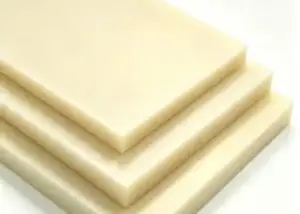
ABS
Material PlasticMaterial Description
General-purpose thermoplastic.Excellent machinability, dimensionalstability, impact resistance.It is widely used in applications such as automotive parts, consumer electronics, and medical equipment.
| Tensile Strength, Yield (MPa) | Elongation at Break (%) | Hardness (Rockwell R) | Heat Deflection Temperature (°C) | Melting Point (°C) |
| 40.7 | 53.4% | 107 | 97.4 | 267 |
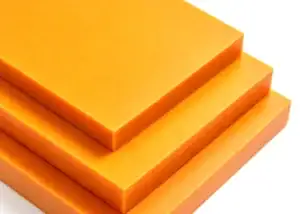
Bakelite
Material BakeliteMaterial Description
Bakelite is a thermosetting engineering plastic, and it has high mechanical strength, good insulation, heat resistance, and corrosion resistance, so It is widely used in electrical components, industrial equipment, fixtures, and structural insulation parts.
| Tensile Strength (MPa) | Elongation at Break (%) | Hardness (Shore D) | Heat Deflection Temperature (°C) | Water Absorption |
| 50–80 | 0.5–2 | 85–95 | 150–220°C | Low |
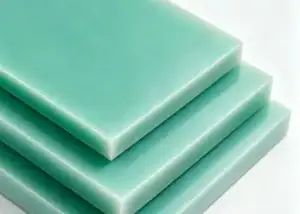
FR4
Material FR4Material Description
FR4 is a Flame retardant glass fiber epoxy laminate,offering excellent electrical insulation and strength, commonly used in circuit boards, electrical components, and structural applications.
| Tensile Strength, Yield (MPa) | Compressive Strength (MPa) | Hardness (Rockwell M) | Flammability Rating | Continous Operating Temperature (°C) |
| 262-310 | 448 | 110 | UL94 V-0 | 140 |
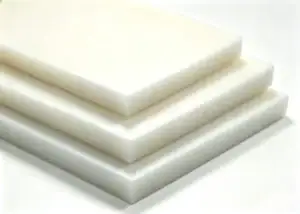
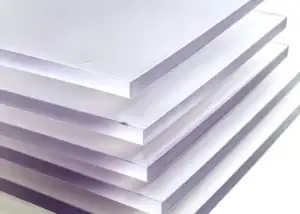
PA66
Material PA66Material Description
PA (Polyamide or Nylon) is a strong, wear-resistant plastic with good chemical resistance, commonly used in gears, bearings, automotive parts, and industrial machinery components. It has advantages when manufactured via CNC machining. Nylon has excellent thermal, mechanical, and chemical resistance properties when cut from solid stock.However, it is precisely its high hygroscopicity that causes it to swell.
| Tensile Strength, Yield (MPa) | Elongation at Break (%) | Hardness (Shore D) | Heat Deflection Temperature (°C) | Melting Point (°C) |
| 30-98 | 1-300 | 78-88 | 75-428 | 197-266 |
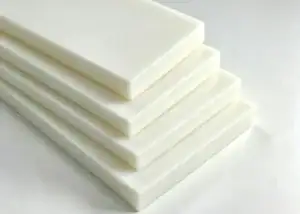
PC
Material PlasticMaterial Description
PC (Polycarbonate) is a strong, impact-resistant plastic with high transparency and heat resistance, widely used in eyewear lenses, electronics, automotive parts, and safety equipment. is colorless and transparent, heat resistant, impact resistant, flame retardant BI grade, and has good mechanical properties within the common use temperature.
| Tensile Strength, Yield (MPa) | Elongation at Break (%) | Hardness (Shore D) | Heat Deflection Temperature (°C) | Glass Transition Temperature (°C) |
| 40-154 | 3-233 | 90-95 | 57.2-208 | 142-152 |
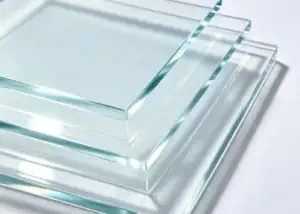
PE
Material PEMaterial Description
PE is a lightweight engineering plastic known for its excellent chemical resistance, low friction, impact resistance, and good electrical insulation properties. It is widely used in industrial equipment, wear-resistant components, food-grade applications, and mechanical engineering parts.
| Tensile Strength, (MPa) | Elongation at Break (%) | Hardness (Shore D) | Continuous Service Temperature(°C) | Melting Point (°C) |
| 20–37 | 100–600 | 60–70 | 60–80 | 110–135 |
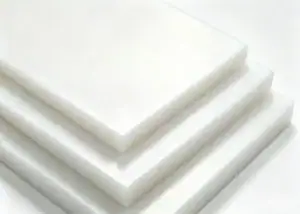
PMMA (Acrylic)
Material PlasticMaterial Description
Acrylic, also known as PMMA or Plexiglas, is the chemical name of polymethyl methacrylate.It is with good transparency, chemical stability, and weather resistance, easy to dye, easy to process, and beautiful appearance, in the construction industry and has a wide range of applications.
| Tensile Strength, Yield (MPa) | Elongation at Break (%) | Hardness (Shore D) | Heat Deflection Temperature (°C) at 0.45MPa | Melting Point (°C) |
| 65-75 | ~2-10 | ~80-90 | 105-110 | 85-110 |
POM
Material PlasticMaterial Description
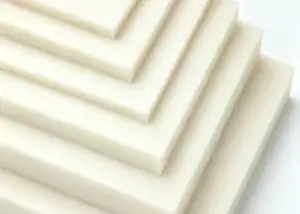
polyoxymethylene is also known abbreviated as POM-C. It is usually the polymer of formaldehyde polymerization, the polymerization degree is not high, and easy to thermal depolymerization. POM is a strong, low-friction plastic ideal for gears, bearings, automotive parts, and precision mechanical components.
| Tensile Strength, Yield (MPa) | Elongation at Break (%) | Hardness (Rockwell M) | Heat Deflection Temperature (°C) at 0.46 MPa | Melting Point (°C) |
| 73-76 | 25-45 | 94 | 160-169 | 175-178 |
PP
Material PlasticMaterial Description
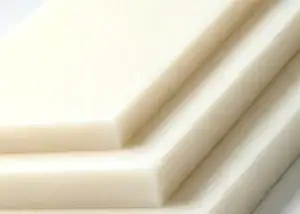
PP (Polypropylene) is a versatile, lightweight, chemical-resistant plastic commonly used in packaging, automotive parts, textiles, and consumer goods due to its durability and flexibility.and due to its semi-crystalline property it possesses a high flexural strength.
| Tensile Strength, Yield (MPa) | Elongation at Break (%) | Hardness (Shore D) | Heat Deflection Temperature (°C) | Melting Point (°C) |
| 25-40 | 25-40 | 25-40 | 25-40 | 25-40 |
PPS
Material PPSMaterial Description
PPS (Polyphenylene Sulfide) is a high-performance engineering plastic known for its excellent heat resistance, chemical resistance, dimensional stability, and electrical insulation properties. It is widely used in industrial equipment, electronics, automotive components, and high-temperature engineering applications.
| Tensile Strength, Yield (MPa) | Elongation at Break (%) | Hardness (Shore D) | Continuous Service Temperature(°C) | Melting Point (°C) |
| 70–120 | 1–3 | 85–95 | 200–240 | 280–290 |