
Selecting between PC and PMMA is one of the most common decisions when developing transparent plastic components. While both materials are widely used in plastic prototyping, they are designed to solve different engineering challenges. Through years of supporting prototype development, we have found that successful material selection depends not only on material properties, but also on how the part will be machined, evaluated, assembled, and used. Understanding these practical differences helps engineers reduce development risks and build prototypes that better support product decisions.
Why Transparent Prototype Parts Demand More Attention?
Transparent components are often among the most closely examined parts of a prototype. Unlike internal structural parts, they remain visible throughout design reviews, engineering evaluations, and customer presentations. Small differences in transparency, surface finish, or edge quality can quickly influence how the entire product is perceived. For this reason, selecting the right transparent material is often more critical than engineers initially expect.
Transparent Parts Are Judged Beyond Dimensional Accuracy
For most prototype parts, dimensional accuracy is the primary evaluation criterion. Transparent components, however, are assessed from a broader perspective. Engineers often pay equal attention to optical clarity, surface consistency, and how the material interacts with light after machining. A dimensionally accurate part may still require improvement if its visual quality does not match the product’s design intent.
Surface Finish Becomes Part of the Engineering Evaluation
One observation we frequently make during CNC plastic machining is that transparent plastics reveal manufacturing quality more clearly than opaque materials. Tool marks, polishing consistency, and edge finishing can all influence the final appearance. As a result, engineers often evaluate the manufacturing process together with the material itself rather than treating them as separate considerations.
This is one reason why two prototypes produced from the same material may still deliver very different visual results. Stable machining processes and consistent finishing methods are essential for achieving repeatable prototype quality.
Understanding the Practical Differences Between PC and PMMA
Although PC and PMMA are both transparent engineering plastics, they are rarely interchangeable in prototype development. Their differences become more obvious when the prototype is assembled, handled, polished, or evaluated in real product environments. Looking at these practical characteristics provides a clearer basis for material selection than simply comparing datasheets.
Optical Performance and Surface Appearance
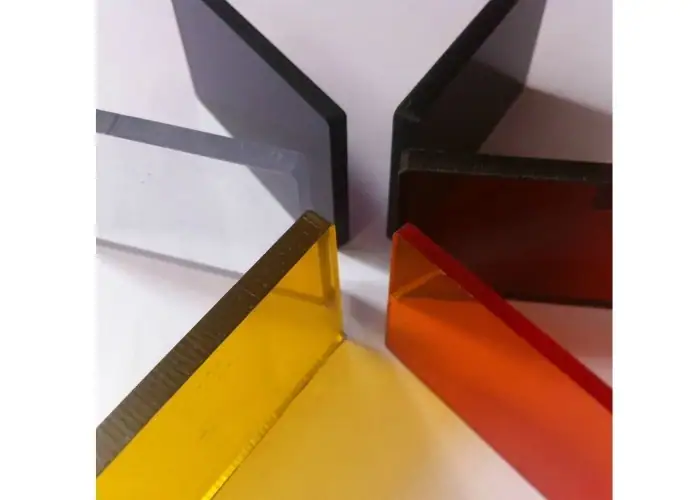
PMMA is widely recognised for its excellent optical clarity and its ability to achieve a highly polished finish. It is commonly used for display windows, transparent covers, light guides, and appearance models where visual presentation is particularly important. After proper machining and polishing, PMMA can produce a clean, glass-like appearance that closely represents the final product.
PC also offers good transparency, but engineers usually select it for reasons beyond appearance. When evaluating transparent components, understanding the intended use of the prototype is often more important than comparing transparency alone.
Mechanical Reliability During Prototype Evaluation
When prototypes are repeatedly assembled, transported, or tested, mechanical performance becomes increasingly important. PC provides higher impact resistance and better toughness, making it more suitable for prototypes that experience repeated handling or structural loading during development.
PMMA performs well in many appearance-focused applications, but it is generally less tolerant of concentrated stress. Understanding how the prototype will be used after manufacturing helps engineers determine whether optical quality or mechanical durability should take priority.
| Comparison Item | PC | PMMA |
| Optical clarity | Excellent | Outstanding |
| Impact resistance | Excellent | Moderate |
| Surface polishing | Good | Excellent |
| Repeated assembly | Excellent | Fair |
| Scratch resistance | Good | Excellent |
| Typical prototype use | Functional transparent parts | Appearance-focused transparent parts |
The Real Engineering Trade-Offs Between PC and PMMA
No transparent plastic performs best in every situation. While PC and PMMA are often compared as alternatives, experienced engineers usually evaluate them by considering what they gain and what they give up with each material. Understanding these engineering trade-offs helps teams avoid unrealistic expectations and choose materials that better support prototype performance throughout development.
When Optical Performance Becomes the Priority
For prototypes where transparency directly influences product evaluation, PMMA is often the preferred choice. Its high light transmission and excellent polishing characteristics allow engineers to produce components with a clean and consistent appearance. This makes PMMA well suited for transparent covers, display panels, light guides, and other parts where visual presentation is an important part of prototype assessment.
Although PC can also be polished, achieving the same optical quality generally requires more process control. When appearance is the primary objective, many engineering teams consider PMMA a more efficient solution.
When Structural Reliability Matters More
Some transparent prototypes must withstand repeated handling, assembly, or functional testing before production decisions are made. In these situations, durability becomes more important than achieving the highest possible transparency. PC provides better impact resistance and toughness, allowing prototypes to remain stable throughout multiple evaluation cycles.
This does not mean PC replaces PMMA. Instead, it highlights that the most suitable material depends on how the prototype will actually be used after manufacturing rather than how it appears immediately after machining.
Why Some Prototypes Use Both Materials
Selecting between PC and PMMA does not always require choosing only one material. In many products, transparent components perform different functions, making a combination of materials the most practical solution. Structural parts may benefit from the toughness of PC, while viewing areas or display sections take advantage of PMMA’s superior optical clarity.
Looking at the complete product instead of evaluating each component separately often leads to a more balanced material strategy and better prototype performance.
How CNC Plastic Machining Influences Material Performance
Material selection and manufacturing cannot be separated. Even when PC and PMMA are correctly selected, machining quality determines whether the finished prototype achieves the expected appearance and performance. Understanding how each material responds during CNC plastic machining helps engineers reduce manufacturing risks before production begins.
PC Requires More Control During Finishing
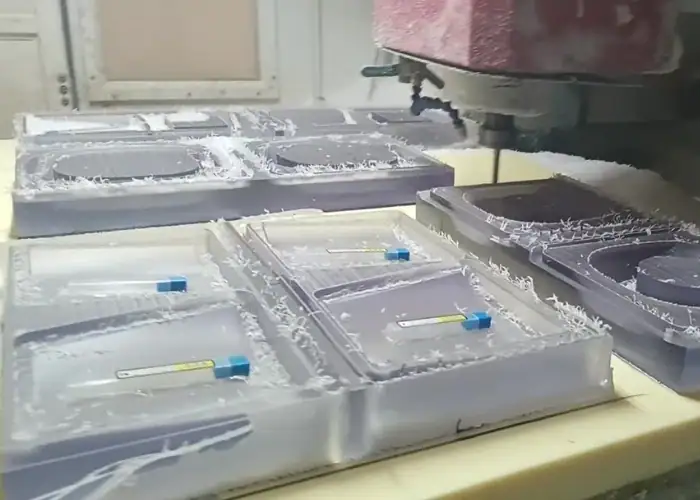
PC is relatively forgiving during machining, but obtaining a high-quality transparent finish often requires additional polishing and careful process control. Surface consistency depends on both machining accuracy and finishing quality, especially for parts with large visible areas.
Engineers often evaluate polishing capability together with machining capability when selecting suppliers for PC prototypes.
PMMA Places Greater Demands on Edge Quality
PMMA machines cleanly and can achieve excellent transparency, but its edges require greater attention during manufacturing. Sharp corners, thin ribs, and small openings should be machined carefully to minimise chipping and maintain a clean appearance after polishing.
Maintaining consistent edge quality is often one of the key factors separating an average transparent prototype from an excellent one.
Stable Manufacturing Delivers More Consistent Results
For transparent prototypes, repeatability is just as important as appearance. A manufacturing process that consistently produces identical optical quality, dimensional accuracy, and surface finish provides engineers with more reliable evaluation results throughout product development.
As a plastic prototype manufacturer, we believe manufacturing consistency adds as much value to prototype development as choosing the correct material.
Working with the Right Plastic Prototype Manufacturer
Choosing between PC and PMMA is only one part of a successful prototype project. Equally important is working with a manufacturer that understands how different transparent plastics behave throughout machining, finishing, inspection, and assembly. Early engineering communication often helps identify potential risks before production begins, reducing unnecessary revisions later in the project.
Engineering Support Starts Before Manufacturing
For transparent prototype projects, engineering support is not limited to manufacturing. Reviewing material selection, machining feasibility, finishing requirements, and structural details before production helps avoid issues that are difficult or expensive to correct later. Early discussions often improve both prototype quality and project efficiency.
A Prototype Should Support Better Product Decisions
A prototype is more than a physical model. It provides an opportunity to evaluate appearance, verify engineering assumptions, and improve product confidence before production investment begins. Selecting the right material is therefore not only about achieving a successful prototype, but also about supporting better decisions for the final product.
Conclusion
Choosing between PC and PMMA is about matching the material to the purpose of the prototype rather than comparing specifications alone. By understanding how each material performs in terms of optical quality, mechanical durability, and CNC plastic machining, engineers can make more confident decisions and reduce unnecessary design revisions.
As a direct plastic prototype manufacturer, we support customers with plastic prototyping, material selection, precision machining, and finishing to help deliver prototypes that accurately reflect real product requirements.
FAQs
1.Is PC always better than PMMA for functional prototypes?
Not always. PC is generally preferred when prototypes require higher impact resistance, repeated assembly, or better mechanical durability. However, if the functional evaluation also depends on optical clarity or visual presentation, PMMA may still be the more appropriate choice.
2.Can PC and PMMA be used in the same prototype?
Yes. Many products combine both materials. PC is commonly used for structural or protective components, while PMMA is selected for transparent windows, display panels, or other areas where optical clarity is important.
3.Why can two transparent prototypes made from the same material look different?
Material is only one factor. Machining parameters, polishing quality, edge finishing, and manufacturing consistency all influence the final appearance of transparent parts after CNC plastic machining.
4.Does polishing affect PC and PMMA differently?
Yes. PMMA generally achieves a higher optical finish with polishing, while PC often requires more careful process control to produce a clear and consistent transparent surface.
5.Which material is better for prototypes that require repeated assembly?
PC is usually the preferred option because of its superior toughness and impact resistance. It is better suited for prototypes that undergo multiple assembly and disassembly cycles during product development.
6.What information should be prepared before requesting a PC or PMMA prototype?
Providing 3D CAD files, required quantities, transparency expectations, surface finishing requirements, intended application, and assembly or testing needs allows manufacturers to recommend a more suitable material and manufacturing process.