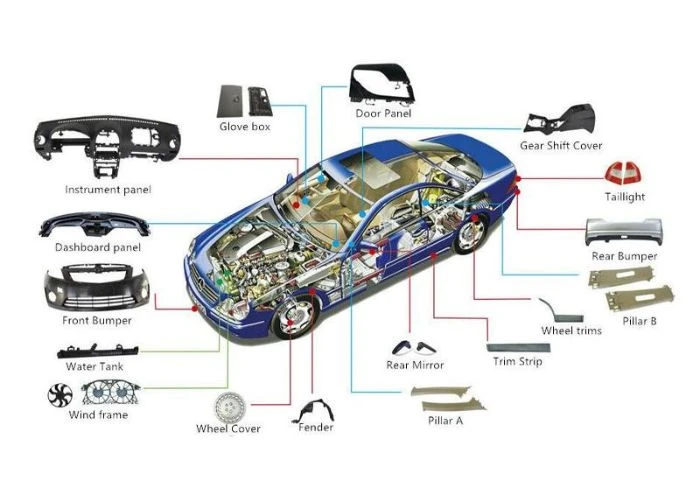

Choosing the right CNC machining services is about more than comparing prices and delivery times. For plastic components, manufacturers must understand material behavior, machining limitations, dimensional requirements, and surface quality. Engineers and purchasing teams also need to determine whether an online manufacturing platform or a direct CNC manufacturer is better suited to their projects. In this guide, we explain how to evaluate plastic machining capabilities, engineering communication, quality control, and additional manufacturing support so that buyers can select a reliable partner for prototype development and custom plastic parts.
What Should You Expect From CNC Machining Services for Plastic Parts?
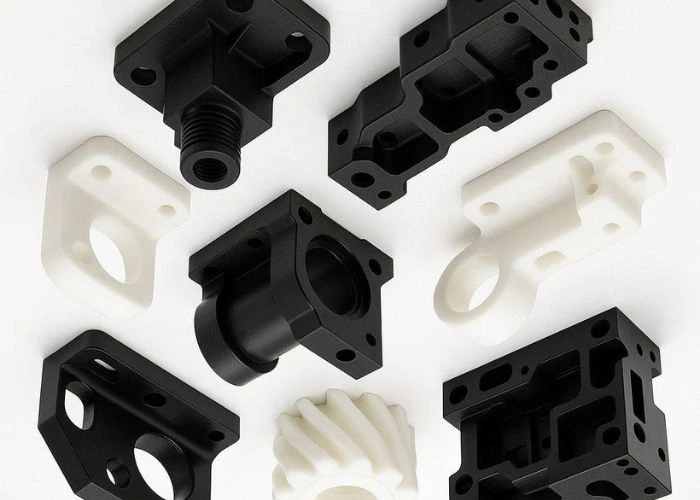
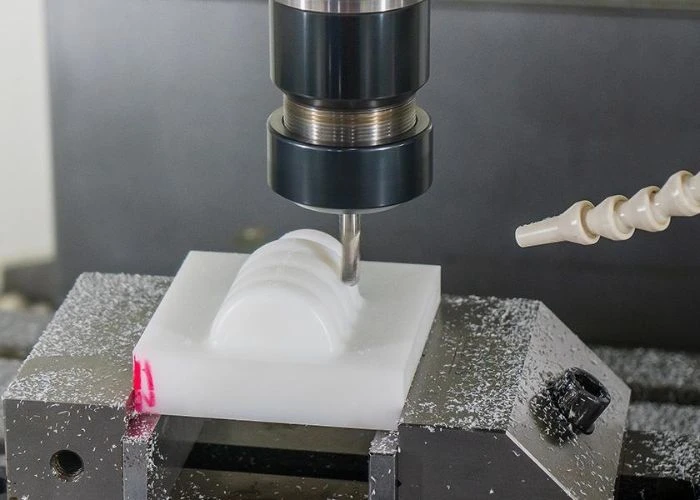
CNC machining services for plastic parts involve more than removing material from a plastic block. A capable manufacturer should understand the complete manufacturing requirements, from reviewing CAD models and selecting suitable materials to controlling critical dimensions and preparing parts for final assembly. The scope of service becomes particularly important when prototypes require complex geometry, cosmetic surfaces, or multiple mating components.
In our experience, the first step in a successful CNC machining project is confirming the intended function of each plastic component. A protective housing may prioritize appearance and dimensional fit, while a mechanical bracket may require greater attention to rigidity, mounting accuracy, and material behavior under load. These differences influence the machining strategy, inspection requirements, and finishing process.
A comprehensive service may include CNC milling and drilling, deburring, dimensional inspection, painting, polishing, printing, and physical prototype assembly. However, not every supplier provides all these operations internally. Buyers should confirm which processes are completed by the manufacturer, which are subcontracted, and who remains responsible for the final delivered parts.
For projects involving multiple development stages, understanding the scope of plastic prototype manufacturing can also help engineers coordinate machining, finishing, and assembly requirements.
Online CNC Machining Services vs Direct Manufacturers: What’s the Difference?
Online CNC machining services and direct manufacturers offer different ways to source custom parts. Online platforms generally emphasize digital quoting, centralized order management, and access to manufacturing capacity, while direct manufacturers may provide closer communication with the team responsible for production. Neither model is automatically superior, and the right choice depends on project complexity, engineering support, and quality expectations.
How Do Online CNC Machining Platforms Work?
Many online CNC machining platforms allow customers to upload CAD files, select materials and quantities, and receive quotations through a digital interface. Depending on the provider, production may be completed by company-owned facilities, approved manufacturing partners, or a combination of both. This approach can simplify supplier discovery and purchasing administration, especially for standardized components with clearly defined specifications.
However, automated quotations may not fully capture every manufacturing concern associated with plastic parts. Thin walls, transparent surfaces, stress-sensitive materials, or unusual assembly requirements may require additional engineering review. Buyers should therefore understand how the platform handles technical questions, design revisions, inspection requests, and manufacturing responsibility before placing an order.
For a broader comparison of digital sourcing models, the Machining Doctor guide to online CNC machining platforms provides additional industry context.
What Are the Advantages of Working With a Direct CNC Manufacturer?
A direct CNC manufacturer can be particularly useful when a project requires ongoing engineering communication. For example, if a plastic housing contains thin mounting features or complex internal geometry, the manufacturing team may need to discuss machining access, fixture design, material selection, and acceptable design modifications before production begins. Direct communication can make these discussions more efficient when the supplier has experienced engineers and a responsive project-management process.
Direct manufacturing relationships may also simplify coordination when several components require machining, surface finishing, and physical assembly. Nevertheless, buyers should not assume that every direct manufacturer offers better quality or lower prices. Manufacturing capability, documented inspection procedures, communication quality, and accountability must still be evaluated individually.
Comparison Table: Online CNC Machining Services vs Direct Manufacturers
| Evaluation Factor | Online CNC Platform | Direct Manufacturer |
| Quotation | Often digital or automated | Often supported by engineering review |
| Manufacturing Model | Owned facilities, partner network, or hybrid | Identifiable production operation |
| Engineering Communication | May be centrally managed | May allow direct production-team communication |
| Material Expertise | Depends on assigned manufacturing capability | Depends on the factory’s specialization |
| Design Changes | Depends on platform workflow | Depends on engineering responsiveness |
| Quality Responsibility | Defined by platform quality arrangements | Defined by factory quality procedures |
| Suitable Projects | Standardized sourcing and distributed capacity | Projects requiring close manufacturing coordination |
Ultimately, buyers should choose the manufacturing model that provides the most reliable combination of technical capability, communication, inspection, and delivery responsibility for their specific project.
How Can You Evaluate a Manufacturer’s Experience With Plastic CNC Machining?
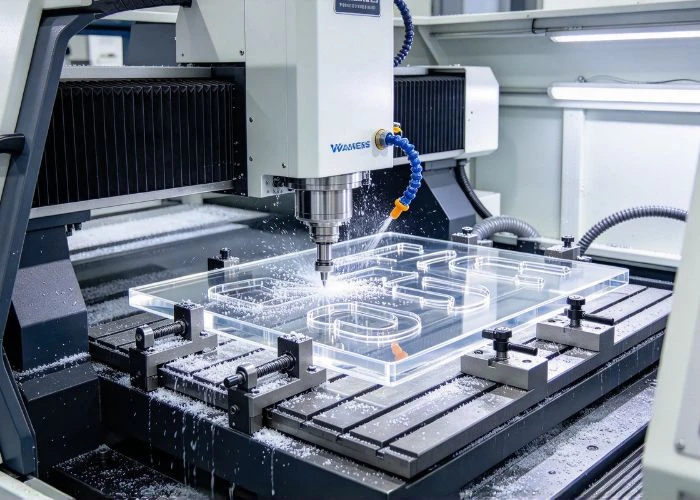
Plastic CNC machining requires a different approach from metal machining because many engineering plastics respond more strongly to cutting heat, clamping pressure, and temperature changes. A supplier with extensive metal machining experience may still need specialized knowledge to manufacture thin plastic housings, transparent components, or dimensionally sensitive mechanical parts. Evaluating previous experience with similar plastic materials and geometries is therefore more useful than simply checking whether a supplier owns CNC machines.
Why Is Plastic Machining Different From Metal Machining?
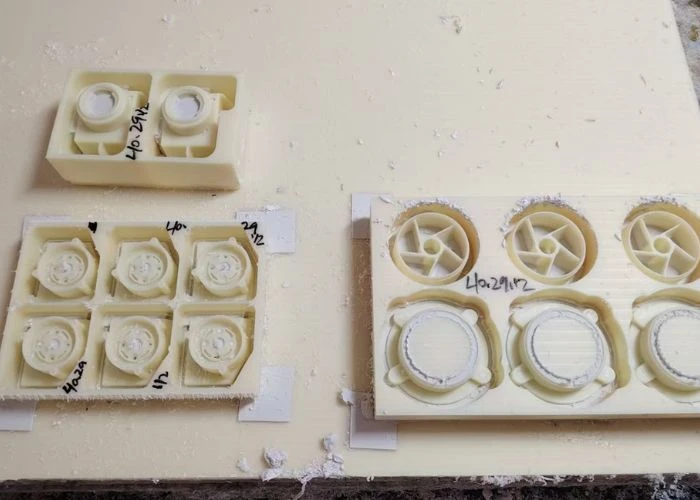
Plastics generally have lower stiffness and higher thermal expansion than common engineering metals. During machining, excessive cutting heat can soften some materials, while aggressive clamping can distort thin sections. Residual stress in plastic stock may also contribute to movement after material removal. These effects become more significant when a component contains long unsupported walls, deep pockets, narrow ribs, or tight-fitting assembly features.
An experienced plastic machining manufacturer should consider cutting conditions, tool geometry, workholding, material condition, and inspection timing together. Instead of promising identical tolerances for every plastic material, the supplier should explain which dimensions are achievable, which features carry higher risk, and whether additional machining or stabilization steps may be necessary.
What Should You Check for ABS, PC, PMMA, POM, and Other Plastics?
Different plastics require different machining considerations. ABS is widely used for prototype housings and cosmetic components because it is relatively easy to machine and finish. Polycarbonate (PC) is selected when impact resistance and toughness are important, but machining stress and surface requirements still need attention. PMMA is commonly used for transparent covers and optical-looking prototypes, where edge quality, cracking risks, and polishing requirements become important.
POM is frequently used for precision mechanical components because of its low friction and favorable dimensional characteristics, although its final accuracy still depends on geometry and machining conditions. Polypropylene (PP), by comparison, can be more challenging to fixture and machine consistently because of its flexibility. Buyers should ask manufacturers about actual experience with the specified grade, part geometry, and finishing requirements rather than relying only on a general material list.
The Xometry CNC Machining Design Guide provides additional reference information about material selection and design considerations for CNC-manufactured parts.
Which Manufacturing Capabilities and DFM Support Should You Check?
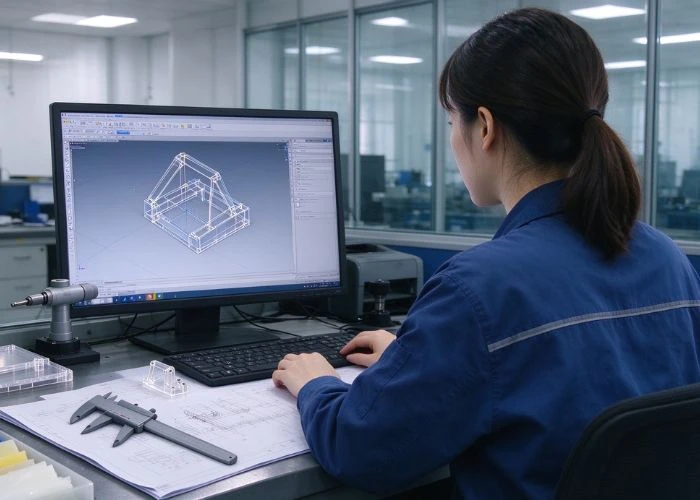
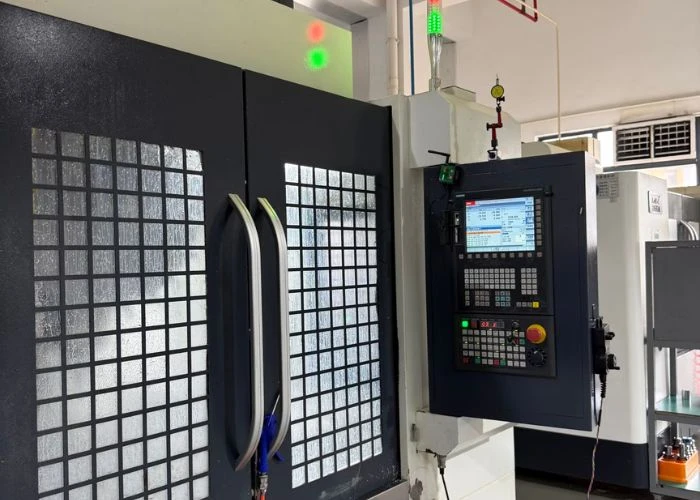
A CNC manufacturer’s capabilities should be evaluated against the actual geometry and requirements of the parts being ordered. Machine availability alone does not determine whether a supplier can successfully produce a complex plastic prototype. Buyers should consider machining dimensions, equipment configuration, workholding methods, accessible cutting directions, and the manufacturer’s ability to identify potential design problems before production.
For example, a plastic enclosure with deep internal cavities may require special tooling or multiple setups. A thin cover with mounting holes close to its edges may need additional support during machining. Similarly, parts with complex internal features may require design modifications if the geometry cannot be accessed by conventional cutting tools. A capable supplier should explain these constraints and propose practical alternatives without compromising critical functional requirements.
How Does DFM Communication Reduce Manufacturing Risks?
Design for Manufacturability (DFM) communication helps identify potential production problems while changes are still relatively easy to make. For plastic parts, this may involve reviewing wall thickness, corner radii, hole locations, tool access, material behavior, and the relationship between machined surfaces and assembly features. Effective DFM support should result in clear engineering recommendations rather than vague statements that a design is difficult to manufacture.
Consider a transparent PC housing with narrow walls and several internal mounting bosses. Before machining, we would review whether the walls can be supported, whether the mounting features are accessible, and whether the specified finish is realistic for the selected material. If a feature creates unnecessary manufacturing risk, we can discuss possible design adjustments with the customer before committing to production.
For engineers developing complex enclosures and mechanical components, understanding the relationship between design geometry and custom plastic parts manufacturing helps establish more realistic production expectations.
How Should You Evaluate CNC Machining Quality Control and Inspection?
Quality control is one of the most important factors when selecting CNC machining services, particularly for plastic components with critical mating surfaces or mounting features. A reliable supplier should be able to interpret engineering drawings, identify inspection priorities, use appropriate measuring equipment, and document results when required. Buyers should evaluate how quality is controlled throughout production rather than relying only on claims of high precision.
What Inspection Evidence Should a CNC Supplier Provide?
The required inspection method depends on part geometry, tolerances, and application. Calipers and micrometers may be suitable for accessible dimensions, while coordinate measuring machines (CMMs) or other specialized equipment may be necessary for complex geometric features. For important projects, buyers can request inspection records, measurement reports, or agreed first-article inspection information. The supplier should also clarify how measuring equipment is calibrated and how nonconforming parts are handled.
Plastic components require additional attention because their dimensions can change with temperature, mechanical loading, and material condition. A thin plastic housing measured immediately after machining may not behave identically after it has stabilized or undergone finishing. For critical features, the manufacturer and customer should agree on inspection conditions and acceptance criteria rather than assuming that a nominal drawing tolerance tells the entire story.
Quality management certifications, such as ISO 9001, can provide useful evidence of an established management system. However, certification does not automatically guarantee that every manufactured part meets its drawing requirements. Buyers should consider documented quality procedures together with actual inspection capability, engineering experience, and project-specific acceptance results.
Why Do Surface Finishing and Prototype Assembly Matter When Choosing a CNC Manufacturer?
Many plastic CNC machining projects require more than accurately machined individual components. Product development teams may need painted housings, polished transparent covers, printed markings, or several plastic parts assembled into a physical prototype. When these operations are managed separately, differences in dimensional interpretation, finishing thickness, and assembly requirements can create additional coordination challenges.
For example, a consumer electronic device prototype may contain an ABS outer housing, a transparent PMMA window, internal mounting components, and decorative surface finishes. Even if every part is machined individually, the final assembly may reveal interference, uneven gaps, or cosmetic inconsistencies. A manufacturer experienced in coordinated prototype production can help identify these issues during physical fitting and assembly checks.
Surface finishing also introduces manufacturing considerations that should be discussed before production. Painting can affect mating clearances, polishing may change exposed edges, and printed graphics require suitable surface preparation. When choosing a supplier, buyers should confirm whether the manufacturer can coordinate these operations and whether final inspection includes relevant post-finishing dimensions and appearance requirements.
Our complete prototype services are designed to support projects requiring coordinated plastic machining, surface finishing, and physical prototype assembly. Such services help evaluate the appearance and mechanical fit of prototype components, although they should not be confused with complete product-level functional testing or regulatory qualification.
What Should Buyers Compare Before Selecting a CNC Machining Service?
Selecting a CNC machining supplier requires a balanced evaluation of technical capability, communication, quotation scope, and manufacturing responsibility. A low initial quotation may not represent the lowest overall project cost if important operations are excluded or if design misunderstandings lead to repeated revisions. Similarly, a short promised lead time is only useful when it reflects the complete manufacturing process, including finishing and inspection.
Before approving a supplier, we recommend comparing quotations against the same drawing revision, material specification, quantity, finishing requirements, and inspection criteria. Buyers should also confirm whether the quoted price includes deburring, packaging, special fixtures, and any necessary secondary processes. If the project is likely to undergo design changes, the supplier’s revision management and engineering responsiveness should be part of the evaluation.
Supplier Evaluation Checklist
| Evaluation Area | Key Question |
| Plastic Experience | Has the supplier machined similar materials and part geometries? |
| Manufacturing Capability | Can the required dimensions and features be produced? |
| DFM Support | Are manufacturing risks identified before production? |
| Quality Control | How are critical dimensions inspected and recorded? |
| Surface Finishing | Can the supplier meet cosmetic and finishing requirements? |
| Assembly Support | Can mating components be checked together? |
| Quotation Scope | Are all required processes and exclusions clearly stated? |
| Accountability | Who manages revisions and quality problems? |
An effective supplier evaluation should also consider evidence rather than marketing claims. Relevant sample parts, previous project experience, inspection procedures, and clear technical responses provide a more reliable basis for decision-making than general promises of excellent quality or universal material expertise.
For additional purchasing considerations, the LKPrototype guide to choosing a CNC machining supplier offers another industry perspective on supplier qualification and manufacturing evaluation.
Can UForProto Support Custom Plastic CNC Machining Projects?
At UForProto, we are a direct plastic prototype manufacturer specializing in CNC plastic machining and related prototype manufacturing services. Our work focuses on helping product development teams turn CAD designs into physical plastic components for engineering evaluation, appearance review, and assembly verification. We work with engineering plastics such as ABS, PC, PMMA, POM, PP, and other project-specific materials, selecting manufacturing approaches according to part geometry, material behavior, and customer requirements.
In addition to CNC machining, we support 3D printing, vacuum casting, surface finishing, and physical prototype assembly. These complementary capabilities allow us to coordinate projects involving multiple components and manufacturing stages. Our ISO 9001:2015 quality management system supports standardized operating and quality procedures, while project-specific dimensional requirements are reviewed according to the applicable drawings and agreed inspection criteria.
We understand that selecting a CNC machining manufacturer involves balancing manufacturing feasibility, part quality, communication, and delivery expectations. By reviewing drawings, discussing potential manufacturing risks, and coordinating appropriate processes, we aim to help engineers and purchasing teams move their plastic prototype projects forward with greater clarity.
Send your CAD files, engineering drawings, and plastic prototype requirements to info@uforproto.com for a manufacturing review and quotation.
Conclusion
Choosing reliable CNC machining services for plastic parts requires more than comparing supplier prices or equipment lists. Engineers and purchasing teams should evaluate material-specific machining experience, manufacturing capabilities, DFM communication, inspection procedures, and support for surface finishing and assembly. Online manufacturing platforms can simplify sourcing, while direct manufacturers may offer advantages for projects requiring close technical coordination. However, the quality of either approach depends on the actual supplier and its manufacturing controls. By reviewing technical evidence, clarifying quotation requirements, and establishing realistic acceptance criteria, buyers can select a CNC machining partner that better supports their product development goals.
FAQs
1. What Should I Look for in a CNC Machining Services Provider?
Look for experience with the required materials, the ability to manufacture critical features, clear DFM communication, suitable inspection methods, and reliable project coordination. For plastic parts, previous experience with similar geometries is particularly important because material behavior can significantly affect machining results.
2. Are Online CNC Machining Services Better Than Direct Manufacturers?
Not necessarily. Online platforms can simplify quotation and purchasing processes, while direct manufacturers may provide closer engineering communication. The best choice depends on project complexity, technical requirements, supplier capabilities, and the level of manufacturing coordination needed.
3. How Can I Verify a Manufacturer’s Experience With Plastic Parts?
Ask for examples of previously manufactured plastic components, information about the materials they commonly machine, and explanations of how they manage thin walls, deformation, surface finish, and dimensional inspection. Technical responses to your drawings can also reveal whether the supplier understands the manufacturing challenges.
4. What Quality Certifications Should a CNC Machining Manufacturer Have?
ISO 9001 is a widely recognized quality management system standard and can be a useful qualification factor. However, buyers should also review inspection procedures, measuring equipment, quality records, and project-specific requirements. Some regulated industries may require additional certifications or documentation.
5. Can a CNC Manufacturer Provide Surface Finishing and Prototype Assembly?
Some CNC manufacturers offer additional services such as painting, polishing, printing, and physical prototype assembly. Others focus only on machining and outsource secondary operations. Buyers should confirm the available services, manufacturing responsibility, and inspection requirements before placing an order.
6. What Information Should I Send to Get an Accurate CNC Machining Quote?
Provide a 3D CAD model, relevant 2D drawings, material specifications, required quantity, critical tolerances, surface finishing requirements, and expected delivery schedule. If the parts must fit together, include assembly information and identify important mating dimensions. Clear documentation helps manufacturers assess feasibility and prepare quotations based on consistent requirements.