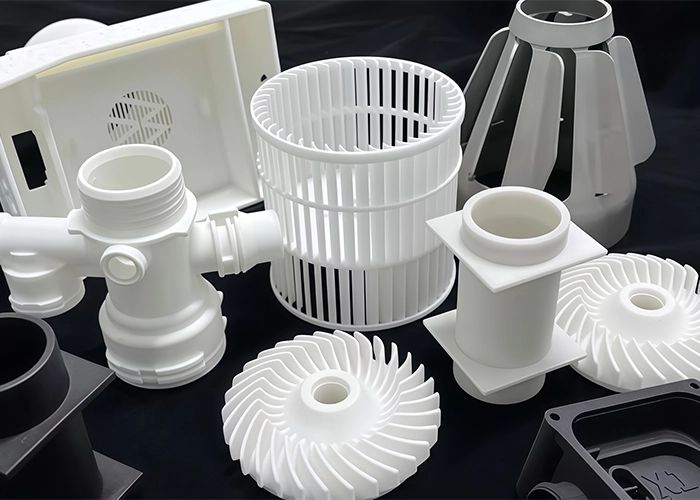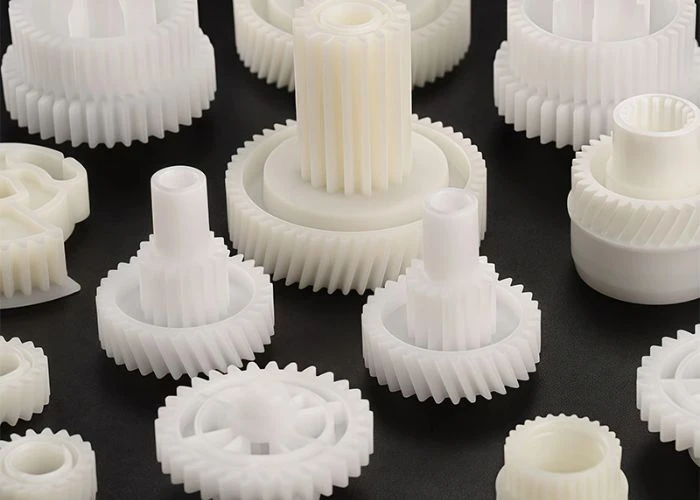

Plastic prototype manufacturing allows engineers to evaluate a physical product before committing to production, but producing a reliable prototype involves more than simply converting a CAD model into a part. Material behaviour, manufacturing processes, dimensional requirements, surface finishing, assembly relationships, and design revisions can all influence the final result. In our plastic prototyping projects, I often find that problems become easier to control when these factors are considered together from the beginning rather than being addressed individually after manufacturing.
Why Can Plastic Prototype Manufacturing Be Challenging?
Plastic prototypes are often produced in small quantities and within short development cycles, yet they may still need accurate dimensions, representative materials, controlled cosmetic surfaces, and reliable assembly. These requirements can conflict with one another. A material that performs well mechanically may be difficult to finish, while a process that produces excellent appearance may not provide the mechanical behaviour required for engineering evaluation.
The challenge is therefore not simply manufacturing each component correctly. Engineers must balance prototype purpose, material characteristics, manufacturing limitations, tolerance requirements, finishing expectations, and assembly conditions throughout the project.
Challenge 1: Choosing the Wrong Plastic Material
Material selection affects much more than the mechanical strength of a prototype. It can influence machining stability, dimensional behaviour, surface appearance, fastening performance, moving interfaces, and the way a prototype behaves during engineering evaluation. Selecting a material mainly because it is inexpensive or readily available can therefore create problems later in the development process.

Match Material Properties to the Prototype Purpose
I prefer to begin material selection by asking what engineers actually need to learn from the prototype.
ABS is commonly useful when a project requires good machinability and cosmetic finishing. PC may be considered when impact resistance or transparency is important. POM can be suitable for precision mechanisms, guides, gears, or components where dimensional stability and low friction matter. Nylon is often valuable for parts requiring toughness and repeated handling.
The correct choice depends on the engineering objective rather than on one material property alone, which is why engineers should select the right material for their plastic prototype according to its intended validation purpose.For example, choosing a very strong material does not automatically make it the best option if the main objective is to evaluate appearance, dimensional stability, or repeated assembly.
Challenge 2: Selecting the Wrong Manufacturing Process
CNC plastic machining, SLA/SLS 3D printing, and vacuum casting can all produce plastic prototypes, but they solve different engineering problems. Selecting the process only according to price or lead time may result in unnecessary compromises in accuracy, material behaviour, surface quality, or quantity.
The manufacturing method should be selected according to what the prototype needs to represent.
CNC, 3D Printing, and Vacuum Casting Serve Different Purposes
CNC plastic machining is often appropriate when engineers require actual engineering plastics, controlled dimensions, threads, mating features, or representative mechanical behaviour.
SLA is useful for detailed geometry and cosmetic prototypes, while SLS can produce durable nylon components with complex shapes without traditional tooling.
Vacuum casting is useful when several similar prototype parts are required and the project needs consistent appearance or production-like polyurethane parts.
In some projects, I do not recommend using one process for every component. A complete prototype may combine CNC-machined structural parts, 3D-printed complex components, and vacuum-cast cosmetic pieces because each component has a different engineering function.
Challenge 3: Poor Dimensional Accuracy and Tolerance Control
Plastic prototype accuracy should support the engineering purpose of the product rather than applying unnecessarily tight tolerances to every dimension. Problems often occur when every dimension is treated as equally critical or when tolerances are specified without considering material behaviour, part geometry, machining access, and assembly relationships.
A single component may pass dimensional inspection but still create problems after several parts are assembled together.
Focus Tolerance Control on Critical Interfaces
Not every dimension requires the tightest possible tolerance.
I recommend identifying dimensions that directly affect:
mating surfaces;
holes and fastening locations;
moving components;
shafts and guides;
enclosure alignment;
sealing or locating features;
critical assembly interfaces.
These areas deserve closer dimensional control than non-functional cosmetic geometry.
Material behaviour also matters. Some plastics respond differently to machining stress, temperature, moisture, or thin-wall geometry. Tool paths, machining sequence, fixturing, wall thickness, and post-machining handling therefore need to be considered when dimensional stability is important.
Challenge 4: Surface Finish Does Not Match Product Expectations
Surface finishing problems are often treated as problems that occur after manufacturing, but many of them actually begin much earlier. Material selection, machining marks, 3D printing layer lines, wall geometry, surface transitions, and finishing specifications can all influence the final cosmetic result.
If appearance matters, finishing requirements should be defined before the prototype is manufactured.
Plan Surface Finishing Before Part Manufacturing
A painted plastic prototype may require sanding and surface preparation before coating. Transparent PMMA or PC parts may require careful machining and polishing to control haze and tool marks. Silk-screened logos require suitable surface geometry and sufficient positioning accuracy.
In our projects, I therefore prefer to confirm colour, gloss level, texture, logo requirements, transparent areas, and cosmetic surfaces early.
This allows machining and finishing teams to understand which surfaces are critical and helps reduce unnecessary rework after the part has already been manufactured.
Challenge 5: Prototype Parts Do Not Perform as Expected
A prototype may look correct and still fail to provide useful engineering information. Problems may result from inappropriate materials, insufficient wall thickness, weak fastening areas, stress concentrations, unsuitable manufacturing processes, or differences between prototype and intended production conditions.
The important question is not simply whether the prototype survives. It is whether it provides representative information for the next engineering decision.
Separate Prototype Manufacturing From Product-Level Functional Testing
As a plastic prototype manufacturer, our role is to produce parts that meet the confirmed manufacturing requirements and support physical evaluation.
We can support dimensional inspection, part fit, trial assembly, surface evaluation, and mechanical integration of manufactured and customer-supplied components.
However, complete-machine functional testing normally remains the responsibility of the customer’s engineering team because it depends on the complete product system, electronics, software, operating conditions, and validation requirements.
For this reason, prototype requirements should clearly identify what the manufactured plastic parts are expected to demonstrate.
Challenge 6: Late Design Changes Increase Cost and Lead Time
Design changes are normal during prototyping. The real problem occurs when important manufacturing or assembly issues are discovered only after several components have already been produced and finished.
At that point, one small CAD change may require new CNC programming, remanufacturing, refitting, repainting, or repeating part of the assembly process.
Early Manufacturing Review Reduces Unnecessary Iterations
Before manufacturing begins, I recommend applying DFM for plastic prototyping to review the design from a manufacturing perspective rather than waiting until the prototype is completed.
This review may include:
material suitability;
manufacturing process;
critical tolerances;
wall thickness;
machining access;
fastening features;
surface requirements;
part interfaces;
assembly sequence.
Early review does not eliminate design changes. Instead, it helps separate necessary engineering iterations from avoidable manufacturing problems.
Challenge 7: Assembly Problems Appear After Individual Parts Are Manufactured
One of the most common misunderstandings in prototype assembly is assuming that individually accurate parts will automatically create an accurate final assembly. In reality, alignment, accumulated tolerances, fastening positions, internal clearances, component access, and assembly sequence can all create problems that are difficult to identify by inspecting parts individually.This becomes especially important for products containing multiple plastic parts and customer-supplied components.
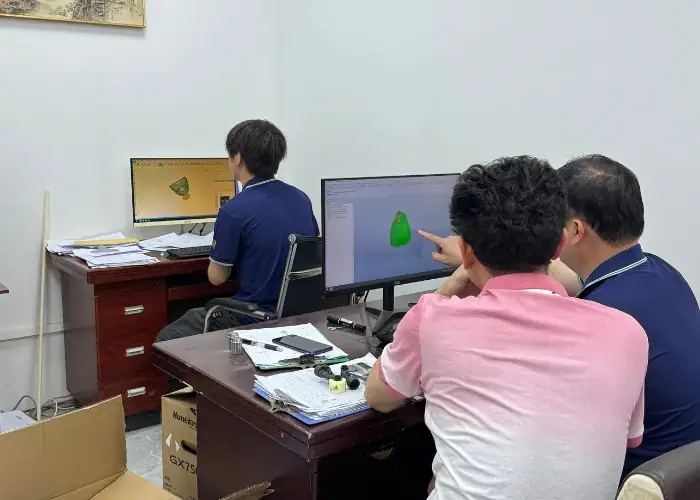
Use Trial Assembly Before Final Finishing When Appropriate
Trial assembly provides an opportunity to check how individual components interact before the prototype is finalized.
Depending on the project, engineers may review:
gaps between housings;
hole and screw alignment;
interference between parts;
fastening access;
locating features;
installation sequence;
purchased component fit;
movement between mating parts.
When practical, identifying these issues before final painting or cosmetic finishing can prevent unnecessary refinishing if a part needs adjustment.
For complex prototype builds, assembly should therefore be treated as part of the manufacturing workflow rather than as a separate activity that happens only after every component is completed.
Common Plastic Prototype Manufacturing Challenges at a Glance
| Challenge | Typical Risk | Practical Response |
| Wrong Material | Poor performance or unstable dimensions | Match material to prototype purpose |
| Wrong Process | Accuracy, cost, or performance compromises | Select CNC, 3D printing, or vacuum casting by application |
| Poor Tolerance Control | Fit and assembly problems | Control critical interfaces first |
| Surface Finish Problems | Appearance differs from expectations | Define finishing requirements early |
| Prototype Reliability Issues | Deformation or failure during evaluation | Align material, geometry, and process |
| Late Design Changes | Increased cost and lead time | Perform early manufacturing review |
| Assembly Problems | Misalignment or interference | Use trial assembly where appropriate |
How Does UForProto Support Plastic Prototype Manufacturing?
In our projects, we focus on manufacturing support rather than treating every prototype problem as a separate issue. Depending on the project requirements, we can coordinate CNC plastic machining, SLA/SLS 3D printing, vacuum casting, surface finishing, dimensional inspection, trial assembly, and prototype assembly.
Our role is to help turn confirmed engineering designs into physical plastic prototypes while identifying manufacturing and assembly conditions that may influence the result. We do not position this service as complete-machine functional testing or electronic product development. Those evaluations remain with the customer’s engineering team.
Conclusion
Plastic prototype manufacturing becomes more predictable when material selection, process choice, tolerance control, surface finishing, and assembly are considered as one connected workflow. Many prototype problems are not caused by a single manufacturing error; they develop when design requirements, material behaviour, process limitations, and assembly conditions are evaluated separately. From my experience, the most effective approach is to define the prototype’s engineering purpose first, identify critical dimensions and interfaces, select appropriate manufacturing methods, and review assembly requirements before final finishing. A well-planned prototype does not eliminate every design iteration, but it helps engineers distinguish useful development changes from avoidable manufacturing problems. This makes each prototype more valuable as the product moves from design evaluation toward production preparation.
FAQs
1. What are the most common challenges in plastic prototype manufacturing?
Common challenges include incorrect material selection, inappropriate manufacturing processes, tolerance problems, surface finish defects, unreliable prototype performance, late design changes, and assembly issues.
2. Why does material selection matter in plastic prototyping?
Different plastics behave differently during machining, finishing, assembly, and engineering evaluation. The material should therefore be selected according to what the prototype needs to validate.
3. How do I choose between CNC machining, 3D printing, and vacuum casting?
CNC machining is useful when actual engineering plastics and controlled dimensions are important. 3D printing is suitable for rapid iterations and complex geometry, while vacuum casting is often effective when several similar prototype parts are required.
4. Why can accurate prototype parts still have assembly problems?
Assembly depends on accumulated tolerances, alignment, fastening positions, internal clearance, locating features, and component interactions. These relationships may not be visible when each part is inspected individually.
5. When should trial assembly be performed?
Trial assembly is useful before final cosmetic finishing when multiple parts need to be checked for fit, alignment, interference, fastening access, or installation sequence.
6. How can engineers reduce prototype manufacturing revisions?
Early review of material, process, critical tolerances, wall thickness, machining access, surface requirements, and assembly relationships can identify avoidable manufacturing risks before parts are produced.
7. Does UForProto provide complete product functional testing?
No. We focus on plastic prototype manufacturing, dimensional inspection, surface finishing, trial assembly, and mechanical integration. Complete product-level functional testing is normally carried out by the customer’s engineering team.