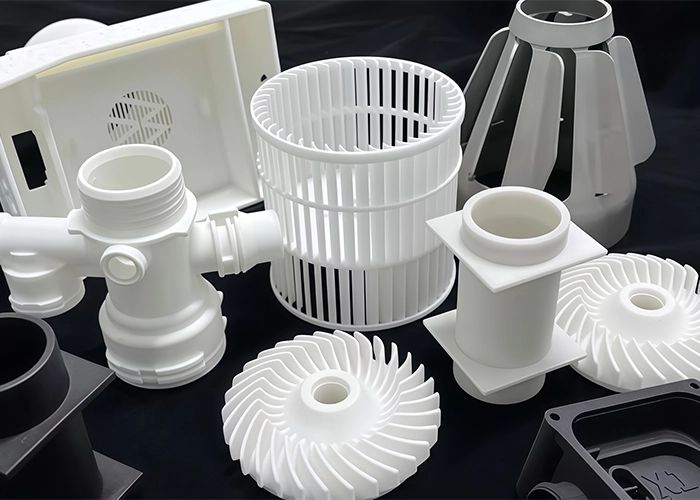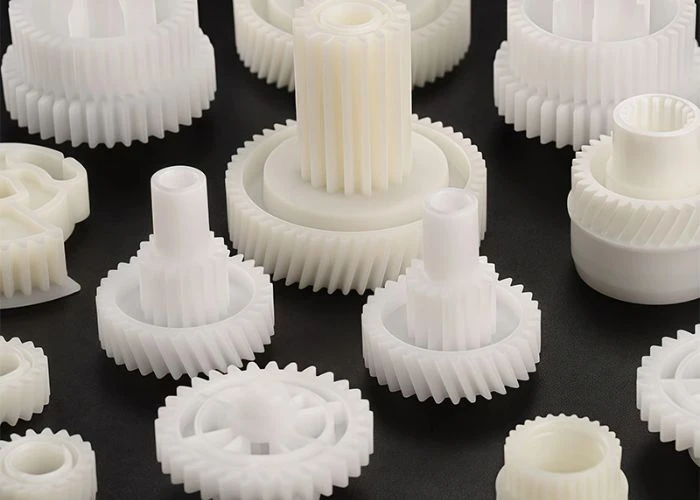

Selecting the right material for a plastic prototype is not simply about choosing a familiar engineering plastic. Material properties influence how accurately a prototype represents the intended product, how it behaves during assembly and testing, and what engineers can learn from the results. A material suitable for an early appearance model may not provide meaningful feedback for load, wear, heat, or chemical exposure. For this reason, effective material selection should begin with the purpose of the prototype and the conditions it needs to reproduce before specific plastic grades are compared.
Material Selection Directly Affects Prototype Validation
A prototype is valuable when it helps engineers make reliable development decisions. The selected plastic affects strength, flexibility, dimensional stability, assembly behaviour, surface appearance, and response to the intended working environment. If these characteristics are significantly different from what the project needs to evaluate, even an accurately manufactured prototype may provide misleading feedback. For example, a housing produced from a material that is too flexible may suggest a structural problem that would not exist with the intended plastic, while the wrong transparent material may distort optical or visibility evaluation. Material selection therefore needs to support the specific question the prototype is intended to answer rather than simply reflect availability or familiarity.
Start With Validation Goals Instead of Material Names
Comparing material datasheets is useful, but it should not be the first step. Before selecting ABS, PC, POM, Nylon, or another engineering plastic, engineers should define what the prototype needs to confirm. The answer determines which material properties actually matter and prevents teams from over-specifying characteristics that have little influence on the current development stage.
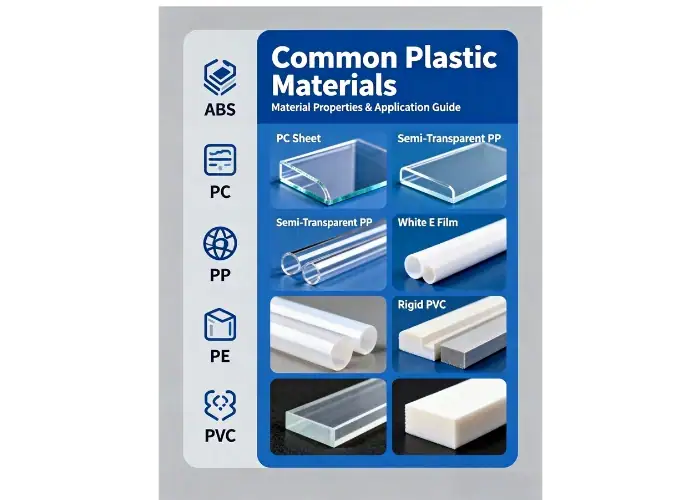
Materials Should Support the Questions You Need to Answer
An assembly prototype may need stable dimensions and accurate mating surfaces, while a mechanical prototype may place greater emphasis on stiffness, impact resistance, wear, or repeated movement. Parts exposed to heat, humidity, cleaning agents, or chemicals introduce another set of requirements. Defining these conditions first makes material comparison more focused because engineers can evaluate only the properties that influence the intended test. The objective is not to reproduce every final-product characteristic in every prototype, but to select a material that provides useful evidence for the current engineering decision.
Material Requirements Evolve During Development
The material used for an early prototype does not always need to match the material used later in development. Early models may focus on appearance, layout, or identifying major design issues, while later prototypes often require more representative mechanical, assembly, or environmental behaviour. As validation becomes more specific, material requirements may also become more demanding. Reviewing the material at key development stages helps ensure that the prototype continues to answer the right question instead of carrying an early material choice into later testing without reconsideration.
Three Factors That Drive Plastic Prototype Material Selection
Once the prototype objective is clear, material selection can be narrowed down through three practical areas: mechanical requirements, operating environment, and manufacturing compatibility. Looking at these factors together is more useful than comparing a long list of material properties without knowing which ones influence the project.
Mechanical Performance Requirements
Strength alone does not determine whether a plastic is suitable. Engineers may need to consider stiffness, impact resistance, wear, fatigue behaviour, flexibility, or dimensional stability depending on how the prototype will be tested. A cosmetic housing may require only enough rigidity for assembly and handling, while a moving component or structural part may need more representative mechanical behaviour. Identifying the actual load and movement conditions helps prevent both under-specifying and unnecessarily over-specifying the prototype material.
For precision parts, dimensional stability can also become a major material-selection factor, especially when tight fits or assembly relationships need to be maintained after machining.
Environmental Exposure Conditions
The intended operating environment can quickly eliminate otherwise suitable materials. Temperature, humidity, UV exposure, oils, cleaning agents, and chemical contact may change dimensional stability, surface condition, or mechanical performance. If environmental behaviour is part of the validation goal, the prototype material should reproduce that exposure closely enough to generate useful feedback. This is especially important for components used in industrial equipment, medical devices, outdoor products, or fluid-contact applications.
Manufacturing Method Compatibility
Material selection should also be considered together with the manufacturing method. Some engineering plastics provide predictable results in CNC plastic machining, while other prototype requirements may be better supported by 3D printing or vacuum casting. Geometry, quantity, tolerance, surface requirements, and the need for real material behaviour all influence this decision. The best material on a datasheet is not necessarily the most practical prototype material if the selected manufacturing process cannot reproduce the required features or test conditions effectively.
Common Materials for Plastic Prototypes and When to Use Them
Different engineering plastics solve different prototype problems. Instead of ranking materials from “best” to “worst,” it is more useful to compare the type of validation each material supports. The following materials are commonly considered in plastic prototyping and CNC plastic machining projects.
| Material | Best Used For | Key Advantage | Typical Prototype Applications |
| ABS | General product development | Balanced machinability, toughness, and finishing | Housings, covers, consumer product prototypes |
| PC | Impact and functional evaluation | High toughness and impact resistance | Protective covers, device housings |
| PMMA | Transparency and appearance validation | Optical clarity and good surface finish | Transparent covers, lenses, display windows |
| POM | Precision movement and assembly | Dimensional stability and low friction | Gears, guides, moving components |
| Nylon (PA) | Toughness and repeated mechanical use | Wear resistance and fatigue performance | Brackets, clips, mechanical components |
| PP | Chemical-contact and flexible applications | Chemical resistance and flexibility | Containers, fluid-contact components |
| PPS | High-temperature and demanding environments | Heat, dimensional, and chemical stability | Industrial and high-temperature components |
Balancing Material Priorities During Prototype Development
Prototype material selection rarely depends on a single property. A material with excellent strength may create unnecessary cost or manufacturing difficulty if the prototype only needs appearance and assembly evaluation, while an easy-to-machine material may provide limited feedback when heat, wear, or chemical resistance is the real concern. The practical choice is usually the material that satisfies the most important current requirements without introducing properties that do not contribute to the test.
Material Priorities Change as the Prototype Evolves
There is rarely one perfect material for every stage of a project. Early development may prioritise speed and design feedback, while later stages place more weight on mechanical behaviour, assembly repeatability, environmental exposure, or production relevance. This is why material selection should be reviewed when the purpose of the prototype changes. Early communication with the prototype manufacturer can also identify whether the preferred material, geometry, tolerance, and manufacturing process work together before parts are produced.
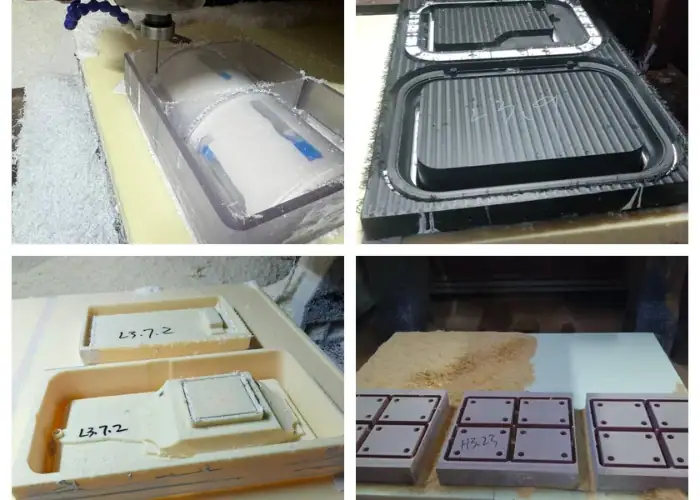
Material Review Before Prototype Manufacturing
Before manufacturing begins, the material decision should be reviewed together with the CAD model, prototype objective, critical dimensions, surface requirements, and expected working conditions. At UForProto, we work with engineering plastics across CNC plastic machining, 3D printing, vacuum casting, surface finishing, and prototype assembly. Reviewing these requirements together helps determine whether the selected material and manufacturing route can provide the feedback the customer needs, rather than treating material selection as an isolated decision.
Conclusion
Selecting the right material for a plastic prototype starts with understanding what the prototype needs to prove. Mechanical requirements, operating conditions, manufacturing compatibility, and development stage should guide the decision before individual plastics are compared. The goal is not to select the strongest or most advanced material, but to use a material that makes the prototype results relevant to the next engineering decision. When these priorities are defined clearly, material selection becomes simpler and the prototype can provide more useful feedback before the project moves forward.
FAQs
1. What Is the Best Material for a Plastic Prototype?
There is no single best material for every prototype. The right choice depends on what the prototype needs to validate, including appearance, assembly, mechanical performance, environmental exposure, and manufacturing requirements.
2. How Do I Choose Between ABS and Polycarbonate?
ABS is commonly used when balanced machinability, appearance, and general product development are priorities. PC becomes more relevant when higher toughness and impact resistance are important to the prototype test.
3. Does CNC Plastic Machining Require Specific Materials?
Many engineering plastics can be CNC machined, including ABS, PC, PMMA, POM, Nylon, PP, and PPS. However, material behaviour, geometry, tolerance, and surface requirements can affect the machining strategy and final result.
4. Should Prototype Material Match the Final Production Material?
Not always. Early prototypes may use a different material when the goal is appearance, layout, or basic assembly. A closer material match becomes more important when later testing depends on mechanical, thermal, chemical, or other material-specific behaviour.
5. What Material Is Suitable for Functional Prototypes?
The answer depends on the function being tested. PC may support impact evaluation, POM may suit precision movement, Nylon may be useful for repeated mechanical loading, and PPS may be considered for demanding thermal or chemical conditions.
6. How Does Material Selection Affect Plastic Prototyping?
Material selection affects how accurately a prototype represents mechanical behaviour, assembly conditions, environmental exposure, and other product requirements. Choosing according to the validation objective makes prototype feedback more useful for subsequent development decisions.