
Choosing Dimensionally Stable Plastics is important when a CNC-machined prototype must maintain critical dimensions, fits, or assembly relationships. However, material selection alone does not determine the final result. In our plastic prototyping work, we also evaluate stock condition, part geometry, material removal, machining heat, workholding, and inspection conditions because CNC machining changes the physical state of the original plastic stock.
What Does Dimensional Stability Mean for a CNC-Machined Plastic Part?
For an engineer selecting a plastic, dimensional stability usually describes how well a material maintains its dimensions when temperature, moisture, load, or other conditions change. For us as a prototype manufacturer, the question goes further: can the finished CNC part maintain the dimensions and relationships that actually matter after machining and inspection?
This distinction matters because a plastic can have favorable dimensional-stability properties while the machined component still changes. A thick POM block, for example, may be relatively stable in its supplied condition, but machining it into a large thin-walled housing removes much of the original material and stiffness. The material has not changed its name or basic properties, yet the physical condition of the part is now completely different.
For this reason, I do not treat Dimensionally Stable Plastics as a guarantee of finished-part accuracy. Material stability provides a better foundation, while the final dimensional result depends on how that material interacts with the geometry and the complete CNC plastic machining process. This is especially important for prototypes with deep cavities, thin walls, long unsupported surfaces, precision interfaces, or substantial material removal.
What Makes Some Plastics More Dimensionally Stable Than Others?
Before considering machining strategy, engineers still need to understand why different plastics behave differently. Thermal expansion, moisture absorption, internal stress, and long-term loading all influence dimensional stability. These properties help narrow the material choice, but their importance depends on the environment and engineering purpose of the prototype rather than on a single material ranking.
Temperature is one of the first factors we consider. Engineering plastics generally expand and contract more noticeably with temperature than metals, although the amount varies significantly between materials. This means a precision plastic part machined while warm may not have exactly the same dimensions after it reaches a stable room temperature. The same principle applies when a component will eventually operate in an environment substantially warmer or colder than the inspection room.
Moisture introduces a different type of dimensional change. Materials such as POM generally absorb relatively little moisture, while polyamides can respond more noticeably to environmental humidity. For a PA component with critical fits, the relevant question is therefore not simply whether the CNC machine can hold the drawing tolerance; the material condition during inspection and the condition expected during use may also need to be understood.
Internal stress adds another variable. Plastic stock can contain residual stress from its previous manufacturing history, and removing material may disturb that existing balance. This is why dimensional stability should not be judged from datasheet properties alone. Material properties tell us how the plastic tends to behave, while the actual prototype geometry and manufacturing process determine how those characteristics appear in the finished part.
Which Dimensionally Stable Plastics Are Commonly Used for CNC Machining?
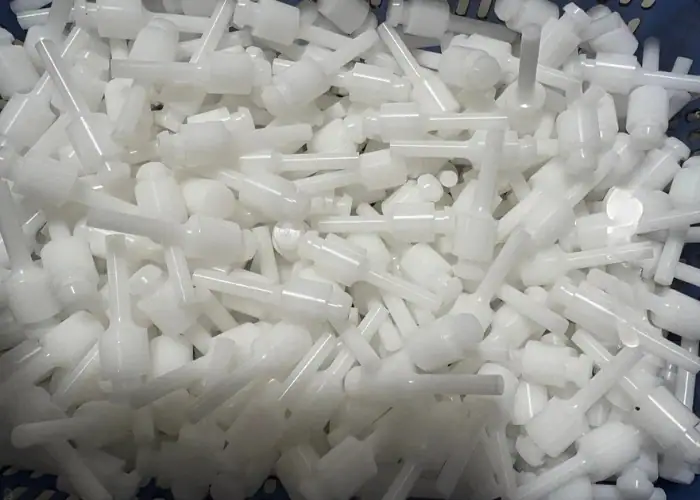
There is no single best dimensionally stable plastic for every CNC project. We compare materials according to the dimensional requirement, operating environment, mechanical function, and prototype objective. For a broader material-selection framework, see our guide on how to select the right material for your plastic prototype.POM, PET, PPS, PC, ABS, and PA can all be useful engineering materials, but they should not be treated as interchangeable simply because they can all be CNC machined.
| Plastic | Dimensional Stability | Moisture Response | Temperature Stability | CNC Machining Consideration | Typical Prototype Use |
| POM / Acetal | High | Low | Moderate | Consistent machinability; suitable for precision features | Mechanical and precision parts |
| PET | High | Low | Moderate | Good stability for precision machining | Structural and precision components |
| PPS | Very High | Very Low | High | Useful where temperature and chemical stability matter | High-performance engineering parts |
| PC | Moderate | Low | Moderate | Machining heat and surface condition require control | Tough housings and transparent prototypes |
| ABS | Moderate | Low | Moderate | Practical general-purpose CNC material | Housings and general prototypes |
| PA / Nylon | Environment-dependent | Higher | Moderate | Moisture condition deserves greater attention | Wear and structural components |
POM is frequently considered when precision mechanical features, low moisture absorption, and consistent machining behavior are important. PPS becomes more relevant when dimensional requirements must coexist with higher temperatures or demanding chemical environments. PET can also provide good dimensional consistency for precision components. These materials demonstrate why Dimensionally Stable Plastics should be selected around the actual operating requirement rather than simply choosing the material with the strongest datasheet value.
PC and ABS are useful in many plastic prototyping projects even though they are not normally selected only because of dimensional stability. Their toughness, appearance, availability, and suitability for housings often make them practical choices. Nylon provides excellent engineering properties for many wear and structural applications, but its response to moisture means dimensional requirements should be evaluated together with environmental conditions.
The table is therefore not a ranking from “best” to “worst.” The correct material is the one whose dimensional behavior, mechanical properties, manufacturing characteristics, and environmental response collectively support the part being developed.
What Is the Most Dimensionally Stable Plastic?
There is no single most dimensionally stable plastic for every application. PPS offers very low moisture absorption and strong dimensional stability at elevated temperatures, while POM is often a practical choice for precision CNC-machined parts because of its low moisture absorption, stiffness, and consistent machinability. PET can also provide good dimensional stability for precision components.
The best choice depends on operating temperature, moisture exposure, mechanical requirements, geometry, and tolerance. For CNC plastic parts, we therefore evaluate both the material properties and how the finished geometry will respond to machining.
Why Can Dimensionally Stable Plastics Still Move After CNC Machining?
This is where material selection becomes a manufacturing problem. CNC machining removes the material that originally supported the stock and changes how internal stress is distributed through the remaining geometry. The greater and more uneven the material removal, the more important it becomes to consider how the part will behave as it approaches its final shape.
Consider a thick plastic block that must become a housing with a deep internal cavity. Before machining, the stock has relatively uniform material distribution. After the cavity is roughed out, one side may contain a broad thin wall while other regions remain much thicker. The finished geometry now responds to residual stress, machining forces, and temperature differently from the original blank. Even when the selected material is known for good dimensional stability, the new structure may require a different machining strategy.
In our CNC plastic machining work, we therefore consider the amount and distribution of material removal before deciding the finishing sequence. For parts with substantial machining, it can be more appropriate to establish the main geometry through roughing first, retain controlled finishing allowance, allow the workpiece to reach a more representative condition, and then complete the dimensions and surfaces that matter most.
Balanced material removal can also matter when geometry allows it. Removing a large volume from only one side of a stock can produce a different result from gradually establishing the structure through a planned sequence. This does not mean every plastic part requires multiple roughing stages or stress-relief treatment. The correct process depends on material condition, geometry, removal volume, wall thickness, and actual tolerance requirements.
This is an important distinction for engineers: a dimensionally stable material can reduce one source of dimensional variation, but it cannot eliminate the effects created by the geometry and manufacturing process.
How Machining Heat and Workholding Affect Final Dimensions
Material removal is only one part of dimensional control. During machining, cutting heat changes the local temperature of the plastic, while workholding determines how the part is supported against machining forces. Both factors can temporarily change the condition in which a part is machined or measured, particularly when the geometry becomes thin or flexible.
Because engineering plastics do not dissipate heat in the same way as metals, tool condition, cutting parameters, chip evacuation, and cooling strategy need to work together. A sharp cutting edge removes material more cleanly and helps reduce unnecessary heat generation, while effective chip evacuation prevents hot chips from remaining around the cutting zone. The objective is not simply to keep the machine cool; it is to avoid introducing a thermal condition that makes final dimensions difficult to judge consistently.
Workholding presents a different challenge. A flexible plastic panel can be clamped flat and machined accurately while held in the fixture, yet recover toward another shape after the clamps are released. Increasing clamping pressure may make machining appear more stable, but it can also hide the natural condition of the workpiece. This is why fixture design for precision plastic parts should provide distributed support without relying on excessive force to create the desired geometry.
For Dimensionally Stable Plastics, good workholding and thermal control therefore protect the advantages provided by the material. They do not improve the intrinsic dimensional stability of the plastic; instead, they prevent the machining process from introducing avoidable dimensional variation into an otherwise suitable material.
Part Geometry Can Matter as Much as the Plastic Grade
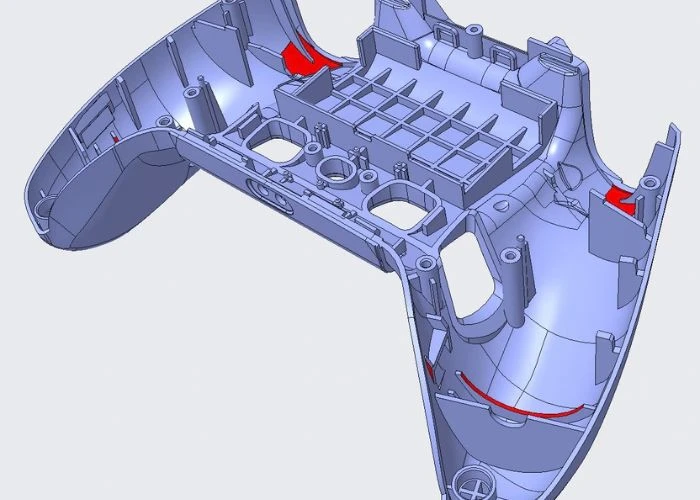
Two CNC parts manufactured from the same material can behave very differently after machining. A compact, thick, relatively symmetrical POM component and a large POM housing with deep pockets, thin walls, and long unsupported surfaces share the same material properties, but they do not share the same structural stability or machining conditions.
Large pockets and deep cavities remove material that previously contributed to rigidity. Thin walls become more sensitive to cutting forces and clamping. Long unsupported surfaces increase the distance between the cutting zone and stable support. Highly asymmetric geometry can also create very different material conditions on opposite sides of the same part. These characteristics change how we plan the machining process even when the material itself remains unchanged.
Our response is not to apply one fixed “stable plastic machining” procedure to every part. We evaluate where the geometry will lose stiffness, where major material removal occurs, which surfaces require support, and which dimensions should be completed only after the main structural changes have taken place. For some components this may require only a straightforward CNC process; for others, roughing and finishing need to be separated more deliberately.
This is also why I would not select Dimensionally Stable Plastics from a material datasheet without considering the CAD model. The material determines the starting behavior, but the finished geometry determines much of the manufacturing challenge.
Tight Tolerances Should Follow the Functional Requirement
Dimensionally stable materials are often associated with tight-tolerance applications, but selecting a stable plastic does not mean every dimension should automatically receive the tightest possible tolerance. In prototype manufacturing, we obtain better engineering value when dimensional control is concentrated on the features that determine fit, alignment, movement, or assembly.
For example, a machined housing may contain bearing locations, mounting holes, mating interfaces, controlled gaps, and datum-related features that directly affect assembly. These requirements deserve clear identification because they influence tooling, machining sequence, inspection, and sometimes the material itself. A hidden cosmetic boundary or non-mating internal surface may not need the same dimensional control simply because it appears on the same drawing.
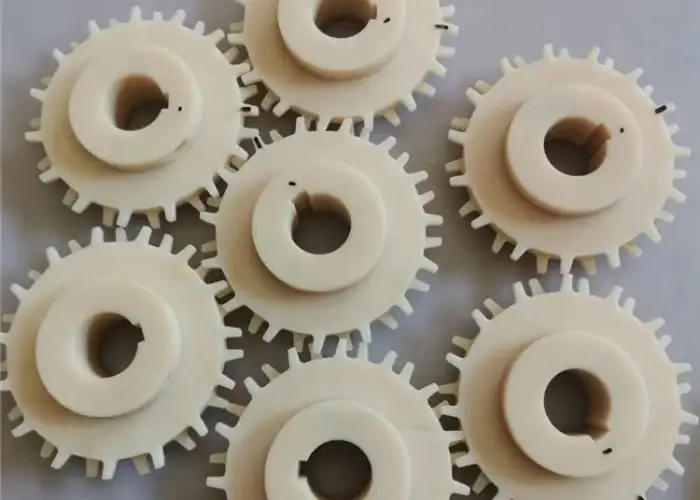
This distinction becomes particularly important in plastic prototyping, where the prototype usually exists to answer specific engineering questions. If the project is intended to verify an assembly relationship, we need to protect the dimensions that define that relationship. Applying unnecessary tight tolerances everywhere can increase machining and inspection effort without making the prototype more useful.
The better approach is therefore to combine Dimensionally Stable Plastics with clearly defined functional requirements. Material stability and tolerance specification should support each other rather than being treated as two independent decisions.
Measurement Conditions Are Part of Dimensional Stability
A precision plastic part is not finished from a dimensional perspective simply because the cutter has completed its last toolpath. Temperature, fixture condition, and, for some materials, moisture state can influence what an inspection result represents. The measurement condition should therefore be appropriate to the dimensional requirement being evaluated.
If a part is inspected immediately after a heat-generating machining operation, its temperature may still differ from the stable inspection environment. For a large or precision component, allowing the part to reach a more stable thermal condition before confirming critical dimensions can provide a more meaningful result. The same principle applies to flexible parts that were strongly supported during machining: important geometry may need to be checked after the workpiece is released rather than only while it remains constrained.
Moisture-sensitive materials add another consideration. If environmental moisture can materially affect a critical dimension, the condition under which the part is measured should be understood together with the condition expected during use. This is not necessary for every prototype, but it becomes increasingly relevant as tolerance requirements become tighter and environmental sensitivity becomes greater.
For us, inspection is therefore part of the manufacturing strategy rather than a separate final activity. The purpose is not simply to record numbers but to confirm that the dimensions being reported represent the condition that matters to the customer’s engineering evaluation.
How UForProto Approaches Dimensionally Stable Plastic Parts
As a direct plastic prototype manufacturer, we evaluate dimensional stability as a combination of material behavior and manufacturing conditions. When a project contains critical fits or precision interfaces, we review not only the specified plastic but also how the CAD geometry, material removal, machining sequence, workholding, temperature, and inspection conditions may influence the finished part.
If the material has already been specified, our focus is on developing a CNC plastic machining route that respects its characteristics. For a thick and structurally stable component, this may be relatively straightforward. For a thin-walled or heavily machined part, we may need to plan support, roughing, finishing allowance, critical-feature timing, and final inspection more carefully so that the machining process does not unnecessarily reduce the dimensional advantages of the selected material.
If the material has not yet been finalized, we prefer to understand the engineering requirement before discussing alternatives. Critical dimensions, operating temperature, moisture exposure, mechanical function, appearance requirements, and prototype objectives provide much more useful context than simply asking for the “most dimensionally stable plastic.” This allows the material and manufacturing process to be evaluated together.
Our plastic prototyping capabilities include CNC plastic machining, surface finishing, and complete prototype assembly. By keeping these manufacturing stages connected, we can evaluate dimensional requirements not only at the individual-part level but also in relation to the finished prototype where assembly interfaces and final fit become important.
Conclusion
Choosing Dimensionally Stable Plastics is only the starting point for reliable CNC plastic parts. Final dimensional performance also depends on how the material is machined, supported, and evaluated after production. For engineers, the key is to match material stability with the actual geometry, tolerance, and application requirements rather than relying on material data alone. If you are developing a precision plastic prototype, you can send us your CAD files and project requirements for manufacturing review and quotation.
FAQs
1.What Are the Most Dimensionally Stable Plastics for CNC Machining?
POM, PET, and PPS are commonly considered when dimensional stability is important, but there is no universal best choice. Temperature, moisture, mechanical requirements, geometry, and manufacturing conditions all affect which plastic is most appropriate. For prototype projects, we prefer to evaluate these requirements together rather than selecting a material from dimensional-stability data alone.
2.Is POM a Dimensionally Stable Plastic?
Yes. POM is widely used for precision machined components because of its relatively low moisture absorption, good stiffness, and consistent machinability. However, a POM part with thin walls, deep cavities, or highly uneven material removal can still change after machining, so the geometry and CNC strategy remain important.
3.Why Does Nylon Change Dimensions After Machining?
Nylon can absorb moisture from its environment, and this can affect its dimensions. Machining may also release stress or create thin sections that respond differently from the original stock. For precision nylon components, both the manufacturing process and the moisture condition relevant to inspection or use should therefore be considered.
4.Can Dimensionally Stable Plastics Hold Tight CNC Tolerances?
They can support tight-tolerance machining, but achievable and maintainable tolerances depend on more than the material. Part size, wall thickness, geometry, material removal, thermal conditions, workholding, and inspection method all influence the final result. Critical tolerances should therefore be defined around actual functional requirements.
5.Does Annealing Improve the Dimensional Stability of Machined Plastics?
Annealing or stress-relief treatment can be useful for certain materials and heavily machined components because it may reduce residual stress before final machining. However, it should not be treated as a mandatory step for every CNC plastic part. The need depends on the plastic, stock condition, geometry, material removal, and tolerance requirement.
6.Why Can Plastic Parts Measure Differently After CNC Machining?
Temperature change, fixture release, residual-stress redistribution, and moisture response can all affect the condition of a machined plastic part. For critical dimensions, measurement should represent the finished part as closely as practical rather than relying only on readings taken immediately after machining or while the workpiece remains strongly constrained.