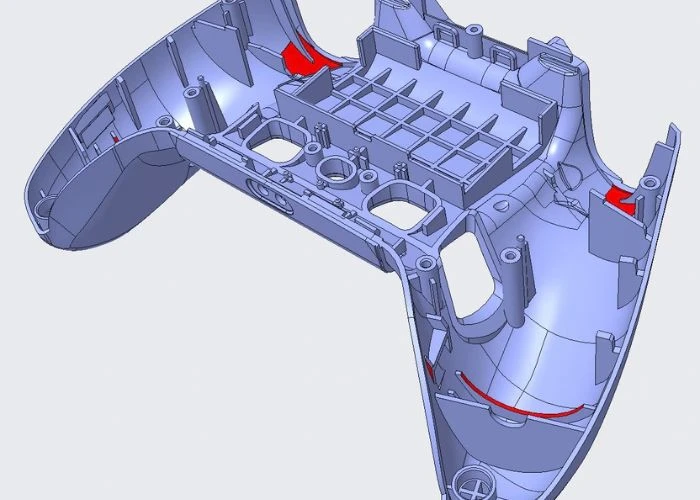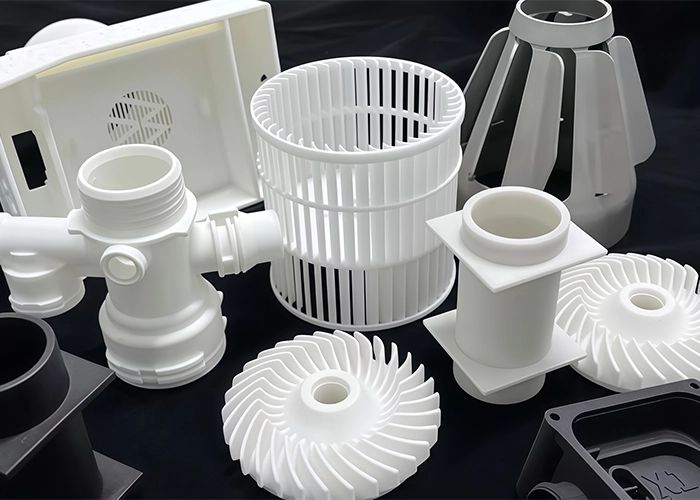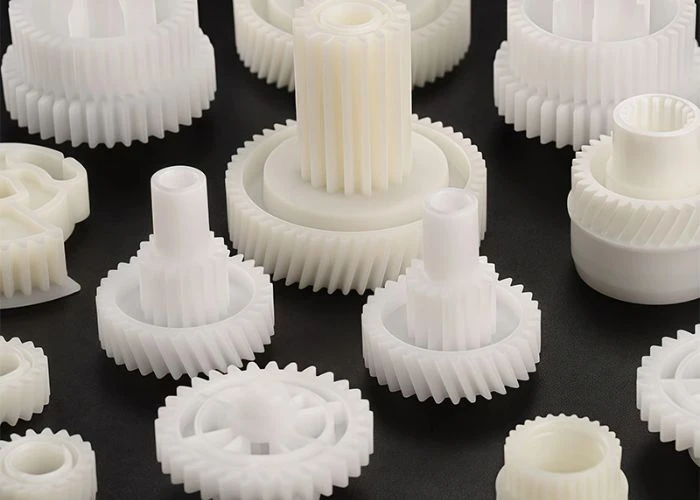

A plastic cover prototype for devices turns a CAD design into a physical part that engineers can see, handle, and assemble. For medical devices, beauty equipment, consumer electronics, personal care appliances, and industrial equipment, the cover often influences both product appearance and how surrounding components fit together. At UForProto, we focus on manufacturing these plastic prototypes through CNC machining, 3D printing, vacuum casting, surface finishing, and prototype assembly, helping development teams evaluate the physical design before moving to the next stage.
What Should a Plastic Cover Prototype Demonstrate?
A plastic cover should not be evaluated only by whether its dimensions match the CAD file. Once installed on a physical prototype, its proportions, surrounding gaps, openings, mounting positions, and surface appearance become much easier to assess. These physical details are often difficult to judge accurately from a screen alone.
Appearance and Product Proportion
For visible device covers, shape and proportion influence how the finished product is perceived. Curved transitions, edge relationships, thickness changes, and the way multiple exterior parts meet can look different in a physical prototype than in a rendering.
A manufactured cover allows engineers and designers to inspect these details at actual scale. This is particularly useful for beauty devices, medical equipment, consumer electronics, and personal care appliances where exterior appearance is an important part of the product design.
Fit and Internal Clearance
A device cover normally works together with frames, brackets, buttons, displays, internal structures, or other prototype parts. Even when individual components are manufactured correctly, their relationship may only become clear during physical assembly.
Trial fitting can reveal whether the cover interferes with neighboring parts, whether sufficient clearance exists, and whether the exterior components align as expected. At UForProto, trial assembly can be performed when the project includes mating prototype components, allowing fit-related issues to be identified before delivery.
Why Do Openings Matter in a Plastic Device Cover?
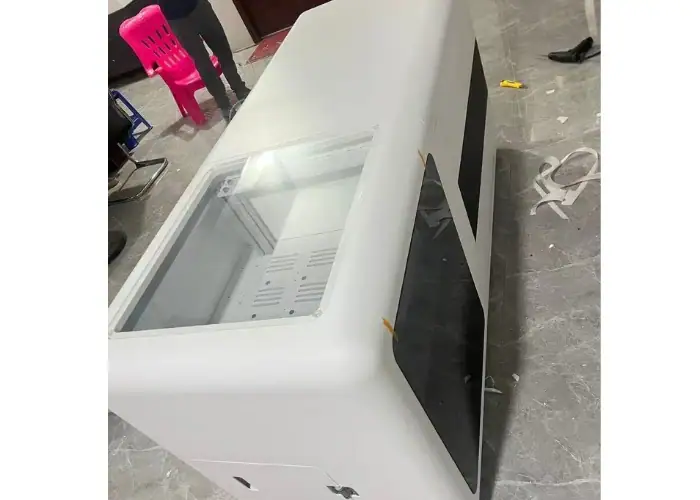
Device covers commonly contain openings for buttons, displays, connectors, cameras, sensors, cables, or other components. The prototype stage provides an opportunity to physically check their position, size, edge condition, and relationship with mating parts rather than relying entirely on the digital model.
Checking Position and Physical Fit
A small positional difference may become visually obvious when a display window, button opening, or connector cutout is placed next to another component. Physical prototypes make these relationships easier to review at full scale.
For CNC-machined covers, openings can be produced directly from the CAD geometry, including slots, windows, mounting holes, and other accessible features. After machining, the part can be cleaned, finished, and trial-fitted with related prototype components when required.
Why Is Assembly Important for Plastic Device Covers?
A cover rarely works as an isolated part. Its practical quality becomes clearer when it is fitted together with other components. Assembly allows development teams to observe gaps, alignment, mounting positions, and the overall relationship between the cover and the rest of the prototype.
Gaps, Flushness, and Alignment
For an appearance-sensitive device, even small differences between adjoining covers can affect the visual result. Engineers may need to inspect whether neighboring surfaces remain flush, whether gaps appear consistent, and whether visible edges align correctly.
These issues are especially relevant when a prototype contains several exterior plastic components. Trial assembly provides a physical reference for identifying fit conditions that may not be obvious when individual parts are inspected separately.
Mounting Features and Prototype Assembly
Screw bosses, mounting holes, locating features, and snap-fit structures determine how a plastic cover connects to other prototype components. At the prototype stage, the objective is not only to inspect these features individually but also to see how they behave during actual assembly.
UForProto can perform prototype assembly for projects that require multiple manufactured components to be combined. Our focus is on part fit, assembly condition, and the physical completeness of the prototype. Product-level functional testing is subsequently carried out by the customer’s engineering team according to its own requirements.
How Does Surface Finishing Affect a Plastic Cover Prototype?
For many device covers, machining or printing is only the first stage. Color, gloss, texture, logos, and other visual details can significantly change how the cover looks once it becomes part of a complete prototype. Surface finishing therefore helps teams evaluate a more representative appearance.
Color, Gloss, and Texture
Painting can be used to create different colors and visual finishes on prototype covers. Depending on the project, a matte, semi-gloss, or gloss appearance may change how surfaces, curves, and transitions are perceived.
The underlying part preparation is also important. Deburring, sanding, polishing, and other manual finishing steps help prepare the surface before painting or other finishing operations, particularly on appearance prototypes.
Logos and Visual Details
Device covers often contain brand logos, symbols, operating marks, or decorative details. Depending on the design requirements and plastic substrate, processes such as screen printing, UV coating, painting, or electroplating can be incorporated into prototype finishing.
Adding these details to the physical cover makes it easier to review how graphics, colors, and surface effects work together with the overall device appearance.
Which Manufacturing Processes Are Used for Plastic Cover Prototypes?
The right process depends on the cover geometry, material requirement, development stage, quantity, and expected appearance. Rather than treating one method as suitable for every project, UForProto uses CNC plastic machining, SLA/SLS 3D printing, and vacuum casting according to the requirements of each prototype.
CNC Plastic Machining
CNC machining is particularly useful when a device cover needs to be made directly from engineering plastic. ABS, PC, PMMA, POM, PP, PA66, PPS and other machinable plastics can be considered according to project requirements. It is well suited to covers where actual material characteristics, machined openings, and physical assembly are important.
SLA and SLS 3D Printing
3D printing is useful for fast design iterations and geometries that may be less convenient to machine. SLA is often used when surface detail and appearance are important, while SLS can support more durable nylon prototype parts.
Vacuum Casting
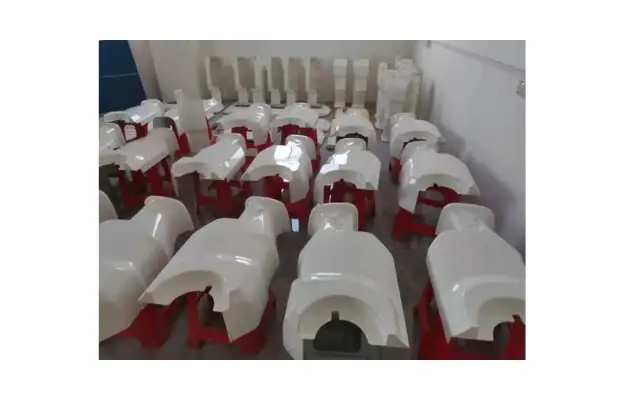
When several similar plastic covers are required, vacuum casting can reproduce multiple parts from a master pattern using silicone molds. It can be useful for small quantities of appearance or assembly prototypes without requiring production tooling.
What Should Engineers Check Before Approving a Plastic Cover Prototype?
Before a prototype cover is considered complete, it should be reviewed as part of the physical device rather than only as an individual part. The exact acceptance criteria depend on the project, but several practical areas can be checked during prototype review and trial assembly.
| Check Item | What to Evaluate |
| Appearance | Shape, proportion and visible transitions |
| Fit | Relationship with mating prototype parts |
| Openings | Position and fit of required openings |
| Clearance | Available space around related components |
| Assembly | Gaps, alignment and mounting condition |
| Surface | Color, gloss, texture and visual details |
| Completeness | Whether required prototype components are assembled correctly |
This review does not replace the customer’s own product testing. Instead, it helps provide a physically complete prototype that the customer’s engineering team can use for subsequent evaluation.
How Does UForProto Manufacture Plastic Cover Prototypes for Devices?
At UForProto, a plastic cover project can move through several coordinated manufacturing stages rather than being treated as an isolated part-making task. Our workflow connects engineering review, manufacturing, manual finishing, surface treatment, inspection, and assembly when the project requires a more complete prototype.
The process typically begins with the customer’s 3D CAD data, material requirements, surface specifications, quantity, and assembly information. Our engineers review these requirements and determine whether CNC machining, 3D printing, vacuum casting, or a combination of processes is appropriate.
After manufacturing, parts can undergo deburring, sanding, polishing, painting, screen printing, UV coating, electroplating, or other applicable finishing operations. When multiple prototype components are included, we can also perform trial fitting and complete prototype assembly before inspection and delivery.
Operating under an ISO 9001:2015 quality management system, UForProto supports fast plastic prototype development with quotations available in as little as 4 hours and selected prototype projects delivered in 1–3 days.
Conclusion
A plastic cover prototype for devices is most useful when it allows a development team to evaluate more than the shape of an individual part. Appearance, openings, fit, internal clearance, surface quality, and assembly all influence how the cover works as part of a physical device. By combining appropriate prototype manufacturing with manual finishing, surface treatment, and trial assembly, engineers can review these characteristics on a real part rather than relying only on CAD data. The objective is not to reproduce every product-level test during manufacturing, but to provide a well-made, physically complete prototype that gives the customer’s engineering team a reliable basis for subsequent evaluation and continued product development.
FAQs
1. What is a plastic cover prototype for devices?
A plastic cover prototype is a physical version of a device’s exterior cover manufactured before the product design is finalized. It can be used to review appearance, openings, fit, assembly, and surface details.
2. Which materials can be used for plastic device cover prototypes?
Common options include ABS, PC, PMMA, PP and other engineering plastics. The appropriate material depends on the prototype’s manufacturing process, appearance requirements, and intended evaluation.
3. Can a plastic cover prototype be used for functional evaluation?
Yes. A properly manufactured and assembled cover can support the customer’s engineering team in subsequent fit and product evaluation. UForProto focuses on prototype manufacturing and assembly rather than complete product-level functional testing.
4. Can painting and screen printing be applied to plastic cover prototypes?
Yes. Depending on the plastic material and appearance requirements, prototype covers can receive painting, screen printing, UV coating, electroplating, and other suitable surface finishing processes.
5. Can UForProto assemble a plastic cover with other prototype components?
Yes. When a project includes multiple prototype components, UForProto can provide trial fitting and complete prototype assembly, helping confirm the physical fit and assembly condition before delivery.