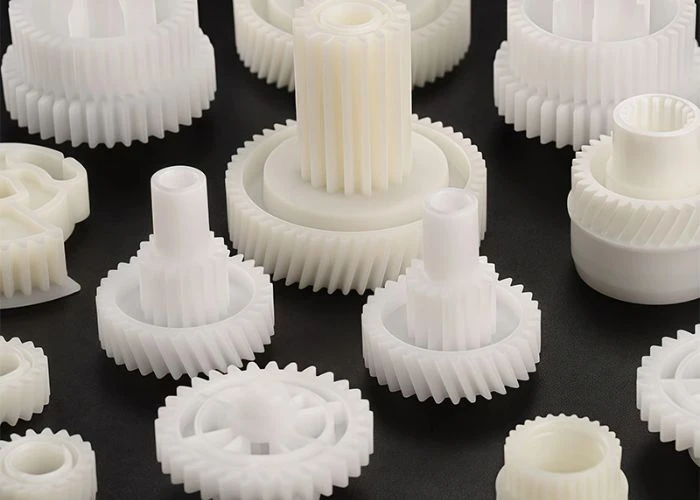

When engineers discuss plastic prototyping, accuracy is often one of the first specifications mentioned. However, the most successful prototype is not always the one with the tightest tolerance. In many development projects, the real objective is to obtain useful engineering feedback, verify product assumptions, and support the next stage of decision-making. Understanding how much accuracy is actually required can help teams improve efficiency while avoiding unnecessary manufacturing complexity.
Prototype Accuracy Is a Project Requirement, Not a Fixed Number
Prototype accuracy is often discussed as a manufacturing capability, but from a product development perspective, it should be viewed as a project requirement. Different development stages require different levels of dimensional control, and the most suitable accuracy level depends on the purpose of the prototype.
Accuracy Expectations Across Development Stages
Prototype requirements change throughout the product development cycle. Early-stage models may focus on evaluating overall product concepts, while later prototypes often support engineering reviews, assembly preparation, or customer demonstrations.
Because development objectives evolve over time, the dimensional expectations applied to a prototype may also change as the project progresses.
Prototype Accuracy and Engineering Decisions
The purpose of a prototype is to help a team reduce uncertainty. Engineers use prototypes to evaluate ideas, review structures, assess feasibility, and identify potential improvements before larger investments are made.
For this reason, prototype accuracy should support engineering decisions rather than become an isolated target.
Why Doesn’t Every Prototype Need the Same Accuracy?
Not every project benefits from applying the same dimensional standard to every feature. Some prototypes are intended to evaluate form, while others focus on functionality or system integration.
Applying identical accuracy requirements everywhere can increase manufacturing effort without necessarily improving the value of the prototype itself.
Understanding Critical and Non-Critical Dimensions
Within any prototype, some dimensions directly influence performance while others simply define shape or appearance. Separating these two categories helps engineers establish more practical manufacturing requirements.
Function-Related Features
Certain prototype features directly influence how components fit, move, or interact with each other. These areas often play a greater role during engineering evaluation.
Examples may include locating features, fastening interfaces, mounting points, and movement-related structures.
Reference Dimensions Within a Prototype
Many dimensions exist primarily to define the overall geometry of a product. These dimensions remain important, but they may not affect prototype performance in the same way as functional features.
Understanding this distinction allows manufacturing resources to be allocated more effectively.
Where Does Accuracy Create the Most Value?
The greatest value often comes from applying dimensional control where it contributes directly to prototype objectives.
Rather than increasing accuracy everywhere, engineers can often achieve better results by concentrating attention on the features that matter most.
The Relationship Between Accuracy, Cost, and Lead Time
Prototype manufacturing always involves balancing multiple project priorities. Accuracy is only one part of the equation. Manufacturing cost, delivery speed, inspection requirements, and development objectives all influence how a prototype should be produced. Understanding these trade-offs helps teams make more practical decisions during product development.
Manufacturing Effort and Tolerance Requirements
As dimensional requirements become more demanding, manufacturing complexity often increases as well. Additional setup verification, machining adjustments, and process monitoring may be required to maintain tighter dimensional control.
For plastic prototyping projects, the key question is whether the additional manufacturing effort contributes meaningful value to the project.
Inspection Activities During Prototype Manufacturing
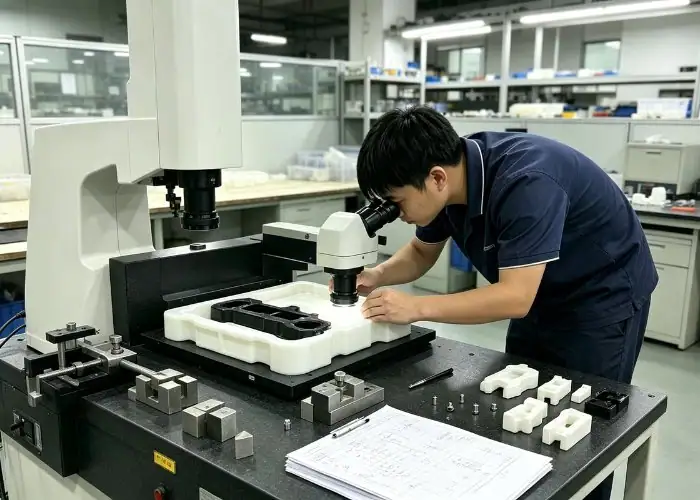
Dimensional control does not end when machining is completed. Verification activities are an important part of prototype manufacturing and help confirm that parts meet project expectations.
As prototype requirements become more detailed, measurement and verification activities often become more extensive as well.
When Does Additional Accuracy Stop Creating Value?
There is a point where increasing dimensional control no longer improves the usefulness of a prototype. If a tighter requirement does not change engineering conclusions or influence product decisions, additional effort may produce limited practical benefit.
In many projects, the objective is not to achieve the smallest possible tolerance but to obtain information that helps move development forward.
Accuracy Expectations Across Different Plastic Prototyping Methods
Different manufacturing technologies are developed for different purposes. Rather than comparing them only by dimensional performance, engineers should evaluate how each process supports the goals of the prototype project.
CNC Plastic Machining
CNC plastic machining is widely used for engineering prototypes that require real plastic materials, structural evaluation, or assembly-related features.
Because the process removes material directly from solid plastic stock, it provides stable dimensional consistency across many engineering plastic materials.
For many product development teams, CNC plastic machining remains one of the most common choices for functional plastic prototyping.
SLA 3D Printing
SLA 3D printing is frequently used when development speed and design flexibility are priorities. It allows engineers to review designs quickly and update models with minimal preparation time.
This makes the process particularly useful during concept development and early-stage product evaluation.
Vacuum Casting
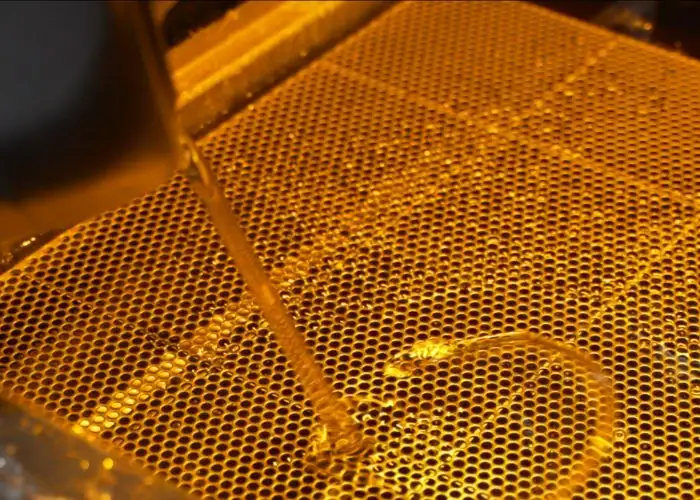
Vacuum casting is commonly applied when projects require multiple sets of similar plastic prototype parts after a design becomes relatively stable.
The process allows repeated prototype production without moving immediately to production tooling, making it useful for evaluation programs, customer reviews, and low-volume prototype builds.
Comparison Table
| Prototype Method | Typical Development Focus | Common Application |
| CNC Plastic Machining | Functional evaluation and engineering prototypes | Structural parts, assembly features, engineering plastic components |
| SLA 3D Printing | Design iteration and concept review | Appearance models, concept verification, early-stage development |
| Vacuum Casting | Repeated prototype production | Multiple prototype units, low-volume plastic parts |
Defining Accuracy Requirements Before Manufacturing Begins
Many prototype challenges can be avoided before production starts. Clear project information often helps manufacturers understand where dimensional control is most important and where flexibility is acceptable. A well-defined requirement usually produces better prototype results than simply requesting tighter tolerances across an entire part.
Identifying Critical Features Early
Every prototype contains features that contribute more directly to project objectives. These may be related to assembly interfaces, mounting locations, movement paths, sealing areas, or other product-specific requirements.
Identifying these features early allows manufacturing attention to be directed toward the areas that influence prototype performance the most.
Prototype Purpose Definition
The same prototype can be evaluated differently depending on its intended use. A prototype prepared for internal engineering review may not require the same priorities as one intended for customer presentations or product demonstrations.
When manufacturing teams understand how the prototype will be used, they can align production activities more effectively with project expectations.
Aligning Manufacturing Requirements With Project Goals
Prototype manufacturing is influenced by multiple factors, including accuracy, delivery schedule, finishing requirements, assembly expectations, and budget considerations.
Looking at these requirements together helps create a manufacturing strategy that supports the project as a whole rather than optimizing a single parameter.
Practical Accuracy Support From UForProto
At UForProto, I do not approach every project with the assumption that tighter tolerances automatically create a better prototype. Instead, I focus on understanding the product, the development stage, and the purpose of the prototype before recommending a manufacturing approach.
Functional Plastic Prototype Manufacturing
Many projects require prototypes that represent real engineering conditions rather than laboratory-level dimensional targets. CNC plastic machining allows functional plastic components to be produced using materials commonly used in product development.
This supports practical evaluation while maintaining manufacturing efficiency.
Project-Oriented Plastic Prototyping
Different projects require different prototype strategies. Some customers focus on engineering reviews, while others prioritize appearance approval, customer presentations, internal testing, or assembly preparation.
By understanding these objectives first, I can recommend a manufacturing approach that better supports the intended outcome of the project.
Balancing Accuracy, Lead Time, and Manufacturing Efficiency
Prototype development rarely focuses on a single objective. Engineering teams often need to balance dimensional expectations, project schedules, manufacturing budgets, and evaluation requirements simultaneously.
A practical manufacturing plan considers all of these factors together, helping teams obtain useful prototype feedback without introducing unnecessary complexity.
Conclusion
Plastic prototype accuracy is most effective when it supports the purpose of the project rather than becoming a goal by itself. In many plastic prototyping programs, the most valuable prototype is not the one with the smallest tolerance, but the one that provides reliable information for engineering decisions, product reviews, and development planning. By identifying critical features, understanding prototype objectives, and selecting suitable manufacturing methods, teams can obtain meaningful prototype results while maintaining a practical balance between cost, lead time, and manufacturing efficiency. As a plastic prototype manufacturer, UForProto supports customers with CNC plastic machining, vacuum casting, 3D printing, surface finishing, and prototype build services, helping transform product concepts into effective physical prototypes.
FAQs
1. What accuracy is typically required for a plastic prototype?
The required accuracy depends on the purpose of the prototype. Engineering reviews, assembly evaluations, appearance assessments, and customer presentations may all require different levels of dimensional control.
2. Does every plastic prototype require tight tolerances?
No. Many prototype projects achieve their objectives without requiring the tightest possible dimensional control. The appropriate level of accuracy should be based on project needs.
3. How does prototype accuracy affect manufacturing cost?
Higher dimensional requirements may increase machining effort, inspection activities, and overall manufacturing complexity, which can influence project cost.
4. Which prototype features usually require the most attention?
Features related to assembly, positioning, fastening, sealing, movement, or component interaction are often among the most important areas during prototype evaluation.
5. How does CNC plastic machining support prototype accuracy?
CNC plastic machining provides stable dimensional consistency across many engineering plastics, making it suitable for functional prototype development and engineering evaluation.
6. What information should be shared before prototype manufacturing begins?
Providing CAD files, project objectives, assembly requirements, surface finishing expectations, and prototype quantities helps establish a more suitable manufacturing plan.