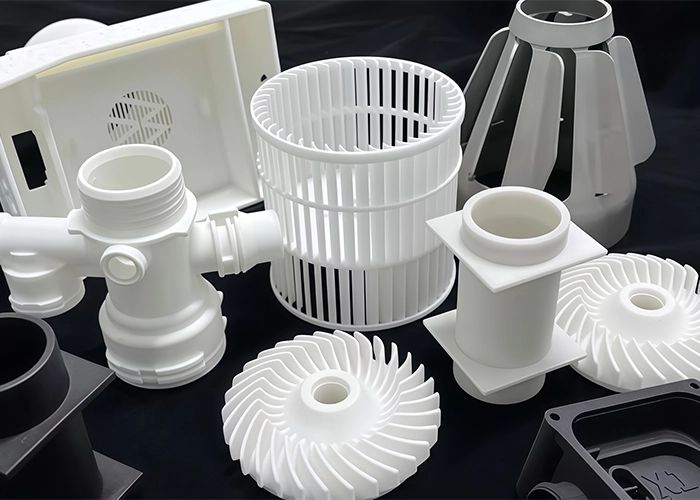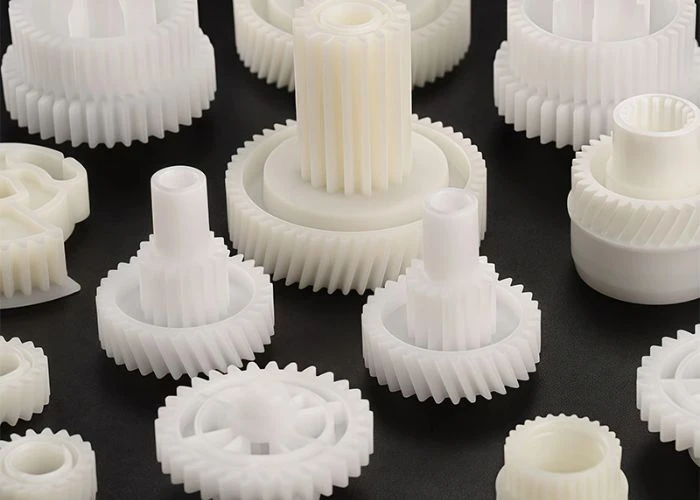

Medical device enclosure development often requires several physical prototypes before the product is ready for production. Both 3D printing and CNC plastic machining can turn CAD data into plastic housing parts, but they provide different types of engineering information. In this article, I compare the two processes according to development stage, enclosure requirements, finishing expectations, and the decisions each prototype needs to support.
Medical Device Enclosure Prototypes and Manufacturing Objectives
A medical device enclosure is not simply a cover around internal components. It connects the product’s exterior form with mounting structures, openings, controls, connectors, and assembly features. Before choosing a manufacturing process, I first clarify what the current prototype must demonstrate.
Enclosure Fit and Assembly Evaluation
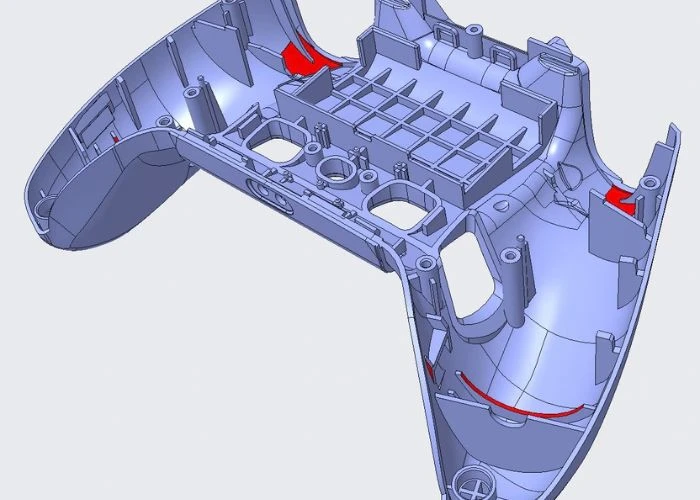
Medical device housings are often divided into front covers, rear covers, panels, access sections, and internal supports. Each component may appear correct when reviewed separately, but the complete enclosure depends on how these parts meet after assembly.
A physical prototype allows engineers to inspect joint alignment, fastening positions, opening relationships, and the sequence required to bring the housing together. These observations are difficult to judge from isolated CAD views alone.
Internal Space Validation
The enclosure must provide usable space for customer-defined electronic modules, connectors, displays, purchased components, and mounting hardware. A design may contain enough theoretical volume while still creating difficult installation access or interference during assembly.
A physical housing prototype helps the engineering team review component clearance, access direction, cable or connector openings, and the relationship between internal supports and exterior panels.
Physical Prototypes and Product Assessment
CAD data defines geometry, but it cannot fully communicate the physical scale and handling characteristics of a medical product. Once the enclosure is manufactured, engineers can assess how the complete product occupies space and how users interact with its exterior surfaces.
This evaluation may include access to controls, visibility of display areas, handling comfort, panel separation, and the appearance of the complete assembled housing.
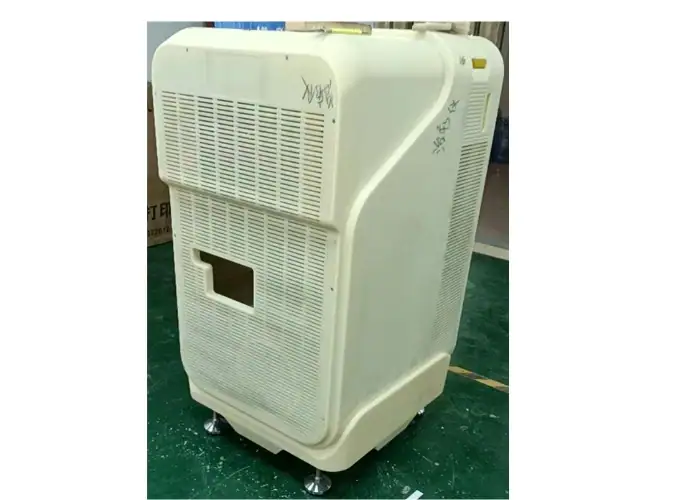
Comparing 3D Printing and CNC Machining for Medical Device Enclosures
The right manufacturing process depends on what engineers need to learn from the enclosure prototype. I do not treat 3D printing and CNC plastic machining as interchangeable methods. Each process is more useful when its characteristics match the current development objective.
Comparison Table
| Comparison Area | 3D Printing | CNC Plastic Machining |
| Typical Development Stage | Early concept and rapid design review | Engineering evaluation and later-stage prototypes |
| Manufacturing Approach | Builds the part layer by layer | Removes material from solid plastic stock |
| Design Changes | Convenient for frequent revisions | Better suited to relatively stable CAD data |
| Plastic Condition | Printing materials and process-dependent properties | Machinable engineering plastic stock |
| Housing Geometry | Useful for complex internal shapes and quick models | Suitable for machinable housings, panels, and structural parts |
| Surface Preparation | May require support removal, sanding, and coating | Often followed by deburring, sanding, painting, or polishing |
| Main Prototype Value | Fast physical feedback during early development | More representative engineering and assembly evaluation |
3D Printing for Early Development Stages
3D printing is particularly useful while the enclosure layout is still changing. Engineers can manufacture updated housing sections without creating CNC programs and machining plans for every early revision.
For medical device enclosure projects, SLA may support exterior form reviews and detailed appearance models, while SLS can be considered for selected nylon components that require a more durable printed condition.
Its main advantage is development flexibility. The process allows the engineering team to check general size, component arrangement, and design direction before the enclosure requirements become stable.
CNC Plastic Machining for Engineering Evaluation
CNC plastic machining becomes more relevant when the housing CAD data is sufficiently developed and the team needs a physical part made from machinable engineering plastic.
At UForProto, this process is commonly considered for medical device housing panels, covers, mounting sections, interface components, and assembly-related plastic parts. Our typical plastic prototype accuracy is approximately ±0.1–0.2 mm, depending on part size, geometry, material, and feature conditions.
The value of CNC machining is not extreme precision. Its value is producing practical engineering plastic parts that can support housing evaluation, surface finishing, and mechanical prototype assembly.
Selecting the Right Process for Different Development Stages
The most suitable manufacturing process often depends on the current stage of product development rather than on the process itself. During early enclosure development, engineering teams may prioritize rapid design updates, layout reviews, and concept evaluation. In these situations, 3D printing can provide physical prototypes quickly and support frequent design changes.
As the enclosure design becomes more stable, prototype priorities often shift toward engineering evaluation, assembly reviews, surface finishing, and overall product assessment. At this stage, CNC plastic machining can provide engineering plastic components that more closely represent the intended prototype configuration.
In many medical device projects, both technologies may be used during different stages of development. Rather than viewing 3D printing and CNC plastic machining as competing processes, it is often more effective to treat them as complementary tools that support different prototype objectives throughout the product development cycle.
Prototype Iteration During Medical Device Enclosure Development
Medical device enclosure development rarely ends with a single prototype. As engineering teams review physical parts, new observations often lead to adjustments in structure, assembly details, openings, user interaction areas, or manufacturing considerations. Prototype iteration helps transform an initial concept into a more mature product solution.
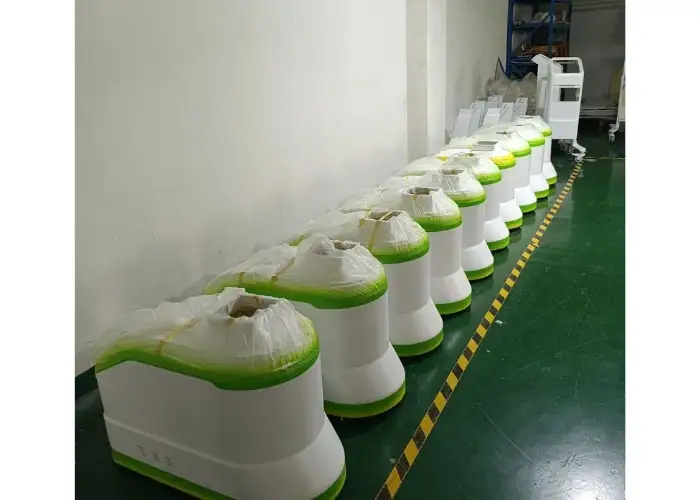
Assembly Refinement Through Physical Prototypes
Many assembly-related improvements are easier to identify after the enclosure is physically built. Engineers can evaluate fastening methods, panel connections, installation sequences, and access areas that may not be obvious during CAD review.
As a result, enclosure prototypes often become an important tool for improving assembly efficiency before production planning begins.
Detail Optimization Throughout Development
As a project progresses, small enclosure details frequently receive additional attention. Button openings, connector access points, display windows, ventilation features, labeling areas, and interface locations may all be refined during successive prototype stages.
These changes are often small individually, but together they contribute significantly to the overall usability and appearance of the product.
Improving Production Readiness Through Iteration
Prototype iterations help reduce uncertainty before production tooling is considered. Each review cycle allows the team to verify previous decisions and identify areas that may require further improvement.
By the time enclosure development reaches a stable stage, the engineering team typically has a much clearer understanding of product requirements, assembly needs, and manufacturing expectations.
Evaluating Prototype Readiness Before the Next Development Stage
Before moving from one development stage to the next, engineering teams often review whether the enclosure prototype has achieved its intended objective. The goal is not to create a perfect prototype, but to determine whether sufficient information has been gathered to support the next decision.
Development Objective Review
Every prototype should be evaluated against the objective that justified its creation. If the enclosure was intended to verify assembly, the review should focus on assembly outcomes rather than unrelated details.
This approach helps development teams remain focused on the purpose of each prototype stage.
Remaining Issues and Development Priorities
Most prototypes reveal opportunities for improvement. The key question is whether those issues prevent the project from progressing or whether they can be addressed in future development stages.
Prioritizing the most important findings helps teams allocate resources more effectively.
Is the Prototype Ready for the Next Engineering Decision?
A prototype does not need to answer every question before development continues. Instead, it should provide enough confidence for the next engineering decision.
When that objective has been achieved, the prototype has successfully completed its role within the development process.
UForProto Support for Medical Device Housing Prototypes
Medical device housing projects often require a combination of plastic prototyping capabilities rather than a single manufacturing process. Different development stages may involve concept models, engineering prototypes, cosmetic housings, or complete prototype builds.
Project Review Before Manufacturing
Before manufacturing begins, I review the enclosure structure, intended prototype objective, material expectations, finishing requirements, and assembly scope.
This helps establish a manufacturing route that aligns with the current stage of product development.
Manufacturing Process Selection
Different enclosure components may benefit from different manufacturing methods. Depending on project requirements, CNC plastic machining, SLA printing, SLS printing, or vacuum casting may all play a role within the same development program.
Selecting the appropriate process for each stage often improves development efficiency and prototype value.
Complete Prototype Build Support
In addition to manufacturing individual plastic parts, many medical device projects require enclosure assembly and complete prototype preparation.
At UForProto, prototype build services help combine machined, printed, and purchased components into a complete physical product for evaluation and review.
Conclusion
Medical device enclosure prototypes support important development decisions throughout product development. Both 3D printing and CNC plastic machining can contribute valuable prototype feedback, but their strengths often serve different stages of the project. By selecting a manufacturing process that matches the current development objective, engineering teams can evaluate enclosure designs more effectively and reduce uncertainty before moving toward production.
FAQ
1. Is 3D printing or CNC machining better for medical device enclosure prototypes?
The better process depends on the development objective. 3D printing is often used for rapid concept evaluation and early-stage design reviews, while CNC plastic machining is commonly selected for engineering evaluation, assembly reviews, and functional prototype development.
2. When should engineers move from 3D printing to CNC plastic machining?
Many teams begin with 3D printing while designs are changing frequently. As enclosure structures become more stable and additional engineering validation is required, CNC plastic machining often becomes the next step.
3. Can CNC plastic machining be used for cosmetic medical device housings?
Yes. CNC plastic machining is frequently used to manufacture medical device housing prototypes that later receive sanding, painting, texture simulation, silk screening, or other cosmetic finishing processes.
4. Why do medical device enclosure projects often require multiple prototype iterations?
Each prototype stage provides new information about assembly, usability, structure, manufacturing feasibility, and product appearance. These findings often lead to refinements before the next development stage.
5. Can one medical device project use both 3D printing and CNC machining?
Yes. Many development programs use 3D printing and CNC plastic machining together. Different components or development stages may benefit from different manufacturing approaches.
6. What information should be prepared before requesting a medical device enclosure prototype?
Providing CAD files, expected quantities, material preferences, surface finishing requirements, assembly expectations, and project objectives helps establish a more suitable prototype manufacturing plan.