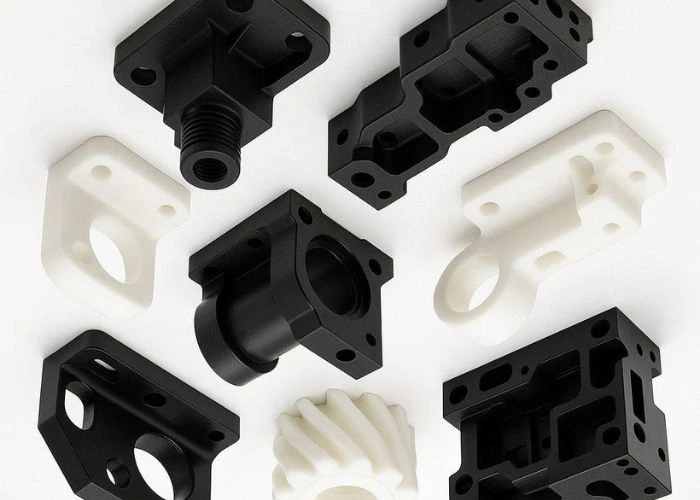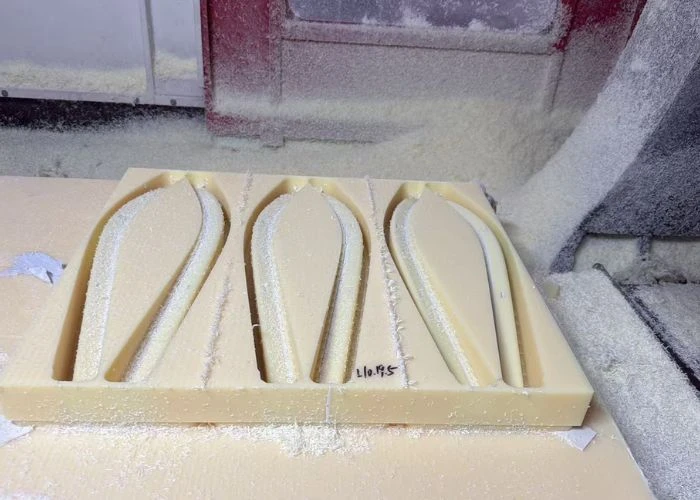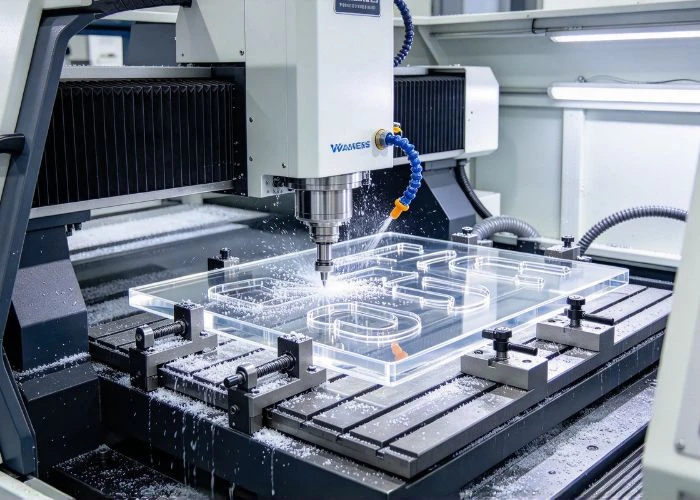

ABS vs PP is more than a comparison of two thermoplastics. In plastic prototyping, I can manufacture the same CAD geometry in ABS and PP and still obtain noticeably different physical behavior. Rigidity, flexibility, weight, surface condition, and response during assembly can all change what engineers learn from the prototype. Instead of asking which plastic is universally better, I compare whether ABS or PP reproduces the behavior that the current prototype is intended to evaluate. That distinction becomes especially important when physical test results will influence the next design decision.
ABS vs PP: Why Can the Same CAD Produce a Different Prototype?
A CAD model defines geometry, but it does not by itself define how a physical part bends, feels, moves, or responds to load. When I change a prototype from ABS to PP without changing the CAD, I preserve the nominal geometry while changing important aspects of its physical behavior.
ABS is an amorphous thermoplastic characterized by useful stiffness, toughness, impact resistance, and machinability. PP behaves differently: it has lower density, greater flexibility, very low moisture absorption, and generally stronger chemical resistance. These are not merely datasheet differences; they can become visible when the materials are turned into the same physical geometry.
Geometry Can Match While Mechanical Response Does Not
Suppose I manufacture the same enclosure with the same wall thickness, ribs, screw positions, and openings in both materials. Dimensional inspection may show that both parts match the CAD, yet pressing the center of the housing can produce different deflection. A flexible feature may also require a different force to move.
This is why I separate geometric accuracy from behavioral equivalence. A dimensionally accurate substitute material can still provide misleading evidence if the development question depends on stiffness, flexibility, weight, surface interaction, or another material-dependent characteristic.
ABS vs PP Comparison: Which Differences Can Change Prototype Results?
For prototype development, I prefer comparing ABS and PP according to the physical questions the prototype needs to answer. Published material values remain useful, but they should not be treated as universal constants because grade, geometry, thickness, and manufacturing route can all influence the final behavior.
| Prototype Question | ABS | PP | Why It Matters |
| How rigid does the housing feel? | Generally more rigid | Generally more flexible | Changes structural feel and wall deflection |
| How does a flexible feature move? | More limited flexibility | Better suited to flexing behavior | Can change snap and flexible-feature evaluation |
| How heavy does the part feel? | Higher density | Lower density | Affects handheld and portable product evaluation |
| How easily can the surface be bonded or finished? | Generally easier | More difficult due to low surface energy | Changes cosmetic and bonding strategy |
| How does the material handle moisture? | Low absorption | Very low absorption | Can matter in wet-use environments |
| Does chemical exposure matter? | Application-dependent | Generally stronger resistance | Can change environmental validation |
| What does CNC machining provide? | Actual ABS stock and machined geometry | Actual PP stock and machined geometry | Material behavior remains different even with equivalent CAD |
The table is most useful as a screening tool rather than a final material specification. If one of these behaviors becomes critical to acceptance, I check the actual grade and relevant supplier data rather than assuming that every ABS or PP grade behaves identically.
How Do Rigidity and Flexibility Change What Engineers Learn From the Prototype?
Rigidity is one of the clearest ways an ABS vs PP comparison becomes physically meaningful. A prototype is not viewed only on a drawing; engineers press it, hold it, assemble it, fasten it, and interact with it. Material stiffness can therefore influence how the design itself is perceived.
Consider a thin enclosure wall that appears acceptable in ABS but flexes noticeably when produced in PP. The immediate reaction may be to increase wall thickness or add ribs. Before changing the CAD, however, I would ask whether PP is the intended material and whether that flexibility represents the behavior the product is actually expected to have.
A Flexible Material Can Change How a Geometry Problem Appears
Material flexibility can also amplify movement that would be less noticeable in a stiffer prototype. A cover may shift under hand pressure, a long wall may bow, or a bracket may deflect when a component is installed. The visible symptom does not automatically identify the root cause.
I therefore look at the relationship between geometry and material response before recommending a design revision. If the final product is intended to use PP, the flexible response may reveal something important about the design. If PP was only a temporary substitute for ABS, the same observation may have much less relevance.
How Can ABS vs PP Change Snap Fits and Flexible Features?
Snap features make the material difference especially visible because their operation depends on both geometry and deformation. A CAD model can accurately define a snap arm, hook, engagement depth, and surrounding clearance, but the material determines how that feature responds while it is being deflected.
PP is widely valued for flexibility and fatigue resistance, which is one reason it appears in flexible and repeated-bending applications. ABS provides a different balance of stiffness and toughness. Protolabs similarly distinguishes PP by its flexibility while describing ABS as the stiffer material.
If the production design contains a PP flexible feature, an ABS prototype may reproduce its dimensions without reproducing its insertion force, deflection, return behavior, or repeated movement. The prototype would still be useful for checking space and geometry, but I would not treat its mechanical response as equivalent to PP.
For this reason, I first identify what the snap prototype is intended to verify. If the question concerns only whether the hook reaches the correct location, material substitution may be acceptable. If the question concerns how the snap actually operates, material behavior becomes part of the test.
Can ABS vs PP Change How Assembly Fit Is Perceived?
Assembly fit is normally discussed in terms of dimensions and clearances, but material compliance can also influence the physical experience of putting parts together. I therefore avoid using the simple observation that “the parts assembled” as proof that ABS and PP validated the same assembly condition.
A PP component can locally flex while it passes over another feature or enters a constrained opening. A more rigid ABS version of the same nominal geometry may resist that movement. Conversely, a flexible PP housing may temporarily accommodate a relationship that becomes more noticeable when the design is produced in a stiffer material.
This does not replace dimensional inspection. It means that I interpret assembly observations together with the material used to create the prototype. If the final product requires a particular material response, successful assembly in a substitute material is useful evidence, but not necessarily complete evidence.
ABS vs PP for Cosmetic Prototype Evaluation
Appearance evaluation introduces a different ABS vs PP question. Here I am less concerned with which material has the higher mechanical value and more concerned with whether the substrate can support the intended cosmetic result without hiding a material-related requirement that the project still needs to validate.
ABS is generally practical for machining followed by bonding or cosmetic preparation. Ensinger identifies good machinability and relatively straightforward adhesive bonding among ABS characteristics. PP presents a different surface challenge because it is a low-surface-energy polyolefin.
3M specifically classifies polypropylene among low-surface-energy plastics that are difficult to bond because conventional adhesives have more difficulty wetting the surface. This does not mean PP cannot be bonded or finished; it means surface preparation and the selected coating or adhesive system become more important.
If the prototype exists mainly to present final color, gloss, graphics, or overall appearance, ABS may sometimes provide a practical cosmetic build route. If the project is specifically evaluating adhesion or finishing on production-intent PP, replacing PP with ABS would remove the very surface condition the prototype needs to investigate.
Does Part Weight Change When a Prototype Moves From ABS to PP?
Weight is easy to overlook when the CAD geometry remains unchanged. PP has a lower density than ABS; Protolabs specifically identifies PP as a lightweight material with density below 1 g/ml, while a representative Ensinger ABS stock grade is listed around 1.02 g/cm³. Exact values still depend on grade.
For a small stationary bracket, that difference may have little influence on the development decision. For a handheld enclosure, portable product, personal-care device, or larger housing, however, material density can change perceived weight, balance, and handling.
I therefore decide whether mass is part of the prototype question before treating ABS and PP as interchangeable. If the team is only reviewing external dimensions, a weight difference may be acceptable. If product handling is being evaluated, the same substitution can change the evidence the prototype provides.
When Can ABS Substitute for PP in a Prototype—and When Can It Not?
Material substitution can save time or solve stock-availability problems, but I only consider it after identifying what the prototype is supposed to prove. The useful question is not whether ABS and PP can ever replace each other; it is whether the changed material affects the particular evidence the team needs.
Substitution Can Work When the Question Is Mainly Geometric
If I am checking an overall envelope, opening position, basic component packaging, visual proportion, or whether a component occupies the intended space, exact material behavior may not control the result. A substitute material can sometimes answer that limited question effectively.
The limitation should remain explicit. An ABS representation of a future PP part can confirm where a feature is located without proving how that feature will flex. Keeping those two conclusions separate prevents a geometric prototype from being interpreted as a material-validation prototype.
Substitution Fails When Material Behavior Is the Test
I avoid substituting ABS for PP when the project needs to evaluate PP-specific flexibility, repeated bending, lightweight behavior, chemical exposure, low-surface-energy bonding, or another material-dependent characteristic. The substitute would change the condition being tested.
The reverse is equally important. If the team needs to evaluate the structural feel, surface preparation, or another characteristic of actual ABS, a PP part cannot provide equivalent evidence simply because its dimensions match.
What Does CNC Plastic Machining Reveal—and What Does It Not?
Using actual ABS or PP stock in CNC plastic machining can make a prototype materially more representative than using an unrelated substitute. It gives me a physical part made from the intended polymer family while maintaining controlled machined geometry. However, actual material does not automatically make the prototype identical to a future production part.
Ensinger supplies ABS in sheet and rod forms specifically suitable for machining, and Protolabs lists both ABS and PP as materials compatible with CNC machining. This makes CNC useful when actual thermoplastic behavior is relevant to the physical build.
At the same time, I do not assume that a CNC-machined ABS or PP prototype reproduces every characteristic of a future molded component. Material grade, stock-production history, molded orientation, wall geometry, residual stress, and the final production process can create differences even within the same polymer family.
For me, the value of machining actual ABS or PP is therefore specific: it improves the relevance of material-dependent prototype observations. It does not remove the need to understand which conclusions can reasonably be transferred to the future production part.
How Should Engineers Read an ABS vs PP Prototype Test Result?
A physical observation is useful, but it is not automatically a design conclusion. When an ABS vs PP prototype behaves differently, I first identify whether the difference comes from the intended material behavior, the geometry, the manufacturing condition, or an interaction among these factors.
If a PP housing flexes more than the ABS version, for example, simply recording “PP failed” provides very little engineering value. If PP is the intended final material, the observation may instead show that the current wall geometry does not provide the required stiffness. The material may be behaving exactly as expected while exposing a design relationship that needs review.
The opposite situation is equally important. If an ABS snap does not reproduce the flexibility expected from a future PP feature, changing the snap geometry immediately could solve a problem created by the prototype material rather than by the product design.
I therefore connect each observation back to the condition the prototype was intended to represent. This helps prevent a material difference from being misdiagnosed as a dimensional or design failure and makes the physical prototype more useful for the next engineering decision.
How We Review ABS vs PP Requirements Before Prototype Manufacturing
At UForProto, I treat material selection as part of the prototype requirement rather than simply a material name on the RFQ. As a direct plastic prototype manufacturer rather than a trading company, we review what the physical build needs to demonstrate before deciding whether actual ABS, actual PP, or a clearly identified substitute is appropriate.
For an ABS vs PP project, I want to know whether the material is mandatory or preferred, which behavior needs to be representative, whether a specific commercial grade is required, and what condition will be evaluated after machining and finishing. These answers prevent unnecessary material restrictions while protecting requirements that genuinely affect the test result.
Our plastic prototyping work can include CNC plastic machining, surface finishing, inspection, and prototype assembly according to the project. When actual material behavior matters, I make that distinction clear rather than presenting an ABS-like or PP-like material as equivalent to the specified thermoplastic.
For manufacturing review, engineers and purchasing teams can send the CAD model, drawing, material or grade requirement, quantity, critical dimensions, finish requirements, mating-part information, and the behavior the prototype needs to evaluate. That context allows us to quote the physical build against the actual development requirement rather than the material name alone.
Conclusion
Choosing between ABS vs PP for a prototype depends on what the physical part needs to demonstrate. Material choice becomes especially important when the prototype must reproduce behavior that will influence an engineering decision. By defining those requirements before manufacturing, engineers can obtain more meaningful prototype results and avoid drawing conclusions from an unsuitable material. As a direct plastic prototype manufacturer, UForProto can review your CAD, drawings, material requirements, and project objectives and provide a quotation for your prototype parts.
FAQs
1. What Is the Main Difference Between ABS and PP in a Physical Prototype?
ABS generally provides a more rigid physical response, while PP is lighter and more flexible. In a prototype, this difference can affect wall deflection, handling, flexible features, assembly behavior, and how engineers interpret the same CAD geometry.
2. Can the Same CAD Model Behave Differently in ABS and PP?
Yes. CAD controls nominal geometry, but material properties influence how the physical part responds. Two dimensionally accurate parts can therefore flex, move, feel, or respond to assembly differently when one is ABS and the other is PP.
3. Can ABS Be Used to Test a PP Snap Fit?
ABS can sometimes verify the location and basic geometry of a future PP snap, but I would not use its mechanical response as direct evidence of how the PP feature will flex or return. If snap behavior itself is being tested, the material needs to represent that behavior appropriately.
4. Does PP Feel More Flexible Than ABS in a Prototype Housing?
Generally, yes. PP is commonly characterized by greater flexibility, while ABS offers greater stiffness. The actual response still depends on grade, wall thickness, ribs, geometry, and load condition, so I evaluate the finished physical part rather than relying on the material name alone.
5. Can CNC-Machined ABS or PP Represent the Final Production Part?
It can represent actual thermoplastic material and precise physical geometry, which is valuable for many prototype evaluations. However, CNC-machined stock and a future molded part can differ because of grade, processing history, orientation, geometry, and production method. I therefore define which characteristics the prototype is expected to represent.
6. When Is Material Substitution Acceptable for an ABS or PP Prototype?
I consider substitution when the prototype question is mainly geometric, such as overall size, component packaging, visual proportion, or basic feature location. If the test depends on flexibility, weight, snap behavior, chemical resistance, bonding, or another material-specific response, I prefer a material that represents that behavior.