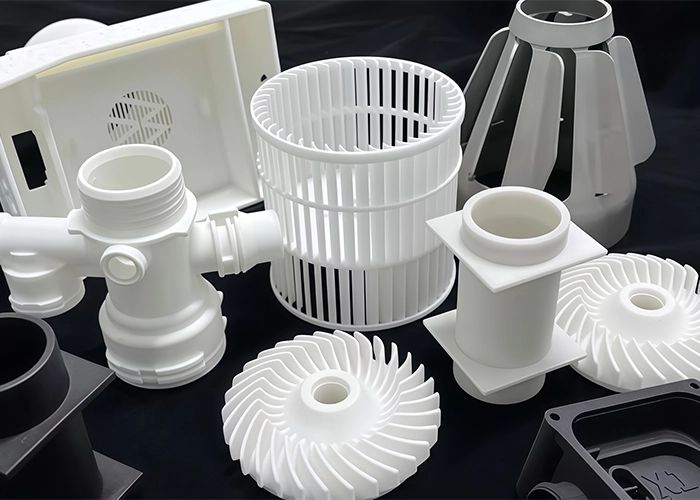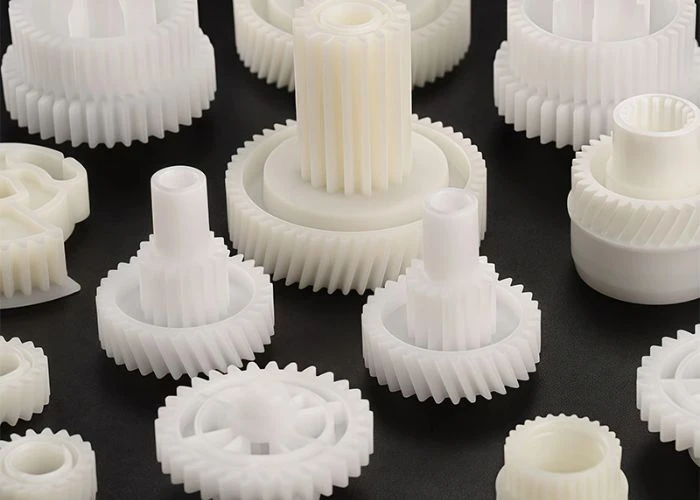

Choosing a prototype material is not about finding the strongest engineering plastic. It is about selecting a material that provides the information needed to move a project forward. In many plastic prototyping projects, ABS remains one of the most practical choices because it supports design evaluation, assembly verification, and efficient CNC plastic machining without adding unnecessary complexity during early product development.
Start with the Prototype Objective, Not the Material
Successful prototype projects rarely begin by asking which material to use. Instead, engineers first define what the prototype is expected to verify. Once the development objective becomes clear, material selection becomes much more straightforward. This approach not only improves engineering decisions but also avoids selecting materials that add unnecessary cost or complexity.
Defining What the Prototype Needs to Validate
Every prototype exists for a reason. Some are built to confirm product appearance, while others focus on assembly, structural design, or basic functional testing. Identifying these objectives before selecting a material allows the prototype to provide more meaningful engineering feedback throughout development.
How Do Validation Objectives Influence Material Selection?
When engineers understand what information the prototype must deliver, choosing a material becomes an engineering decision instead of a material comparison. Rather than asking which plastic has the highest performance, teams can focus on selecting a material that best supports the current stage of development.
Why Does ABS Often Fit Early Prototype Development?
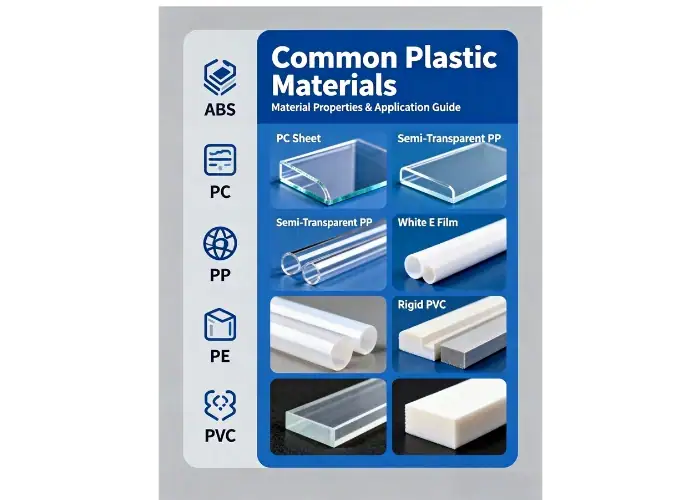
Early-stage prototypes usually aim to reduce uncertainty rather than replicate every production condition. ABS provides a practical balance between manufacturability, appearance, assembly evaluation, and prototype efficiency, making it well suited for many early development activities.
Choosing Materials Based on Prototype Objectives
| Prototype Objective | Material Priority | Why ABS Is Often Selected |
| Appearance validation | Surface quality | Easy to finish and review |
| Assembly verification | Dimensional consistency | Supports reliable fitting and assembly |
| Early functional testing | Balanced performance | Provides practical engineering feedback |
| Design review | Fast prototype production | Compatible with CNC plastic machining |
When Is ABS the Right Choice for Plastic Prototyping?
ABS has remained one of the most widely used materials in plastic prototyping because it performs well across many stages of product development. Rather than offering the highest mechanical performance, it provides a balanced combination of machinability, appearance, dimensional stability, and manufacturing efficiency. For many prototype projects, these advantages are more valuable than selecting the highest-performance engineering plastic.
Appearance Models and Design Reviews
Appearance is often one of the first aspects evaluated during product development. Before investing in production tooling, engineering teams need physical prototypes that accurately represent the product’s shape, proportions, and overall design language. ABS machines cleanly, accepts a wide range of surface finishing processes, and produces high-quality appearance models suitable for customer presentations and design reviews.
Assembly Verification and Functional Evaluation
Many prototype projects focus on confirming whether individual parts fit together correctly before production begins. ABS prototypes allow engineers to evaluate housing alignment, fastening features, internal component installation, and basic functional performance while reducing the risk of costly design changes later in development. For products that require multiple design revisions, ABS also supports efficient prototype updates throughout the validation process.
When Should Another Engineering Plastic Be Considered?
Although ABS is an excellent material for many prototype applications, it is not always the best representation of the final production material. When a project requires higher impact strength, superior wear resistance, chemical resistance, or long-term performance under elevated temperatures, engineering plastics such as PC, POM, PA, or PPS may provide more representative validation results. The right material should always reflect the objective of the current development stage rather than simply offering the highest specification.
ABS vs. Engineering Plastics in Prototype Development
| Development Requirement | ABS | Engineering Plastics (PC / POM / PA / PPS) |
| Appearance validation | ★★★★★ | ★★★★☆ |
| Assembly verification | ★★★★★ | ★★★★★ |
| CNC plastic machining | ★★★★★ | ★★★★☆ |
| Surface finishing | ★★★★★ | ★★★☆☆ |
| High-temperature testing | ★★☆☆☆ | ★★★★★ |
| Wear resistance evaluation | ★★☆☆☆ | ★★★★★ |
| Production material simulation | ★★★☆☆ | ★★★★★ |
How Does ABS Support Faster Prototype Validation?
Speed in product development is measured by more than manufacturing lead time. The real objective is to reduce uncertainty and enable engineering teams to make informed decisions as early as possible. ABS supports this process by allowing prototypes to be manufactured efficiently, evaluated quickly, and refined through multiple design iterations before production tooling is committed.
Reducing Design Uncertainty Earlier
Every prototype answers a series of engineering questions. Can the enclosure be assembled correctly? Does the product size feel appropriate? Are internal components positioned as expected? Instead of relying solely on CAD models, ABS prototypes provide physical evidence that allows engineers to evaluate these questions under real-world conditions. Earlier feedback reduces the risk of costly design changes later in development.
Supporting Faster Design Iterations
Product development is rarely completed after a single prototype. Most projects require several rounds of refinement as engineers improve structural details, optimise assembly features, or adjust product appearance. Because ABS is easy to machine and finish, updated prototypes can be produced efficiently, allowing development teams to validate improvements without significantly extending project schedules.
Why Does ABS Work Well with CNC Plastic Machining?
CNC plastic machining remains one of the most reliable manufacturing methods for high-precision plastic prototypes. ABS machines consistently, produces stable dimensional accuracy, and supports a wide range of secondary finishing processes, making it an ideal material for appearance models, functional prototypes, and complete prototype assemblies. This combination of machining efficiency and predictable quality allows engineering teams to move from CAD data to physical validation with minimal delay.
How Does UForProto Support ABS Prototype Projects?
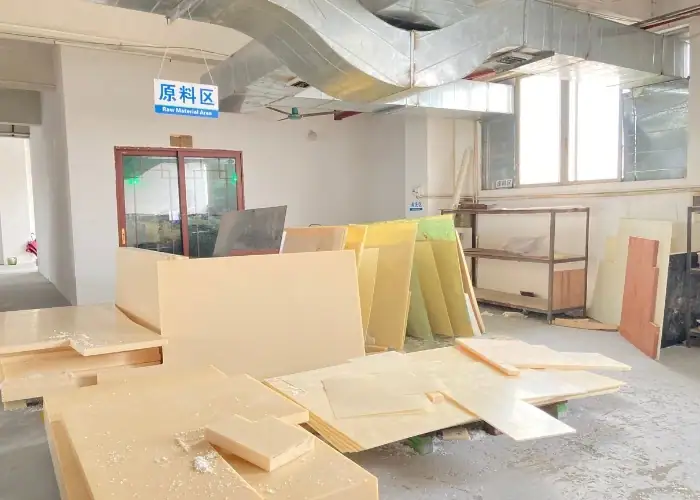
Successful ABS prototypes depend on more than accurate machining. Material selection, manufacturing methods, surface finishing, and assembly all influence how effectively a prototype supports product development. At UForProto, we tailor our manufacturing approach to the validation objectives of each project, helping customers obtain prototypes that provide reliable engineering feedback while maintaining fast turnaround times.
Precision Manufacturing for ABS Prototypes
Our capabilities include CNC plastic machining, vacuum casting, and a variety of surface finishing processes to support prototypes at different stages of development. Whether the objective is appearance validation, assembly testing, or functional evaluation, we manufacture ABS prototypes that closely match engineering requirements while maintaining consistent quality.
From Individual Parts to Complete Prototype Assembly
Many development projects require more than individual plastic components. Complete prototype assembly allows engineering teams to evaluate product fit, structural integrity, and overall appearance before production begins. By combining precision manufacturing with prototype assembly services, we help customers review products as complete systems and identify improvement opportunities earlier in the development process.
Conclusion
ABS has remained one of the most widely used materials in plastic prototyping because it helps engineering teams make informed decisions before investing in production tooling. Rather than providing the highest level of material performance, it offers the right balance of manufacturability, appearance quality, dimensional stability, and development efficiency for many prototype applications.
The most effective material is not always the strongest one—it is the one that best supports the objective of the current development stage. By selecting materials based on validation goals instead of specifications alone, engineers can reduce development risks, improve design decisions, and move products toward production with greater confidence.
FAQs
1. Is ABS a good material for plastic prototyping?
Yes. ABS is one of the most commonly used prototype materials because it provides a good balance of machinability, appearance quality, dimensional stability, and cost. It is widely used for design validation, assembly testing, and early-stage product development.
2. When should I choose ABS instead of other engineering plastics?
ABS is often the preferred choice when the prototype focuses on appearance reviews, assembly verification, ergonomic evaluation, or general functional testing. If the project requires higher heat resistance, wear resistance, or long-term mechanical performance, engineering plastics such as PC, POM, PA, or PPS may be more suitable.
3. Why is ABS commonly used for CNC plastic machining?
ABS machines easily and consistently, allowing engineers to produce accurate prototype parts with reliable dimensional stability. It also supports various surface finishing processes, making it suitable for both functional and appearance prototypes.
4. Can ABS prototypes receive surface finishing?
Yes. ABS is compatible with many finishing processes, including painting, silk screening, texture finishing, and polishing. These treatments help prototypes better represent the appearance of the final product before production.
5. Is ABS suitable for production parts?
It depends on the product application. ABS is widely used in many commercial products, but some applications may require engineering plastics with higher strength, heat resistance, or chemical resistance. Material selection should always match the product’s operating requirements.
6. What information is needed to start an ABS prototype project?
Providing 3D CAD files, expected quantities, dimensional tolerance requirements, surface finish expectations, and prototype objectives allows manufacturers to recommend the most suitable manufacturing process and provide a more accurate quotation.