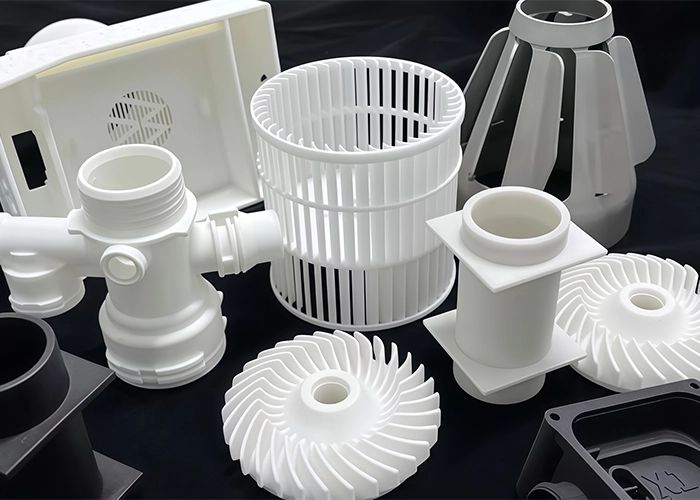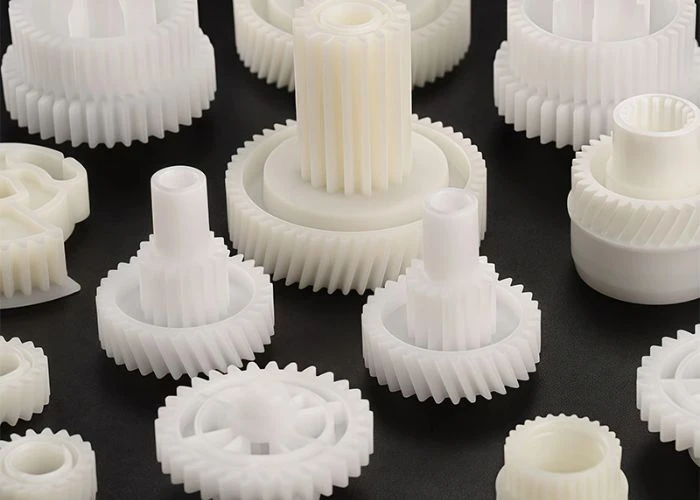

In product development, a design can look convincing in CAD but feel different once it becomes a physical object. An appearance prototype helps close that gap. It allows engineers, designers, and product teams to evaluate product form, proportion, surface quality, and user perception before tooling or production planning begins.
Why Digital Models Do Not Always Tell the Whole Story
CAD models and renderings are useful, but they cannot fully show how a product will be perceived when it is held, viewed, and reviewed as a real object.
A Product Can Feel Different Once It Becomes Physical
A product may look well balanced on screen, but once it becomes a physical model, the team may notice that the shape feels too heavy, the edges look too sharp, or the overall size does not match the intended user experience.
This is especially common in plastic prototyping projects for medical devices, beauty devices, consumer electronics, and personal care products, where the visible housing strongly influences product perception.
Appearance Issues Are Easier to Judge in Person
Some details are difficult to evaluate on a monitor. Surface transitions, parting lines, visible seams, edge softness, and overall visual balance often become much clearer when the prototype is physically inspected.
This is why appearance prototypes are still valuable even when digital visualization tools are highly advanced. They help teams move from “the design looks good” to “the product feels right.”
An appearance prototype is not built to prove internal performance. Its main role is to make the product’s external design visible, tangible, and easier to evaluate.
An appearance prototype is less about proving that a product works and more about understanding how the design translates into a real-world object. Once a concept leaves the screen and becomes something people can see and hold, questions about form, visual quality, and overall product impression become much easier to answer.
Evaluating Form, Proportion, and Visual Details
One of the primary purposes of an appearance prototype is to evaluate the product’s external design. Teams can review overall proportions, surface transitions, visible features, edge treatments, and how different design elements work together as a complete product.
Many issues that seem minor in CAD become much more noticeable when viewed as a physical object. A curve may appear too aggressive, a housing may feel bulkier than expected, or certain details may attract more attention than intended.
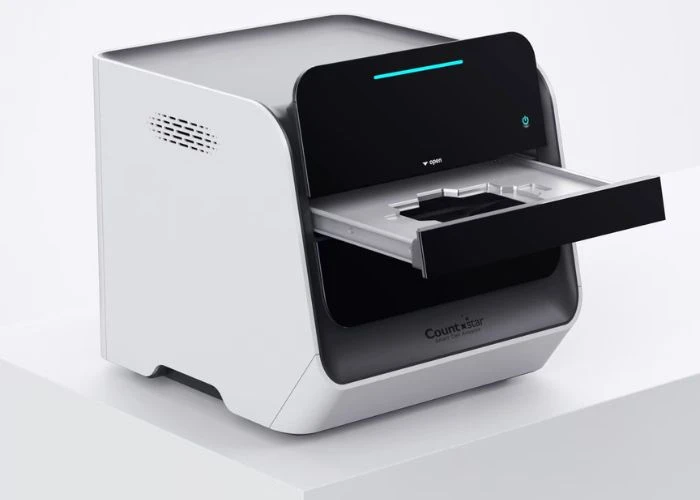
For products with visible plastic components—such as consumer electronics, beauty devices, medical devices, and personal care products—these visual evaluations are often an important part of the development process.
Understanding How the Product Will Be Perceived
An appearance prototype also helps teams evaluate the overall impression a product creates. People often form opinions about quality, reliability, and value before they interact with a product’s functionality.
By reviewing a physical model, teams can better understand whether the design communicates the intended message. Does the product feel premium or economical? Does it appear modern, professional, compact, or robust? These are difficult questions to answer through renderings alone.
Different from a Functional Prototype
A functional prototype is primarily used to verify performance, mechanisms, assembly, or engineering concepts. An appearance prototype serves a different purpose. Its value comes from helping teams evaluate what users, customers, investors, or stakeholders will actually see.
The two types of prototypes are not mutually exclusive, and later-stage prototypes may combine appearance and functionality. However, when the goal is appearance validation, the priority is visual presentation, perceived quality, and design communication rather than technical performance.
Why Appearance Prototypes Help Teams Make Better Decisions
Many design decisions become clearer when everyone reviews the same physical model instead of interpreting separate renderings or CAD screenshots.
They Create a Shared Reference for the Team
Product development usually involves engineers, industrial designers, product managers, marketing teams, and customers. Each group may look at the product from a different perspective.
An appearance prototype gives everyone the same physical reference. Instead of discussing whether a curve “looks too sharp” or whether a housing “feels too large,” the team can evaluate the actual model and make decisions more efficiently.
They Help Identify Presentation Problems Before Tooling
Tooling changes are expensive. If visible surfaces, seam positions, logo placement, or color direction are questioned after mold development begins, the cost of correction can be much higher.
An appearance prototype allows the team to review these details earlier. It does not eliminate every future change, but it gives the team a better chance to correct visual issues before production investment increases.
What Product Teams Evaluate with Appearance Prototypes
A good appearance prototype should answer practical questions about how the product will be seen, handled, and presented.
Product Proportion and Physical Presence
Proportion is one of the first things I evaluate. A product may look compact in CAD but feel oversized when held. Another design may appear elegant on screen but feel too fragile once made into a physical model.
Appearance prototypes help teams judge whether the product has the right size, visual weight, balance, and physical presence for its intended market.
Surface Quality and Visible Details
Surface quality has a strong influence on perceived product value. Tool marks, uneven sanding, visible layer lines, poor paint coverage, or inconsistent edges can make a prototype feel unfinished.
This is why appearance prototype manufacturing requires more than simply producing the shape. Surface preparation, finishing, polishing, painting, and assembly presentation all affect how the final model is perceived.
User Perception and Product Confidence
Users often judge a product before they understand its technical details. If the enclosure looks rough, poorly aligned, or visually inconsistent, the product may feel less reliable even if the engineering concept is strong.
For industries such as beauty devices, medical devices, personal care appliances, and consumer electronics, appearance quality can strongly influence how customers, investors, or internal decision-makers respond to a new product.
When Appearance Prototypes Deliver the Most Value
Rather than being tied to a specific manufacturing process, appearance prototypes are typically used at key decision points throughout product development. The table below shows some of the most common situations where teams rely on appearance validation.
| Development Stage | Why an Appearance Prototype Helps |
| Industrial Design Review | Compare design concepts, evaluate proportions, grip areas, surface transitions, and overall visual balance before finalizing the design. |
| Customer, Investor, or Management Presentation | Provide a realistic physical model that communicates the product more clearly than renderings alone and helps build confidence in the concept. |
| Trade Shows and Marketing Preparation | Create presentation-ready models for exhibitions, photography, promotional materials, or product launch activities. |
| Tooling Evaluation | Confirm visible design details before mold investment, reducing the risk of costly appearance-related changes later. |
| Production Planning | Verify that the product’s appearance, assembly presentation, and perceived quality meet expectations before moving toward manufacturing. |
In practice, appearance prototypes are often used more than once during a project. Early models help guide design decisions, while later versions support presentations, approvals, and production readiness reviews.
How Appearance Prototype Requirements Change During Development
Not every appearance prototype needs the same level of detail. The right level depends on how the model will be used.
Early Concept Models Focus on Direction
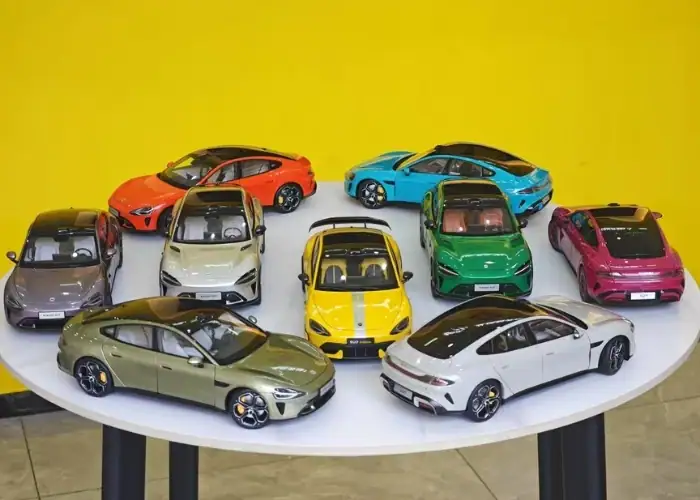
Early appearance models are usually built to answer broad questions. Does the concept make sense? Is the size acceptable? Does the shape communicate the right product identity?
At this stage, speed may be more important than perfect surface quality. The goal is to support discussion and guide the next design revision.
Presentation Models Require Higher Visual Quality
When a prototype is used for photography, exhibitions, crowdfunding, customer presentations, or executive reviews, the quality expectations are higher.
Visible surfaces need to be clean. Colors need to look intentional. Logos, icons, labels, and finishing details should be carefully controlled because every visible detail affects product perception.
Production-Like Appearance Models Support Final Confirmation
Later-stage appearance prototypes may need to look very close to the final product. These models are often used before tooling approval, market testing, or production planning.
In these cases, plastic prototyping must be combined with careful finishing and assembly presentation. The model does not need to contain final electronics or complete internal functionality, but its visible quality should represent the intended product.
How Different Prototype Processes Contribute to Appearance Evaluation
Appearance prototypes are not tied to a single manufacturing method. Different processes offer different advantages depending on what the team needs to learn from the model.
SLA 3D Printing for Fast Design Visualization
SLA 3D printing is commonly used when designers need to turn a digital concept into a physical model quickly. Its ability to reproduce fine details makes it useful for reviewing product shape, feature placement, and overall design direction.
Because of its speed and flexibility, SLA is often used during the early stages of appearance development when multiple design iterations may still be expected.
CNC Plastic Machining for High-Quality Visual Models
When appearance prototypes require tighter tolerances and more refined surfaces, CNC plastic machining becomes a strong option. It can produce parts with consistent geometry and well-defined features that are suitable for detailed visual assessment.
This approach is frequently used for plastic enclosures, front panels, covers, and other visible components that need to represent the intended product more accurately.
Vacuum Casting for Small Batches of Appearance Models
Some projects require more than one prototype for evaluation. In these situations, vacuum casting provides an efficient way to create multiple copies from a master model.
This can be useful for customer reviews, internal testing groups, trade show preparation, or situations where several teams need access to the same prototype design.
Finishing Processes Bring the Design Closer to Reality
The prototype manufacturing method defines the physical structure, but finishing processes often determine how realistic the model appears.
Techniques such as painting, polishing, silk screening, UV coating, electroplating, and water transfer printing can be applied to improve visual quality and better simulate the intended production appearance.
Common Mistakes When Building Appearance Prototypes
Many appearance prototype problems are caused not by manufacturing limitations, but by unclear expectations at the beginning of the project.
Treating Every Appearance Prototype as a Final Display Model
Not every appearance prototype needs exhibition-level finishing. If the goal is early design review, an overly refined model may consume unnecessary time and budget.
A better approach is to match the prototype quality to the decision being made. Early models can be simpler, while presentation models should receive more finishing attention.
Waiting Too Long to Validate Appearance
Some teams wait until the design is nearly locked before building an appearance prototype. By then, the design may be harder to change.
Earlier physical review gives the team more flexibility. It allows appearance concerns to be corrected before they affect tooling, production planning, or launch preparation.
Ignoring Assembly Presentation
A single part may look excellent on its own, but the overall product may still feel unfinished if gaps, seams, or alignment between components are poorly controlled.
For appearance prototypes, prototype assembly is often part of the visual evaluation. How visible parts come together can strongly affect the perceived quality of the model.
How UForProto Supports Appearance Prototype Development
Appearance prototype development requires a balance between manufacturing accuracy, surface preparation, finishing quality, and project speed.
From Plastic Prototype Parts to Presentation-Ready Models
At UForProto, we support customers who need realistic plastic appearance prototypes for product reviews, customer presentations, exhibitions, and development decision-making.
Our work focuses on plastic housings, covers, exterior components, panels, and assembled prototype models. We do not position appearance prototypes as simple visual mockups, but as physical tools that help teams evaluate product presentation before production.
One-Stop Support for Appearance Prototype Projects
Depending on the project stage, we may support appearance prototype development through SLA 3D printing, CNC plastic machining, vacuum casting, surface finishing, and prototype assembly.
This allows teams to move from early design models to higher-quality presentation prototypes without changing suppliers throughout the development process.
Surface Finishing for More Realistic Product Presentation
Appearance quality often depends on finishing details. Painting, silk screening, UV coating, electroplating, water transfer printing, polishing, and natural finishing can all be selected based on the final presentation goal.
The goal is to help the prototype communicate the intended product quality clearly, whether it is used for an internal design review, a customer meeting, a trade show, or a product launch preparation.
Conclusion
An appearance prototype is not just a model that looks good. It is a practical product development tool that helps teams evaluate form, proportion, surface quality, user perception, and presentation value before larger manufacturing decisions are made. When used at the right stage, it can improve communication, support design approval, and help teams avoid late-stage appearance changes.
For companies developing plastic housings, covers, panels, or consumer-facing products, appearance validation should be considered an important part of plastic prototyping. As a direct plastic prototype manufacturer, UForProto supports appearance prototype projects through CNC plastic machining, 3D printing, vacuum casting, surface finishing, and prototype assembly services.
FAQs
1.What is an appearance prototype?
An appearance prototype is a physical model used to evaluate how a product looks and feels before production. It focuses on product form, proportion, surface quality, color direction, visible details, and overall presentation rather than internal function.
2.Is an appearance prototype the same as a functional prototype?
No. An appearance prototype is mainly used to evaluate visual quality and user perception. A functional prototype is used to test mechanical performance, structure, assembly, or working behavior. Some later-stage prototypes may combine both purposes.
3.When should an appearance prototype be built?
An appearance prototype is useful before industrial design approval, customer presentations, investor reviews, trade shows, photography, tooling decisions, or production planning. It is most valuable when visual decisions need to be confirmed physically.
4.Can CNC plastic machining be used for appearance prototypes?
Yes. CNC plastic machining is often used when an appearance prototype requires accurate dimensions, clean edges, stable part geometry, and a good surface foundation for painting, polishing, or other finishing processes.
5.What is the best process for making an appearance prototype?
The best process depends on the prototype’s purpose. SLA 3D printing is useful for fast visual review, CNC plastic machining is suitable for refined plastic models, and vacuum casting is practical when multiple appearance samples are needed.
6.Can an appearance prototype look like the final product?
Yes. With the right plastic prototyping process and surface finishing, an appearance prototype can closely represent the final product’s shape, color, texture, visible details, and overall presentation quality.