
Bakelite does not behave like common thermoplastics during CNC machining. Its rigid thermoset structure maintains geometry well, but it has limited ability to deform under cutting or clamping forces. As a result, sharp edges, thin sections, holes, and unsupported features can be more sensitive to local stress. Successful Bakelite machining therefore depends not only on machine accuracy, but also on how the part is supported, how material is removed, and where dimensional control is most important.
Bakelite’s Thermoset Structure Changes Its Machining Behaviour
The main difference in Bakelite machining comes from how the material responds to mechanical stress. Unlike many thermoplastics that can deform slightly during cutting, Bakelite is rigid and relatively brittle. When cutting forces concentrate around holes, sharp corners, narrow sections, or exposed edges, the material is more likely to chip or suffer local damage rather than relieve stress through deformation. This makes edge integrity an important part of machining quality. A component may meet its nominal dimensions but still create assembly or functional problems if critical edges or detailed features are damaged. For this reason, Bakelite machining should be evaluated through both dimensional accuracy and feature integrity rather than treating dimensions as the only measure of quality.
Geometry and Workholding Need to Be Planned Together
Many Bakelite machining risks can be identified before cutting begins. Part geometry determines where stress is likely to concentrate, while workholding determines how additional force enters the component during machining. Reviewing these two factors together helps protect fragile features without sacrificing machining stability.
Fragile Features Need Adequate Support
Thin walls, narrow ribs, sharp internal corners, and partially unsupported sections deserve early attention because they can concentrate machining forces in a small area. The goal is not to redesign every delicate feature, but to identify where additional support or a different machining sequence may reduce the risk of chipping and cracking. Support also changes as material is removed, so a feature that is stable at the beginning of machining may become more vulnerable later. Considering this change during process planning helps engineers avoid exposing fragile geometry too early and provides a more stable basis for machining detailed Bakelite components.
Workholding Should Stabilize the Part Without Overloading It
Secure workholding is necessary for machining accuracy, but excessive or uneven clamping pressure can create new problems in a brittle Bakelite component. Fixtures should distribute force across suitable support areas rather than concentrating pressure around thin walls, edges, or detailed features. The workholding strategy should also consider how the part stiffness changes as machining progresses. A setup that is stable for rough machining may need different support once large amounts of material have been removed. Balancing rigidity and local stress helps keep the component stable while reducing the chance that the fixture itself contributes to cracking, deformation, or edge damage.
Cutting Strategy Directly Affects Edge and Surface Integrity
Bakelite machining quality is closely related to how and when material is removed. Cutting conditions, tool access, and machining sequence influence the amount and direction of stress placed on detailed features. A stable strategy should therefore consider not only how to produce the required geometry, but also how to preserve the part’s support throughout the machining process.
Machining Sequence Should Preserve Part Support
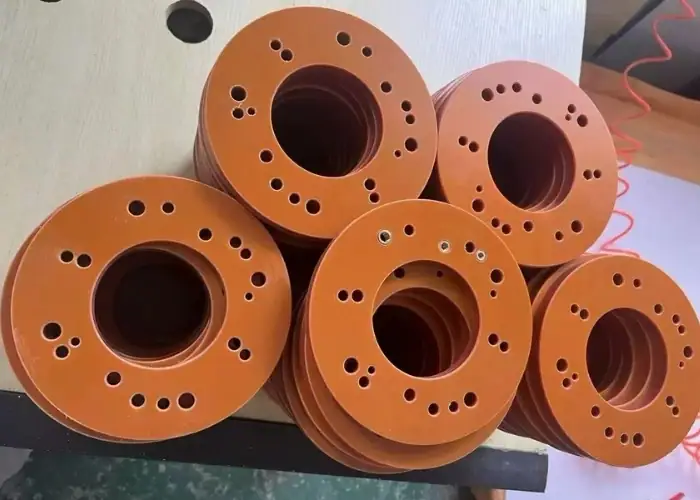
Deep features, narrow sections, and complex internal geometry may become less stable as surrounding material is removed. Planning the operation sequence so that vulnerable areas retain support for as long as practical can reduce unnecessary machining stress. Tool access should also be considered early, because difficult approaches may require longer tools or less favourable cutting conditions that can affect feature quality. For Bakelite parts with multiple detailed areas, the order of roughing and finishing operations can therefore influence the final result just as much as the nominal toolpath itself.
Edge Integrity Is Part of Functional Quality
Edge quality should not be treated only as a cosmetic issue. Chipping around mounting holes, mating edges, slots, or positioning features can affect how a Bakelite component fits and functions even when measured dimensions remain within tolerance. Inspection should therefore consider whether critical boundaries remain complete and usable after machining. This is particularly important for components where holes and edges participate directly in fastening, positioning, or electrical isolation. Evaluating these features as functional surfaces gives a more realistic picture of machining quality than checking dimensions alone.
Tolerance Planning Should Follow Part Function
Not every Bakelite dimension needs the tightest possible tolerance. Greater control should be concentrated on mounting holes, positioning surfaces, mating interfaces, reference features, and other dimensions that directly affect assembly or function. Non-critical external dimensions can often follow practical machining tolerances without reducing engineering value. This approach is particularly useful for Bakelite because unnecessarily tight requirements may complicate machining around already sensitive geometry. Functional tolerance planning helps the manufacturing process focus precision where it produces a measurable benefit, while avoiding additional machining difficulty in areas that do not influence the finished component’s performance.
Different Bakelite Parts Create Different Machining Priorities
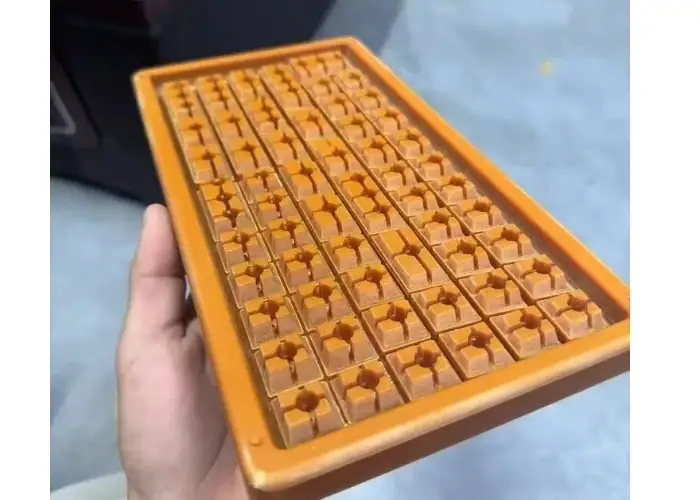
The most important machining features depend on how the finished Bakelite component will be used. Electrical insulation plates and supports often rely on clean holes, slots, and exposed edges for mounting and isolation. Structural supports and precision fixtures may place greater emphasis on flatness, reference surfaces, and positioning relationships. Parts with thin walls, narrow ribs, small holes, or detailed internal geometry require closer attention to support and operation sequence. Instead of applying one machining strategy to every Bakelite component, engineers should identify which features control function and which areas are most vulnerable during manufacturing. This connects CNC process planning directly to the role of the finished part.
Common Mistakes in Bakelite Machining
Many Bakelite machining problems begin with assumptions made before manufacturing. Treating the material like a conventional thermoplastic, focusing only on dimensions, or overlooking how support changes during machining can all reduce process reliability. The better approach is to connect material behaviour, geometry, workholding, and functional requirements from the beginning.
| Common Mistake | Better Engineering Approach |
| Using thermoplastic machining assumptions | Account for Bakelite’s rigid and brittle response |
| Ignoring support around fragile features | Plan workholding and machining sequence together |
| Applying tight tolerances everywhere | Prioritize functional interfaces and positioning features |
| Checking dimensions but ignoring edge condition | Evaluate dimensions and edge integrity together |
| Judging the process from one finished part | Check consistency across the required batch |
Conclusion
Bakelite machining requires a different CNC strategy because its rigid thermoset structure changes how cutting and clamping forces affect the component. Reliable results come from considering geometry, workholding, machining sequence, edge integrity, and functional tolerances as one connected process. Rather than applying standard plastic machining assumptions, engineers should focus on protecting vulnerable features while controlling the dimensions that matter most to assembly and function.
FAQs
1. Why Is Bakelite Machining Different from Machining ABS or POM?
Bakelite is a rigid thermoset, while ABS and POM are thermoplastics. It has less ability to relieve local machining stress through deformation, making feature support and edge integrity more important during CNC machining.
2. Can Bakelite Be CNC Machined Accurately?
Yes. Accurate Bakelite components can be produced when geometry, workholding, machining sequence, and functional tolerances are planned according to the material’s behaviour.
3. Why Are Thin Bakelite Features More Difficult to Machine?
Thin or unsupported features are more sensitive to cutting and clamping forces. Their support may also decrease as surrounding material is removed, increasing the importance of machining sequence.
4. Does Workholding Affect Bakelite Machining Quality?
Yes. Workholding must keep the component stable without concentrating excessive pressure around fragile areas. Fixture support may also need to account for changes in part stiffness during machining.
5. Does Every Bakelite Dimension Need a Tight Tolerance?
No. Tighter tolerances should normally focus on mounting, positioning, mating, and other function-critical features rather than every dimension.
6. What Should Be Checked After Bakelite CNC Machining?
Inspection should cover both dimensional accuracy and feature integrity, particularly around mounting holes, edges, slots, thin sections, and other areas sensitive to machining stress.