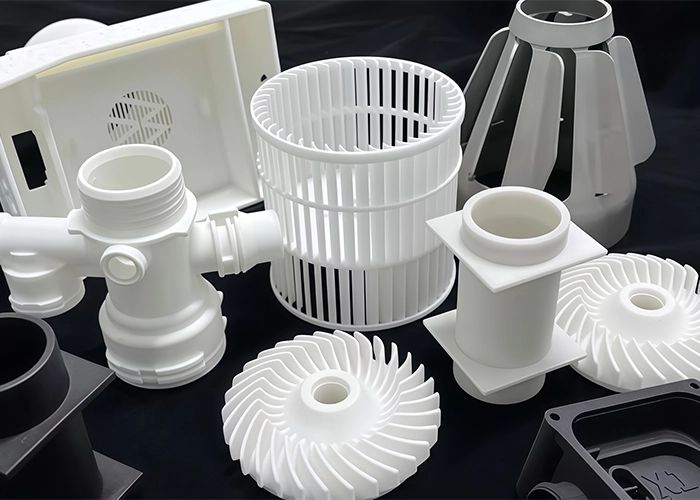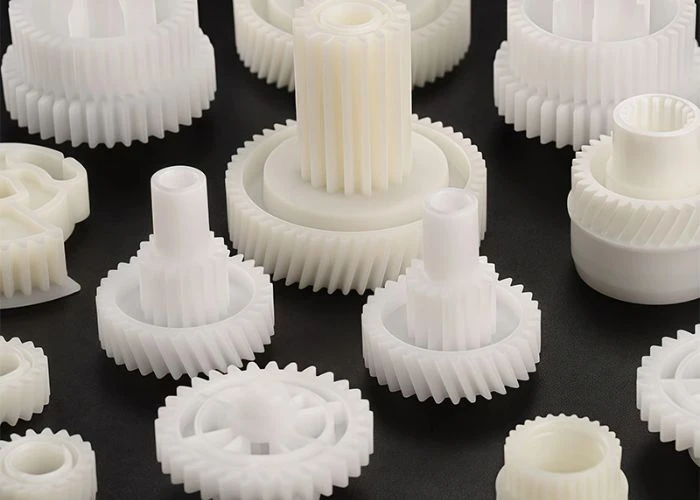

POM and Nylon are both widely used engineering plastics, but they support different prototype goals. POM is generally more useful when the prototype depends on dimensional stability, controlled clearances, and predictable movement, while Nylon becomes more valuable when toughness, repeated loading, bending, or real-world handling are part of the evaluation. The better choice therefore depends less on which material has the higher specification and more on what the prototype needs to reveal before production.
The Practical Difference Between POM and Nylon in Prototype Development
The practical difference between POM and Nylon is best understood through the type of uncertainty each material helps remove during testing. POM has low moisture absorption and good dimensional stability, which makes it useful when engineers need to evaluate precision fits, clearances, sliding relationships, or repeatable movement without introducing unnecessary dimensional variation. Nylon, by contrast, is generally more valuable when the part must tolerate mechanical stress, bending, impact, or repeated loading. In these situations, toughness becomes part of the test itself. This means POM often helps engineers control the geometry of the evaluation, while Nylon helps reveal how the design behaves when mechanical use becomes more demanding.
POM vs Nylon: Key Differences for Prototype Evaluation
| Evaluation Priority | POM | Nylon |
| Dimensional stability | Excellent | Moderate |
| Low-friction movement | Excellent | Good |
| Wear performance | Excellent | Good |
| Toughness | Good | Excellent |
| Repeated loading | Good | Excellent |
| Moisture sensitivity | Low | Higher |
| Precision assembly | Excellent | Good |
| Typical prototype goal | Motion and dimensional validation | Structural and durability validation |
When POM Is the Better Prototype Material
POM becomes more useful when the prototype must maintain stable geometry throughout machining, assembly, and evaluation. This is especially important when small dimensional changes could alter fit, clearance, or motion and make the test result harder to interpret. In these projects, POM helps reduce material-related variation so engineers can focus more directly on the design and mechanical relationship between parts.
Precision Fits and Moving Interfaces
POM is well suited to prototypes where accurate fits and controlled movement are closely connected. Precision interfaces, guides, sliders, and other moving components depend on stable clearances to operate consistently, and dimensional changes can easily distort the engineering feedback. POM’s stable geometry makes it easier to evaluate whether resistance, play, or movement quality comes from the design rather than from material variation. This is particularly useful when several components interact and engineers need a predictable baseline before deciding whether the mechanism itself should be modified.
When Nylon Provides Better Engineering Feedback
Nylon becomes more useful when the prototype is expected to experience real mechanical use rather than remain dimensionally unchanged. Repeated loading, impact, bending, and frequent handling can reveal design weaknesses that are difficult to identify from dimensional inspection alone. In these situations, the material needs to participate in the test rather than simply hold its original geometry.
Repeated Loads, Impact, and Structural Flexing
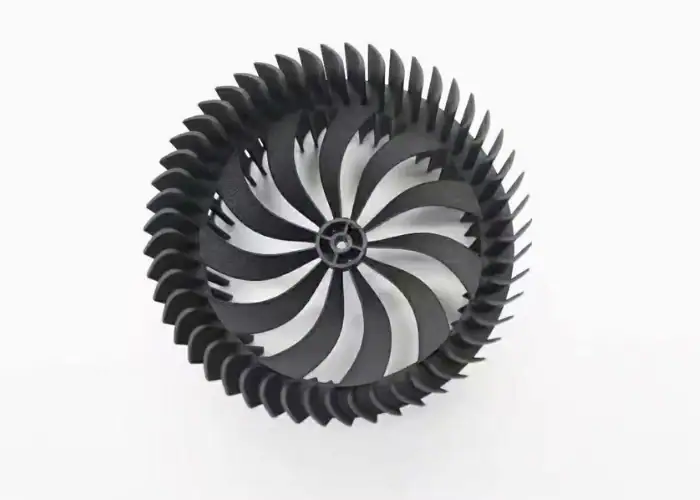
Nylon is useful for prototypes that must undergo repeated mechanical stress during development. Clips, hinges, brackets, protective parts, and flexible structural components may be bent, pressed, impacted, or handled many times before the design is approved. For these parts, engineers need to understand whether repeated use changes fit, stiffness, or functional behaviour rather than simply whether the part survives one load. Nylon’s toughness allows the prototype to provide more representative durability feedback when the final product is expected to experience ongoing mechanical use.
CNC Plastic Machining Considerations for POM and Nylon
Both POM and Nylon can be CNC machined successfully, but the materials do not behave identically during manufacturing. The important difference is not whether either material can be machined, but how easily its geometry can be controlled before the prototype reaches engineering evaluation. This becomes particularly important when dimensional variation could influence assembly or functional testing.
POM Offers More Predictable Dimensional Control
POM generally provides predictable machining behaviour and stable geometry, making it easier to produce components where small dimensional differences could influence fit or movement. For precision prototype parts, this consistency reduces one source of variation and gives engineers a clearer basis for comparing assembly or mechanism performance. The advantage is not simply a better machined surface, but a more controlled part condition when the prototype enters testing.
Nylon Requires More Attention to Material Condition
Nylon’s moisture sensitivity and tougher machining behaviour mean that material condition, workholding, and process planning deserve additional attention when dimensional consistency matters. Moisture-related changes may affect geometry before or after machining, while the material’s toughness can influence how the part responds during cutting and clamping. These factors are manageable, but they should be considered early if the prototype is expected to provide precise dimensional or assembly feedback.
Material Selection Should Follow the Prototype Question
The clearest way to choose between POM and Nylon is to identify what could make the prototype result misleading. If the project depends on accurate fit, controlled clearance, or repeatable motion, dimensional variation may be the main uncertainty, making POM the more useful option. If the project needs to reveal how a part behaves under impact, bending, repeated loading, or frequent handling, Nylon may provide more meaningful feedback. When both priorities matter, engineers should decide which uncertainty needs to be removed first rather than asking which material is universally better. This keeps material selection connected to the actual development decision.
Can POM and Nylon Be Used in the Same Product?
Yes. In many products, the correct engineering decision is not POM or Nylon, but POM and Nylon in different locations. POM may be selected for precision guides, gears, sliding interfaces, or other components where stable geometry and controlled motion are important. Nylon may be used for clips, brackets, protective structures, or load-bearing components that benefit from greater toughness and repeated-load capability. Dividing material selection according to component function allows each material to solve the problem it is better suited to address and avoids forcing one plastic to satisfy conflicting requirements across the entire product.
Common Material Selection Mistakes
Many incorrect material decisions come from comparing one property at a time instead of considering what the prototype is intended to evaluate. The following mistakes can make POM and Nylon appear interchangeable when their engineering roles are actually different.
| Common Mistake | Better Engineering Approach |
| Choosing only by strength | Match the material to the prototype objective |
| Using POM for every moving component | Consider load, impact, flexing, and motion together |
| Using Nylon without considering moisture | Consider dimensional sensitivity before testing |
| Comparing material data without assembly context | Evaluate the material in the real component relationship |
Conclusion
Choosing between POM and Nylon depends on what the prototype needs to reveal. POM provides a more controlled basis for precision fits, clearances, and motion, while Nylon is more useful when toughness, impact, flexing, or repeated loading are part of the evaluation. Matching the material to the engineering question gives development teams clearer prototype feedback and reduces unnecessary material changes later.
FAQs
1. Is POM Always Better Than Nylon for Precision Parts?
POM is generally more suitable when dimensional stability and controlled clearances are critical, but Nylon may be more appropriate when toughness or repeated loading matters more.
2. When Should I Choose Nylon Instead of POM?
Nylon is usually more useful when the prototype needs to tolerate repeated bending, impact, structural loading, or frequent handling during testing.
3. Does Moisture Absorption Affect POM and Nylon Selection?
Yes. POM absorbs relatively little moisture, while Nylon is more moisture-sensitive, which can influence dimensional stability in applications where geometry must remain tightly controlled.
4. How Does CNC Plastic Machining Affect POM and Nylon?
POM generally provides more predictable dimensional control, while Nylon requires greater attention to material condition, workholding, and machining strategy when accuracy is important.
5. Can POM and Nylon Be Used in the Same Product?
Yes. POM can be used for precision moving or sliding components, while Nylon can support tougher structural or repeatedly loaded parts within the same product.
6. What Is the Main Difference Between POM and Nylon for Prototypes?
POM mainly helps control geometry and movement-related variables, while Nylon provides more useful feedback about toughness and durability under mechanical use.