
Beauty devices have become increasingly sophisticated, placing higher expectations on both product appearance and manufacturing quality. After participating in many beauty device housing projects, I have found that successful prototype development is rarely defined by manufacturing alone. It depends on how effectively the prototype helps engineering teams evaluate the product before production. In this article, I share several practical lessons that repeatedly appear during beauty device prototype development and explain why they matter throughout the product development process.
Understanding the Challenges of Beauty Device Housing Development
Beauty devices are products that users hold, observe, and interact with every day. Because of this, customers often evaluate much more than whether the product functions correctly. Housing quality, assembly precision, and the overall product presentation all contribute to how the final product is perceived. During prototype development, these details often become just as important as the engineering performance itself.
Why Do Customers Often Revisit Housing Details During Prototype Reviews?
One pattern I frequently see in beauty device projects is that customers rarely finalise the housing after reviewing CAD models alone. Once they receive a physical prototype, they often discover details that are difficult to judge on screen, such as the visual balance of the product, the relationship between different housing sections, or how design features appear under real lighting conditions.

The Importance of Refining Housing Design Through Prototype Reviews
Unlike many industrial products, beauty devices are designed for everyday consumer use, where visual refinement plays an important role in the overall product experience. Instead of making major structural changes, many projects focus on gradually refining housing details through successive prototype reviews until the product reflects the intended design direction.
Evaluating the Complete Product Instead of Individual Components
Beauty device housings are designed to work as a unified product rather than a collection of separate components. Reviewing the complete prototype allows customers to evaluate the overall visual harmony, the relationship between different housing sections, and whether the finished product delivers the experience they expect before moving forward with production.
Practical Lessons Learned from Beauty Device Prototype Projects
After supporting many beauty device housing projects, I have noticed that prototype development rarely follows a straight path. Customers often refine products through several rounds of review, with each prototype revealing opportunities that are difficult to identify during the design stage. These improvements are usually small on their own, but together they have a significant influence on the final product.
Why Do Customers Often Refine the Housing After Seeing the First Prototype?
Digital models provide an accurate representation of the design, but they cannot fully reproduce how a product looks and feels in real life. Once customers hold the first prototype, they often notice details such as edge transitions, button positions, product proportions, or visual balance that they would like to improve before production.
Surface Finishing Evaluation Before Production
Beauty devices often represent a premium consumer product, so customers usually compare several appearance options before making a final decision. Rather than selecting the first finish immediately, many projects involve reviewing different colours, textures, or decorative effects until they achieve the appearance that best matches the product positioning.
Small Design Improvements That Create Better Product Experiences
Some of the most valuable improvements come from relatively small adjustments. Refining a joint line, modifying a corner radius, or slightly changing the relationship between housing components can make the product appear more refined without changing its overall design concept.
Preparing Beauty Device Prototypes Before Tooling
Before investing in production tooling, customers usually want confidence that the product reflects both their design expectations and manufacturing goals. Prototype reviews therefore focus on the complete product rather than isolated components, helping teams make final adjustments while changes are still relatively easy to implement.
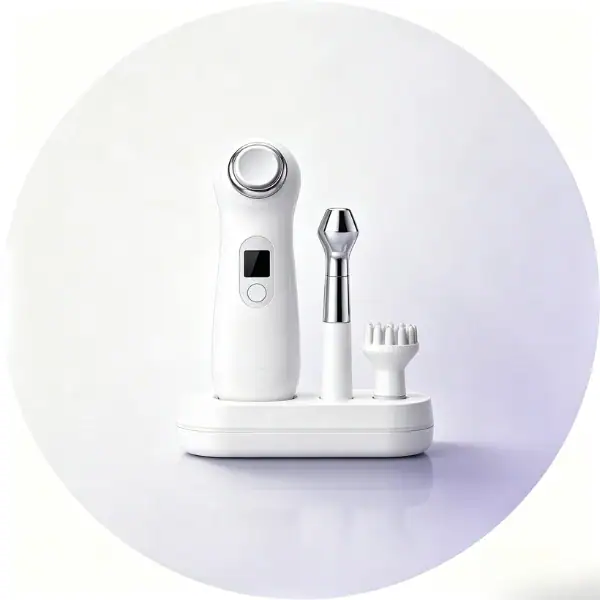
Confirming Product Consistency Before Production
Customers rarely evaluate housing components one by one. Instead, they focus on whether the complete product presents a consistent appearance, with uniform transitions, balanced proportions, and coordinated details. A complete prototype makes this overall evaluation much easier.
Why Physical Prototype Evaluation Still Matters
Even with detailed CAD models and digital rendering, physical prototypes provide information that is difficult to obtain on a screen. Holding the product, examining it under different lighting conditions, and reviewing it from multiple angles often leads to practical improvements before production begins.
Conclusion
Developing a beauty device housing is about much more than producing plastic parts with accurate dimensions. Throughout different prototype projects, I have found that the most valuable improvements often come from evaluating the complete product in real-world conditions. Small refinements to appearance, assembly quality, and overall product consistency can make a significant difference before production begins. This is why many beauty device projects go through several prototype iterations before tooling is approved. Developing a beauty device housing is about much more than producing accurate plastic parts. By working closely with customers during prototype development, we help transform design concepts into production-ready products with greater confidence.
FAQs
1.Why do beauty device housing projects usually require multiple prototype iterations?
Each prototype provides new feedback that helps improve the product. Customers often refine appearance details, assembly quality, and overall product presentation through several prototype reviews before approving the final design.
2.What is the biggest challenge when developing a beauty device housing?
In many projects, balancing appearance, product quality, and manufacturability is more challenging than producing the plastic parts themselves. Successful prototypes help engineers evaluate these factors together before production.
3.Should the complete product be reviewed before tooling?
Yes. Reviewing the complete prototype allows teams to evaluate the overall appearance, assembly quality, and product presentation in a way that individual components cannot provide.
4.Can different surface finishes be compared during prototype development?
Yes. Many beauty device projects compare multiple colours, textures, or decorative finishes during prototype development to identify the appearance that best reflects the product’s brand positioning.
5.What information is usually needed to start a beauty device prototype project?
Most projects begin with 3D CAD files, basic product requirements, and any appearance expectations. The more complete the project information is, the easier it becomes to plan prototype manufacturing efficiently.
6.How does UForProto support beauty device prototype development?
UForProto specialises in plastic prototyping, CNC plastic machining, prototype assembly, surface finishing, and low-volume manufacturing. We have supported a wide range of beauty device housing projects and help customers evaluate products more efficiently before production through reliable prototype manufacturing.