
Many engineers first encounter FR4 as the base material for printed circuit boards. However, its engineering value extends well beyond the electronics industry. Today, FR4 is widely used in industrial equipment, electrical insulation components, testing fixtures, and precision structural parts because it combines excellent electrical insulation with reliable mechanical stability. During plastic prototyping and product development, engineers often select FR4 when projects require a material that performs consistently in demanding environments while remaining suitable for precision CNC plastic machining.
Understanding FR4 Beyond PCB Applications
Although FR4 is best known as a PCB substrate, engineers increasingly evaluate it as a structural engineering material. Rather than focusing on its role in electronic assemblies alone, many product development teams choose FR4 because it combines insulation, rigidity, dimensional stability, and environmental resistance in a single material. These characteristics allow FR4 to solve engineering challenges that standard plastics may not always address.
FR4 as an Engineering Material
FR4 is manufactured by combining woven glass fibre reinforcement with epoxy resin through a high-pressure lamination process. This structure gives the material excellent rigidity, dimensional stability, and electrical insulation while maintaining consistent performance over long periods of use. Unlike many plastics that are selected for a single mechanical property, FR4 provides multiple engineering advantages within one material. This makes it particularly valuable for components that must maintain both structural integrity and electrical isolation throughout their service life.
Electrical Insulation and Structural Stability
One of the key reasons engineers continue to select FR4 is its ability to combine electrical insulation with mechanical support. In many industrial products, insulation materials must also withstand fastening forces, maintain dimensional accuracy, and support surrounding components without deformation. FR4 performs well in these situations because its laminated glass-fibre structure provides reliable rigidity while preventing electrical conductivity. This combination reduces the need for separate insulating and structural components, simplifying product design and improving long-term reliability.
Industrial Reliability in Long-Term Applications
Industrial products are often exposed to changing temperatures, humidity, vibration, and continuous operating cycles. Under these conditions, engineers require materials that continue performing consistently instead of gradually losing stability. FR4 is frequently selected because it maintains reliable insulation properties, dimensional consistency, and mechanical rigidity throughout long-term operation. For many industrial applications, predictable performance over time is more valuable than achieving the highest possible mechanical strength, making FR4 a dependable choice for engineering components.
Why Engineers Choose FR4
| Engineering Requirement | How FR4 Delivers Value | Typical Applications |
| Electrical insulation | Excellent dielectric performance | Insulation plates, electrical barriers |
| Structural rigidity | High stiffness and dimensional stability | Mounting panels, support plates |
| Environmental stability | Reliable performance in demanding environments | Industrial equipment, automation systems |
| Long-term consistency | Stable mechanical and electrical properties | Testing fixtures, inspection tools |
Where Is FR4 Commonly Used in Product Development?
The value of FR4 becomes much clearer when engineers evaluate complete product requirements rather than individual material properties. Instead of replacing standard engineering plastics in every application, FR4 is typically selected for components that require electrical insulation, structural rigidity, and long-term dimensional stability. Understanding where these advantages create the greatest value helps engineers choose the right material for each stage of product development.
Electrical Insulation Components
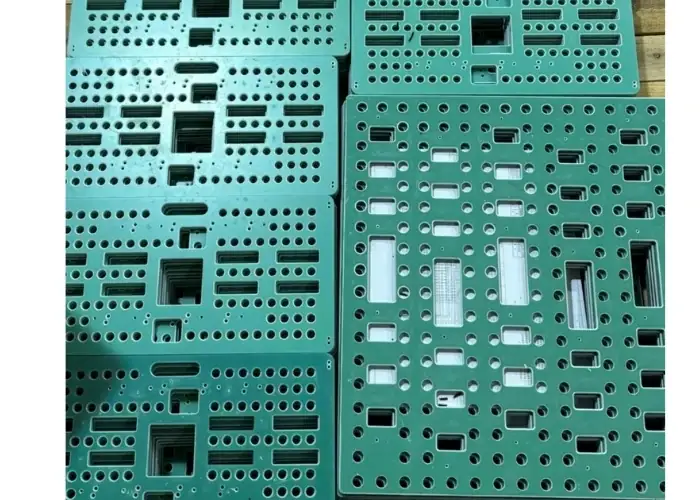
FR4 is widely used to manufacture insulation plates, electrical barriers, terminal supports, mounting panels, and other components that separate conductive parts while maintaining structural integrity. These parts often operate in environments where electrical safety and mechanical stability are equally important. Because FR4 provides both functions within a single material, engineers can simplify product structures while maintaining reliable long-term performance.
Industrial Fixtures and Testing Equipment
Beyond electrical products, FR4 is frequently used in positioning fixtures, inspection jigs, automation equipment, and testing tools. These applications rely on accurate positioning, dimensional consistency, and dependable insulation throughout repeated operation. Unlike materials chosen primarily for appearance, FR4 is selected because it delivers predictable engineering performance under demanding manufacturing and testing conditions.
When Is FR4 a Better Choice Than Standard Engineering Plastics?
Engineering plastics such as ABS, PC, and POM each offer unique advantages, but they are designed for different engineering priorities. FR4 becomes a stronger option when electrical insulation must be combined with structural support in the same component. If a project mainly requires impact resistance, transparency, or low-friction performance, other engineering plastics may provide better solutions. Selecting the right material therefore depends on the product’s functional requirements rather than choosing the most familiar material.
FR4 vs. Common Engineering Plastics
| Material | Primary Strength | Typical Applications | When to Choose |
| FR4 | Electrical insulation + structural rigidity | Insulation plates, industrial fixtures, testing equipment | Electrical isolation with mechanical stability |
| ABS | Easy machining and surface finishing | Appearance models, housing prototypes | Design reviews and assembly validation |
| PC | High impact resistance | Protective covers, transparent components | Functional testing and durable housings |
| POM | Low friction and wear resistance | Gears, bushings, moving parts | Precision motion and mechanical components |
Validating FR4 Designs Through Prototyping
Selecting FR4 is only the first step in material selection. Before moving into production, engineers still need to verify that the material performs as expected within the actual product. Prototype development provides an opportunity to evaluate electrical insulation, structural stability, dimensional accuracy, and assembly performance under realistic operating conditions. This process helps reduce engineering risks and supports more confident design decisions before production tooling is introduced.
Functional Validation
Material properties listed on technical datasheets provide useful reference information, but they cannot fully represent how a component performs within a complete product. Functional prototypes allow engineers to verify whether FR4 maintains sufficient rigidity, electrical insulation, and dimensional stability during installation and operation. Testing physical components also helps identify potential design improvements before production begins, reducing the likelihood of costly engineering changes later in the project.
Assembly Verification
Many FR4 components are integrated with metal parts, plastic housings, fasteners, and electrical assemblies. Even when individual parts meet dimensional requirements, complete assemblies should still be verified to confirm positioning accuracy, fastening reliability, and installation efficiency. Assembly validation allows engineers to evaluate how each component interacts with surrounding parts before production, helping ensure consistent product quality and reducing assembly-related issues during manufacturing.
CNC Plastic Machining for FR4 Components
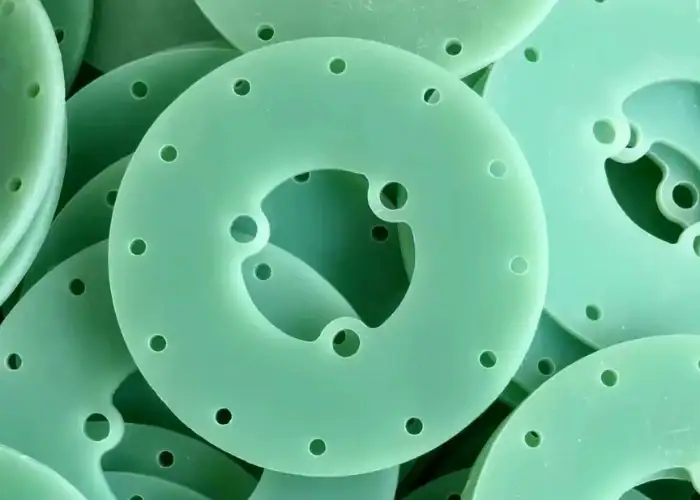
FR4 is commonly manufactured through precision CNC plastic machining because the process delivers excellent dimensional accuracy and supports a wide range of custom geometries. CNC machining is particularly suitable for prototype development, where engineers frequently modify designs based on testing results. Compared with dedicated production tooling, CNC plastic machining enables faster design iterations while maintaining the precision required for functional validation and assembly evaluation.
How Does UForProto Support FR4 Prototype Projects?
Successful prototype development depends not only on manufacturing capability but also on clear engineering communication throughout the project. At UForProto, we work closely with customers to understand validation objectives before production begins, ensuring that every FR4 prototype supports practical engineering evaluation instead of simply reproducing CAD geometry.
Engineering Review Before Manufacturing
Every prototype project starts with understanding what the customer intends to validate. By reviewing CAD files, application requirements, tolerance expectations, and assembly objectives, our engineering team can recommend suitable manufacturing processes and identify potential design concerns before production. Early engineering communication helps reduce unnecessary revisions and improves development efficiency.
Precision Manufacturing and Prototype Assembly
UForProto provides one-stop services including plastic prototyping, CNC plastic machining, prototype assembly, vacuum casting, surface finishing, and low-volume manufacturing. Whether customers require a single functional component or a complete assembled prototype, we focus on delivering accurate, production-oriented prototypes that help engineering teams validate designs with confidence before moving to mass production.
Conclusion
FR4 has evolved far beyond its traditional role as a PCB substrate. Today, it is widely used in industrial equipment, electrical insulation components, testing fixtures, and structural parts where reliable insulation and mechanical stability are equally important. Rather than replacing standard engineering plastics, FR4 fills a unique position by combining electrical performance with structural support in a single material.
For engineers, selecting the right material is not about choosing the most familiar option—it is about matching material properties to product requirements. By understanding where FR4 delivers the greatest engineering value and validating its performance through prototyping, development teams can reduce design risks, improve product reliability, and make more confident decisions before production begins.
FAQs
1. What is FR4 material used for besides printed circuit boards?
FR4 is widely used for insulation plates, mounting panels, industrial fixtures, testing equipment, terminal supports, and other structural components that require both electrical insulation and mechanical stability.
2. Is FR4 better than standard engineering plastics?
Not necessarily. FR4 is the better choice when electrical insulation and structural rigidity are required in the same component. For applications focused on impact resistance, transparency, or wear resistance, materials such as PC, ABS, or POM may be more suitable.
3. Can FR4 be machined using CNC plastic machining?
Yes. FR4 is commonly manufactured through precision CNC plastic machining, allowing engineers to produce complex geometries, maintain tight tolerances, and quickly modify prototype designs during product development.
4. Why is prototype validation important for FR4 components?
Prototype validation confirms whether FR4 components meet functional, dimensional, and assembly requirements under real operating conditions. It also helps identify potential design improvements before production tooling is manufactured.
5. Which industries commonly use FR4 components?
FR4 is widely applied in industrial equipment, automation systems, electrical products, testing instruments, medical devices, and other engineering applications that require stable insulation and structural performance.
6. What information is needed to start an FR4 prototype project?
Providing 3D CAD files, material specifications, dimensional tolerances, application requirements, and validation objectives allows manufacturers to recommend suitable machining processes and provide more accurate quotations.