
One of the most common questions in product development is whether a project should begin with an appearance prototype or a functional prototype. The answer is not determined by the manufacturing process, material, or budget alone. It depends on what the development team needs to learn from the prototype.
In many projects, prototype development problems do not occur because the prototype was manufactured incorrectly. They occur because the wrong type of prototype was selected for the task being evaluated.
Understanding the difference between appearance validation and functional validation helps teams collect more meaningful feedback, reduce unnecessary iterations, and make better development decisions throughout the product lifecycle.
What Is Functional Prototyping?
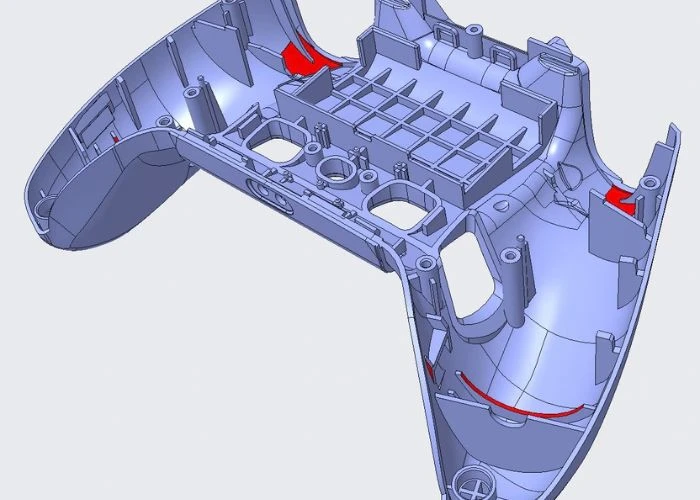
Functional prototyping is the process of building physical prototype parts or assemblies to evaluate how a product design performs under realistic engineering conditions. Unlike an appearance model that primarily supports visual review, a functional prototype may be used to evaluate part fit, assembly relationships, structural behaviour, moving mechanisms, fastening features, material performance, or other engineering requirements.
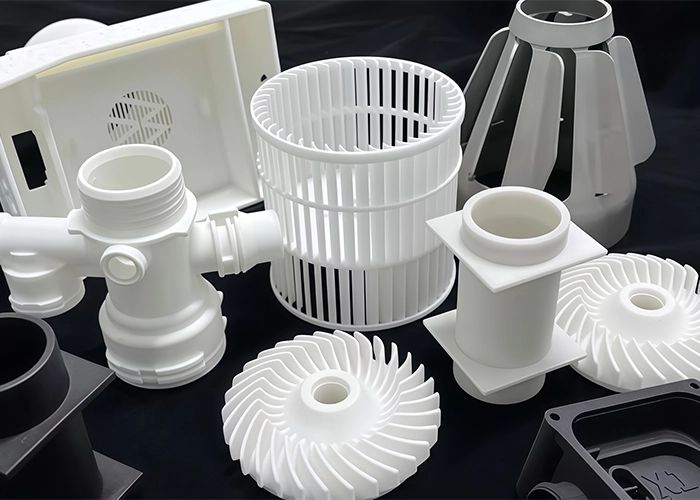
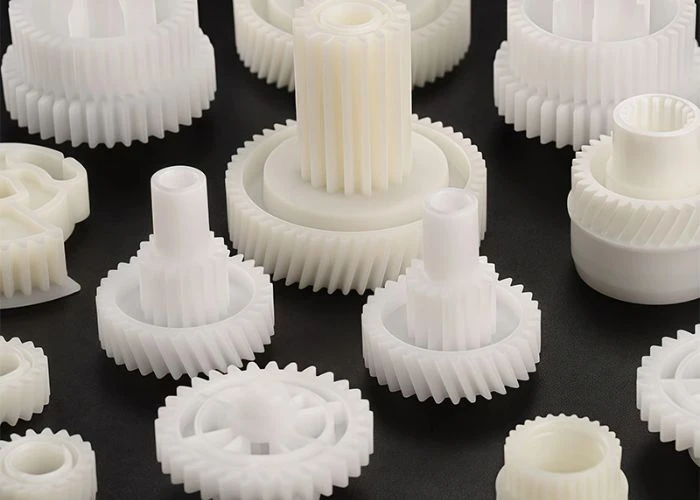
Functional prototyping services may involve CNC plastic machining, SLA or SLS 3D printing, vacuum casting, dimensional inspection, and prototype assembly depending on what the engineering team needs to validate. The manufacturing method should therefore be selected around the validation objective rather than simply choosing the fastest available prototyping process.
Why Prototype Type Matters More Than Many Teams Realize?
In many product development projects, discussions about prototypes often begin with manufacturing methods. Teams compare 3D printing, CNC plastic machining, vacuum casting, lead times, and budgets long before they discuss what the prototype is actually supposed to prove.
This approach seems reasonable at first, but it can easily lead development efforts in the wrong direction. A prototype is not valuable because it exists. It is valuable because it helps the team answer a specific question that cannot be answered confidently through CAD models, simulations, design reviews, or engineering discussions alone.
A Well-Made Prototype Can Still Miss the Real Development Risk
One situation I frequently see is that teams invest significant effort creating a prototype that is technically successful but strategically unhelpful.
For example, a product may be developed as a highly refined appearance model with excellent surface finishing, accurate colors, and presentation-level quality. Everyone agrees that it looks impressive. However, weeks later the project encounters delays because internal components cannot be assembled efficiently, fastening features do not perform as expected, or dimensional relationships between parts create unexpected complications.However,the prototype itself was not wrong. The problem was that the project’s most important uncertainty was never evaluated.
The opposite situation also occurs. Some teams spend months evaluating structural performance, mechanical movement, and engineering details, only to discover later that the product feels larger than expected, appears visually unbalanced, or fails to create the level of quality perception required for its target market.
In both cases, the issue is not prototype quality. The issue is that the prototype was answering a different question than the one the project needed answered.This is why selecting the right prototype strategy is often more important than selecting the right manufacturing process. Before deciding how a prototype should be built, teams should first understand what uncertainty they are trying to reduce and what decision the prototype is expected to support.
Start with the Validation Question, Not the Prototype Type
One pattern I have noticed in many development projects is that prototype discussions often start too late in the process and for the wrong reasons. By the time a team begins talking about prototypes, the conversation is already focused on manufacturing methods, budgets, or lead times.
Questions such as “Should we use CNC plastic machining?” or “Can this be 3D printed?” appear very early. Yet the more important discussion is often missing. What exactly are we trying to learn from this prototype?
In practice, prototypes are rarely built simply because a physical model is needed. They are built because there is uncertainty somewhere in the project. The challenge is identifying where that uncertainty actually exists.Sometimes the uncertainty is visual. The team may have reviewed the design repeatedly on screen, but nobody is completely confident about how the product will feel once it is held in the hand. The overall proportions may look correct in CAD, yet the physical size, perceived weight, or visual balance may still be unknown.
In other projects, the uncertainty has little to do with appearance. The product may already be visually mature, but questions remain about assembly, structural performance, moving mechanisms, fastening methods, or internal packaging constraints.
Although both situations may require a prototype, they are solving completely different development problems.
This is why I generally avoid thinking about prototype categories too early. Before deciding whether an appearance prototype or a functional prototype is needed, I find it more useful to identify what decision the team is trying to make next. Once that becomes clear, the prototype strategy usually becomes much easier to define.
Prototype Priorities Change as a Project Moves Forward
One reason prototype planning becomes difficult is that development priorities rarely stay the same from the beginning of a project to the end.
A question that seems critical during concept development may become irrelevant a few months later. At the same time, new challenges often emerge as the product moves closer to engineering validation and production preparation.
Early discussions are often centered around the product itself. Teams want to understand whether the overall concept feels right, whether the size is appropriate, and whether the product direction aligns with market expectations.
As development progresses, attention gradually shifts away from those questions. Teams become more concerned with whether components fit together consistently, whether assembly procedures are practical, and whether the design can perform reliably outside of controlled development environments.
Neither stage is more important than the other. They simply represent different points in the development process. The challenge is recognising which uncertainty currently represents the greatest risk to the project.
The most successful prototype programs are rarely built around a single prototype type. Instead, they evolve as project priorities evolve. What begins as a design validation exercise may later become an engineering validation project, and eventually develop into a production-readiness evaluation.For this reason, prototype planning is often less about choosing between appearance prototypes and functional prototypes, and more about understanding which questions need answers at a particular stage of development.
What Happens When the Wrong Prototype Is Chosen?
In product development, prototype-related problems are not always caused by manufacturing errors. More often, they occur when the prototype is unable to provide the information the team actually needs. A prototype may be well made and technically successful, yet still leave critical development questions unanswered.
| Validation Focus | What the Team Learns | What May Be Missed |
| Appearance-Focused Prototype | Product proportion, visual balance, surface quality, overall user perception | Assembly performance, structural behavior, durability, and functional reliability |
| Functional Prototype | Assembly validation, structural performance, movement, usability, engineering feasibility | Customer perception, visual quality, brand presentation, and market acceptance |
Neither prototype approach is inherently better. Problems usually arise when the team expects one type of prototype to answer questions that belong to another stage of development.
For example, a highly polished appearance prototype may create confidence in the product’s visual direction, but it cannot confirm whether internal components assemble correctly or whether the structure will perform reliably during testing.
Likewise, a functional prototype may demonstrate excellent engineering performance while providing very little insight into how customers, investors, or stakeholders will respond to the product when they first see it.
The objective is not to choose between appearance validation and functional validation. The objective is to understand which uncertainty currently represents the greatest development risk and build the prototype strategy around that priority.
The Most Valuable Prototype Is Not Always the Most Complex
A common assumption in product development is that more advanced prototypes automatically provide more value. In reality, prototype effectiveness is rarely determined by complexity alone.
Some of the most useful prototypes are surprisingly simple. A rough appearance model may reveal proportion issues that months of CAD review failed to identify. A basic functional assembly may expose a fastening problem long before production tooling is considered.
The objective is not to create the most sophisticated prototype possible. The objective is to obtain the information needed to make the next development decision with confidence.
How Are Functional Prototypes Manufactured?
The manufacturing route for a functional prototype depends on what engineers need the physical parts to demonstrate. When material behaviour, dimensional accuracy, threaded features, or controlled mating relationships are important, CNC plastic machining can produce parts directly from engineering plastics such as ABS, PC, POM, PA, or PPS.
SLA and SLS 3D printing can support faster design iterations or geometries that are difficult to machine, while vacuum casting may be suitable when several similar prototype parts are required. For multi-component products, individually manufactured parts can also move through dimensional inspection and trial assembly to evaluate fit, clearances, fastening positions, and mechanical interfaces.
A functional prototype therefore does not depend on one manufacturing technology. The appropriate process—or combination of processes—should reflect the engineering questions the prototype is intended to answer.
Choosing the Right Prototype Often Means Identifying the Wrong Assumption
Many development teams begin prototype planning with assumptions they believe are already correct.
They may assume customers will like the appearance. They may assume components will assemble without difficulty. They may assume a mechanism will perform exactly as intended.However,the role of a prototype is not to confirm what everyone already believes. Its role is to challenge assumptions before those assumptions become expensive mistakes.
When viewed from this perspective, the difference between appearance prototypes and functional prototypes becomes much clearer. Each one is simply a tool for questioning a different set of assumptions.
Conclusion
As a direct plastic prototype manufacturer, UForProto supports functional prototyping through CNC plastic machining, SLA/SLS 3D printing, vacuum casting, dimensional inspection, surface finishing, trial assembly, and prototype assembly. Our manufacturing work focuses on producing and preparing the physical prototype so engineering teams can carry out the product-level validation required for their development decisions.
FAQs
1.Can an appearance prototype be used for functional testing?
Usually only in a limited way. Appearance prototypes are primarily intended for visual evaluation rather than engineering validation.
2.Can a functional prototype also look like the final product?
Yes. Many later-stage prototypes combine functional validation with appearance requirements.
3.Which prototype should be built first?
The answer depends on what needs to be validated first.
4.Is CNC plastic machining suitable for functional prototypes?
Yes. CNC plastic machining is widely used for engineering validation because of its accuracy and material options.
5.Can appearance and functional prototypes be combined?
Yes. Many advanced prototype projects combine elements of both.
6.How do prototype requirements change during development?
Yes. Validation objectives usually evolve as the project moves from concept development to engineering validation and production preparation.
7. What Do Functional Prototyping Services Include?
Functional prototyping services may include CNC plastic machining, SLA/SLS 3D printing, vacuum casting, dimensional inspection, surface finishing, trial assembly, and prototype assembly. The exact manufacturing scope depends on what the engineering team needs the prototype to validate.
8. Which Manufacturing Process Is Best for a Functional Prototype?
There is no single process that is best for every functional prototype. CNC plastic machining is often suitable when real engineering plastics and dimensional control are important, while SLA/SLS 3D printing or vacuum casting may be more appropriate for other geometries, development stages, or quantities.