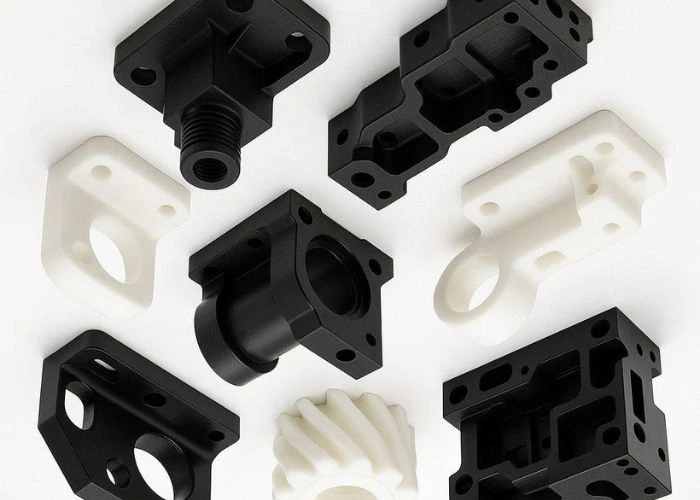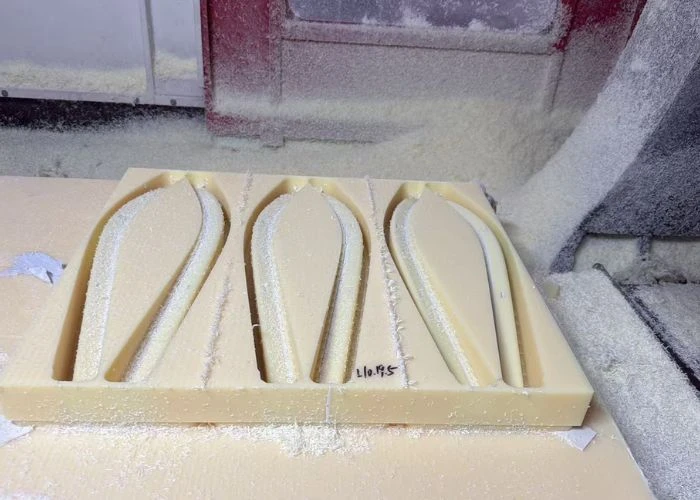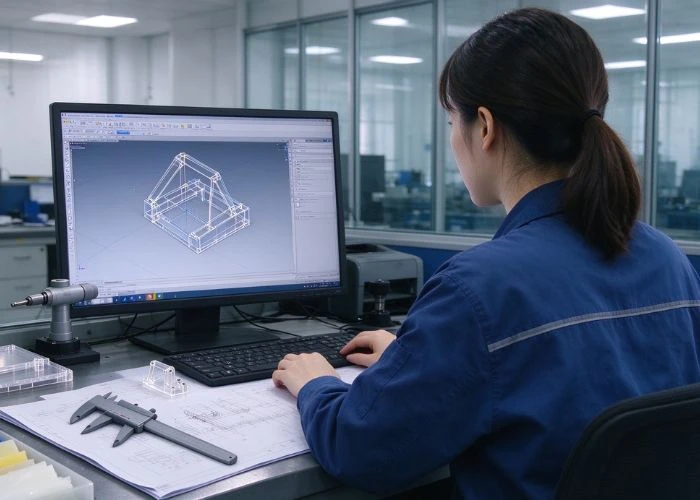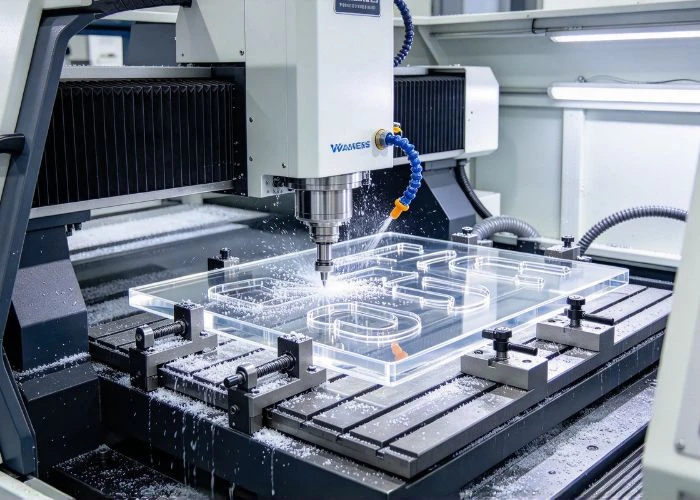

Choosing a CNC machining company involves more than comparing equipment lists, quotations, or delivery promises. For custom plastic parts, material behavior, dimensional stability, surface quality, and engineering communication can significantly influence the final result. A supplier experienced in metal machining may not necessarily have the same expertise in CNC plastic machining. We believe engineers and procurement teams should evaluate manufacturing models, technical capabilities, quality systems, and project requirements before selecting a partner. This guide explains how to compare CNC machining companies and determine which supplier is best suited to your plastic prototyping needs.
What Should You Expect From a CNC Machining Company?
A CNC machining company should do more than produce parts that visually resemble a CAD model. For engineering projects, we expect the manufacturer to understand the relationship between material selection, machining strategy, dimensional requirements, and the intended application. The most suitable supplier should also communicate manufacturing limitations clearly and provide the inspection or finishing services necessary for the customer’s next development stage.
Most CNC machining companies provide milling, turning, or a combination of both. CNC milling is commonly used for housings, brackets, mounting plates, and components with pockets or complex external features. CNC turning is more suitable for rotational parts such as bushings, rollers, spacers, and certain cylindrical components. However, the availability of a particular machine does not guarantee that the manufacturer can achieve every requested geometry or tolerance. Machine travel, tooling access, workholding arrangements, material properties, and inspection methods all affect practical manufacturing capability. We recommend reviewing representative parts and asking how the supplier would manufacture the most challenging features of your design rather than relying exclusively on a machine list.
Engineering support is equally important. A manufacturer should be able to identify areas where a design creates unnecessary machining risk, such as inaccessible internal corners, insufficient workholding surfaces, or tolerances that are difficult to maintain after the part is released from the fixture. These observations should be communicated before production whenever possible. For plastic prototyping, we also consider whether the supplier can provide material verification, dimensional inspection, surface finishing, and basic assembly support. A machined component may meet its individual drawing requirements but still require additional work before it can be used in a prototype build. Understanding the complete deliverable prevents delays and makes quotations more comparable.
What Types of CNC Machining Companies Are Available?
Not all CNC machining companies operate under the same manufacturing model. Some specialize in engineering plastics, while others primarily machine metals or coordinate production through external manufacturing networks. We recommend identifying the supplier type before requesting quotations because different business models can influence technical communication, quality responsibility, production flexibility, and the range of services available.
Plastic CNC Machining Specialists vs General Machine Shops
A general machine shop may manufacture components from aluminum, steel, brass, and various plastics. Its broad material experience can be valuable for projects involving multiple component types. However, plastic machining introduces challenges that differ from those encountered with metals. Many engineering plastics have lower stiffness, greater thermal expansion, and different responses to clamping pressure and cutting heat. These characteristics can influence dimensional stability and surface finish, particularly in thin-walled housings, large panels, and components with asymmetric material removal. We therefore assess whether a CNC machining company has practical experience with the specified plastic grade and part geometry, rather than assuming that experience with precision metal components automatically transfers to plastics.
A plastic machining specialist should be able to explain how material behavior affects the manufacturing plan. For example, machining PMMA for a transparent enclosure requires attention to surface damage and optical appearance, while POM components used in moving mechanisms may require careful control of mating dimensions and fit. Large ABS housings can introduce different concerns related to stock stability, workholding, and visible surface quality. We do not expect one universal machining method to suit every polymer. Instead, we look for evidence that the supplier adjusts machining sequences, cutting conditions, fixture design, and inspection methods according to the material and intended use. That experience is particularly valuable when prototypes must support meaningful engineering decisions.
Direct CNC Manufacturers vs Manufacturing Marketplaces
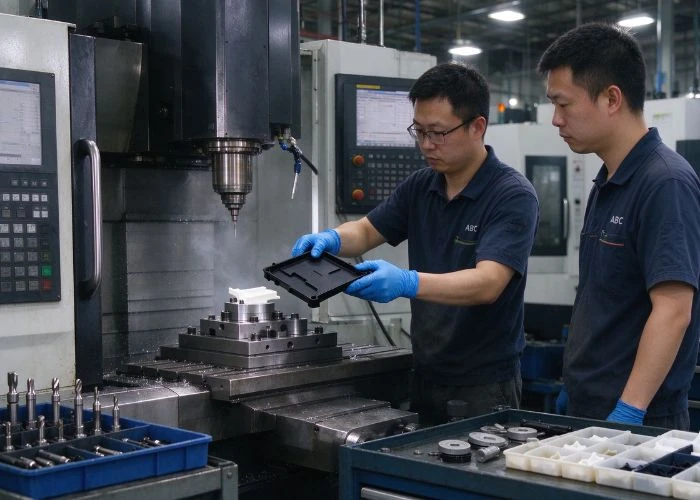
A direct CNC manufacturer operates its own machining equipment and manages production within its manufacturing organization. This arrangement can provide a relatively direct communication path between the customer, engineering team, machine operators, and quality personnel. For projects involving frequent design revisions or complex plastic components, direct access to manufacturing feedback may help clarify technical issues efficiently. However, operating a factory does not automatically guarantee superior quality or lower prices. Buyers still need to verify the manufacturer’s equipment, material experience, inspection capabilities, and ability to manage the project. We believe direct manufacturing is most valuable when the supplier’s actual technical capabilities match the customer’s requirements.
Manufacturing marketplaces and managed sourcing platforms operate differently. They may provide online quotation systems, project management tools, and access to a network of manufacturing partners. This model can be useful when a project requires several processes, production locations, or additional capacity beyond one factory’s resources. However, buyers should understand who physically manufactures the components, how production partners are qualified, and which organization is responsible for dimensional problems or rejected parts. Some platforms also operate their own facilities or use hybrid sourcing arrangements, so the distinction is not always absolute. We recommend evaluating the actual service agreement rather than making assumptions based on the supplier’s website or marketing description.
Comparison Table: CNC Machining Supplier Models
| Evaluation | Plastic CNC Specialist | General Machine Shop | Manufacturing Marketplace |
| Primary Focus | Engineering plastics and plastic components | Multiple materials and applications | Coordinated manufacturing services |
| Plastic Expertise | Often a core specialization | Depends on the shop | Depends on assigned manufacturer |
| Engineering Communication | Direct with manufacturing team | Usually direct | Often coordinated through platform |
| Process Range | Plastic machining and related services | Often broad machining capabilities | Potential access to multiple processes / |
| Quality Responsibility | Defined by manufacturer agreement | Defined by manufacturer agreement | Must clarify platform and partner responsibilities |
| Best Fit | Plastic prototypes and precision plastic parts | Mixed-material mechanical components | Multi-process or distributed sourcing |
We use this comparison to identify which sourcing model best matches the project rather than to declare one model universally superior. A plastic-focused manufacturer may be preferable for a complex cosmetic housing requiring several revisions, while a general machine shop may be efficient for a mixed-metal assembly with only a few straightforward plastic components. A manufacturing marketplace may simplify sourcing when several production methods are required. The final decision should depend on technical evidence, project management requirements, and the supplier’s ability to deliver the complete specified result.
Which CNC Machining Companies Should Engineers Compare?
When searching for a CNC machining company, buyers often encounter digital manufacturing platforms, large machining providers, and smaller specialized factories. We recommend comparing a limited number of relevant suppliers instead of relying on generic top-ten rankings. The objective is to understand each company’s manufacturing model, material capabilities, engineering support, and suitability for the project, not to identify a universally superior manufacturer.
Protolabs is an established digital manufacturing provider offering CNC machining for plastic and metal components. Its published services include machining options for materials such as ABS, acetal, polycarbonate, PMMA, and nylon, as well as design guidance and additional manufacturing capabilities. Protolabs uses a combination of internal manufacturing facilities and a supplier network, which makes it an example of a hybrid production model rather than a purely outsourced marketplace. We would evaluate its available material grades, project-specific machining limits, inspection options, and quoted production arrangement before selecting it for a particular component.
Xometry provides online CNC machining services through a manufacturing marketplace model. Its sourcing approach can be useful for buyers who want access to multiple manufacturing capabilities without qualifying every production facility independently. However, we would still confirm which technical requirements are included in the order, how inspection responsibilities are assigned, and how design revisions are communicated. A platform’s ability to access many suppliers does not mean every participating manufacturer has the same experience with complex engineering plastics. For a demanding plastic housing or precision component, the qualification of the actual production process remains important.
Fictiv is another digital manufacturing provider that buyers may consider for CNC machining and broader product development sourcing. Its managed manufacturing approach can help coordinate technical requirements across a distributed supplier base. When comparing Fictiv with a direct machine shop, we would focus on the practical details of engineering communication, production traceability, inspection deliverables, and responsibility for nonconforming parts. These factors are more useful than treating the number of manufacturing partners as a direct measure of quality. The appropriate choice depends on the customer’s need for sourcing flexibility, manufacturing visibility, and project-specific technical support.
We also recommend considering specialized plastic machining manufacturers when the project involves demanding cosmetic surfaces, unusual stock sizes, or repeated prototype revisions. A smaller direct manufacturer may provide closer interaction with the machining team, while a larger provider may offer broader capacity or more automated purchasing tools. Neither characteristic alone proves technical superiority. We would request relevant part examples, material experience, inspection methods, and a clear explanation of which operations are completed internally. This creates a more meaningful comparison than choosing suppliers based only on company size, location, or marketing claims.
Comparison Table: Representative CNC Machining Providers
| Provider | Manufacturing Model | Relevant Strength | What to Verify |
| Protolabs | In-house and manufacturing network | CNC machining, engineering guidance, material options | Project-specific limits and inspection scope |
| Xometry | Manufacturing marketplace | Broad supplier access and online sourcing | Production accountability and quality deliverables |
| Fictiv | Managed manufacturing network | Coordinated sourcing and project management | Supplier qualification and revision control |
| Specialized Plastic CNC Manufacturer | Direct or specialized production | Material-specific machining and prototype support | Actual equipment, experience, and capacity |
These are representative sourcing models, not independently verified rankings. Confirm current capabilities and commercial terms directly with each provider.
For procurement teams, we suggest preparing one consistent technical package before approaching the shortlist. The package should identify the latest CAD revision, material grade, quantity, critical dimensions, appearance requirements, inspection expectations, and required delivery condition. Suppliers should then explain any exceptions or manufacturing concerns rather than silently substituting assumptions. This approach helps us compare quotations fairly and identify which CNC machining company understands the engineering requirements most clearly. It also reduces the risk of selecting a low-priced quotation that excludes essential operations or depends on an unsuitable material or manufacturing method.

How Can You Evaluate a CNC Machining Company for Plastic Parts?
Evaluating a CNC machining company for plastic parts requires more than checking whether the supplier has machined ABS or polycarbonate before. We examine how material behavior, part geometry, tolerance requirements, finishing processes, and inspection methods interact. The most useful evidence comes from relevant manufacturing experience and a clear plan for controlling the features that matter to the customer’s application.
Material Expertise and Dimensional Accuracy
Engineering plastics respond differently to cutting forces, heat, moisture, and material removal. ABS is commonly used for housings and prototypes requiring subsequent painting, while PC is selected for applications that benefit from toughness or transparency. PMMA is relevant to clear cosmetic components, although maintaining optical appearance requires careful manufacturing and finishing. POM is frequently considered for precision mechanical components involving sliding or rotational movement. PP and PA66 introduce other considerations related to flexibility, moisture response, and dimensional stability. We expect a capable CNC machining company to understand these differences and explain how they affect the proposed manufacturing method. Published plastic machining material guides, such as those provided by Protolabs, are useful references, but the exact stock grade and project requirements still need to be confirmed.
Dimensional accuracy should be evaluated in relation to the finished part, not simply the machine’s advertised positioning accuracy. Plastic components can deform during clamping, change shape after material removal, or respond to temperature changes during inspection. For thin walls and large housings, the supplier may need to plan the machining sequence around stiffness and workholding limitations. We therefore identify critical mating dimensions, datum references, flatness requirements, and the conditions under which the finished part will be measured. Rather than applying extremely tight tolerances to every feature, we prefer a drawing that distinguishes functional interfaces from noncritical geometry. This makes the manufacturing objective clearer and allows the supplier to concentrate process control where it provides genuine engineering value.
Quality Control, Surface Finishing, and Assembly Support
Quality control begins with knowing which dimensions and surfaces determine whether a prototype can be used for its intended evaluation. A manufacturer may inspect overall dimensions with calipers, but complex geometric relationships can require coordinate measurement, optical inspection, or purpose-designed gauges. We ask how the supplier establishes measurement references, handles difficult-to-access features, and records inspection results when documentation is required. ISO 9001 certification can provide evidence of a quality management system, but it does not guarantee that every part will meet an arbitrary tolerance. For important assemblies, we also consider whether the supplier can check critical interfaces after machining and identify discrepancies before the parts are shipped.
Surface finishing can be as important as dimensional accuracy for consumer-facing plastic products. A machined housing may require sanding, painting, printing, or other cosmetic treatment before engineers can evaluate its final appearance. However, finishing operations can change visible edges, local thickness, or the fit of mating components. We recommend defining which surfaces are cosmetic, which must remain dimensionally controlled, and whether finishing is permitted near critical interfaces. For transparent components, machining and polishing expectations should be agreed upon separately from ordinary dimensional requirements. We also review how finished parts will be protected during handling and shipment, particularly when scratches or surface marks could affect appearance evaluation.
Assembly support provides another way to evaluate the practical value of a CNC machining company. A supplier that manufactures several components independently may still need to verify whether mounting holes align, inserts fit correctly, and mechanical clearances remain acceptable when the parts are combined. For multi-component prototypes, we prefer discussing assembly requirements before machining begins rather than treating assembly as an unrelated final step. This allows the manufacturing team to identify critical relationships and plan suitable inspections. Buyers can explore these considerations further in our guide to complete prototype services, which explains how component manufacturing and assembly requirements can be coordinated within a prototype development project.
What Affects CNC Machining Company Quotes and Lead Times?
Quotations from CNC machining companies can differ even when suppliers receive identical CAD files. Material availability, part geometry, programming effort, workholding, inspection, and finishing requirements all influence cost and scheduling. We recommend comparing the complete manufacturing scope rather than assuming that the lowest machining price represents the lowest project cost.
Material cost is one consideration, but machining complexity can have a greater influence on the quotation for some components. A large plastic housing may require substantial stock material, several setups, and careful support during machining. A small component with deep pockets, narrow access, or multiple precision interfaces can also require significant programming and machining time. We therefore examine the amount of material removed, tool accessibility, setup requirements, and the number of critical features. Quantity affects the calculation because programming and fixture preparation may be shared across multiple parts, but the relationship between quantity and unit price is not always linear. For prototype work, design stability can be just as important as batch size when evaluating the commercial risk.
Finishing and inspection requirements should be included in the same cost comparison. Two suppliers may quote identical CNC-machined parts, but one may include deburring and basic dimensional checks while another includes painting, printing, detailed inspection, and trial assembly. These quotations describe different deliverables. We recommend asking each supplier to identify the condition in which parts will be delivered and which additional operations are excluded. If the project includes cosmetic surfaces or multi-component assemblies, a complete quotation can help reduce coordination work across multiple vendors. Our custom plastic parts resource provides additional context for preparing consistent manufacturing requirements before requesting quotations.
Lead time should be treated as a project schedule rather than a single number. We distinguish between engineering review, material procurement, programming, machining, finishing, inspection, and shipment. If a supplier promises rapid delivery, we ask whether that estimate begins after CAD approval, material confirmation, or purchase-order acceptance. We also consider how design revisions could affect the schedule. A short machining cycle does not necessarily mean the entire prototype will be ready quickly if painting, printing, or assembly requires additional preparation. Reliable delivery planning depends on clearly defined milestones and realistic coordination between manufacturing stages.
What Questions Should You Ask Before Choosing a CNC Machining Supplier?
Before approving a CNC machining company, we recommend using a structured evaluation checklist. The purpose is not to create unnecessary paperwork but to confirm that the supplier understands the part’s functional requirements, manufacturing risks, and expected deliverables. Written answers make it easier to compare suppliers and resolve disagreements before production begins.
CNC Machining Supplier Evaluation Checklist
| Evaluation Area | Question to Ask | Evidence to Request |
| Manufacturing Model | Who will manufacture the parts? | Factory and production responsibility |
| Plastic Experience | Have you machined this material and similar geometry? | Relevant part examples |
| Machining Capability | Can your equipment and fixtures accommodate the part? | Manufacturing approach |
| Critical Tolerances | How will important dimensions be controlled and inspected? | Inspection plan |
| Cosmetic Quality | Can you meet the required visible finish? | Finish samples or specifications |
| Assembly | Can you verify component fit before shipment? | Assembly scope |
| Revision Control | How do you identify and approve CAD changes? | Revision procedure |
| Quotation | Which services are included and excluded? | Itemized quotation |
| Lead Time | Which milestones determine the delivery date? | Project schedule |
| Quality Issues | How are nonconforming parts handled? | Corrective-action process |
We recommend assigning greater importance to the criteria that directly affect the project. For a transparent medical device housing, surface appearance and dimensional fit may deserve more attention than broad production capacity. For a POM mechanical component, mating dimensions, material grade, and inspection methods may be more important. A large industrial enclosure may require evidence of suitable machine travel, stock availability, and deformation-control experience. This project-specific approach is more useful than giving every supplier the same generic score. It also prevents a strong performance in an unrelated category from hiding a critical technical limitation.
We also consider how a supplier responds to uncertainty. A manufacturer that asks thoughtful questions about material grades, datum references, or cosmetic expectations may be demonstrating a more careful engineering review than one that accepts every requirement immediately. We do not expect suppliers to eliminate all manufacturing risk before receiving an order. We do expect them to identify significant assumptions and explain how those assumptions will be resolved. For international projects, clear communication about drawing revisions, acceptance criteria, packaging, and shipping responsibilities is particularly important. A reliable supplier relationship depends on shared technical understanding as much as machining equipment.
Why Does Direct Manufacturing Matter for Plastic Prototyping?
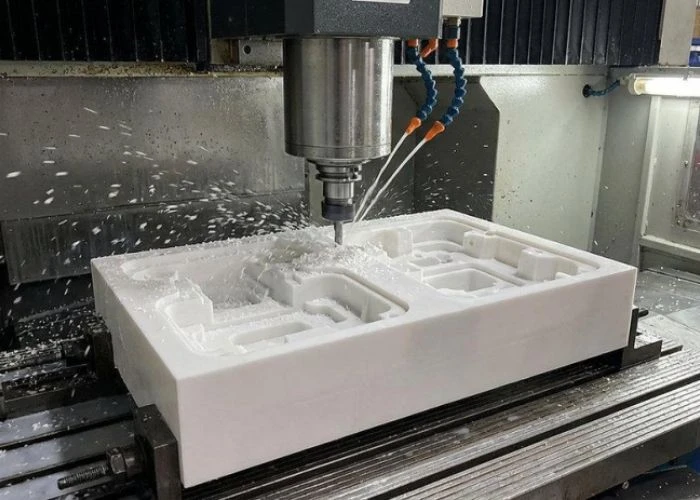
Plastic prototyping often involves more engineering interaction than a straightforward repeat production order. Drawings may change after fit checks, cosmetic reviews, or assembly trials, and those changes can affect several components simultaneously. We believe direct manufacturing can be valuable when the supplier combines practical machining experience with responsive engineering communication and the finishing or assembly services needed for the prototype.
For example, a multi-part consumer electronics housing may include CNC-machined ABS structural components, transparent PMMA windows, and smaller POM mechanical features. Each material presents different manufacturing considerations, but the components must still fit together according to the same assembly references. If a mounting feature changes, the manufacturing team may need to review the corresponding parts before machining continues. Direct communication between programming, machining, finishing, and assembly personnel can help identify these dependencies. However, the advantage comes from effective coordination, not simply from owning machines. A direct manufacturer with poor documentation or weak inspection controls may still create substantial project risk.
At UForProto, we are a direct plastic prototype manufacturer based in Foshan, China, rather than a trading company. Our manufacturing services include CNC plastic machining, 3D printing, vacuum casting, surface finishing, and prototype assembly. We work with engineering teams developing medical device housings, beauty devices, consumer electronics, personal care appliances, industrial equipment, and other plastic products. Our focus is on manufacturing plastic components and coordinating the operations needed to deliver suitable physical prototypes. We do not provide injection molding or complete-machine functional testing. By keeping those boundaries clear, we can concentrate on the prototype manufacturing activities that match our actual production capabilities.
We encourage customers to define what their prototype must demonstrate before selecting a manufacturing process. A dimensional prototype may require accurate mounting features and specified engineering plastic. A cosmetic prototype may place greater emphasis on visible surfaces, color, and assembly gaps. A multi-component build may require trial fitting and adjustment of several interfaces. These objectives influence how we plan plastic prototyping and determine which manufacturing and finishing operations are appropriate. When a design contains avoidable manufacturing difficulties, an early design for manufacturability review can help clarify practical changes before production begins. The aim is to manufacture prototypes that answer defined engineering questions, not simply reproduce CAD geometry.
For teams preparing a new prototype project, we can review CAD files, drawings, materials, quantities, surface requirements, and assembly information to assess manufacturing feasibility and prepare a quotation. Engineers and procurement managers can send project details to info@uforproto.com. We recommend including the intended purpose of the prototype and identifying any critical dimensions or visible surfaces that require special attention. This helps us evaluate whether the proposed manufacturing approach is appropriate and communicate relevant limitations before production begins.
How Should You Make the Final CNC Supplier Decision?
The final selection should connect technical capability, supplier responsibility, total cost, and project risk. We recommend using the same requirements for every shortlisted CNC machining company and documenting any exceptions before approving production. This makes the decision easier to explain internally and reduces the chance that important manufacturing assumptions are overlooked.
We begin by defining the project’s purpose. A single appearance prototype, a precision mechanical component, and a small batch of assembly-ready plastic parts may require different manufacturing arrangements. Next, we determine whether a plastic specialist, general machine shop, or manufacturing platform is most appropriate. We then compare relevant experience, machining capability, inspection plans, finishing scope, communication procedures, and quotation details. When suppliers propose alternative materials or manufacturing methods, we assess those changes against the actual design requirements rather than accepting them solely to reduce price. The preferred supplier should demonstrate a practical understanding of the work and a credible plan for delivering the specified result.
We also recommend considering the consequences of a manufacturing problem, not only its probability. A cosmetic defect on an early appearance sample may require refinishing, while an incorrect datum or mounting interface can invalidate an entire assembly review. For a critical prototype, inspection evidence and revision control may therefore justify additional cost. For a simpler component, a more streamlined manufacturing arrangement may be sufficient. This risk-based approach helps avoid both under-specification and unnecessary overengineering. Ultimately, choosing a CNC machining company should be a decision about dependable engineering outcomes rather than a competition between advertised tolerances, machine counts, or headline prices.
Conclusion
Choosing the right CNC machining company requires evaluating material expertise, machining accuracy, quality control, and engineering support—not just price. For custom plastic parts, we recommend selecting a manufacturer with proven CNC plastic machining experience and reliable communication. The right supplier can improve prototype quality, reduce manufacturing risks, and support efficient product development.
FAQs
1. How Do I Choose the Right CNC Machining Company?
We recommend comparing suppliers based on relevant material experience, machining capability, inspection methods, finishing requirements, and engineering communication. Send the same technical package to each candidate and review any exceptions. The right CNC machining company should demonstrate that it understands the component’s critical requirements and can deliver the specified parts consistently.
2. What Is the Difference Between a Plastic CNC Machining Company and a General Machine Shop?
A plastic CNC machining company focuses on manufacturing plastic components and may have deeper experience with polymer-specific machining challenges. A general machine shop typically processes a broader range of materials, often including metals. Both can manufacture plastic parts, but buyers should verify relevant experience with material behavior, dimensional stability, surface finish, and the required geometry.
3. Is a Direct CNC Manufacturer Better Than a Manufacturing Marketplace?
Not necessarily. A direct manufacturer may offer closer communication with the production team, while a manufacturing marketplace may provide access to broader manufacturing resources. We recommend evaluating the actual production arrangement, supplier qualifications, quality responsibilities, and engineering support. The better option depends on the complexity and sourcing needs of the project.
4. What Materials Can a CNC Machining Company Process?
CNC machining companies may process metals and engineering plastics, depending on their equipment and expertise. Common machinable plastics include ABS, PC, PMMA, POM, PP, and nylon. We recommend confirming the exact material grade, stock form, and dimensional requirements because experience with one polymer does not automatically demonstrate capability with every plastic material.
5. What Information Should I Provide for a CNC Machining Quote?
We recommend providing 3D CAD files, 2D drawings, material specifications, quantities, critical tolerances, surface requirements, and expected delivery dates. For multi-component prototypes, include assembly relationships and the intended evaluation purpose. Clear documentation helps a CNC machining company identify manufacturing risks, reduce assumptions, and prepare a more accurate quotation.
6. Can a CNC Machining Company Handle Prototype Finishing and Assembly?
Some CNC machining companies offer finishing and assembly services, while others only supply machined components. Available operations may include sanding, painting, printing, insert installation, and mechanical fit-up. We recommend confirming which services are performed internally, what acceptance criteria apply, and whether the supplier can inspect critical interfaces after assembly.