
Choosing among injection molding companies requires more than comparing prices or production capacity. Manufacturers differ in tooling capabilities, material experience, quality systems, engineering support, and suitability for different production volumes. A supplier that performs well in mass production may not be the right partner for an evolving product design. In this guide, we examine how to compare injection molding manufacturers, evaluate quotations, identify sourcing risks, and determine when plastic prototyping should come before production tooling. Our goal is to help engineers and procurement teams make informed supplier decisions.
What Do Injection Molding Companies Actually Provide?
Injection molding companies manufacture plastic components by injecting molten polymer into precision tooling. However, their responsibilities often extend beyond operating molding machines. Depending on the supplier, services may include design for manufacturability, mold development, resin selection, production planning, dimensional inspection, and secondary operations. We recommend understanding the complete service scope before assuming that every injection molding manufacturer offers the same capabilities.
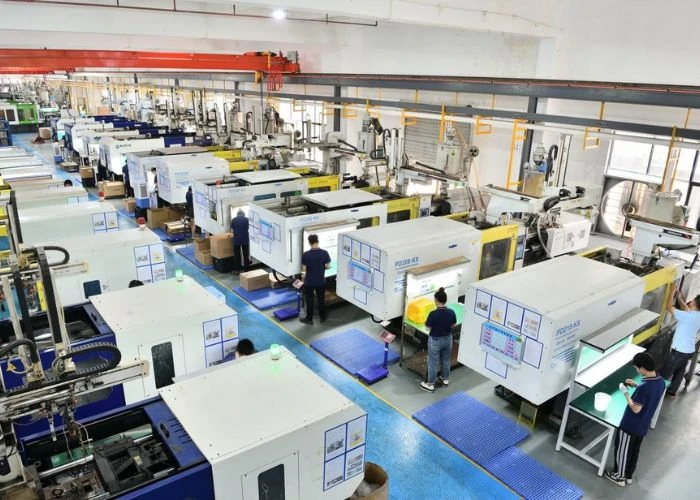
Some injection molding companies operate both tooling workshops and molding facilities, allowing their engineering teams to coordinate mold construction, trial production, and subsequent process adjustments. Others focus on molding operations while outsourcing tool fabrication to specialized moldmakers. Both arrangements can produce reliable components when responsibilities are clearly defined. The critical issue is how engineering information moves between the mold designer, toolmaker, molding technician, and customer. If a dimensional problem appears during trial production, the supplier should be able to explain who investigates the root cause, who approves corrective changes, and who pays for modifications. A technically capable manufacturer should also identify which services are performed internally and which depend on subcontractors, particularly when tooling schedules and quality accountability are important.
We also distinguish between molding production and the additional services required to deliver an assembly-ready component. A plastic housing may need painting, printing, threaded inserts, ultrasonic welding, or inspection documentation before it can enter the customer’s assembly process. These requirements influence supplier selection because the lowest molded-part quotation may exclude substantial downstream work. For products involving cosmetic surfaces, we examine whether the supplier can maintain color, texture, and visible quality across repeated production batches. For mechanical components, we focus more heavily on dimensional capability, resin traceability, and process consistency. Defining these expectations early makes it easier to compare injection molding companies on the same technical basis rather than relying on broad claims about manufacturing quality.
What Types of Injection Molding Companies Should You Consider?
Not all injection molding companies are structured around the same production model. Some prioritize high-volume manufacturing, while others specialize in shorter runs, demanding applications, or coordinated sourcing through manufacturing networks. We find that identifying the appropriate supplier category before requesting quotations can reduce wasted communication and prevent teams from comparing companies that are designed to serve fundamentally different requirements.
High-volume injection molding manufacturers are generally most attractive when a product design is stable and demand can justify dedicated tooling, process development, and recurring production. Their strengths may include automation, multiple cavities, scheduled material procurement, and repeatable quality controls. However, a high-volume production environment is not necessarily optimized for frequent engineering changes or a handful of evaluation parts. Low-volume molding suppliers may offer more flexible ordering arrangements or tooling options, but their economics still depend on mold construction, setup costs, and expected part quantities. We therefore avoid treating minimum order quantity as a universal dividing line. A supplier’s practical minimum depends on its commercial model, equipment, tooling arrangement, and willingness to support short production runs.
Specialized manufacturers focus on applications requiring particular technical expertise, such as medical components, automotive parts, optical surfaces, or high-performance engineering polymers. Their value comes from relevant manufacturing experience and documented controls rather than industry labels alone. Digital manufacturing platforms operate differently: they coordinate quotations, engineering communication, and manufacturing through their own facilities, partner networks, or combinations of both. These platforms can simplify supplier discovery, especially when several manufacturing processes are required. However, we still recommend confirming who physically produces the parts, how production sites are qualified, and which organization is responsible for quality issues. A convenient purchasing interface does not remove the need for clear manufacturing accountability.
Comparison Table: Types of Injection Molding Companies
| Supplier Type | Best Suited For | Main Strength | Key Risk to Evaluate |
| High-Volume Manufacturer | Stable production programs | Repeatability and production efficiency | Engineering-change flexibility |
| Low-Volume Molder | Limited or recurring small runs | More flexible production arrangements | Tooling and setup economics |
| Specialized Molder | Industry-specific components | Application-specific experience | Actual process and quality scope |
| Manufacturing Platform | Coordinated sourcing | Supplier access and project coordination | Production visibility and accountability |
We use this comparison to narrow the supplier list before discussing price. For example, a purchasing team sourcing thousands of identical plastic connectors each month may prioritize stable production capacity and documented process control. A product development team still changing a housing design may need engineering feedback and limited initial quantities instead. The supplier category does not guarantee performance, but it helps establish whether the manufacturer’s business model matches the project. Once that alignment is clear, we can evaluate technical capability, quality, commercial terms, and long-term risk in greater detail.
Which Injection Molding Companies Are Worth Comparing?
When researching injection molding companies, we recommend creating a shortlist based on manufacturing models rather than selecting suppliers solely from a popularity ranking. A well-known company may offer an efficient digital quoting process, while a smaller specialist may have stronger experience with a particular polymer or component geometry. The following examples illustrate different sourcing options, not an independent ranking of manufacturing quality.
Established Manufacturers and Digital Manufacturing Platforms
Protolabs provides injection molding services that distinguish between development-oriented tooling and on-demand production. Its published service information illustrates why tooling life, part pricing, inspection documentation, and ownership conditions should be reviewed as separate purchasing decisions. Fictiv operates a digital manufacturing model that connects customers with manufacturing capabilities through a managed supplier ecosystem. Xometry is another established manufacturing marketplace that buyers may evaluate when sourcing injection-molded components. We would compare these organizations by the specific service offered for a project rather than assuming their operating models, quality arrangements, or contractual responsibilities are identical.
For buyers who prefer to work directly with a molding facility, regional manufacturing directories can provide a different starting point. Thomasnet’s injection molding supplier guide identifies companies such as Wabash Plastics, Advantech Plastics, and Prime Molding Technologies, along with publicly listed manufacturing characteristics. These examples are useful because they show that supplier specialization can vary by component size, material range, production volume, and industry. However, directory inclusion is not proof that a supplier is suitable for a particular project. We would still request current equipment capabilities, relevant project examples, quality documentation, and confirmation of the actual manufacturing location before proceeding with a qualification review.
Comparison Table: Representative Injection Molding Companies
| Company | Publicly Described Model | What Buyers Should Evaluate |
| Protolabs | Injection molding services with development and production options | Tooling terms, inspection options, volume fit |
| Fictiv | Managed digital manufacturing ecosystem | Manufacturing responsibility, DFM support, quality reporting |
| Xometry | Manufacturing marketplace | Supplier qualification, production visibility, technical support |
| Wabash Plastics | Injection molding manufacturer listed by Thomasnet | Part-size suitability, capacity, materials |
| Advantech Plastics | Injection molding manufacturer listed by Thomasnet / Thomasnet | Relevant application experience and quality requirements |
| Prime Molding Technologies | Injection molding manufacturer listed by Thomasnet / Thomasnet | DFM, tooling coordination, production requirements |
The table is a sourcing starting point, not a quality ranking. Capabilities, terms, and availability must be confirmed for each RFQ.
A useful shortlist should contain suppliers that can be compared against the same project requirements. We normally recommend sending an identical technical package to each candidate, including the latest CAD revision, material grade, annual volume estimate, critical dimensions, cosmetic requirements, and expected production schedule. Without a consistent information package, one supplier may quote basic molded parts while another includes inspection, inserts, or finishing. The resulting prices will appear comparable even though the deliverables are different. We also suggest recording unanswered technical questions alongside each quotation. A supplier that identifies realistic manufacturing risks early may provide greater project value than one that immediately promises to meet every requirement without qualification.
How Should Engineers Evaluate Injection Molding Companies?
Comparing injection molding companies requires a structured technical review that goes beyond brochures and general certifications. We begin with the component’s functional requirements, then examine whether the supplier has suitable equipment, material experience, quality controls, and engineering support. A credible evaluation should identify evidence of capability, not simply collect positive answers to a questionnaire.
Manufacturing Capabilities, Materials, and Production Volume
Manufacturing capability starts with the relationship between part geometry, resin behavior, and available equipment. We would ask whether the supplier’s molding machines can accommodate the required tool dimensions, shot size, and clamping requirements. Equally important is experience with the specified polymer grade, particularly when the design involves glass-filled materials, flame-retardant formulations, transparent components, or demanding cosmetic surfaces. A manufacturer may routinely process ABS but have limited experience with a particular reinforced polycarbonate blend. That difference matters because material handling, drying, flow behavior, and process conditions influence dimensional stability and part quality. We prefer suppliers who can discuss relevant manufacturing experience and material-specific risks rather than treating all thermoplastics as interchangeable.
Production volume should also be evaluated over the entire product life cycle. A supplier may be comfortable producing an initial batch but unable to support a significant increase in annual demand. Conversely, a factory optimized for large recurring orders may have high setup costs or limited scheduling flexibility for small releases. We recommend discussing forecast quantities, order frequency, seasonal demand, and possible design revisions before selecting the production model. The goal is not simply to confirm that a supplier can produce the first order. It is to determine whether its capacity planning, tooling strategy, and quality controls remain appropriate as demand changes. A strong supplier should explain the assumptions behind its proposed production arrangement.
Quality Control, Tolerances, and Industry Requirements
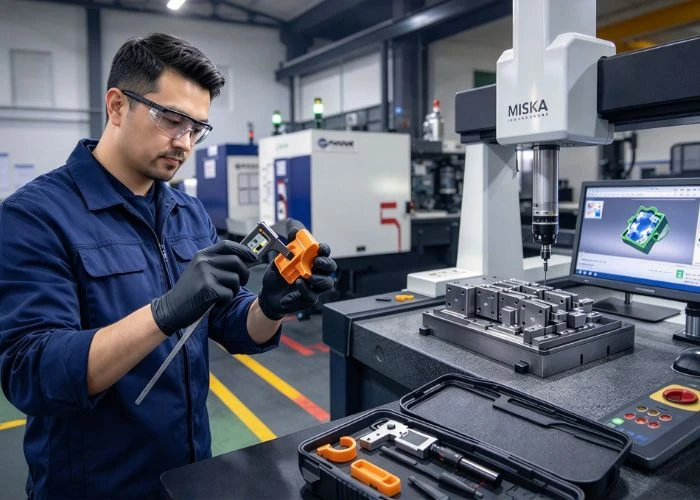
Quality evaluation should begin with the dimensions and characteristics that determine whether the part performs its intended function. We recommend identifying critical-to-quality features, such as mating surfaces, mounting locations, sealing interfaces, and dimensions that affect downstream assembly. The supplier should then explain how these characteristics will be measured, how frequently inspections will occur, and what happens when results fall outside specification. Depending on the project, relevant methods may include first article inspection, coordinate measuring machines, optical measurement, statistical process control, or documented sampling plans. A general statement that a factory performs quality inspection is insufficient unless the inspection method and acceptance criteria are defined.
Certifications provide useful information about management systems, but they should be interpreted within their actual scope. ISO 9001, for example, addresses quality management requirements; it does not automatically demonstrate compliance with every medical, automotive, or other industry-specific obligation. We also review whether the supplier can maintain resin lot traceability, document approved process changes, and preserve inspection records when required. For critical applications, buyers may need additional supplier audits, process qualification, or customer-specific documentation. We consider these requirements part of the sourcing decision because a low quotation loses value if the supplier cannot provide the evidence necessary for product acceptance or regulatory compliance.
Tooling Ownership, Engineering Support, and Delivery Reliability
Tooling ownership is one of the most important contractual issues when comparing injection molding companies. Paying a tooling charge does not necessarily establish unrestricted ownership or the right to remove the mold. Some agreements distinguish customer-owned tooling from supplier-owned standard components, while others include storage periods, maintenance conditions, or transfer fees. We recommend obtaining written clarification of who owns the tool, where it will be stored, who pays for repairs, and what happens if production is transferred to another supplier. Protolabs, for example, publishes different ownership and storage arrangements for certain tooling service options, illustrating why buyers should review the specific quotation and contract rather than assume one universal policy.
Engineering support and delivery reliability are closely connected. A supplier that identifies a problematic wall transition or difficult-to-mold feature during DFM review may prevent later delays during tool trials. We therefore examine how engineering changes are proposed, documented, approved, and incorporated into the production drawing. Delivery schedules should also distinguish between design approval, tooling completion, first molded samples, sample acceptance, and recurring production. A quoted tooling lead time is not necessarily the same as the date when approved production parts will be available. We prefer schedules with identifiable milestones and clear responsibilities because they make it easier to manage design changes, inspection findings, and corrective actions without losing control of the overall project.
What Factors Affect Quotes From Injection Molding Companies?
Quotations from injection molding companies can differ substantially even when suppliers receive the same CAD model. The difference may come from tooling assumptions, production quantities, material specifications, inspection requirements, or services excluded from the quoted price. We recommend comparing the total commercial and technical scope rather than selecting the supplier with the lowest visible unit price.
A complete quotation should separate initial tooling investment from recurring part costs whenever possible. Tooling expenses may include engineering review, mold construction, trial runs, and agreed modifications, while recurring costs can include resin, machine time, labor, quality inspection, and packaging. The estimated production quantity has a major effect on how those costs are distributed. A supplier offering a lower tooling price may quote a higher unit price, while another may recommend more expensive tooling to improve production efficiency over a longer program. Neither approach is automatically better. We calculate the expected cost over the relevant production horizon and consider whether the forecast volume is sufficiently reliable to justify the proposed tooling investment.
Material specifications and downstream requirements can also change the quotation. A standard resin may have different purchasing and processing costs from a reinforced, flame-retardant, or specialty grade. Cosmetic surfaces, color matching, inserts, printing, assembly, and dimensional reports may introduce additional operations. We also examine whether quotations include scrap allowances, setup charges for repeat orders, material certification, shipping, and engineering-change fees. For international sourcing, the comparison should account for applicable shipping terms, duties, taxes, and logistics responsibilities. These items are not always visible in the initial price, but they can materially affect the total landed cost and the effort required to manage the supplier.
Example: Comparing Two Injection Molding Quotations
Consider a hypothetical project requiring 10,000 acceptable plastic parts. Supplier A quotes $8,000 for tooling and $2.40 per part, while Supplier B quotes $14,000 for tooling and $1.60 per part. Before inspection, logistics, and other charges, the estimated totals are $32,000 and $30,000 respectively. Although Supplier A has the lower tooling charge, Supplier B becomes less expensive over the stated quantity. At 5,000 parts, however, Supplier A would total $20,000 while Supplier B would total $22,000. This example shows why we compare projected volume and total cost rather than tooling price or unit price in isolation. The figures are illustrative, not actual supplier quotations.
What Questions Should You Ask Before Choosing an Injection Molding Company?
Before selecting an injection molding company, we recommend converting project requirements into a written supplier evaluation checklist. The purpose is to obtain comparable evidence about technical capability, commercial terms, and project responsibility. Questions should be specific enough to reveal differences between suppliers, but relevant to the actual component rather than creating unnecessary documentation requirements.
Supplier Evaluation Checklist
| Evaluation Area | Question | Evidence |
| Production Capacity | Can you support our expected annual volume and release schedule? | Capacity plan |
| Material Experience | Have you processed our specified resin grade? | Relevant examples |
| DFM Support | How are design risks reviewed before tooling approval? | DFM review process |
| Tooling Ownership | Who owns, maintains, stores, and transfers the mold? | Written tooling terms |
| Dimensional Quality | How will critical dimensions be inspected? | Inspection plan |
| Traceability | Can resin lots and production changes be traced? | Traceability records |
| Lead Time | When will first samples and approved production parts be available? | Milestone schedule |
| Commercial Scope | What costs are excluded from the quotation? | Itemized quote |
| Change Control | Who approves and pays for engineering changes? | Change procedure |
| Supply Continuity | What happens if equipment or tooling becomes unavailable? | Contingency plan |
We use the answers to distinguish manageable risks from unresolved concerns. For example, a supplier may have sufficient machine capacity but no documented procedure for controlling resin substitutions. Another may provide strong inspection capability while leaving tooling transfer rights unclear. These are different types of risk and should not be combined into a single subjective quality score. A practical evaluation can assign greater importance to the requirements most likely to affect product acceptance, schedule, or long-term supply. We also recommend keeping supplier responses alongside the latest drawing revision so that later design changes do not invalidate the original comparison without being noticed.
A supplier’s willingness to explain limitations is also informative. We do not expect every manufacturer to accept every material, tolerance, production volume, or delivery target. Instead, we look for clear technical reasoning, realistic assumptions, and an established process for resolving open questions. When suppliers identify risks, we ask whether they can propose a practical alternative without compromising critical requirements. This approach is particularly valuable for new product introductions, where specifications may evolve as engineering teams gather more information. A transparent supplier relationship can prevent costly misunderstandings long before the first production order is placed.
When Should You Choose a Prototype Manufacturer Before an Injection Molding Company?
Injection molding companies are essential when a product is ready for molded-part development or production, but production tooling is not always the first manufacturing investment a project needs. When geometry, assembly interfaces, or appearance requirements remain uncertain, plastic prototyping can provide physical evidence before tooling decisions become expensive to reverse. We recommend selecting the manufacturing process according to the question the engineering team needs to answer.
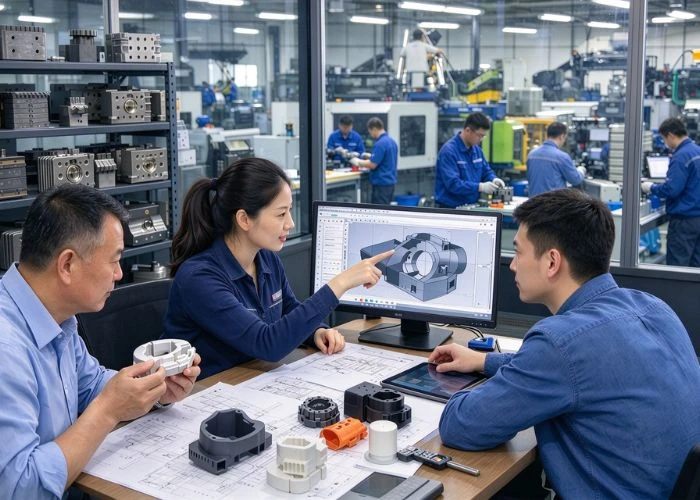
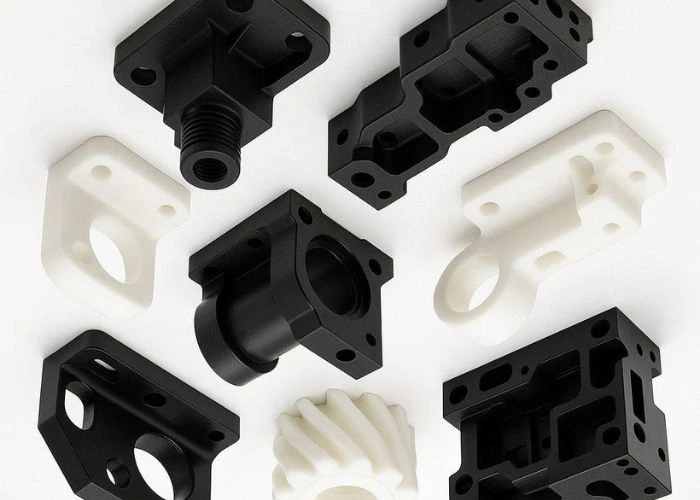
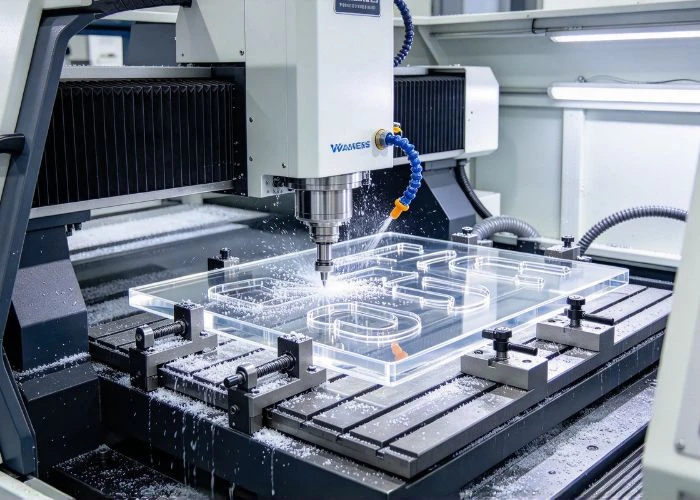
For early geometry evaluation, 3D printing can help engineers compare alternative shapes, check internal clearances, and review component layouts. When specified engineering plastics or accurately machined interfaces are important, CNC plastic machining may provide more relevant evaluation parts. A CNC-machined ABS or POM component, for example, can support dimensional inspection and selected mechanical assembly assessments using the chosen stock material. However, machining does not reproduce the flow orientation, shrinkage behavior, or residual stresses of an injection-molded component. We therefore define the intended validation objective before choosing a prototype method. The goal is to identify design problems early, not to claim that a successful machined prototype guarantees a successful injection molding process.
Vacuum casting is another option when the team needs several similar plastic parts for appearance evaluation, assembly trials, or limited development batches. Silicone molds can reproduce suitable master patterns without the investment associated with production injection tooling. Nevertheless, the resulting polyurethane materials are not automatically equivalent to the intended injection-molding resin. Their mechanical properties, temperature response, and long-term behavior must be assessed according to the application. For multi-component products, prototype assembly can also reveal misaligned mounting features, insufficient fastening access, and inconsistent visible gaps. These findings can support design improvements before a production mold is approved, even though the actual molding process still requires its own validation.
At UForProto, we are a direct plastic prototype manufacturer in China, not a trading company or an injection molding supplier. Our in-house services include plastic prototyping, CNC plastic machining, 3D printing, vacuum casting, surface finishing, and complete prototype assembly. We support engineers developing consumer electronics, medical device housings, beauty devices, personal care appliances, and industrial equipment. Our role is to manufacture and assemble suitable prototypes for dimensional, appearance, and mechanical-fit evaluation before customers move toward production. We do not manufacture injection molds, perform injection molding, or provide complete-machine functional testing. This distinction helps customers select the right manufacturing partner for the right development stage.
How Can You Make the Final Supplier Selection?
The final decision should connect supplier capability with the project’s actual development stage, technical requirements, and commercial risks. We recommend using a structured decision process instead of selecting a manufacturer based on one attractive quotation or a broad claim of industry experience. A strong supplier choice should remain defensible when engineers, procurement managers, and quality teams review the same evidence.
We begin by confirming whether the product design is ready for production tooling. If critical dimensions, assembly interfaces, or cosmetic requirements remain unresolved, additional prototype evaluation may be appropriate. Once the design is sufficiently mature, we compare qualified injection molding companies against a consistent technical package and evaluate their responses in four areas: manufacturing capability, quality assurance, total commercial cost, and project execution risk. We also confirm tooling ownership, inspection deliverables, change-control procedures, and the schedule for approving molded samples. The best supplier is not necessarily the one with the lowest initial quotation; it is the one whose documented capabilities and contractual responsibilities match the product’s requirements over the intended production period.
For projects that are not yet ready for injection molding, we can review CAD files and help determine whether CNC plastic machining, 3D printing, vacuum casting, or prototype assembly is appropriate for the next development step. Engineers and purchasing teams can send us their drawings, material preferences, quantities, surface requirements, and assembly information at info@uforproto.com for a prototype manufacturing quotation. We recommend clearly identifying the intended validation objectives so that the proposed manufacturing process addresses the actual engineering risks rather than producing samples without a defined purpose.
Conclusion
Selecting among injection molding companies requires a balanced assessment of manufacturing capabilities, material experience, quality systems, tooling agreements, and long-term production needs. We recommend comparing suppliers through consistent technical requirements and documented evidence rather than relying on price or reputation alone. Tooling ownership, inspection responsibilities, and engineering-change procedures deserve particular attention because they can affect cost and delivery throughout the product life cycle. When a design is still evolving, plastic prototyping can help resolve geometry and assembly questions before production tooling is approved. Ultimately, the right manufacturing partner depends on the project’s maturity, technical risks, expected volume, and quality requirements.
FAQs
1. How Do I Choose the Best Injection Molding Company for My Project?
We recommend comparing injection molding companies based on material experience, equipment capability, production volume, quality requirements, and tooling terms. Request comparable quotations using the same technical documents, then review the supplier’s ability to manage design changes, inspection, and delivery. The best choice depends on your specific project rather than a general company ranking.
2. What Is the Difference Between an Injection Molding Manufacturer and a Manufacturing Platform?
An injection molding manufacturer directly operates molding equipment, while a manufacturing platform may coordinate production through internal facilities, external suppliers, or both. Platforms can simplify sourcing and project communication, but buyers should confirm the actual manufacturing location, quality responsibilities, and supplier qualification procedures before placing an order.
3. Do Injection Molding Companies Have Minimum Order Quantities?
Minimum order quantities vary among injection molding companies. Some offer flexible ordering arrangements, while others require larger production volumes to justify tooling, machine setup, and material handling. We recommend evaluating the total cost at your expected quantity rather than assuming that a low MOQ automatically makes a supplier more economical.
4. Who Owns the Injection Mold After Tooling Is Completed?
Mold ownership depends on the supplier agreement. Paying a tooling fee does not always guarantee unrestricted ownership or transfer rights. Before approving tooling, we recommend confirming ownership, storage, maintenance, repair responsibilities, and transfer conditions in writing. These terms can become important if production moves to another manufacturer.
5. What Information Should I Send to an Injection Molding Company for a Quote?
We recommend providing a 3D CAD model, 2D drawing, material grade, estimated order quantity, annual demand, critical tolerances, cosmetic requirements, and expected delivery schedule. Include any special inspection or regulatory requirements. A complete technical package helps suppliers identify manufacturing risks and prepare quotations with fewer assumptions.
6. Should I Build a Plastic Prototype Before Contacting an Injection Molding Company?
A prototype is useful when geometry, assembly fit, or appearance still requires evaluation. CNC plastic machining and other plastic prototyping methods can help identify selected design problems before tooling investment. However, prototype manufacturing cannot replace molding-specific validation, and an early discussion with an injection molding supplier can also help identify production design constraints.