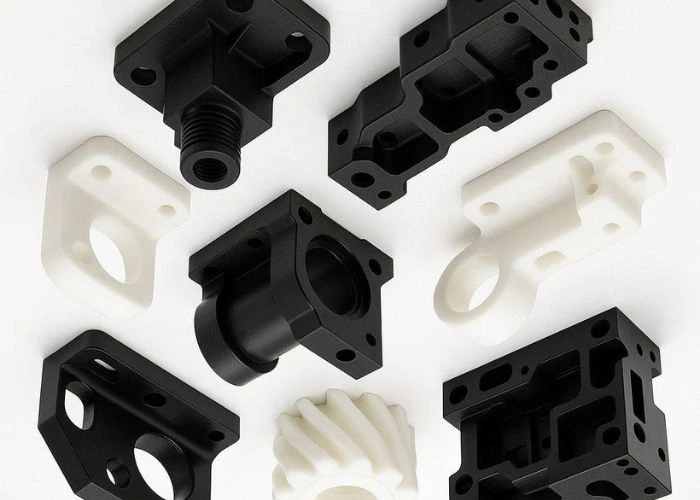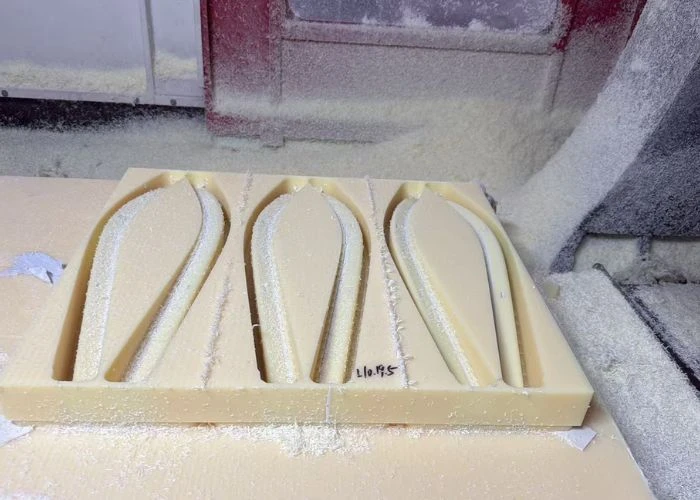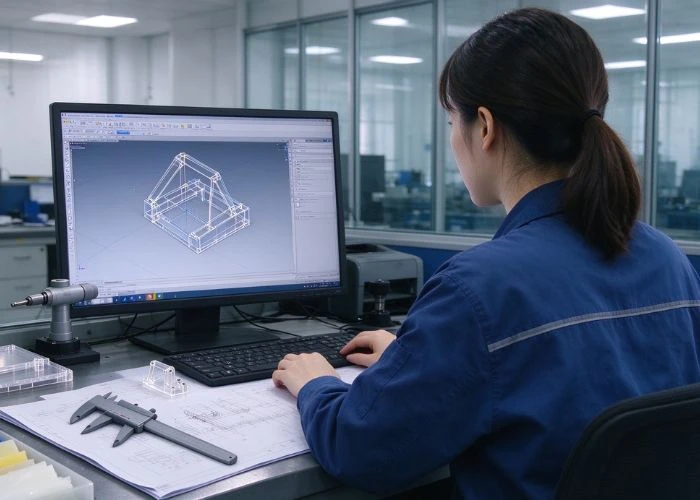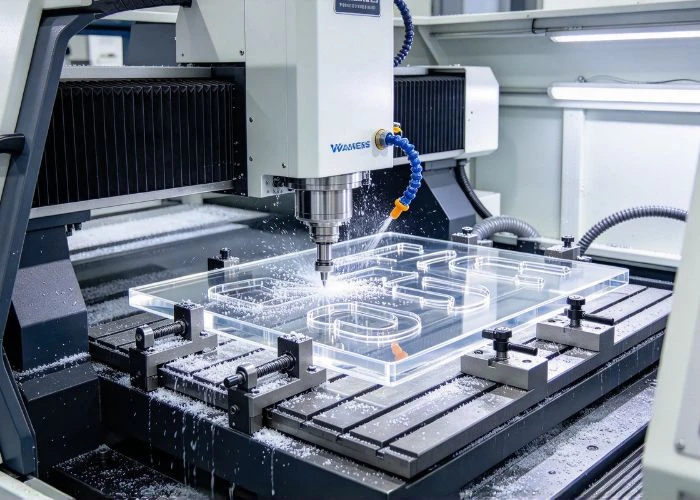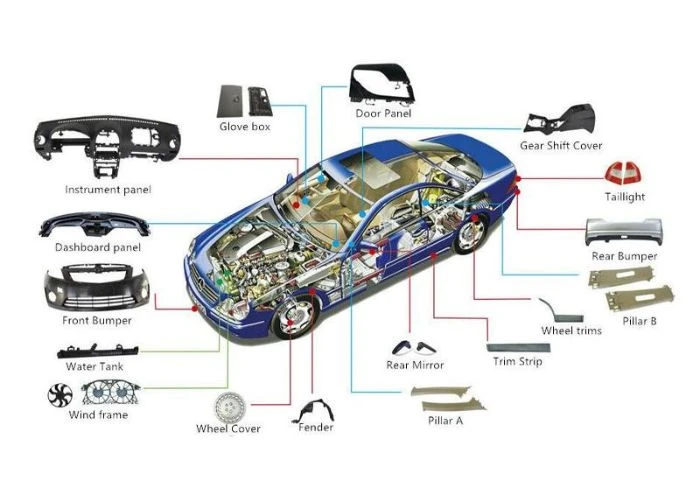

Plastic automotive components are essential to modern vehicle design, from interior panels and exterior trim to electrical housings and precision mechanical parts. Engineers select these components based on weight, strength, temperature resistance, dimensional stability, and manufacturing requirements. However, choosing a suitable plastic is only one part of the development process. The geometry, intended function, and production stage also determine how a component should be manufactured. In this guide, we examine common automotive plastic parts, compare engineering materials, and explain how CNC plastic machining and other plastic prototyping methods support product development before production.
What Are Automotive Interior Plastic Components?
Automotive interior plastic components include dashboard housings, center console panels, display bezels, door trim, and supporting structures used inside vehicle cabins. During product development, these components are often manufactured as prototypes before production tooling is finalized. We focus on creating physical plastic parts that allow engineers to examine design geometry, component interfaces, and overall assembly feasibility.
Unlike finished automotive replacement parts, interior plastic prototypes are primarily developed for engineering evaluation. A prototype may represent an early concept, a revised housing design, or a set of components prepared for assembly review. The manufacturing objective is therefore determined by the development stage rather than the final commercial application of the part.
Through plastic prototyping, engineers can obtain physical samples to review geometry, identify design conflicts, and communicate revisions before committing to production tooling. We recommend defining the purpose of each prototype early so the manufacturing approach matches the engineering questions that need to be answered.
What Types of Automotive Interior Plastic Components Require Prototyping?
Different automotive interior plastic components present different challenges during prototype development. Instead of classifying parts only by their location in the vehicle, we group them according to their engineering purpose. This helps determine what a physical prototype should demonstrate and prevents unnecessary manufacturing complexity during early design iterations.
Interior Plastic Housings and Structural Prototypes
Interior plastic housings are commonly prototyped when engineers need to evaluate internal space, mounting interfaces, or the relationship between several assembled components. Examples include display housings, control enclosures, and center console structures. These prototypes may contain internal cavities, mounting holes, locating features, and multiple mating surfaces.
For these parts, we recommend identifying the features that directly affect installation before manufacturing begins. A prototype does not always need every cosmetic detail to support an early structural review. Prioritizing the relevant geometry can make design iterations more efficient while keeping the physical model useful for engineering decisions.
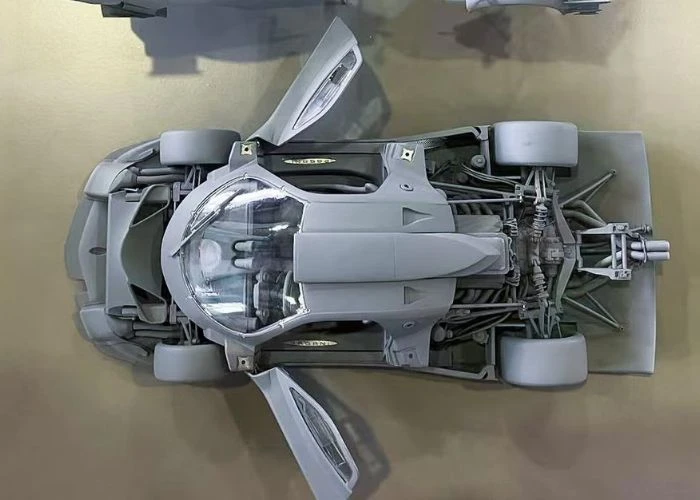
Interior Trim and Appearance Prototypes
Interior trim prototypes are developed when engineers and industrial designers need to evaluate the physical appearance of a proposed design. Typical examples include dashboard decorative panels, door trim inserts, display surrounds, and center console covers. These prototypes help teams review surface geometry, proportions, edge transitions, and the visual relationship between neighboring parts.
An appearance prototype may emphasize visible surfaces while simplifying hidden structures that are not relevant to the current review. We recommend separating essential design features from details that can be refined in later iterations. This allows teams to evaluate the overall design direction without treating every early sample as a production-ready component.
Multi-Part Interior Assembly Prototypes
Some interior development projects require several plastic components to be manufactured and assembled together. A display module, for example, may involve a front bezel, rear housing, mounting brackets, and decorative covers. Building these components as a physical assembly helps engineers review their spatial relationships and identify potential installation conflicts.
We recommend defining which components belong to the prototype assembly and which surrounding structures will be represented by reference models or fixtures. This prevents unnecessary parts from being manufactured while ensuring that the relevant engineering interfaces can still be evaluated.
Automotive Interior Prototype Applications
| Prototype Type | Typical Parts | Development Purpose |
| Structural prototype | Display housings, control enclosures | Review internal geometry and mounting concepts |
| Appearance prototype | Dashboard trim, decorative covers | Review shape, proportions, and visible design |
| Assembly prototype | Multi-part housings and brackets | Review component relationships and installation sequence |
The purpose of prototyping is not simply to reproduce an automotive component. It is to create a physical reference that helps engineers make informed design decisions. For a broader overview of vehicle plastic materials and manufacturing applications, see our plastic automotive components guide.
Which Materials Are Commonly Used for Plastic Automotive Components?
Material selection is one of the most important decisions in automotive component development. Different polymers offer different combinations of stiffness, toughness, heat resistance, chemical compatibility, wear behavior, and appearance. We recommend selecting materials according to the component’s service conditions and required properties, while also considering whether an appropriate stock form is available for prototype manufacturing.
Polypropylene (PP) is widely used in automotive applications because of its low density, chemical resistance, and flexibility. Depending on the formulation, it can be used in interior trim, bumper-related components, and other molded parts. However, PP’s relatively flexible behavior and thermal expansion can complicate dimensional control during machining. For CNC plastic machining, the actual grade, stock form, and workholding arrangement matter. A machined PP prototype should not automatically be assumed to reproduce the mechanical behavior of a filled or specially modified production grade.
ABS is commonly considered for housings, interior components, and cosmetic prototypes because it offers a useful combination of rigidity, toughness, machinability, and finishing options. It can support dimensional studies and appearance evaluations when the chosen grade is appropriate. However, ABS should not be selected for every automotive environment. Temperature resistance, UV exposure, chemical contact, and flammability requirements may limit its suitability. We confirm whether the prototype is intended primarily for appearance, assembly, or representative material evaluation before recommending ABS.
Polycarbonate (PC) is valued for its toughness and potential transparency, while PMMA is often considered when optical appearance is a major requirement. Both materials can be relevant to automotive covers, display-related parts, and selected lighting components. Their machining and finishing behavior differs, so the choice should reflect impact requirements, optical quality, and surface treatment needs. Transparent CNC-machined parts may require polishing to achieve the intended appearance. Optical performance should be evaluated separately from basic dimensional accuracy.
POM is often selected for mechanical parts that require low friction and consistent dimensional interfaces. Typical applications include bushings, guides, and selected moving components. PA6 and PA66 are also relevant to automotive engineering because of their toughness and mechanical performance, particularly in suitable reinforced grades. However, nylon’s moisture absorption can affect dimensions and mechanical properties. We consider the operating environment and material conditioning requirements before specifying critical tolerances for these components.
High-performance polymers such as PPS may be considered for selected applications requiring elevated temperature resistance, chemical stability, or electrical properties. However, performance varies by grade and reinforcement. Automotive production materials may also include PC/ABS blends, PBT, glass-filled polyamides, and thermoplastic elastomers. Not all of these materials are available in the same stock forms or are equally suitable for conventional CNC machining. We therefore distinguish between a material commonly used in mass-produced automotive parts and a material that can realistically be sourced for a representative machined prototype.
Comparison Table: Common Automotive Plastic Materials
| Material | Typical Automotive Applications | Main Selection Considerations |
| PP | Trim, covers, bumper-related parts | Low weight, flexibility, chemical resistance |
| ABS | Interior housings, cosmetic parts | Rigidity, appearance, temperature limits |
| PC | Protective covers, display-related parts | Toughness, optical needs, surface finish |
| PMMA | Transparent covers, lighting-related prototypes | Optical clarity, impact limitations |
| POM | Bushings, guides, moving parts | Wear, friction, dimensional fit |
| PA66 | Mechanical brackets, selected under-hood parts | Moisture, strength, grade selection |
| PPS | Selected heat-resistant electrical components | Heat, chemical exposure, specific grade |
This table is intended as an initial material-selection reference, not a qualification statement for any automotive application. Material properties can change substantially with fillers, additives, manufacturing processes, and operating conditions. For critical applications, we recommend reviewing the exact manufacturer’s datasheet and the customer’s specification. The material selected for an early prototype may differ from the eventual production compound, provided the differences are understood and the prototype’s evaluation objectives are clearly defined.
What Engineering Requirements Matter Most for Automotive Plastic Parts?
Automotive plastic parts must satisfy requirements that depend on their operating environment and intended function. A decorative cover and a mechanically loaded bracket may use different materials even when their overall dimensions are similar. We recommend identifying temperature, loading, chemical exposure, dimensional fit, and appearance requirements before deciding how a prototype should be manufactured or evaluated.
Temperature affects many polymer properties, including stiffness, thermal expansion, and long-term dimensional behavior. A component installed in a vehicle cabin may experience significant heat during sun exposure, while parts near thermal systems may encounter more demanding conditions. We therefore consider both the expected temperature range and the duration of exposure. A plastic that machines accurately at room temperature may still be unsuitable for its final operating environment. Material selection and prototype inspection should reflect this distinction.
Chemical compatibility is another important consideration. Automotive components may encounter cleaning products, oils, fuels, coolants, or other fluids depending on their location. Different polymers respond differently to these substances, and stress cracking or property changes may occur under unsuitable conditions. We recommend defining the actual chemicals and exposure conditions rather than relying on broad descriptions such as chemical resistant. Where long-term compatibility is essential, appropriate material testing remains necessary.
Dimensional stability becomes especially important when several components must assemble together. Mounting holes, locating features, flatness, and clearance dimensions can affect whether a prototype fits as intended. We distinguish between dimensions that are critical to function and those that are less sensitive. This allows the manufacturing and inspection plan to focus on important interfaces. It also helps engineers avoid applying unnecessarily restrictive tolerances to every surface, which can increase cost without improving the actual prototype evaluation.
Automotive components may also be subject to customer-specific material, flammability, environmental, or validation requirements. These cannot be assumed from a polymer family name or a successful machining result. A prototype may support dimensional inspection, assembly review, or selected mechanical studies without being qualified for road use. We recommend defining the intended evaluation stage and acceptance criteria at the beginning of the project so that manufacturing results are not confused with full automotive performance approval.
How Are Plastic Automotive Components Manufactured?
Plastic automotive components can be manufactured through several processes, including injection molding, CNC machining, 3D printing, and vacuum casting. Each method serves a different purpose depending on geometry, material requirements, quantity, and development stage. We distinguish between production manufacturing and prototype manufacturing because the best process for high-volume parts may not be the best option for early design evaluation.
Injection molding is widely used for high-volume automotive plastic production. It can create complex geometries efficiently once the mold, material, and process have been developed and validated. However, tooling requires an upfront investment, and design changes may involve mold modifications. For early development projects with uncertain geometry or frequent revisions, engineers may prefer processes that do not require production tooling. This is where CNC machining and additive manufacturing can provide practical advantages.
CNC machining produces components by removing material from solid stock. For automotive plastic prototypes, it is particularly useful when engineers need parts made from specified machinable engineering plastics. CNC milling can produce housings, brackets, cavities, and mounting features, while turning is appropriate for many cylindrical mechanical components. CNC plastic machining also allows engineers to revise geometry without producing a new injection mold. However, complex internal features, deep cavities, and very thin walls may increase manufacturing difficulty or require alternative processes.
3D printing offers different advantages, particularly for complex geometries and rapid design iteration. SLA can produce detailed resin components, while SLS can manufacture parts with complex structures without conventional cutting-tool access. These processes are useful for concept models, fit checks, and selected prototype applications. However, printed material properties may differ from those of production-grade thermoplastics. We therefore recommend confirming whether the prototype is intended for visual evaluation, dimensional fit, or material-dependent mechanical assessment before selecting a printing process.
Vacuum casting uses silicone molds to reproduce suitable master patterns in castable materials, commonly polyurethane-based systems. It can be useful for small batches of appearance or assembly prototypes when multiple similar parts are required. However, casting materials are not automatically equivalent to the final production thermoplastic. Dimensional consistency, mold life, and material performance should be evaluated according to the project’s requirements. We consider vacuum casting when the quantity and prototype objectives justify reproducing parts from a master rather than machining each component individually.
Comparison Table: Automotive Plastic Manufacturing Methods
| Factor | CNC Machining | 3D Printing | Vacuum Casting | Injection Molding |
| Main Purpose | Engineering plastic prototypes | Complex and iterative prototypes | Small prototype batches | Production components |
| Tooling | No production mold | No production mold | Silicone mold | Production mold |
| Material | Machinable plastic stock | Process-specific printing materials | Castable resins | Moldable thermoplastics |
| Design Changes | Update machining program | Update print model | May require new master or mold | May require mold changes |
| Key Limitation | Tool access and stock removal | Material and process differences | Cast-material equivalence | Tooling investment |
The right manufacturing method depends on what the prototype must demonstrate. A CNC-machined POM mechanical component may be useful for evaluating a specified material and fit, while a printed housing may be more practical for checking a complex internal layout. A vacuum-cast batch can support repeated appearance or assembly reviews. We recommend comparing processes against the actual engineering question rather than assuming that one method is universally faster, cheaper, or more accurate.
How Does CNC Machining Support Automotive Plastic Prototyping?
CNC machining is valuable during automotive plastic prototyping because it allows engineers to manufacture parts directly from suitable engineering plastic stock. This can be useful when the design requires defined material properties, machined mounting interfaces, or repeated dimensional adjustments. We focus on the engineering purpose of each prototype rather than treating CNC machining as a replacement for every production process.
For plastic housings, CNC milling can produce external surfaces, internal cavities, mounting holes, and structural features from solid stock. Engineers can use these prototypes to examine component geometry and assembly relationships before committing to production tooling. However, CNC machining has geometric limitations. Features that would be easy to create with a molded core may be inaccessible to cutting tools. We therefore review the CAD model and identify which features can be machined directly, which require multiple setups, and which may need a design adjustment or another prototyping method.
Material behavior is another important factor. Plastics can deform under clamping forces, expand with temperature, or change dimensions after material removal. Thin walls and large flat sections may be particularly sensitive. We plan machining sequences and workholding according to the geometry and material instead of relying only on machine positioning specifications. For automotive prototypes with critical mounting interfaces, the condition of the part after unclamping can be more relevant than its dimensions while secured in the machine.
CNC machining also supports design iteration. If an early prototype reveals insufficient clearance, an incorrect mounting location, or interference between components, engineers can revise the CAD geometry and produce an updated part. This avoids waiting for changes to production tooling. However, the value of iteration depends on accurate feedback. We recommend recording the specific dimensions or features that caused the problem, rather than making broad design changes without identifying the underlying issue.
For multi-component automotive prototypes, machining should also be coordinated with surface finishing and assembly. A painted housing may have different cosmetic requirements from an internal structural bracket, while mating interfaces may need protection from coating buildup. We consider these requirements before manufacturing begins. This helps prevent situations where individually acceptable parts become difficult to assemble after finishing. The objective is to deliver components that support the intended design review, not merely parts that match isolated CAD models.
How Should Engineers Evaluate Plastic Automotive Components Before Production?
Prototype evaluation should be aligned with the development stage and the risks associated with the component. A visual model, an assembly prototype, and a material-representative engineering part may require different manufacturing approaches. We recommend defining the questions each prototype must answer before selecting the material, process, inspection scope, and acceptance criteria.
The first stage is often geometric and dimensional review. Engineers may need to confirm overall size, mounting locations, internal clearances, and the relationship between neighboring components. These checks are particularly useful for plastic housings and structural brackets. We recommend identifying critical dimensions on the drawing and using appropriate datums for inspection. A prototype can then provide more useful feedback than a simple visual comparison against the CAD model.
Assembly review is another important stage. A component may meet its individual drawing dimensions but still experience interference, inconsistent gaps, or difficulty during installation. We therefore consider the relationship between parts and the sequence in which they are assembled. For multi-component prototypes, trial fitting can reveal whether mounting features are accessible and whether the intended clearances are practical. These observations should be recorded and incorporated into subsequent design revisions.
Cosmetic evaluation may focus on surface smoothness, color, coating quality, and the appearance of visible joints. This is particularly relevant to automotive interior and exterior parts. However, a prototype finished with paint or other cosmetic treatments may not reproduce the exact texture, weathering behavior, or surface durability of a future molded production component. We recommend separating appearance approval from material and environmental performance qualification.
Further validation may involve mechanical loading, vibration, thermal cycling, chemical exposure, electrical testing, or applicable automotive standards. These activities require appropriate test methods, equipment, and acceptance criteria. Manufacturing a prototype does not automatically establish that it is qualified for vehicle use. We recommend that engineers identify which evaluations can be supported through dimensional inspection and trial assembly, and which must be performed by their own engineering teams or qualified testing organizations.
A well-defined prototype plan also reduces unnecessary manufacturing iterations. Before requesting a quotation, we recommend preparing the CAD model, engineering drawings, material specification, required quantity, surface finish requirements, and intended evaluation purpose. If a material substitution is acceptable for a visual or assembly prototype, this should be stated explicitly. If the actual production material is essential, the specification should identify the required grade rather than only the polymer family.
How Can a Direct Plastic Prototype Manufacturer Support Automotive Development?
Automotive development projects often require more than a single machined part. Engineers may need plastic housings, mechanical components, surface finishing, and trial assembly within the same prototype build. We believe a coordinated manufacturing approach can improve communication about materials, critical interfaces, and design changes while helping project teams manage the transition from CAD models to physical components.
At UForProto, we are a direct plastic prototype manufacturer based in Foshan, China. We specialize in CNC plastic machining, SLA and SLS 3D printing, vacuum casting, surface finishing, and complete prototype assembly. Our work supports custom plastic housings, structural parts, cosmetic prototypes, and multi-component prototype builds. We focus on prototype manufacturing and related assembly operations rather than injection molding production or complete-machine functional testing.
For automotive plastic components, we review the CAD geometry, specified material, critical dimensions, quantity, and finishing requirements before recommending a manufacturing approach. CNC machining may be suitable when the project requires a machinable engineering plastic and defined dimensional interfaces. Other prototype methods may be more practical when geometry, quantity, or appearance objectives differ. We aim to match the manufacturing method to the prototype’s actual purpose rather than apply the same process to every component.
Projects involving several components can also benefit from coordinated finishing and assembly planning. We consider how painted surfaces, mounting interfaces, and machined dimensions interact during prototype production. When appropriate, our complete prototype services can help coordinate these stages. This does not replace the customer’s engineering validation, but it can provide physical components and assembled prototypes for the intended design review.
If you are developing custom plastic automotive components, you can send your CAD files, drawings, material specifications, and prototype requirements to info@uforproto.com for a manufacturing review and quotation. Including the intended evaluation purpose, critical dimensions, and surface expectations will help us assess the most appropriate manufacturing approach for your project.
Conclusion
Plastic automotive components serve essential functions across vehicle interiors, exteriors, electrical systems, and mechanical assemblies. Selecting the right material requires understanding operating temperature, mechanical demands, chemical exposure, dimensional stability, and appearance requirements. Manufacturing decisions should also reflect the development stage: CNC machining, 3D printing, and vacuum casting can support different prototype objectives, while injection molding is commonly used for high-volume production. We recommend defining critical features and evaluation goals before selecting a process. By combining suitable materials, practical manufacturing methods, and structured prototype reviews, engineers can reduce development risks and make better-informed decisions before committing to production tooling.
FAQs
1. What Are the Most Common Plastic Automotive Components?
Common plastic automotive components include interior trim, instrument panel parts, bumper fascias, mirror housings, electrical enclosures, connectors, bushings, and mounting brackets. We classify them according to their vehicle system and function because different applications require different materials, manufacturing processes, and performance criteria.
2. Which Plastic Materials Are Commonly Used in Automotive Components?
Common materials include PP, ABS, PC, PMMA, POM, PA6, PA66, PBT, and selected high-performance polymers. We recommend choosing the specific grade according to temperature, impact, chemical exposure, mechanical loading, and applicable automotive requirements rather than selecting a material based only on its general polymer name.
3. Can CNC Machining Be Used for Automotive Plastic Parts?
Yes. CNC machining is suitable for many automotive plastic prototypes, including housings, brackets, bushings, and precision structural parts. We use it when the geometry can be machined from suitable stock and the project benefits from defined engineering plastic properties or dimensional interfaces. Complex inaccessible features may require another process.
4. What Is the Difference Between CNC Machining and Injection Molding for Automotive Components?
CNC machining removes material from solid stock without requiring a production mold, making it useful for many prototypes and design revisions. Injection molding uses tooling to form plastic parts and is commonly selected for higher production volumes. We recommend choosing the process according to quantity, geometry, material requirements, and development stage.
5. How Are Plastic Automotive Components Evaluated Before Production?
Evaluation may include dimensional inspection, assembly fit, cosmetic review, and application-specific mechanical or environmental testing. We recommend defining acceptance criteria before manufacturing the prototype. Dimensional checks and trial assembly can support development, but automotive durability, safety, and compliance qualification require appropriate additional validation.
6. How Do I Choose the Right Prototyping Method for Plastic Automotive Components?
We recommend starting with the CAD geometry, material specification, quantity, critical dimensions, and intended evaluation purpose. CNC machining is useful for suitable engineering plastic parts, 3D printing supports complex design iterations, and vacuum casting can reproduce small batches of appropriate prototypes. The best method is the one that addresses the project’s specific development requirements.