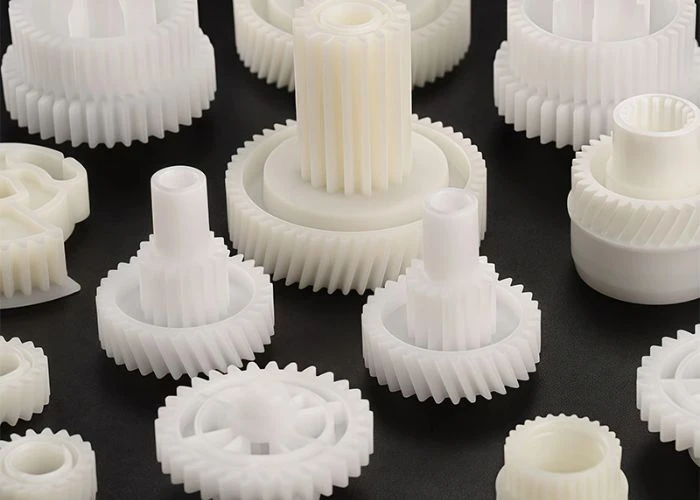

Plastic is formed by converting carbon-rich raw materials into small chemical building blocks called monomers and then joining those monomers into long molecular chains called polymers. Most conventional plastics begin with feedstocks derived from crude oil or natural gas, although recycled and renewable sources can also provide raw materials for plastic production. Refining, cracking, polymerization, compounding, and forming turn these starting materials into usable plastic resins and finished products.
This guide explains how plastic is formed, what plastic is made out of, where its raw materials come from, and how plastic is produced on an industrial scale.
What Is Plastic?
Plastic is a group of polymer-based materials that can be shaped or processed into useful products. Most plastics contain synthetic polymers made from repeating molecular units, combined with additives that modify properties such as strength, flexibility, heat resistance, chemical resistance, color, and processing behavior.
Plastic is therefore not one specific substance. Polyethylene used in packaging, polypropylene used in containers, PVC used in pipes, ABS used in housings, POM used in precision mechanical parts, and PEEK used in demanding engineering applications are all plastics, but their chemical structures and performance differ significantly.
The word “plastic” originally relates to the ability to shape or mold a material. In modern materials science, plastics are mainly understood as polymer-based materials engineered for particular combinations of mechanical, thermal, electrical, chemical, optical, and manufacturing properties.
What Are Polymers and Monomers?
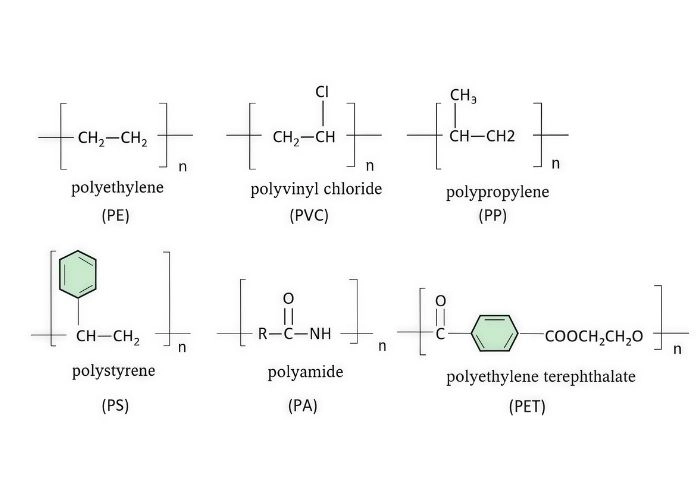
Monomers are relatively small molecules that can chemically bond with other monomers, while polymers are much larger molecules made from many repeating molecular units. Polymer formation is the chemical foundation of how plastic is created.
A simplified relationship is:
Monomer → Polymerization → Polymer → Plastic Material → Finished Product
Ethylene provides a simple example. When many ethylene molecules are chemically joined through polymerization, they form polyethylene. Propylene can similarly be polymerized into polypropylene.
Not every polymer is plastic. Natural materials such as cellulose also contain polymers. Commercial plastics are generally polymer-based materials that have been formulated and processed for specific applications.
What Gives Plastic Its Different Properties?
Plastic gets its different properties from polymer chemistry, molecular structure, molecular weight, chain arrangement, crystallinity, additives, reinforcement, and manufacturing conditions. Small differences at the molecular level can create substantial differences in real-world performance.
For example, some plastics are designed to remain flexible, while others are optimized for stiffness or dimensional stability. Adding glass fiber can increase the stiffness of an engineering plastic, while plasticizers can increase flexibility. UV stabilizers can improve outdoor durability, and impact modifiers can increase toughness.
This is why engineers should normally select a specific polymer and grade rather than specify only “plastic.” The correct material depends on temperature, load, chemicals, dimensional requirements, appearance, wear, electrical properties, and manufacturing process.
What Is Plastic Made Of?
Plastic is made primarily from polymers produced from carbon-rich raw materials, with conventional plastics commonly using chemical feedstocks derived from crude oil or natural gas. Commercial plastic materials may also contain fillers, pigments, stabilizers, plasticizers, reinforcing fibers, flame retardants, and other additives that modify processing or final performance.
The answer to “what is plastic made out of?” therefore depends on which level of the material is being considered. At the resource level, many conventional plastics originate from fossil feedstocks. At the chemical level, they are made from monomers that become polymers. At the commercial material level, the polymer may be combined with numerous additives.
Crude Oil and Natural Gas
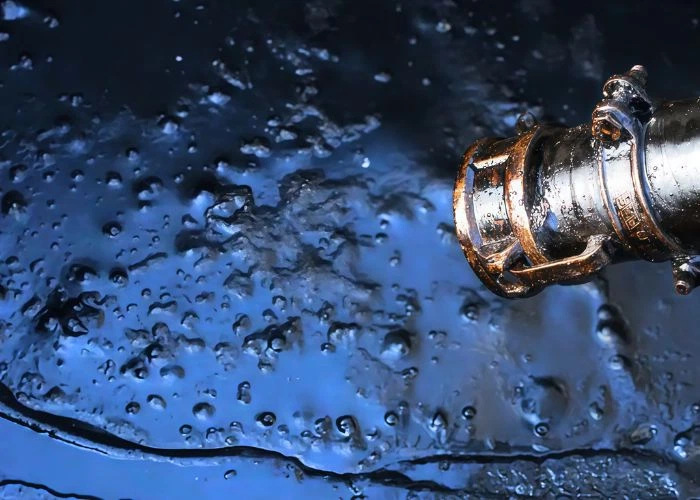
Crude oil and natural gas are major raw-material sources for conventional plastic production because they contain hydrocarbons that can be converted into petrochemical feedstocks.
Crude oil is refined into different fractions, including streams that can enter petrochemical processing. Natural gas processing can supply hydrocarbons such as ethane and propane. Through additional chemical processing, these materials can become ethylene, propylene, and other building blocks used to produce polymers.
Plastic therefore does not simply exist inside crude oil or natural gas. Several industrial transformations are required before the original hydrocarbon resource becomes a usable plastic material.
Monomers, Polymers, and Additives
Monomers form the chemical building blocks of synthetic polymers. Polymerization connects these molecules into long chains or networks, while compounding introduces additives that help tailor the resulting material to a specific application.
| Component | Role in Plastic | Examples |
| Monomers | Building blocks for polymers | Ethylene, propylene, styrene |
| Polymers | Main structural material | PE, PP, PVC, PET |
| Plasticizers | Increase flexibility | Used in selected flexible formulations |
| Fillers | Modify stiffness, stability, or cost | Calcium carbonate, mineral fillers |
| Reinforcement | Increase mechanical performance | Glass fiber, carbon fiber |
| Stabilizers | Protect against degradation | Heat and UV stabilizers |
| Pigments | Control color and appearance | Organic and inorganic pigments |
| Impact Modifiers | Improve toughness | Used in selected engineering plastics |
A commercial plastic grade is therefore often more complex than the name of its base polymer suggests. Two grades of the same polymer can have significantly different mechanical properties, dimensional behavior, appearance, or machinability.
Can Plastic Be Made From Renewable Materials?
Yes. Plastic can also be made from renewable feedstocks such as sugarcane, corn, cellulose, vegetable oils, and other biomass sources. These materials can provide carbon-containing molecules that are chemically converted into polymer feedstocks.
However, bio-based and biodegradable describe different characteristics. A bio-based polyethylene can have essentially the same chemical structure as polyethylene produced from fossil feedstocks and therefore may not readily biodegrade. Likewise, biodegradability depends on polymer chemistry and environmental conditions rather than simply whether plants were used as the original feedstock.
Material origin, recyclability, compostability, and biodegradability should therefore be evaluated separately.
How Is Plastic Formed?
Plastic is formed through a sequence that typically includes raw-material extraction, refining, petrochemical processing, monomer production, polymerization, compounding, pellet production, and final forming or fabrication. Polymerization is the key chemical stage because it joins small monomer molecules into the long polymer chains that give plastic its fundamental material structure.
For conventional fossil-based plastics, the process can be simplified as:
Raw Materials → Refining → Petrochemical Feedstocks → Monomers → Polymerization → Polymer Resin → Compounding → Pellets → Forming or Fabrication → Finished Product
The exact process changes according to the polymer. Polyethylene and polypropylene, for example, do not follow exactly the same chemistry as PET, PVC, nylon, or high-performance engineering plastics.
Step 1: Raw Material Extraction
Plastic production begins by obtaining suitable carbon-containing raw materials. For many conventional plastics, these originate from crude oil and natural gas extracted from underground geological formations.
The extracted resources are not plastic and cannot simply be molded into plastic products. They contain mixtures of hydrocarbons that must first be separated and chemically processed. Renewable or recycled feedstocks can enter the plastic supply chain through different routes, but virgin fossil-based plastics generally begin with this hydrocarbon extraction stage.
Step 2: Refining and Petrochemical Processing
Refining separates crude oil into fractions with different physical and chemical characteristics. Some of these fractions can be used as petrochemical feedstocks rather than fuels.
Naphtha is an important example in many petroleum-based production routes. Natural gas can provide other feedstocks, including ethane and propane. These hydrocarbon streams are then processed further to produce smaller molecules suitable for chemical manufacturing.
The objective is to convert a complex raw resource into controlled chemical feedstocks from which useful monomers can be produced.
Step 3: Producing Plastic Monomers
Plastic monomers are produced by converting suitable hydrocarbon feedstocks into smaller reactive molecules. Cracking is one of the important industrial processes used for this purpose.
Steam cracking can break larger hydrocarbons into smaller molecules such as ethylene and propylene. These are among the most important building blocks in the plastics industry because ethylene can be used to produce polyethylene and propylene can be used to produce polypropylene.
Other plastic families require different monomers and additional chemical reactions. This is why there is no single universal recipe for how to make plastic.
Step 4: Polymerization
Polymerization chemically joins monomers into much larger molecules called polymers. This is the stage at which small chemical building blocks become the long molecular structures associated with plastic materials.
For example:
Ethylene → Polymerization → Polyethylene
Propylene → Polymerization → Polypropylene
Industrial polymerization requires controlled reaction conditions. Catalysts, temperature, pressure, reaction time, monomer composition, and process design can influence molecular weight, branching, crystallinity, density, and other characteristics.
These variables ultimately affect how the plastic behaves during manufacturing and in its final application.
Step 5: Compounding and Plastic Pellet Production
After polymerization, the polymer can be compounded with additives to create a commercial plastic formulation. Depending on the required grade, manufacturers may introduce pigments, stabilizers, fillers, reinforcing fibers, impact modifiers, flame retardants, or processing aids.
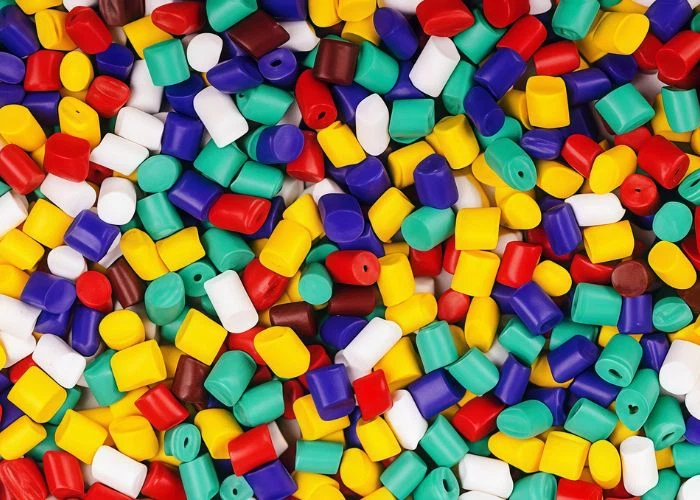
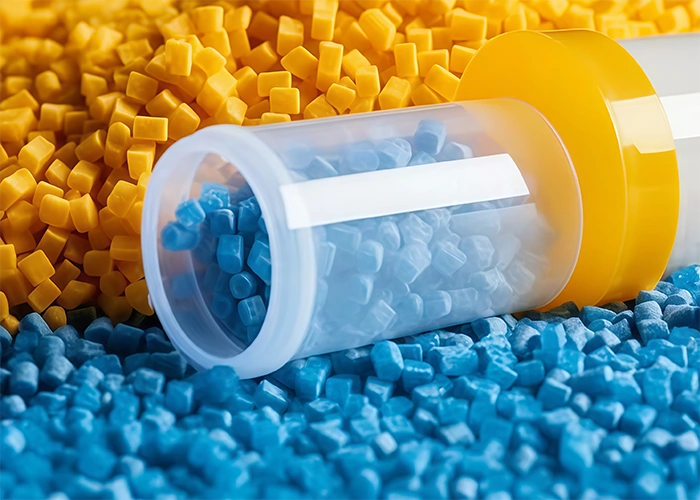
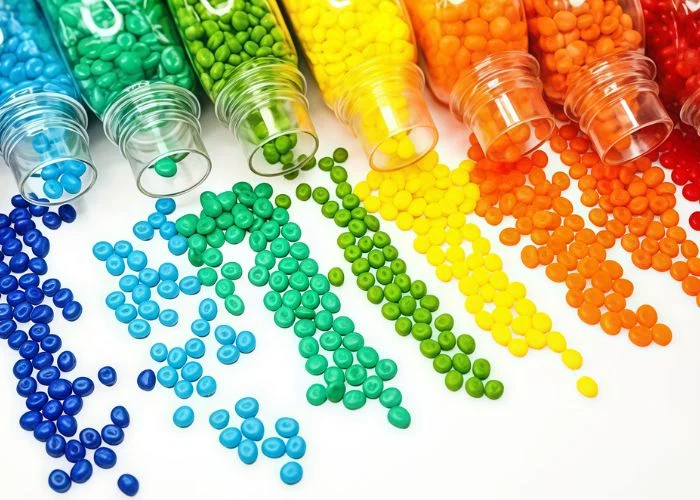
Many thermoplastics are then converted into small pellets, sometimes called resin pellets or nurdles. Pellets provide a convenient and consistent form for transportation, storage, drying, blending, and feeding into manufacturing equipment.
Not every plastic reaches manufacturers as pellets. Plastic materials can also be supplied as powders, liquid resins, films, sheets, rods, plates, blocks, tubes, or other stock forms.
Step 6: Forming and Fabricating Plastic Products
Plastic becomes a finished product when the prepared material is shaped, formed, built, cast, or machined into the required geometry. The manufacturing method depends on material behavior, part geometry, tolerance, quantity, surface requirements, and tooling budget.
Common methods include CNC machining, injection molding, extrusion, blow molding, thermoforming, vacuum casting, and 3D printing.
This stage should be distinguished from polymer formation. Polymerization creates the polymer material itself; manufacturing processes turn that material into an actual component or product.
How Does Polymerization Form Plastic?
Polymerization forms plastic by chemically connecting many small monomer molecules into long polymer chains or networks. The resulting molecular architecture determines much of the plastic’s strength, stiffness, flexibility, thermal behavior, chemical resistance, processing characteristics, and long-term performance.
Polymerization is therefore the central chemical answer to “how is plastic formed.” Extraction and refining provide the feedstocks, but polymerization creates the large molecular structures that become the basis of synthetic plastic materials.
Addition Polymerization
Addition polymerization, commonly associated with chain-growth polymerization, forms polymers by linking reactive monomers into chains without producing a small-molecule by-product in the basic chain-forming reaction.
Polyethylene and polypropylene are familiar examples. Ethylene molecules can be linked into polyethylene chains, while propylene produces polypropylene.
Reaction conditions and catalysts can produce different molecular structures even within one polymer family. This helps explain why polyethylene alone includes multiple grades with different densities, flexibility, stiffness, and processing characteristics.
Condensation Polymerization
Condensation or step-growth polymerization forms polymers through reactions between molecules containing suitable functional groups. Polyesters and polyamides are important polymer families produced through step-growth chemistry.
PET and many nylon materials are associated with these routes. Their chemistry is more complex than simply linking ethylene molecules, but the general result is similar: relatively small molecules react to produce high-molecular-weight polymer structures.
The chosen chemistry influences not only material performance but also how the polymer must be manufactured and processed.
How Polymer Structure Affects Plastic Properties
Polymer structure strongly affects the properties of the finished plastic because chain length, branching, crystallinity, intermolecular forces, side groups, and crosslinking influence how molecular chains move and interact.
| Polymer Factor | Possible Effect |
| Molecular Weight | Strength, toughness, melt behavior |
| Chain Branching | Density, flexibility, crystallinity |
| Crystallinity | Stiffness, chemical resistance, shrinkage |
| Crosslinking | Rigidity and thermal behavior |
| Side Groups | Mechanical and chemical properties |
| Reinforcement | Strength, stiffness, wear behavior |
| Additives | Color, UV resistance, impact, processing |
Material performance therefore begins at the molecular level. Manufacturing can further influence that performance through cooling rate, orientation, residual stress, moisture, reinforcement direction, and processing conditions.
How Is Plastic Produced From Petroleum?
Plastic is produced from petroleum by refining crude oil into useful fractions, converting selected hydrocarbon feedstocks into monomers such as ethylene and propylene, polymerizing those monomers into resins, and then processing the resins into usable plastic materials and products. Petroleum is therefore a starting resource rather than the finished plastic itself.
This distinction is important when explaining how plastic is made from petroleum. The journey involves several chemical and manufacturing stages, and different polymers follow different pathways.
From Crude Oil to Petrochemical Feedstocks
Crude oil contains a complex mixture of hydrocarbons. Refineries separate this mixture into fractions according to differences in properties such as boiling range.
Some fractions are used mainly for fuels, while others can serve as petrochemical feedstocks. Naphtha is particularly important in many regions because it can be processed through steam cracking to produce smaller molecules used by the chemical industry.
Natural gas provides another major route, particularly through feedstocks such as ethane and propane.
Cracking Hydrocarbons Into Monomers
Cracking uses heat and controlled process conditions to break larger hydrocarbon molecules into smaller molecules. Steam cracking is widely used to produce important chemicals such as ethylene and propylene.
A simplified route is:
Crude Oil → Refining → Naphtha → Cracking → Ethylene / Propylene
These molecules can then enter polymerization processes.
The actual industrial system also produces numerous other chemicals, and individual plastic families may require additional chemical transformations before polymerization can occur.
From Ethylene and Propylene to Plastic
Ethylene and propylene become useful plastic materials after polymerization transforms them into polyethylene and polypropylene.
Ethylene → Polyethylene (PE)
Propylene → Polypropylene (PP)
Polyethylene is widely used in films, bottles, containers, pipes, insulation, and numerous consumer and industrial products. Polypropylene is commonly used in packaging, automotive parts, containers, living hinges, fibers, and other applications where its balance of low density, chemical resistance, and fatigue behavior is useful.
This illustrates why plastic production should be understood as chemical conversion rather than simply melting petroleum into a new shape.
How Are Different Types of Plastic Formed?
Different types of plastic are formed using different monomers, polymerization reactions, molecular structures, and additives. PE, PP, PVC, PET, and engineering plastics therefore differ not only in their final properties but also in the chemistry and processing required to produce them.
The polymer family selected determines much of the material’s baseline behavior. Manufacturers can then modify individual grades through molecular design, additives, reinforcement, blending, and processing.
Polyethylene (PE)
Polyethylene is formed by polymerizing ethylene. It is one of the world’s most widely used plastic families and can be produced in multiple forms with different molecular structures and densities.
Low-density polyethylene is commonly associated with flexible films and bags, while higher-density grades are used for containers, piping, bottles, and more rigid products.
Differences in branching and molecular arrangement significantly affect density, stiffness, strength, and flexibility even though these materials all belong to the polyethylene family.
Polypropylene (PP)
Polypropylene is formed by polymerizing propylene monomers. Its low density, chemical resistance, fatigue resistance, and useful temperature performance make it common in packaging, containers, automotive components, appliances, fibers, and living-hinge designs.
The arrangement of molecular groups along the polymer chain influences crystallinity and material properties. Commercial polypropylene grades can also be modified with fillers, impact modifiers, reinforcement, or copolymers to suit specific applications.
Polyvinyl Chloride (PVC)
PVC is formed through polymerization of vinyl chloride monomer. Chlorine is incorporated into its molecular structure, helping give PVC characteristics that differ significantly from polyethylene and polypropylene.
Rigid PVC is widely used for pipes, profiles, construction products, and similar applications. Flexible PVC formulations can be produced through the use of suitable plasticizers and other additives.
PVC is therefore a good example of how both polymer chemistry and formulation determine final material behavior.
Polyethylene Terephthalate (PET)
PET is a polyester produced through step-growth reactions involving suitable chemical precursors. It combines strength, dimensional performance, transparency in appropriate grades, and useful barrier properties.
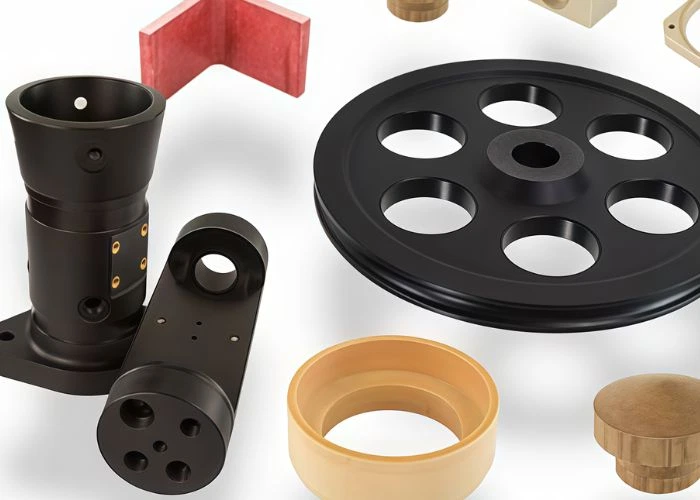
PET is widely known for beverage bottles and food packaging, but polyester chemistry also appears in fibers and engineering applications.
Its formation differs chemically from polyethylene and polypropylene, reinforcing the point that “plastic production” covers multiple polymerization routes rather than one universal process.
Engineering Plastics
Engineering plastics are polymer materials designed to provide higher or more specialized performance than many general-purpose commodity plastics.
Examples include ABS, polycarbonate, POM, nylon, PMMA, PPS, PEI, and PEEK. Depending on the material, they can provide improved dimensional stability, impact resistance, wear resistance, chemical resistance, transparency, strength, or elevated-temperature performance.
For precision product development, the specific grade can matter as much as the polymer family. Glass-filled nylon, unfilled nylon, bearing-grade POM, and medical-grade PEEK, for example, may require very different manufacturing and design considerations.
How Is Plastic Processed Into Finished Parts?
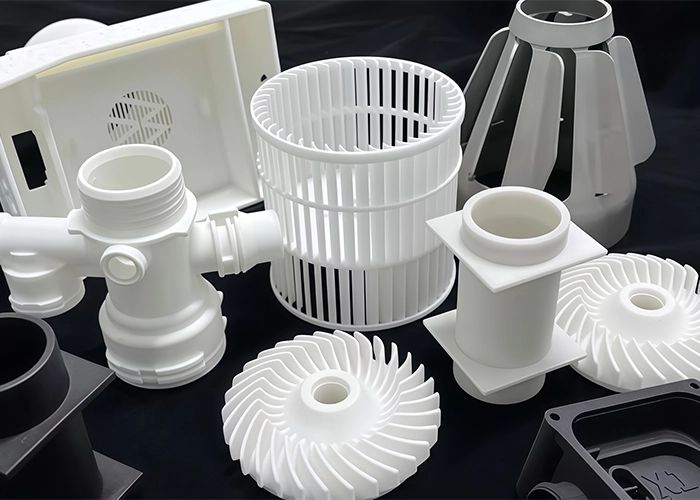
Plastic is processed into finished parts through manufacturing methods such as CNC machining, 3D printing, vacuum casting, injection molding, extrusion, blow molding, and thermoforming. The appropriate method depends on plastic type, geometry, tolerance, surface finish, production volume, development stage, lead time, and tooling investment.
Plastic processing occurs after the required polymer or commercial plastic grade has been produced. Some processes melt and reshape thermoplastics, some build parts layer by layer, some cast liquid materials into molds, and CNC machining removes material from solid plastic stock.
| Process | Starting Material | Best Suited For | Main Consideration |
| CNC Machining | Sheet, rod, plate, block | Precision prototypes and low-volume parts | Material behavior and machining stability |
| 3D Printing | Filament, powder, resin | Rapid prototypes and complex geometry | Process-dependent properties |
| Vacuum Casting | Liquid casting resin | Small prototype batches | Limited silicone mold life |
| Injection Molding | Thermoplastic pellets | Medium- and high-volume parts | Mold investment |
| Extrusion | Pellets or compound | Continuous profiles, tubes, sheets | Limited cross-sectional geometry |
| Blow Molding | Heated preform or parison | Hollow products | Mainly suitable for hollow parts |
| Thermoforming | Plastic sheet | Covers, trays, panels | Wall-thickness variation |
CNC Plastic Machining
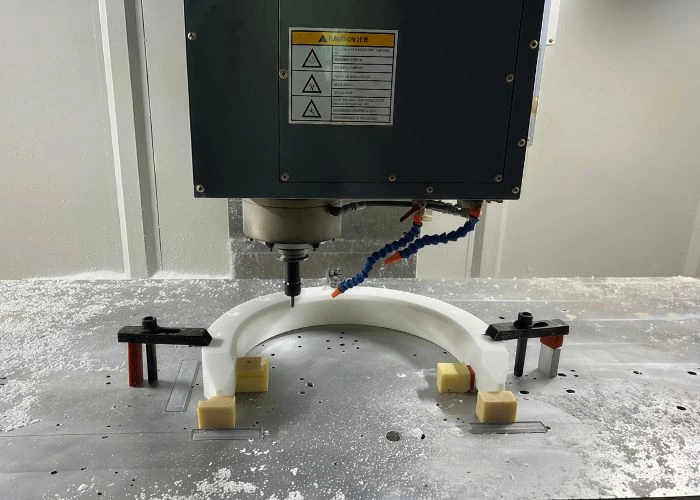
CNC plastic machining removes material from solid sheet, rod, plate, or block using computer-controlled cutting tools. Because no dedicated production mold is required, it is particularly useful for functional prototypes, precision plastic components, custom parts, engineering verification, and low-volume manufacturing.
Materials such as ABS, POM, nylon, PMMA, polycarbonate, PTFE, PVC, PE, PP, and PEEK can be CNC machined. However, plastics often require different machining strategies from metals because of thermal expansion, lower thermal conductivity, softness, internal stress, moisture absorption, elastic deformation, and sensitivity to excessive clamping pressure.
CNC machining is particularly valuable when engineers need prototypes made from actual engineering plastic stock. Functional features such as bores, threads, sealing surfaces, assembly interfaces, flatness, and dimensional relationships can be evaluated before expensive production tooling is created.
3D Printing
3D printing builds plastic parts layer by layer directly from digital geometry. Processes such as FDM, SLA, and SLS allow prototypes to be produced without dedicated molds or extensive machining setup.
Its main advantages are design speed and geometric freedom. Internal channels, lightweight structures, and complex shapes can sometimes be produced more easily by additive manufacturing than by conventional subtractive processes.
However, printed parts may have layer-dependent mechanical behavior, process-specific materials, visible layer texture, or different dimensional characteristics from production plastics. The selected printing technology should therefore match the purpose of the prototype.
Vacuum Casting
Vacuum casting uses a master pattern to produce a flexible silicone mold, after which polyurethane or similar casting resin is introduced under vacuum.
The process is useful when several visually or functionally similar prototypes are needed without the investment required for hard injection-molding tooling. It can reproduce detailed surfaces, colors, transparent appearances, and soft or rubber-like characteristics depending on the casting material.
Casting resins often simulate production plastics rather than being chemically identical to them. Vacuum casting is therefore commonly used for prototype batches, design validation, presentation models, and bridge production.
Injection Molding
Injection molding melts thermoplastic material and injects it under pressure into a mold cavity. After cooling, the mold opens and the component is ejected.
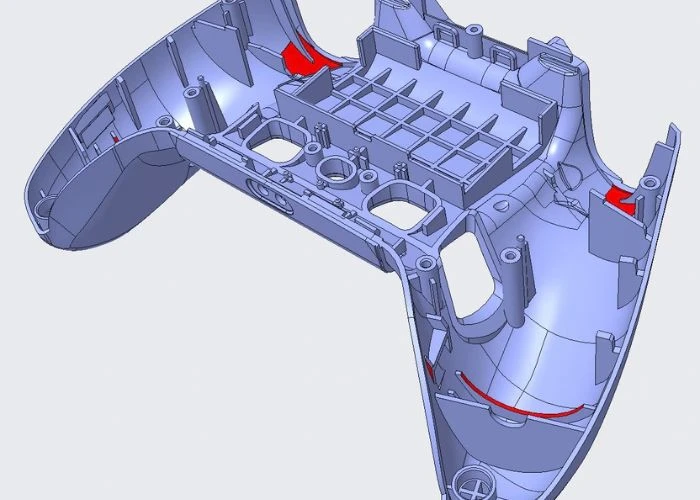
Once tooling is established, injection molding can produce large quantities of complex parts with relatively short cycle times. Features such as ribs, bosses, clips, textures, and assembly details can often be incorporated directly into the molded geometry.
The tradeoff is tooling investment and design constraint. Draft, wall thickness, shrinkage, undercuts, gate position, ejector marks, weld lines, and parting lines should be considered during product development.
Extrusion, Blow Molding, and Thermoforming
Extrusion, blow molding, and thermoforming are efficient plastic-processing methods for specific types of geometry.
Extrusion continuously forces heated plastic through a die and is widely used for tubing, profiles, films, and sheets. Blow molding expands heated plastic against a mold surface to manufacture bottles, containers, tanks, and other hollow products. Thermoforming heats plastic sheet and forms it against a tool to produce packaging, trays, covers, and panels.
These processes can offer excellent productivity when geometry and volume suit them, but they are not direct substitutes for CNC machining or injection molding. Each process imposes different restrictions on tolerances, wall thickness, geometry, tooling, and material selection.
What Properties Does the Plastic Forming Process Affect?
The plastic forming process can affect flexibility, hardness, heat resistance, chemical resistance, strength, dimensional stability, durability, appearance, and surface quality. Final properties depend on both the polymer formulation and how temperature, pressure, cooling, orientation, moisture, reinforcement, and residual stress are controlled during manufacturing.
Material datasheets provide an important baseline, but a finished component does not always behave exactly like an ideal material sample. Processing history can influence crystallinity, molecular orientation, internal stress, fiber direction, shrinkage, and dimensions.
Flexibility and Hardness
Flexibility and hardness depend primarily on polymer chemistry and formulation, but manufacturing conditions can further influence the final result.
A flexible polymer cannot normally be transformed into a rigid engineering plastic simply by changing the processing method. However, crystallinity, cooling rate, orientation, additives, and reinforcement can modify stiffness and mechanical response within the practical range of the material.
Design geometry also matters. A thin section of a relatively stiff polymer may flex considerably, while a thicker section of the same material may behave rigidly.
Melting and Heat Resistance
Heat behavior depends strongly on polymer structure. Thermoplastics soften or melt when heated sufficiently, while thermosetting materials behave differently because their molecular networks are permanently crosslinked.
For engineering applications, service temperature should not be confused with processing temperature or melting point. A component may begin losing stiffness or dimensional stability well below the temperature at which the polymer actually melts.
Material selection should therefore consider continuous service temperature, short-term thermal exposure, load, thermal expansion, and environmental conditions.
Chemical Resistance
Chemical resistance depends on polymer chemistry, concentration, exposure temperature, stress, and contact time.
PE, PP, PTFE, PEEK, PVC, and other plastics can offer strong resistance to selected chemicals, but no plastic is universally resistant to every fluid.
Chemical exposure can cause swelling, softening, cracking, discoloration, or loss of mechanical properties. For critical components, compatibility should be evaluated using the specific polymer grade and actual service conditions.
Strength and Durability
Plastic strength and durability are affected by polymer type, reinforcement, geometry, manufacturing conditions, temperature, moisture, loading mode, and time.
Unlike many metals, some plastics exhibit significant creep under sustained load. Nylon can absorb moisture, while reinforced polymers can exhibit directional properties related to fiber orientation.
Designers should therefore evaluate long-term conditions rather than rely only on short-term tensile strength.
Appearance and Surface Quality
Plastic appearance can be influenced by material transparency, pigment, fillers, manufacturing process, tool marks, mold texture, flow patterns, polishing, and secondary finishing.
CNC-machined PMMA, for example, may require polishing when optical clarity is important. Injection-molded surfaces can reproduce textures built into the mold, while 3D-printed surfaces may display layer lines.
Surface requirements should therefore be defined before the manufacturing process is selected.
What Are the Environmental Impacts of Plastic Production?
Plastic production can affect the environment through fossil-resource extraction, energy consumption, greenhouse-gas emissions, manufacturing waste, pellet loss, product disposal, and long-term plastic leakage into natural systems. The scale of impact depends on the polymer, feedstock, manufacturing route, product lifetime, waste-management system, and whether material is reused or recycled.
Plastic also provides functional benefits such as low weight, corrosion resistance, insulation, durability, and material efficiency. Environmental evaluation therefore needs to consider the complete application and life cycle rather than treating every plastic product as equivalent.
Fossil Feedstocks and Energy Use
Most conventional virgin plastics remain connected to fossil-based feedstocks. Extraction, refining, petrochemical conversion, polymerization, compounding, transportation, and product manufacturing all require resources and energy.
The amount varies substantially according to polymer and manufacturing route. A high-performance engineering plastic cannot be assumed to have the same production profile as commodity polyethylene.
Energy consumption should also be evaluated against product function and lifetime. A durable component that operates for many years represents a different use case from a short-lived disposable product.
Plastic Waste and Material Loss
Plastic waste can occur during manufacturing, product use, and end-of-life disposal. Production scrap may sometimes be collected and reused, while uncontrolled environmental leakage is considerably more difficult to recover.
Pellet loss is another concern because small resin pellets can escape during production, transportation, storage, or handling. Larger discarded products can also fragment over time into smaller particles.
Waste reduction therefore begins before disposal. Process control, efficient material use, reuse, appropriate recycling, and designing products around realistic service requirements can all reduce unnecessary material loss.
Recycled and Bio-Based Alternatives
Recycled plastics reduce reliance on entirely virgin polymer feedstocks by using previously manufactured material as an input. Mechanical recycling commonly involves sorting, cleaning, shredding, melting, filtering, and reforming suitable thermoplastics.
Bio-based plastics use renewable biological resources for some or all of their feedstock. However, recycled, bio-based, biodegradable, and compostable are not interchangeable terms.
The correct option depends on required performance, available recycling infrastructure, contamination, material purity, regulatory requirements, and realistic end-of-life conditions.
Designing Plastic Products for Longer Service Life
Longer product life can reduce replacement frequency when durability provides meaningful functional value.
Material selection, stress concentration, wall thickness, UV exposure, chemical compatibility, wear, temperature, assembly design, repairability, and dimensional stability should all be considered during development.
For prototypes and low-volume parts, testing the design in an appropriate engineering plastic can help identify problems before high-volume tooling. This allows designers to evaluate fit, function, assembly, material behavior, and durability earlier in the development process.
Conclusion
Plastic is formed by converting suitable raw materials into chemical building blocks, joining those molecules through polymerization, modifying the resulting polymers through compounding, and processing the material into usable products. Understanding this sequence explains how crude oil, natural gas, recycled polymers, or renewable feedstocks can ultimately become plastic materials with very different properties. It also shows why polymer chemistry, additives, processing conditions, and manufacturing methods must be considered together when selecting plastic for a real product.
At UForProto, we support plastic product development through CNC plastic machining, 3D printing, vacuum casting, precision assembly, surface finishing, and low-volume manufacturing. By matching engineering plastics and manufacturing methods to geometry, tolerance, appearance, testing requirements, and intended production volume, we help customers move from early design verification to functional prototypes and reliable low-volume plastic components.
FAQs
1.Who Created Plastic And Why?
The development of plastic did not come from one invention alone. In 1869, John Wesley Hyatt developed an early semi-synthetic plastic from cellulose partly in response to demand for an alternative to ivory. In 1907, Leo Baekeland created Bakelite, widely recognized as the first fully synthetic plastic, while searching for an electrical-insulating material. These developments showed that manufactured polymers could replace scarce natural materials and provide properties such as moldability, durability, insulation, and heat resistance.
2.What Is Plastic Made From Originally?
Most conventional synthetic plastics begin with carbon-rich feedstocks derived from crude oil or natural gas. Refining and petrochemical processing convert these resources into smaller molecules such as ethylene and propylene, which can then undergo polymerization to form polymers such as polyethylene and polypropylene. However, not every plastic begins with petroleum. Cellulose was used in early semi-synthetic plastics, while modern polymers can also use recycled material or renewable feedstocks such as sugarcane and other biomass.
3.Is Plastic Made From Chemicals?
Yes. Plastic is made from chemical compounds, particularly monomers that are chemically joined into polymers through polymerization. Ethylene, for example, can be polymerized into polyethylene, while propylene can become polypropylene. Commercial plastics may also contain stabilizers, pigments, fillers, plasticizers, reinforcement, or other additives. However, describing plastic simply as “chemicals” is too broad because all materials consist of chemical substances. The important distinction is the specific polymer chemistry, formulation, and additives used in each plastic grade.
4.Is Plastic Made From Trees?
Some plastics can be made partly from tree-derived materials, but most conventional modern plastics are produced from fossil-based feedstocks. Cellulose, a natural polymer found in plant cell walls and wood, was important in the development of early semi-synthetic plastics. Modern cellulose-based materials also exist. However, plant origin does not automatically mean a plastic is biodegradable or compostable. Feedstock origin, polymer chemistry, processing method, recyclability, and end-of-life behavior are separate material characteristics.
5.Is Plastic Made From Natural Resources?
Yes. Plastic ultimately comes from natural resources, although extensive chemical processing is normally required before those resources become synthetic polymers. Crude oil and natural gas are major feedstocks for conventional plastics, while cellulose, sugarcane, corn, vegetable oils, and other biomass can provide renewable alternatives for selected polymers. Recycled plastic provides another feedstock route by reprocessing previously manufactured polymer material. The original resource therefore depends on the polymer type, manufacturing route, and whether virgin, recycled, or bio-based material is used.