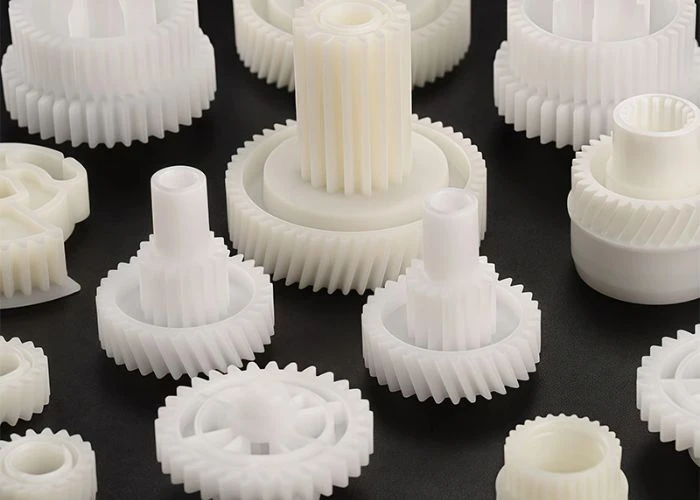

A useful prototype definition goes beyond calling it the “first version” of a product. In engineering, I see a prototype as a deliberately created representation used to answer specific questions before important product decisions are fixed. It may help a team evaluate form, fit, function, assembly, material behavior, or manufacturing feasibility. The prototype does not need to reproduce everything about the final product. What matters is whether it represents the right characteristics with enough fidelity to support the decision the engineering team needs to make.
What Is the Prototype Definition in Product Development?
The simplest prototype definition describes a prototype as an early representation of a product or design. For engineering work, however, I find that definition incomplete. A prototype becomes valuable when it represents selected characteristics of a proposed product so that the development team can learn, evaluate, communicate, or make a decision before committing to the final design or production route.
There is a reason the term is difficult to reduce to one sentence. A systematic review published through The Design Society found no single overarching definition of a prototype across engineering-design literature. Instead, prototypes have been defined according to different purposes, representations, and development contexts.
From a manufacturing perspective, I therefore use a practical definition:
A prototype is a purpose-built representation of a proposed product used to answer one or more development questions before the product is finalized.
This definition leaves room for a prototype to be simple or highly representative, digital or physical, one component or a complete assembly. It also explains why two prototypes of the same product may look very different while both remain useful.
A Prototype Does Not Need to Reproduce the Entire Final Product
One of the most important parts of the prototype definition is representation. I do not judge a prototype only by how closely it resembles the finished product. I first ask which product characteristics must be represented accurately and which can remain simplified without weakening the decision that the prototype is intended to support.
For example, an enclosure used to evaluate overall size and ergonomics may not need production material, final internal hardware, or production-level tolerances. If the question concerns whether users can comfortably hold the product, the external form may deserve much higher fidelity than its internal construction.
The opposite can also be true. A plain CNC-machined internal component may look nothing like a finished commercial product, yet it can be an excellent prototype if the development team needs to evaluate a bearing seat, moving interface, fastening point, or structural relationship.
This is why I separate prototype quality from prototype completeness. Adding more detail does not automatically create a better prototype. The useful level of detail depends on the question being investigated.
Why Do Engineers Build Prototypes?
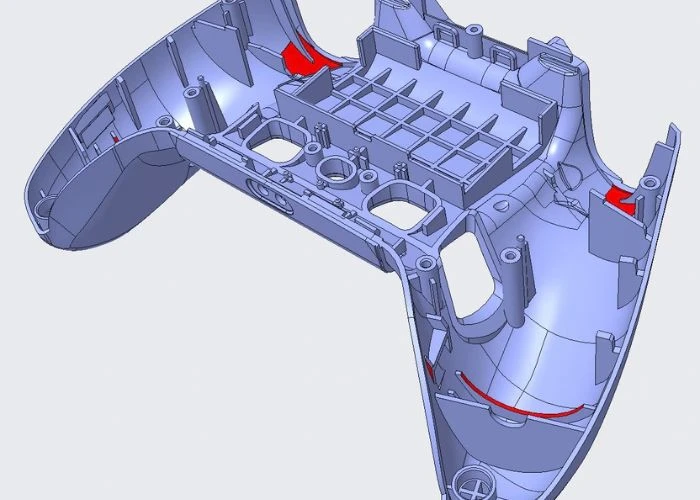
Engineers build prototypes because CAD, simulation, drawings, and calculations cannot answer every development question with equal confidence. A prototype turns selected assumptions into something that can be observed, handled, measured, assembled, or tested. The value is not simply that a physical object exists; the value comes from the new evidence it creates.
MIT engineering education materials describe prototyping as part of an ongoing problem-solving process in which engineers document what they learn from a prototype and continue improving it as new information emerges.
I therefore see a prototype as a decision tool. A successful prototype does not always confirm that the design is correct. Sometimes its greatest value is revealing that an assumption was wrong while changing the design is still relatively practical.
What Can a Prototype Help a Product Team Learn?
A prototype should be connected to a development question rather than built simply because a project has reached a stage called “prototyping.” In my experience, the most useful question before manufacturing is what the team expects to learn from the physical result. That answer determines which characteristics need to be representative.
A product team may need to evaluate whether the overall dimensions feel appropriate, whether two housings can physically mate, whether an internal component has enough clearance, whether a button reaches its mechanism, or whether a specified engineering plastic provides the expected rigidity.
Another project may focus on visual questions: whether a transparent window has the expected appearance, whether adjacent panels look aligned, or whether painted surfaces and graphics communicate the intended product identity. These are different questions and may require a different prototype.
This is why I avoid assuming that one prototype must validate everything. If one build tries to represent every production characteristic simultaneously, cost and complexity can rise without necessarily producing better information.
What Are the Main Types of Product Prototypes?
Prototype terminology varies across industries, so I prefer to classify physical prototypes according to what they are expected to demonstrate. This keeps the prototype definition connected to engineering purpose rather than to a manufacturing process. A CNC-machined part and a 3D-printed part can belong to the same prototype category if they answer the same development question.
An early concept prototype may communicate overall scale, proportions, ergonomics, or basic product direction. An appearance prototype places greater emphasis on form, color, surface quality, visual details, and product presentation. A functional prototype represents selected mechanical or operational characteristics strongly enough for relevant evaluation.
Assembly-oriented prototypes focus more on how multiple parts locate, fasten, clear, move, and come together. Later physical builds may combine more representative materials, finishes, purchased components, and manufactured parts as the team needs a more integrated view of the product.
I intentionally keep the classification brief here because the manufacturing decision becomes clearer when prototype categories are examined by their validation goals. UForProto’s existing guide to types of plastic prototypes covers concept, appearance, functional, assembly, and later-stage prototypes in greater depth.
Prototype vs Model vs Mockup: What Is the Difference?
These terms are often used loosely, and different companies may apply them differently. I therefore avoid treating the boundaries as universal standards. For engineering communication, however, it is useful to distinguish them according to what the physical or digital representation is expected to communicate and whether it is intended to answer a development question.
| Term | Typical Purpose | Functional Representation | Typical Engineering Use |
| Prototype | Learn, evaluate, test, or support a development decision | Can range from low to high | Form, fit, function, assembly, manufacturing learning |
| Model | Represent geometry, structure, appearance, or behavior | Depends on the model | Visualization, analysis, communication, physical representation |
| Mockup | Demonstrate layout, scale, interaction, or appearance | Often limited | Ergonomics, presentation, packaging, interface review |
A mockup can still be useful during prototyping, and a model can become part of a prototype strategy. The distinction is therefore less important than understanding what evidence the team expects the representation to provide.
What Does Prototype Fidelity Mean?
Prototype fidelity describes how closely selected characteristics represent the intended product. I find this concept more useful than simply calling a prototype “rough” or “high quality,” because fidelity can differ across characteristics. One prototype can have highly representative geometry while deliberately using a non-representative material or simplified internal construction.
A painted SLA housing, for example, may provide strong visual fidelity but may not reproduce the mechanical response of an injection-molded engineering thermoplastic. A CNC-machined ABS or POM component can provide actual material behavior for selected engineering evaluation, while its manufacturing process may still differ from future mass production.
This distinction prevents a common mistake: assuming that a prototype must be “as close as possible to production” in every respect. I instead define which characteristics need high fidelity and which can remain approximate. That makes the prototype more focused and makes its results easier to interpret.
When Does a Digital Design Need to Become a Physical Prototype?
CAD and simulation are powerful development tools, but a physical prototype becomes valuable when the question depends on real geometry, touch, assembly, movement, material response, or human interaction. I do not see physical prototyping as a replacement for digital engineering; it adds evidence that is difficult to obtain from the digital model alone.
An engineer can measure clearances in CAD, but physically assembling the parts may expose access problems, fastening difficulties, cable routing conflicts, or interactions with purchased components. A rendering can show color and form, but it cannot fully reproduce how a product feels when held or how several finished surfaces look together under real lighting.
Xometry similarly describes rapid prototyping as part of a development path that includes physical models, fit checks, tests, revisions, and updated designs. For me, the transition from digital to physical becomes justified when the expected learning is worth more than continuing to evaluate the same question only on screen.
How Are Physical Product Prototypes Manufactured?
There is no single “prototype manufacturing process” because the process should follow the characteristics that need to be represented. In plastic prototyping, I may use CNC plastic machining, SLA or SLS 3D printing, vacuum casting, surface finishing, and assembly individually or in combination, depending on what the physical prototype needs to demonstrate.
CNC Plastic Machining Provides Actual Engineering-Plastic Parts
I use CNC plastic machining when a prototype benefits from being manufactured directly from engineering-plastic stock such as ABS, PC, PMMA, POM, PP, PA, PPS, or other available materials. This can be valuable when material behavior, precision interfaces, machined surface relationships, or functional geometry matter to the development question.
The important point is not that CNC automatically creates a “better” prototype. If the project only needs a fast visual form study, machining actual engineering plastic may provide information the team does not yet need. Process value depends on prototype purpose.
3D Printing and Vacuum Casting Represent Different Development Needs
SLA can quickly produce detailed parts and is useful when geometry, appearance preparation, or fast iteration is important. SLS can support complex nylon parts without conventional tooling. These routes can make sense when speed, geometry, or the intended evaluation is more important than reproducing a specific machined thermoplastic.
Vacuum casting addresses a different requirement. Once a suitable master pattern exists, silicone tooling can be used to reproduce small quantities of polyurethane parts. UForProto uses this route for prototype and low-volume requirements where repeated parts, appearance, or production-like presentation are important.
How Should Engineers Choose the Right Prototype Manufacturing Method?
I do not begin process selection by asking which prototyping technology is fastest or most advanced. I begin with the development question. Once I understand what the prototype must represent, I can determine which manufacturing characteristics are necessary and which would add cost without improving the evidence produced by the prototype.
If material behavior is central to the evaluation, using the intended engineering plastic may matter. If the team needs to inspect a transparent housing visually, optical appearance and finishing become more important. If the product contains several interacting parts, individual component accuracy alone may not provide enough information and a physical assembly may be required.
I therefore move from question → required representation → manufacturing method, rather than from available manufacturing technology → prototype. This keeps process selection connected to engineering value and avoids manufacturing a more complex prototype than the project actually needs.
What Information Should Engineers Give a Prototype Manufacturer?
A CAD file describes geometry, but geometry alone does not always explain why the prototype is being made. When I review a new project, understanding the intended evaluation helps me distinguish critical manufacturing requirements from features that are less important to the current development decision.
I normally want to understand the 3D geometry, preferred or required material, quantity, critical dimensions, surface requirements, and any assembly relationships. If the prototype interacts with customer-supplied components, those interfaces or relevant component data can also be important.
The prototype purpose provides context for all of this information. A dimension can be important because it controls fit; a surface may be important because it will remain visible; a material may be specified because the team needs to evaluate rigidity. Knowing the reason helps manufacturing attention follow engineering priority.
When Does a Prototype Become a Complete Physical Build?
Not every project needs a fully assembled prototype. I recommend moving toward a complete physical build only when interactions between components become part of the development question. At that point, the prototype is no longer just representing individual geometry; it is also representing relationships between manufactured parts, hardware, purchased components, finishes, and assembly conditions.
A complete build can reveal information that isolated components cannot provide. Fastener access may become difficult after another component is installed. A purchased display may change the real fit of an enclosure. Surface finishing may alter how adjacent cosmetic parts look together. These are system-level observations rather than isolated part measurements.
This is different from simply defining prototype types. UForProto’s complete prototype services coordinate CNC machining, 3D printing, vacuum casting, finishing, inspection, and assembly when the project needs a more integrated physical product.
How Should Engineers Interpret the Results of a Prototype?
Building a prototype produces physical evidence, but that evidence is only useful when it is interpreted within the limits of what the prototype was designed to represent. I avoid treating every observation from a prototype as equally representative of the final product. The first step is to separate what the build can genuinely validate from what remains outside its intended scope.
For example, a CNC-machined ABS housing can provide useful information about physical geometry, actual ABS behavior, fastening features, and mating relationships. If the future production part will use a different manufacturing process, however, I would not assume that every surface condition or manufacturing characteristic observed on the machined prototype will transfer directly to production.
The same limitation applies to a 3D-printed appearance prototype. It may answer questions about overall form, visual proportions, openings, user interaction, or presentation after finishing, while providing much less evidence about the mechanical behavior of the intended production thermoplastic. A useful prototype result therefore needs to be connected back to the characteristics that were intentionally represented.
I also distinguish a prototype problem from a product design problem. If two components do not fit, the observation is real, but the cause still needs to be understood. The issue may come from CAD geometry, a specified clearance, dimensional variation, a supplied component, the manufacturing method, or an assumption made when the prototype was planned. Changing the product design before understanding that distinction can create an unnecessary revision.
A prototype can also produce a useful result when it reveals that the current design should not proceed unchanged. In that case, the build has reduced uncertainty by identifying a relationship that needs revision. The engineering team can update the CAD, adjust the relevant requirement, or create a more targeted prototype to investigate the remaining uncertainty.
For me, this is where the prototype definition becomes especially practical. A prototype should not be judged simply by whether it “worked.” It should be judged by whether it produced reliable information about the development question it was created to investigate. That information can then support the next design, manufacturing, or product-development decision.
Conclusion
A useful prototype definition is not determined by one process, material, or level of completeness. In product development, I see a prototype as a purposeful representation that allows a team to reduce uncertainty before important decisions are fixed. Its value depends on whether the right characteristics are represented with enough fidelity to produce reliable evidence. Physical prototypes can support decisions about form, fit, material behavior, function, appearance, and assembly when their limitations are understood. As a direct plastic prototype manufacturer, UForProto can review your CAD, drawings, material requirements, quantities, and prototype objectives for manufacturing evaluation and quotation.
FAQs
1. What Is the Definition of a Prototype?
A prototype is a representation of a proposed product or design created to support learning, evaluation, testing, communication, or development decisions before the product is finalized. In engineering, I consider its purpose more important than whether it looks exactly like the final product.
2. What Is the Purpose of a Prototype?
The purpose is to reduce uncertainty around a specific development question. A prototype may help evaluate geometry, ergonomics, fit, material response, mechanical behavior, assembly, appearance, or manufacturing assumptions. It can confirm an idea, but identifying a design problem early can be equally valuable.
3. Does a Prototype Have to Be a Physical Product?
No. Prototype definitions vary across engineering and design disciplines, and prototypes can take different forms. A physical prototype becomes particularly valuable when the development question depends on real geometry, material behavior, touch, assembly, movement, surface appearance, or interaction between physical components.
4. Is a Prototype the Same as the Final Product?
No. A prototype normally represents selected characteristics of the intended product at the fidelity required for a particular evaluation. It may use different manufacturing processes, materials, internal components, or finishes from the final production product when those differences do not invalidate the development question being studied.
5. What Is a Physical Prototype Used For?
A physical prototype allows engineers to observe characteristics that may be difficult to evaluate completely in CAD. Depending on the build, it can support reviews of form, ergonomics, physical fit, movement, assembly access, material behavior, surface appearance, and interaction with other components.
6. How Do I Choose the Right Manufacturing Process for a Prototype?
I begin with what the prototype needs to demonstrate. CNC plastic machining is useful when actual engineering-plastic stock and machined features matter. SLA or SLS can support rapid iteration and complex geometry, while vacuum casting can reproduce small quantities from a master pattern. The best route depends on the required evidence rather than one process being universally superior.