
ABS is a widely used engineering thermoplastic valued for its toughness, impact resistance, rigidity, and manufacturing flexibility. It appears in electronic housings, automotive components, appliances, consumer products, and functional prototypes because it can be molded, machined, formed, and 3D printed.
For product development, ABS is especially useful because the same material family can support early prototypes and production parts through different manufacturing processes. This guide explains what is ABS plastic, how it performs, where it is used, and how CNC machining and prototyping affect material and design decisions.
What Is ABS Plastic?
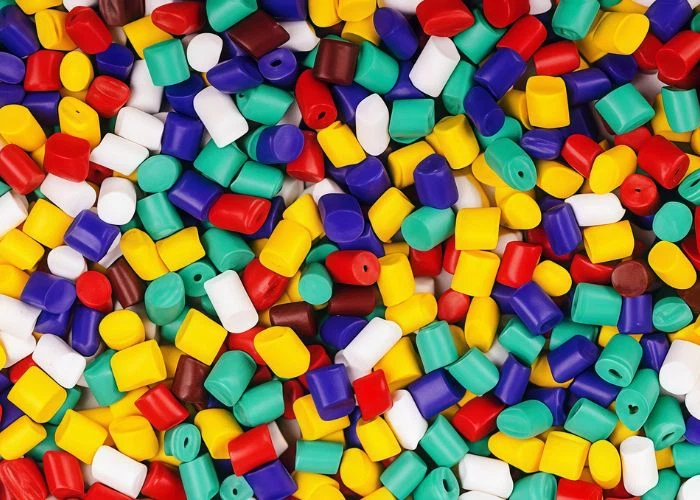
ABS, short for Acrylonitrile Butadiene Styrene, is a thermoplastic polymer that combines toughness, rigidity, impact resistance, and good processability. Its balanced performance allows it to serve both functional and appearance-focused applications, from protective housings to custom prototypes.
Unlike thermoset plastics, ABS softens when heated and can be reshaped through processes such as injection molding, extrusion, thermoforming, and additive manufacturing. Solid ABS sheet, plate, or rod can also be machined when prototypes or custom parts are needed.
What Does ABS Stand For?
ABS stands for Acrylonitrile Butadiene Styrene. The material is produced by combining these three components through polymerization, and the balance between them influences the final properties of the material.
Because the formulation can be adjusted, ABS is available in grades developed for general use, higher impact resistance, improved heat performance, flame resistance, or UV exposure. This allows designers to select a grade that better matches the final operating environment.
How Do Acrylonitrile, Butadiene, and Styrene Affect ABS?
Each component contributes differently to ABS performance. Acrylonitrile supports chemical resistance and thermal stability, butadiene contributes toughness and impact resistance, and styrene improves rigidity, strength, surface appearance, and processability.
This combination explains why ABS can be both mechanically durable and relatively easy to manufacture. Adjusting the proportions changes the balance between impact strength, stiffness, heat resistance, and processing behavior, so not every ABS grade performs exactly the same way.
What Are the Key Properties of ABS Plastic?
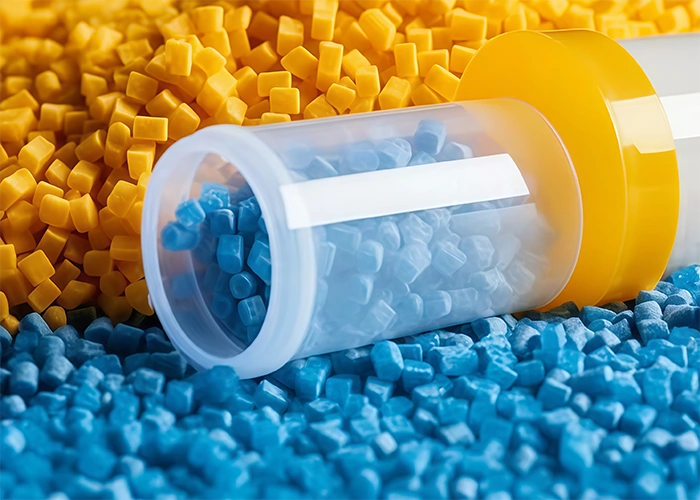
ABS is mainly valued for its balance rather than one extreme material property. It provides good impact resistance, useful stiffness, electrical insulation, attractive surface quality, and straightforward processing, which makes it suitable for a broad range of engineered products.
Impact Resistance and Toughness
ABS can absorb impact without cracking as easily as many more brittle plastics. The butadiene component plays an important role in this toughness, making the material useful for housings, protective parts, automotive interiors, and products exposed to drops or repeated handling.
Impact performance still depends on grade, temperature, wall thickness, and part geometry. Sharp corners and thin unsupported sections can create stress concentrations even when the base material is tough.
Strength and Rigidity
ABS provides enough rigidity for many housings, panels, covers, brackets, and structural plastic components. Protolabs highlights both strength and stiffness as key reasons ABS is used in parts exposed to mechanical loads.
It is not intended to replace metals in highly loaded structures, but its combination of stiffness and low weight works well for many functional prototypes and consumer products.
Surface Finish and Appearance
ABS is well suited to products where appearance matters. Properly processed surfaces can be smooth and can also be sanded, polished, textured, painted, or otherwise finished.
This is particularly useful for enclosure prototypes and presentation models because one material can support both functional testing and cosmetic evaluation.
Temperature and Dimensional Stability
ABS performs well in normal indoor and moderate-temperature applications, but dimensional change should be considered as temperature varies. Its thermal expansion is higher than that of metals, which can affect close fits or large dimensions.
For precision prototypes, designers should concentrate tighter tolerances on functional interfaces rather than applying them across the entire part.
Chemical and Electrical Performance
ABS resists many common chemicals, although aggressive solvents and harsh chemical environments can cause swelling or degradation. The exact grade and exposure conditions should therefore be checked for demanding applications.
It also provides useful electrical insulation, which is one reason ABS is common in electronic enclosures, device housings, and other components that protect electrical hardware.
What Are the Advantages and Limitations of ABS?
ABS offers an attractive combination of performance, manufacturability, surface quality, and cost. However, it is not equally suitable for every environment, especially where long-term UV exposure, high heat, fire resistance, or aggressive chemicals are major concerns.
Advantages of ABS Plastic
ABS is tough, rigid, easy to shape, and compatible with several manufacturing processes. It can be injection molded for production, CNC machined for custom parts, or 3D printed for rapid prototypes. It also accepts many secondary finishing processes, which gives designers greater freedom over appearance.
For product development, this flexibility is important because the same general material family can support different stages of a project without requiring designers to completely change their material strategy.
Limitations of ABS Plastic
Standard ABS is vulnerable to prolonged UV exposure and may discolor or lose performance outdoors. It is also combustible unless a suitable flame-retardant grade is selected, and its heat resistance is lower than that of some higher-performance engineering plastics.
Chemical exposure must also be reviewed carefully. Some strong solvents can damage ABS, so a part that performs well in a dry indoor environment may not be appropriate around aggressive cleaners, fuels, or process chemicals.
What Is ABS Plastic Used For?
ABS is used wherever manufacturers need a practical balance of toughness, stiffness, appearance, electrical insulation, and manufacturing flexibility. Its applications range from consumer products and electronics to automotive components and industrial equipment.
Electronic Enclosures and Housings
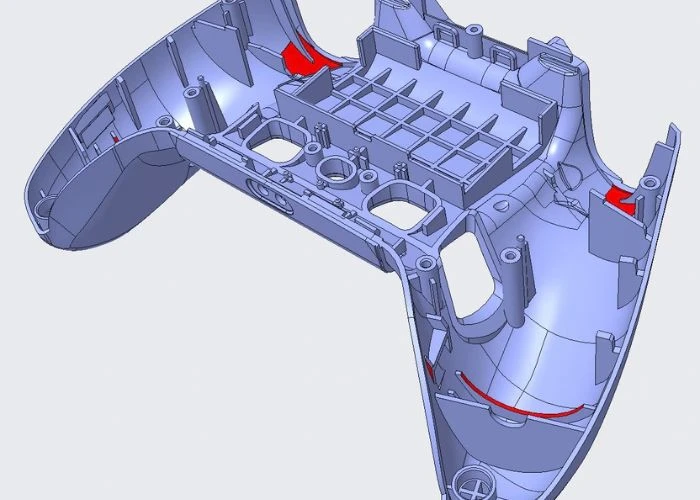
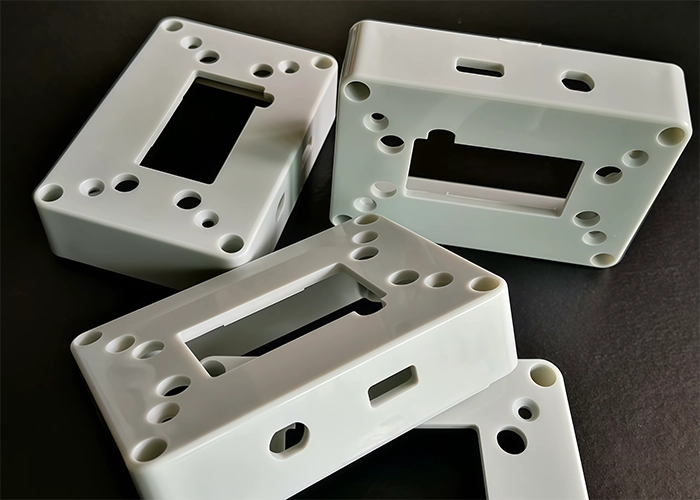
ABS is widely used for computer accessories, remote controls, device housings, electrical enclosures, and similar products. Its impact resistance protects internal hardware, while its electrical insulation and surface quality make it suitable for user-facing components.
Automotive and Appliance Parts
Automotive uses include dashboards, trim, panels, grilles, housings, and console components. ABS is also found in household appliances such as vacuum cleaners, coffee makers, and other products where durability and appearance both matter.
Consumer and Medical Products
Toys, sporting goods, equipment housings, and other consumer products use ABS because it handles impact while remaining easy to mold into detailed forms. Selected grades are also used for medical and laboratory equipment, although application-specific certification must be confirmed.
Industrial Components
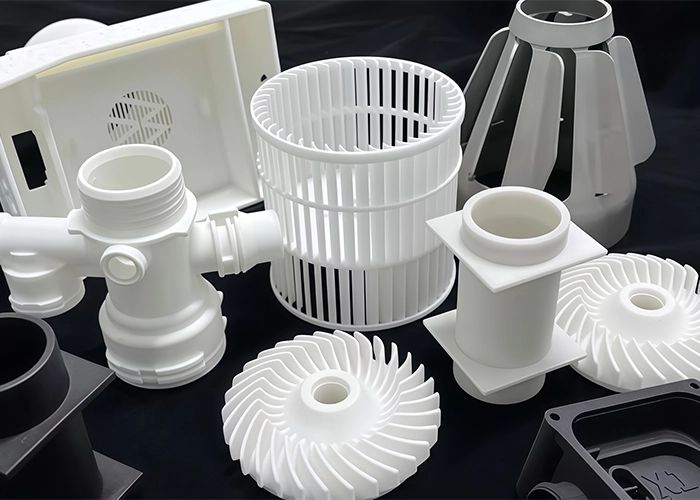
ABS can also be used for covers, fixtures, protective panels, instrument housings, and other industrial parts. Custom geometries are particularly suitable for machining when production volumes are too low to justify dedicated tooling.
How Are ABS Plastic Parts Manufactured?
ABS can be manufactured through several processes, so the most suitable method depends on part geometry, production quantity, required accuracy, surface quality, and tooling budget. This flexibility is one of the material’s strongest advantages for product development.
Injection Molding
Injection molding is widely used for high-volume ABS production. Molten material is injected into a mold, cooled, and ejected as a finished component.
It is effective for complex geometry and repeatable production, but tooling cost makes it less attractive during early design iterations.
CNC Machining
CNC machining removes material from ABS stock using milling, turning, drilling, or routing operations. Protolabs identifies machining as a suitable route for customized and lower-volume ABS parts, including projects with tighter dimensional requirements.
Its main advantage is flexibility: CAD changes can be transferred directly into updated machining programs without modifying a mold.
3D Printing
ABS is also widely associated with fused deposition modeling. 3D printing can create prototypes and complex shapes with relatively little setup cost, making it useful during early development.
Printed ABS and machined ABS do not produce identical surfaces or dimensional behavior, so the process should match what the prototype needs to validate.
Thermoforming and Extrusion
ABS can be extruded into sheet, rod, tubes, and profiles. Sheet can then be heated and thermoformed over a mold to create larger covers, trays, panels, and interior components.
These methods are useful when geometry and production requirements do not justify machining every feature from solid stock.
How Does CNC Machining ABS Work?
CNC machining ABS is a practical way to produce accurate functional prototypes and low-volume custom parts without investing in molds. ABS can be milled, turned, drilled, or routed, but good results depend on controlling heat, cutting forces, chip removal, workholding, and surface damage.
Why Use CNC Machining for ABS Parts?
CNC machining is especially useful when a design is still changing or when only a small number of parts are needed. There is no mold to redesign, so dimensions, holes, pockets, interfaces, and wall features can be modified directly in the CAD and CAM workflow.
It also produces parts from solid engineering stock rather than layer-by-layer deposition. This makes machining useful when designers need functional surfaces, controlled geometry, accurate mating features, or material behavior that is less influenced by print orientation.
CNC Milling ABS
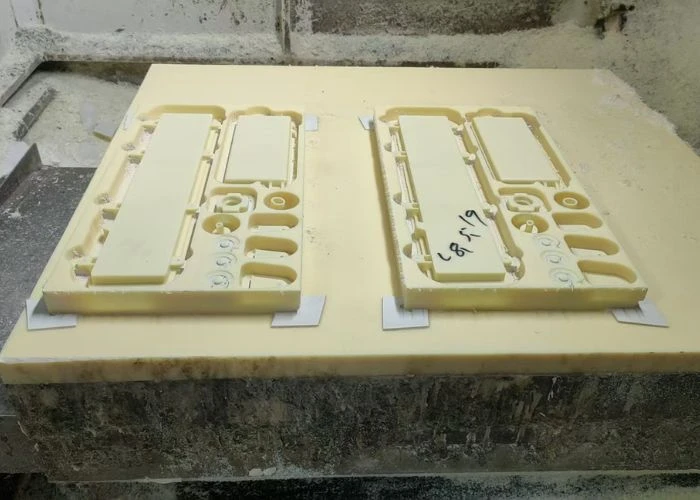
CNC milling is well suited to housings, brackets, covers, panels, pockets, slots, mounting features, and custom profiles.
Because ABS is softer than metals, cutting forces do not need to be excessive. Sharp cutters help shear the material cleanly instead of rubbing against it. Stable tool engagement also helps limit heat and reduces the risk of rough edges or local softening.
For enclosure prototypes, milling can produce connector openings, screw locations, internal pockets, bosses, and external profiles in one coordinated machining plan.
CNC Turning and Drilling ABS
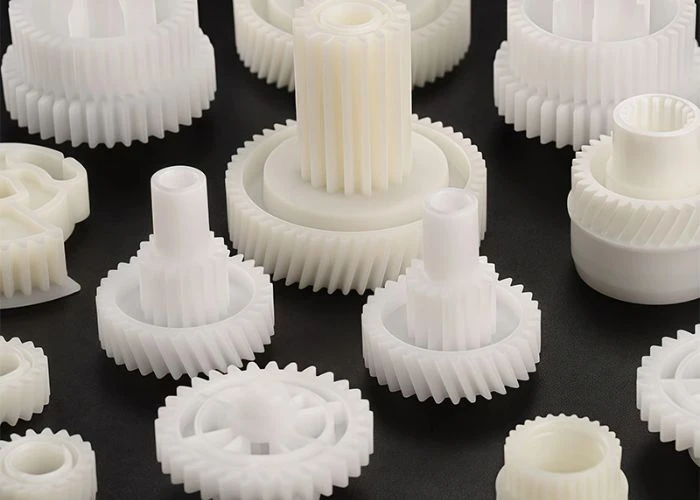
ABS rod or tubular stock can be turned into sleeves, spacers, rings, bushings, knobs, and other rotational parts. Turning is especially effective when concentricity between cylindrical features is important.
Drilling ABS is also straightforward when tools are sharp and chips can leave the hole efficiently. Deep holes require more attention because trapped chips increase friction and heat, which can affect both the hole surface and final dimensions.
Heat and Chip Control
Heat is one of the main factors that separates plastic machining from metal machining. Excessive rubbing can soften ABS locally and leave smeared edges instead of a clean cut.
Sharp tools, effective chip evacuation, and cutting conditions that produce a real chip rather than friction help maintain a stable process. SendCutSend specifically uses CNC routing for ABS sheet and notes that this avoids the material degradation that could occur with its laser-cutting process.
Machined parts should also reach a stable temperature before tight dimensions are evaluated.
Workholding and Part Deformation
ABS parts need enough clamping force to prevent movement but not so much that the stock is distorted. This becomes more important with thin panels, large flat components, or parts with flexible walls.
A workpiece that is compressed during machining may change shape after it is unclamped. Wide support areas, soft jaws, vacuum fixtures, or dedicated fixtures can help distribute holding force.
Design geometry matters as well. Stable locating surfaces make machining easier and reduce the need for complex workholding.
Tolerances and Dimensional Accuracy
CNC-machined ABS can support accurate features, but the tolerance strategy should follow function. Protolabs notes that machining is suitable for customized ABS components with tighter tolerances, while also identifying thermal expansion as a dimensional consideration for ABS generally.
Bearing locations, assembly interfaces, hole positions, and mating surfaces may justify tighter control. Cosmetic panels or clearance surfaces usually do not need the same tolerance.
This selective approach reduces machining time and inspection effort without compromising function.
Surface Finish and Deburring
ABS can produce a good machined surface, and one of its broader advantages is its compatibility with post-processing and finishing.
Sharp tools reduce tearing and burr formation around edges. After machining, parts may also be sanded, polished, painted, textured, or otherwise finished when appearance is important.
For presentation prototypes, designers should specify which surfaces are cosmetic. This allows machining and finishing effort to focus on the areas that will actually be visible.
Why Is ABS Popular for Prototyping?
ABS works particularly well for prototypes because it combines useful mechanical performance with multiple manufacturing options. Designers can machine it for accurate functional parts, 3D print it for rapid iterations, thermoform sheet for covers, or eventually injection mold the same type of material for production.
Functional Prototypes
A functional prototype needs to do more than look correct. It may need to support assembly loads, hold fasteners, survive handling, protect internal components, or demonstrate actual mechanical behavior.
CNC-machined ABS is useful in these situations because the prototype can be produced from solid stock with controlled mating features and practical structural strength.
Engineers can then evaluate whether wall thickness, fastening points, clearances, and interfaces behave as expected before tooling is released.
Enclosure and Housing Prototypes
Housings are one of the strongest applications for ABS. Its rigidity, impact resistance, electrical insulation, and surface quality all support enclosure design.
A machined enclosure prototype can include connector openings, ventilation slots, display windows, mounting holes, internal pockets, and hardware locations. This allows electrical and mechanical components to be assembled in a near-final configuration.
It also helps reveal issues that may not be obvious in CAD, such as connector access, cable routing, screw clearance, or interference between internal components.
Appearance and Presentation Models
ABS can also support visual prototypes because it accepts sanding, painting, polishing, and texturing.
This allows a prototype to communicate more than geometry. Product teams can review shape, color, surface finish, seam placement, button locations, and overall appearance before the final manufacturing process is chosen.
Where both appearance and function matter, CNC machining followed by finishing can produce a prototype that is closer to a production product than a rough early-stage model.
Engineering Validation Parts
ABS prototypes are useful during engineering validation when the team needs to test fit, assembly, handling, structural response, or repeated operation.
Machining is particularly valuable because design changes are relatively easy to implement. If testing reveals that a hole needs to move, a wall needs more clearance, or an interface needs to change, the CAD model and machining program can be updated without rebuilding production tooling.
This shortens the feedback loop between testing and the next design iteration.
Low-Volume Custom Parts
Not every ABS component eventually becomes a mass-produced molded part. Specialized equipment, test systems, replacement components, and custom products may only need a few units.
For these applications, CNC machining can remain the final production process. The manufacturer avoids mold investment while still producing parts from engineering-grade material with controlled features.
This is especially useful when the design changes frequently or when multiple product variants share a similar base geometry.
How to Choose the Right Process for an ABS Prototype
The best prototype process depends on what the prototype must prove. CNC machining is strongest for dimensional and functional validation, 3D printing is useful for rapid geometry iteration, and injection molding becomes more practical when the design is stable and production quantity increases.
When CNC Machining Makes Sense
Choose CNC machining when the prototype needs accurate mating features, smooth machined surfaces, solid stock material, drilled or threaded details, or reliable fit with other components.
It is also a practical choice for low quantities because no dedicated mold is required.
When 3D Printing Makes Sense
3D printing is useful when speed, geometry complexity, and frequent design changes are more important than matching the final surface or dimensional behavior of a machined part.
It is often well suited to early concept models, ergonomic studies, internal layout checks, and fast iterative testing. Protolabs notes that ABS is widely used with FDM and that additive manufacturing offers relatively low setup cost for prototypes.
When Injection Molding Becomes Practical
Injection molding becomes more attractive when the design is stable, quantities rise, and the same geometry needs to be produced repeatedly.
The higher tooling investment can then be distributed across more parts, while the process can reproduce complex molded features efficiently.
For many development programs, CNC or 3D-printed prototypes come first, followed by molded parts once major design risks have been resolved.
What Should Designers Consider for CNC-Machined ABS Prototypes?
Good ABS prototype design should account for the way plastic responds to cutting, clamping, temperature, fastening, and finishing. Practical geometry and tolerance decisions usually improve both machining stability and prototype performance.
Wall Thickness and Unsupported Features
Very thin walls can flex under cutting or clamping forces. Larger unsupported panels may also vibrate during machining or deflect during assembly.
Design walls according to their functional load and provide support where possible. A slightly thicker feature is often easier to machine and more representative during testing than an unnecessarily delicate section.
Tolerances and Fits
Tight tolerances should be reserved for dimensions that control assembly or function.
ABS expands and contracts with temperature, so extremely close fits over large dimensions may not remain constant in every environment.
Clearances should reflect how the part will actually operate, not only the nominal CAD dimension.
Holes, Threads, and Fasteners
Holes should have enough surrounding material to distribute fastening loads. Threads can be machined directly into suitable ABS features, but repeated assembly may eventually wear the plastic.
When a prototype will be assembled and disassembled many times, inserts or other fastening solutions may provide more reliable testing.
Surface Finish and Secondary Processing
ABS is particularly useful when a prototype needs additional finishing. It can be sanded, painted, polished, textured, or prepared for other cosmetic treatments.
Designers should define appearance requirements before machining. Functional internal surfaces usually do not need the same finishing effort as visible exterior faces.
Heat, UV, and Chemical Exposure
Standard ABS is not ideal for prolonged sunlight exposure, and certain solvents or harsh chemicals can degrade the material.
A prototype intended to test outdoor exposure, high temperature, or chemical contact should therefore use a grade specifically suited to that environment or a different material if ABS cannot meet the requirement.
Conclusion
ABS is a practical engineering thermoplastic that combines toughness, impact resistance, rigidity, good surface quality, and flexible manufacturing options. Its ability to be injection molded, CNC machined, 3D printed, extruded, and thermoformed makes it especially useful during product development. For prototypes, the best results come from matching the manufacturing process to what needs to be validated, while controlling wall thickness, tolerances, heat, workholding, surface finish, and the final operating environment.
At UForProto, we provide plastic prototyping, CNC plastic machining, 3D printing, and low-volume manufacturing services for custom ABS components. From functional housings and engineering validation parts to appearance models and short-run production components, we support material selection, machining, assembly, finishing, and dimensional verification to help move plastic product designs from concept to practical testing.
FAQs
1.Is ABS Plastic Food Safe?
Not all ABS grades are approved for food contact. Food safety depends on the specific formulation, additives, and applicable regulations. If ABS will contact food, use a grade specifically certified for that purpose.
2.Is ABS Plastic Safe?
ABS is generally safe for normal industrial and consumer use when processed and used as intended. However, safety depends on the grade, additives, temperature, and exposure conditions.
3.How to Paint ABS Plastic?
ABS can be painted effectively after proper surface preparation. Clean the surface, lightly sand if needed, apply a plastic-compatible primer, and use a coating designed for ABS or similar thermoplastics.
4.Is ABS Plastic Strong?
Yes. ABS offers a good balance of strength, rigidity, and impact resistance. It is suitable for housings, brackets, covers, and functional prototypes, although performance still depends on part geometry and material grade.
5.Is ABS Plastic Recyclable?
Yes, ABS is recyclable and can be reprocessed in suitable recycling systems. However, actual recyclability depends on local facilities, contamination, additives, and whether the material can be properly identified and separated.