
Plastic ABS is widely used for housings, covers, structural components, and functional prototype parts, but specifying “ABS” does not automatically define how a physical part will perform. Different grades, manufacturing routes, surface requirements, and validation goals can change what an ABS prototype actually represents. In plastic prototyping, I therefore look beyond the material name. I consider whether actual ABS behavior matters, which characteristics need to be validated, and whether CNC plastic machining, finishing, or another prototype route will provide the most useful physical result.
What Is Plastic ABS?
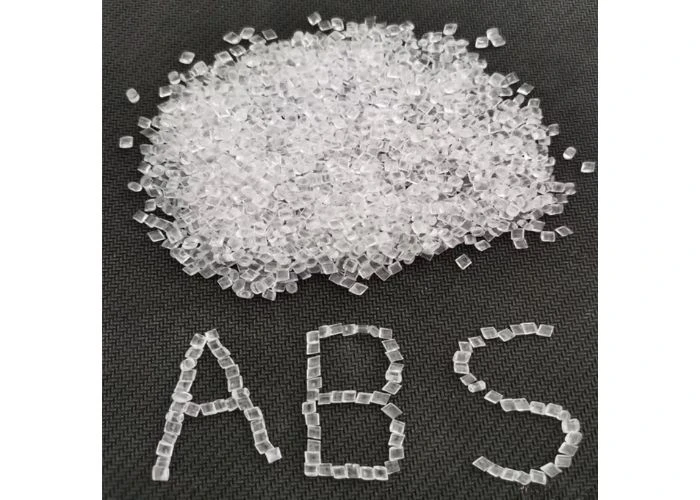
Plastic ABS, or acrylonitrile butadiene styrene, is an amorphous thermoplastic commonly used for engineering and consumer-product components. For prototype work, its importance comes less from one exceptional property than from a practical balance of toughness, stiffness, machinability, availability, and surface-finishing potential.
ABS combines three constituent monomers whose contributions help explain the material’s overall behavior. Acrylonitrile contributes chemical and thermal resistance, butadiene contributes toughness and impact resistance, while styrene contributes rigidity and processability. Changing the formulation changes the resulting material, which is one reason I avoid treating all ABS as a single fixed engineering specification.
ABS is also amorphous rather than semi-crystalline. This distinction matters when engineers interpret thermal data. ABS does not have the same sharp crystalline melting transition associated with materials such as PP or POM, so temperature-related requirements should not be reduced to a single “ABS melting point.”
Why Is Plastic ABS Common in Prototype Parts?
I often encounter ABS in physical product development because it combines several characteristics that are useful at the prototype stage. It is available as machinable stock, supports practical structural components, and can accept secondary finishing. This makes it particularly useful when one prototype needs to provide both engineering information and a presentable physical result.
For example, an ABS housing can begin as a CNC-machined engineering-plastic part and later receive hand finishing, painting, graphics, or other specified cosmetic treatment. The same component can therefore support dimensional or assembly evaluation before becoming part of a more refined presentation prototype.
That flexibility does not mean ABS should become a default material for every project. I use its balanced characteristics as a reason to consider it, not as evidence that it is automatically the best engineering plastic.
Plastic ABS Is a Material Family, Not One Fixed Specification
One of the most important points I want engineers and purchasing teams to understand is that “ABS” identifies a material family rather than one universal set of mechanical properties. Different formulations can produce different ABS types, so values taken from a generic online table should not automatically become design or inspection requirements.
When Is “ABS” Enough and When Does the Grade Matter?
For an early housing prototype whose purpose is to evaluate geometry, assembly, handling, or cosmetic finishing, a general-purpose machinable ABS may provide the information the team needs. In that situation, requiring a specific commercial grade can add a sourcing constraint without improving the intended evaluation.
The situation changes when the material itself becomes part of the requirement. If the project depends on a specified impact performance, elevated-temperature behavior, flame-retardant classification, color, regulatory requirement, or direct comparison with a future production material, I need more than the word “ABS.”
In those cases, the drawing or RFQ should identify the manufacturer and grade where necessary, together with the property or requirement that makes that grade important. This avoids treating a generic material name as though it were a complete material specification.
Which ABS Plastic Properties Matter Most for a Prototype?
Material data becomes useful when I can connect it to what the prototype needs to demonstrate. Instead of copying a long ABS datasheet into a prototype specification, I prefer to identify which material characteristics can materially change the result. Typical published values are useful for screening, but the specified grade’s datasheet should govern when a property is critical.
| ABS Characteristic | What It Can Affect in a Prototype |
| Impact behavior | Handling, covers, housings and components exposed to knocks |
| Stiffness | Wall deflection, structural support and perceived rigidity |
| Thermal response | Dimensional behavior and suitability near heat sources |
| Machinability | Ability to create detailed physical geometry from stock |
| Surface behavior | Sanding, painting, bonding and cosmetic preparation |
| Grade-specific requirements | Whether the prototype can represent a defined production material requirement |
This approach also prevents false precision. A single tensile-strength or heat-deflection value found online does not describe every ABS grade. Protolabs, for example, explicitly identifies its published CNC material values as typical reference values rather than design specifications for quality control.
Where Does ABS Work Well in Physical Product Development?
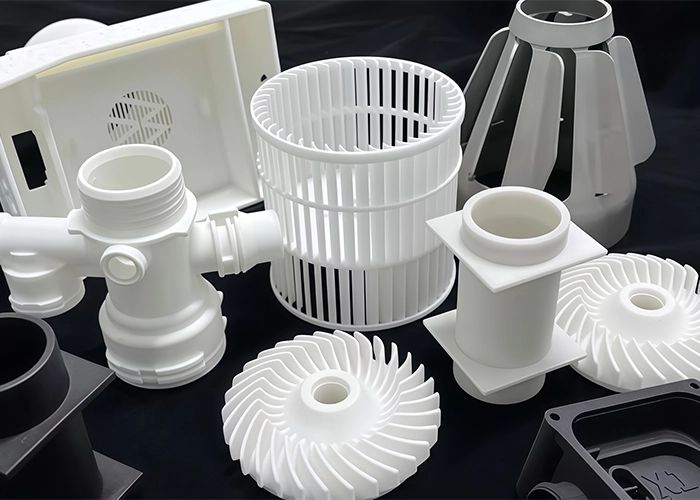
ABS is particularly useful when the prototype requires a combination of physical structure, machinable geometry, handling durability, and cosmetic potential. Rather than defining suitability by industry alone, I find it more useful to look at the type of component and what the development team needs to learn from it.
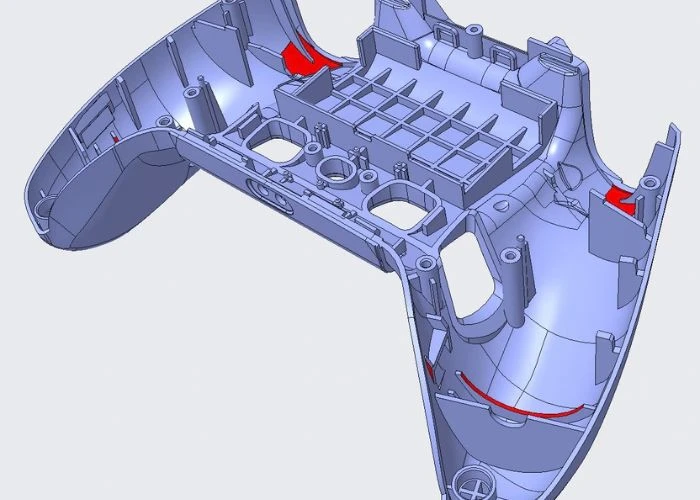
Housings and covers are obvious examples because they often combine visible surfaces with mounting bosses, openings, internal supports, fastening features, and mating interfaces. ABS can also be practical for brackets, internal structures, control panels, handheld product bodies, and other components that require a relatively rigid physical representation.
This explains why ABS appears in consumer electronics, equipment housings, automotive interior components, appliances, and many product-development builds. Ensinger similarly lists electronics housings and automotive components among typical ABS applications.
When Can Plastic ABS Be the Wrong Material Choice?
Understanding the limits of ABS is more useful than describing it as a universally versatile plastic. I reconsider ABS when the prototype must represent environmental or functional requirements that fall outside the strengths of the selected grade. The correct response is not automatically to choose a “better” plastic, but to identify which requirement ABS cannot adequately represent.
A transparent component, for example, immediately changes the material question because standard ABS does not provide the optical clarity expected from materials such as PMMA or PC. A low-friction moving interface may shift attention toward materials such as POM, while a demanding high-temperature environment may require another engineering plastic.
Outdoor exposure, chemical contact, flame requirements, wear, and production-material specifications can also change the decision. I therefore avoid selecting ABS simply because it is familiar or easy to manufacture. The material should still represent the environment and behavior that matter to the project.
What Changes When Plastic ABS Is Used for CNC Plastic Machining?
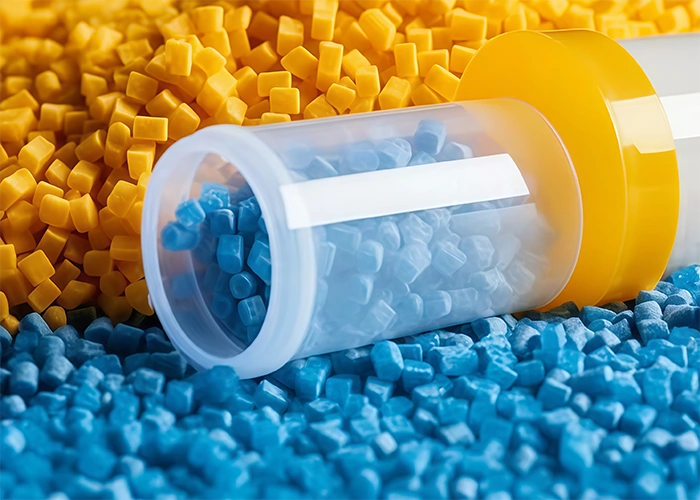
Machining ABS from stock gives the engineering team a physical part made from actual thermoplastic material rather than a material formulated merely to resemble selected ABS characteristics. That distinction can be important when the project needs representative material behavior together with accurate machined geometry. ABS stock is commercially available in machinable forms such as sheet and rod.
In CNC plastic machining, I can machine mounting features, bores, openings, mating surfaces, pockets, and other geometry directly into the stock. This is one reason machined ABS is frequently used for pre-production prototypes and structural applications. Protolabs likewise identifies ABS as an easy-to-machine engineering plastic commonly used for pre-production prototypes.
However, I would not automatically treat a machined ABS prototype as identical to a future injection-molded ABS part. Even when the polymer family is the same, stock production, part manufacturing, geometry, processing history, and exact grade can influence the final result. The prototype should therefore be evaluated according to what it was intended to represent.
Is CNC-Machined ABS the Same as ABS-Like 3D Printing Resin?
No. This distinction matters when a prototype is expected to provide information about actual material behavior. CNC-machined ABS begins with thermoplastic ABS stock. An ABS-like SLA material is a photopolymer formulation designed to reproduce selected characteristics associated with ABS, but its chemistry and material system are different.
| Material Route | Material Basis | What It Can Represent Well |
| CNC-machined ABS | Actual ABS thermoplastic stock | ABS material plus machined physical geometry |
| FDM ABS | ABS-based thermoplastic filament | Printed ABS parts, with process-dependent layer behavior |
| ABS-like SLA resin | UV-cured photopolymer | Selected ABS-like mechanical behavior with SLA geometry and surface characteristics |
Formlabs describes ABS-like resin as a UV-acrylate-based photopolymer with modifiers intended to mimic selected ABS properties. Its comparison also shows why the term “ABS-like” should not be interpreted as meaning that the material is chemically ABS.
I therefore choose between actual ABS and an ABS-like printing material according to the validation objective. If actual ABS behavior matters, the material route becomes part of the engineering requirement. If geometry, rapid iteration, or presentation is the priority, a different prototype material may still provide the information the team needs.
Does Surface Finishing Change What an ABS Prototype Can Demonstrate?
Surface finishing can add significant value to an ABS prototype, particularly when appearance is part of the evaluation. At the same time, finishing changes the condition in which the part is being assessed. I therefore distinguish between evaluating the underlying ABS material and evaluating a finished product surface.
ABS is commonly selected for prototypes partly because it can be machined and then prepared for painting or bonding. Protolabs specifically identifies ease of painting and gluing among the reasons ABS is used for pre-production prototypes.
For an appearance-oriented housing, sanding, primer, paint, graphics, or another specified finish can help the team evaluate color, gloss, visual continuity, and presentation. Those results are valuable, but they describe the finished prototype system rather than the untouched surface of the ABS stock.
This distinction becomes especially important when surface condition affects a mating or functional interface. In those cases, I need to know whether the finished condition or the underlying machined condition is the one that must satisfy the engineering requirement.
When Should Engineers Specify an Exact ABS Grade?
I recommend specifying an exact ABS grade when the development decision depends on a property that cannot be represented reliably by a generic ABS stock material. This keeps material requirements proportional to the prototype objective: ordinary projects remain practical, while material-critical projects preserve the information needed for meaningful evaluation.
A specific grade becomes more relevant when requirements include a defined impact level, thermal performance, flame rating, particular color or formulation, regulatory consideration, or direct correlation with a specified production material. Availability should also be checked because not every commercial resin grade is readily available as thick plate, sheet, rod, or block for machining.
If an exact grade is unavailable in machinable stock, I prefer to discuss the mismatch openly rather than silently substitute another ABS and imply equivalence. The engineering team can then decide whether generic ABS is sufficient for the current validation or whether another manufacturing route is necessary.
What Should Engineers Send for a Plastic ABS Prototype Quote?
Plastic ABS Prototype询价应该提供哪些信息?
For an ABS prototype RFQ, I need enough information to determine whether “ABS” is simply the preferred manufacturing material or an engineering requirement that must represent a specific grade. That distinction affects sourcing, manufacturing review, inspection expectations, and how the finished prototype should be interpreted.
The starting point is the 3D CAD model and, where necessary, a 2D drawing identifying critical dimensions, tolerances, and other controlled requirements. I also need the quantity, required finish, color or appearance requirements, and relevant assembly relationships.
For the material, the RFQ should state whether general-purpose ABS is acceptable or whether a manufacturer and grade are mandatory. If a specific property is driving that requirement, identifying it helps me understand why substitution may or may not be acceptable.
This ABS-specific information is more useful than simply adding unnecessary material data to every drawing. The objective is to communicate the requirements that can change the manufacturing or validation result.
How We Manufacture Plastic ABS Prototype Parts at UForProto
At UForProto, we manufacture physical plastic prototypes directly rather than acting as a trading company. For ABS projects, I first review whether the customer requires actual ABS material behavior, a particular grade, specific dimensional relationships, cosmetic finishing, or a combination of these requirements before defining the manufacturing route.
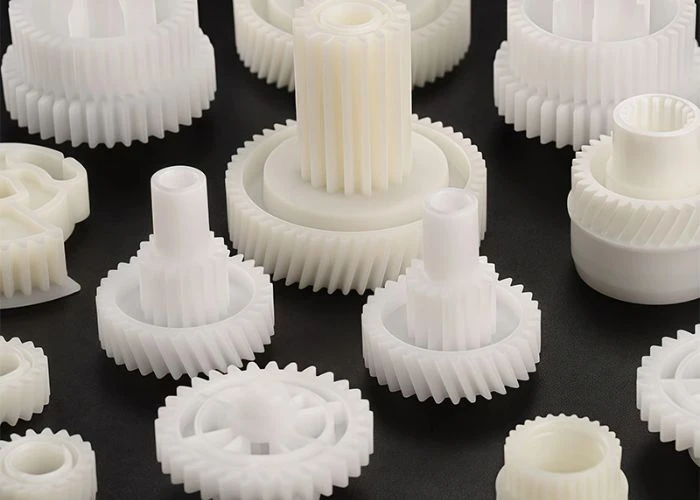
When actual ABS stock is required, CNC plastic machining allows us to manufacture the geometry directly from engineering-plastic material. Depending on the project, the parts can then move through hand finishing, painting, silk screening, other specified surface treatments, inspection, and prototype assembly.
Our broader plastic prototyping capabilities also include SLA and SLS 3D printing and vacuum casting, but I do not describe an ABS-like resin or polyurethane as actual ABS simply because it is intended to reproduce some similar characteristics. UForProto’s own vacuum-casting material information, for example, identifies its relevant polyurethane specifically as “ABS-Like Polyurethane.”
For customers, this distinction makes the quotation more meaningful. You can send us your CAD files, drawings, ABS grade requirements where applicable, quantity, finish, critical dimensions, and prototype purpose so that we can review the project against the characteristics the physical part actually needs to represent.
Conclusion
Plastic ABS is useful for prototype parts because it combines practical toughness, stiffness, machinability, availability, and finishing potential, but the material name alone does not define the result. I consider the required ABS grade, actual validation objective, manufacturing route, and finished condition before deciding what an ABS prototype can meaningfully represent. Actual CNC-machined ABS should also be distinguished from ABS-like photopolymers or casting materials when material behavior matters. As a direct plastic prototype manufacturer, UForProto can review your CAD, drawings, material specifications, quantities, critical requirements, and finishing needs for ABS prototype manufacturing and quotation.
FAQs
1. What Is Plastic ABS?
Plastic ABS is acrylonitrile butadiene styrene, an amorphous thermoplastic material known for a useful combination of toughness, rigidity, impact resistance, machinability, and finishing capability. I commonly see it used for housings, covers, structural components, and physical prototype parts.
2. Is ABS a Thermoplastic?
Yes. ABS is an amorphous thermoplastic. Unlike semi-crystalline plastics, it does not have a sharp crystalline melting point. This distinction matters when engineers evaluate temperature-related behavior rather than relying on a single generic “melting temperature.”
3. Is ABS Plastic Good for Prototypes?
ABS can be a practical prototype material when the project needs physical structure, impact resistance, machined geometry, or a surface that can receive further cosmetic finishing. Whether it is suitable still depends on the environment and what the prototype needs to validate.
4. Can ABS Plastic Be CNC Machined?
Yes. ABS is available as machinable stock and is widely used for CNC-machined prototype parts. This allows engineers to evaluate a physical component made from actual ABS rather than relying on a material that only imitates selected ABS characteristics.
5. Is ABS-Like 3D Printing Resin the Same as ABS Plastic?
No. ABS-like SLA resin is a photopolymer formulated to reproduce selected characteristics associated with ABS. Actual ABS is a thermoplastic polymer. Some ABS-like resins can approach particular mechanical properties of ABS, but the terms should not be treated as chemically equivalent materials.
6. Do I Need to Specify an Exact ABS Grade for a Prototype?
Not always. General-purpose ABS may be sufficient when the prototype primarily evaluates geometry, fit, handling, or appearance. I recommend specifying an exact grade when impact, thermal performance, flame rating, regulatory requirements, or correlation with a defined production material is important to the development decision.