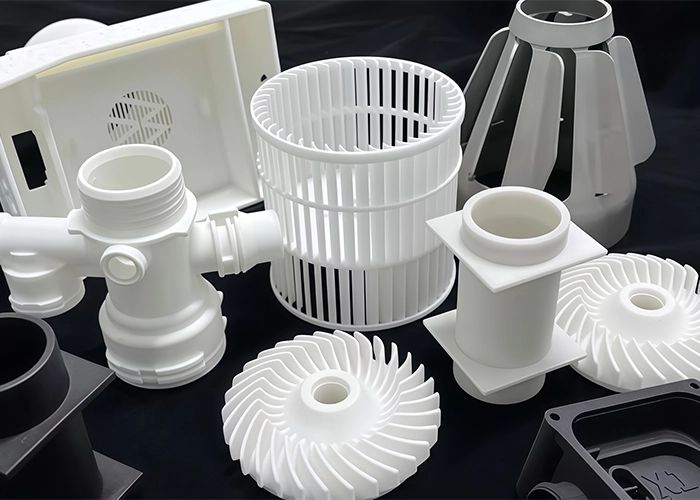

POM is a high-performance engineering plastic known for its stiffness, low friction, wear resistance, and dimensional stability. It is widely used for gears, bushings, bearings, rollers, valve parts, and other components that need accurate dimensions and reliable movement.
Also called polyoxymethylene, polyacetal, or acetal plastic, POM is available in several grades for machining and molding. This guide explains what is POM, how its main types differ, where it is used, and what designers should consider when CNC machining POM parts.
What Is POM?
POM, or polyoxymethylene, is a semi-crystalline engineering thermoplastic produced from formaldehyde-based chemistry. It is also widely known as polyacetal or acetal plastic. The material combines high rigidity with low friction and good resistance to wear, which makes it particularly useful for precision mechanical components.
Unlike softer commodity plastics, POM can maintain its shape under repeated loading and changing environmental conditions. It also absorbs relatively little moisture, helping machined parts retain their dimensions during service. These characteristics are why POM material is common in mechanisms that need consistent fit and motion.
What Is POM Made Of?
POM is formed from repeating oxymethylene units in its polymer chain. Commercial production uses formaldehyde-based polymerization to create a highly crystalline molecular structure. This dense structure contributes to the material’s stiffness, strength, wear resistance, and low-friction surface.
The degree of crystallinity also influences how POM behaves during manufacturing. It gives the material strong mechanical performance but also contributes to shrinkage during molding and thermal expansion during service.
For most product designers, the key point is not the detailed chemistry but the relationship between structure and performance. POM’s molecular arrangement helps it hold tight dimensions while providing smooth movement in mechanical assemblies.
Why Is POM Used for Precision Parts?
POM is especially useful for precision parts because it combines rigidity, low moisture absorption, and good dimensional stability. These qualities help components maintain their geometry more consistently than many softer or moisture-sensitive plastics.
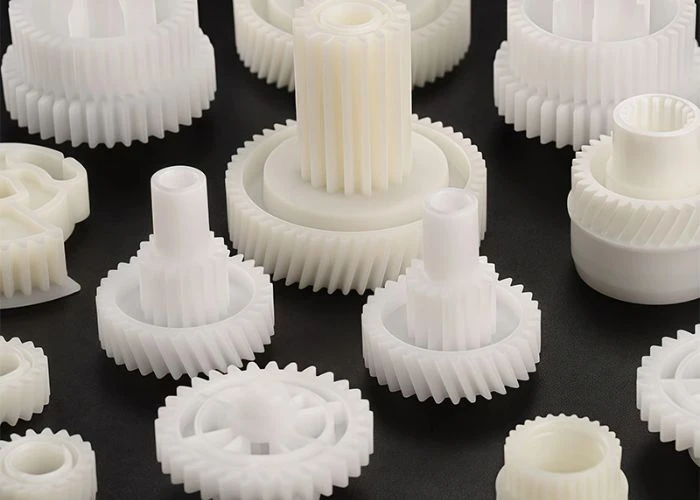
Its low-friction surface is another advantage. Components such as gears, bushings, bearings, sliders, and guides can move repeatedly with relatively low resistance and good wear performance. Protolabs also identifies clean machinability and tight dimensional control as major reasons POM is used for precision parts.
This combination makes POM particularly attractive when designers want a lightweight polymer part that can replace metal in selected low- to moderate-load mechanical applications.
What Are the Main Types of POM?
POM is mainly available in two forms: homopolymer and copolymer. Both belong to the same polyoxymethylene family, but differences in molecular structure give them slightly different mechanical and processing characteristics.
Selecting the right type depends on whether the project prioritizes maximum stiffness and strength, chemical resistance, thermal stability, or machining behavior.
POM Homopolymer (POM-H)
POM homopolymer generally offers higher stiffness, tensile strength, and fatigue resistance. Delrin is a well-known trade name associated with homopolymer acetal, but Delrin is not a separate polymer family.
These properties make POM-H useful for highly loaded gears, precision mechanisms, snap-fit parts, springs, and other components exposed to repeated mechanical stress.
One consideration is centerline porosity in thicker stock sections. Depending on how the material is produced, this can influence the selection of homopolymer for large machined cross-sections.
POM Copolymer (POM-C)
POM copolymer generally provides slightly lower mechanical strength than homopolymer but offers better chemical and thermal stability. It also avoids the centerline porosity associated with some homopolymer stock, which can make it attractive for thicker machined components.
POM-C is widely used for valves, pump parts, fluid-handling components, bushings, guides, and other applications where dimensional stability and chemical resistance are important.
Its balanced properties also make acetal copolymer a common stock material for CNC machining.
How to Choose Between POM-H and POM-C
The choice should follow the functional requirement rather than the material name alone.
| Property | POM-H | POM-C |
| Stiffness | Higher | Slightly lower |
| Strength | Higher | Good |
| Fatigue resistance | Higher | Good |
| Chemical resistance | Good | Better |
| Thermal stability | Good | Better |
| Centerline porosity | Possible in thick stock | Lower risk |
| CNC machinability | Excellent | Excellent |
| Typical use | Gears, mechanical parts, snap fits | Valves, guides, bushings, fluid parts |
POM-H is often preferred when stiffness, mechanical strength, and fatigue performance are the main priorities. POM-C is often more suitable when chemical exposure, thermal stability, or thicker cross-sections are more important.
What Are the Key Properties of POM?
The performance of POM comes from a combination of mechanical strength, dimensional stability, low friction, and low moisture absorption. Together, these properties make it well suited to precision mechanisms and moving components.
Exact values vary by grade, reinforcement, temperature, and manufacturing method, so final material selection should always be checked against the supplier’s data.
High Strength and Stiffness
POM provides high rigidity compared with many common plastics. This allows components to resist bending and maintain their geometry under mechanical load.
The material also provides useful tensile and flexural strength, making it suitable for gears, brackets, linkages, clips, and other load-bearing plastic components.
Geometry still matters. Thin walls, long unsupported features, and high localized loads can cause deformation even when the material itself is relatively stiff.
Low Friction and Wear Resistance
One of POM’s most valuable characteristics is its low coefficient of friction. Parts can slide or rotate against mating surfaces with relatively little resistance.
This makes POM a common material for gears, bushings, bearings, conveyor guides, rollers, and other moving components. Its wear resistance also helps maintain surface quality and dimensional performance during repeated motion.
In some applications, this low-friction behavior can reduce the need for additional lubrication, although actual wear life still depends on pressure, speed, temperature, and the mating material.
Dimensional Stability
Dimensional stability is a major reason POM is used for precision engineering parts.
The material resists deformation well under normal mechanical conditions and changes less with moisture than materials that absorb more water. This helps gears, bushings, housings, and other close-fitting parts maintain reliable alignment.
For CNC machining, this behavior allows POM to hold relatively tight tolerances when the part geometry, stock condition, temperature, and machining strategy are properly controlled.
Low Moisture Absorption
POM absorbs relatively little water compared with some other engineering plastics. Protolabs notes typical short-term water absorption for standard unfilled grades at around 0.20–0.25%.
Low moisture absorption is important because absorbed water can change the dimensions and mechanical behavior of plastic components.
For parts used in humid environments or applications where close fits matter, this gives POM a useful advantage.
Chemical Resistance
POM provides good resistance to many fuels, lubricants, solvents, and mild chemicals. This is one reason acetal plastic appears in automotive fuel systems, industrial equipment, and fluid-handling components.
However, its chemical resistance is not universal. Strong acids and oxidizing chemicals can attack the material.
Designers should therefore evaluate the actual chemical, concentration, temperature, and exposure time before selecting a specific POM grade.
Fatigue and Creep Resistance
POM performs well in applications involving repeated mechanical movement. Homopolymer grades in particular offer strong fatigue resistance, making them suitable for springs, snap fits, gears, and other cyclic components.
The material also resists creep better than many softer plastics, helping parts maintain their shape under sustained load.
These characteristics are valuable in mechanisms that must operate consistently over many cycles rather than simply withstand a single static load.
What Are the Advantages and Limitations of POM?
POM offers an unusually useful balance for mechanical plastic parts, but it is not suitable for every environment.
Understanding both its strengths and its limitations helps avoid choosing it simply because it machines well.
Advantages of POM
POM is rigid, dimensionally stable, and resistant to wear. Its low friction makes it especially useful for sliding and rotating components, while low moisture absorption helps dimensions remain stable in changing humidity.
It is also one of the easier engineering plastics to CNC machine. Sharp tools can produce clean chips, accurate features, and relatively smooth machined surfaces.
These properties make it possible to use POM instead of metal in selected gears, rollers, guides, spacers, and mechanical components where reducing weight, noise, or lubrication requirements provides an advantage.
Limitations of POM
Standard POM grades are not ideal for prolonged outdoor UV exposure unless they are specifically stabilized. Strong acids and oxidizing chemicals can also damage the material.
POM has relatively high molding shrinkage compared with some other plastics, so injection-molded parts require careful attention to wall thickness, flow direction, and mold design.
Another limitation is bonding. Its low surface energy makes adhesive bonding difficult, so mechanical fastening, press fits, or suitable welding methods may be more reliable.
What Is POM Used For?
POM is most valuable in components that need precise geometry, low friction, repeated movement, and long-term mechanical reliability.
Its applications range from small consumer mechanisms to automotive and industrial machine components.
Gears, Bearings, and Bushings
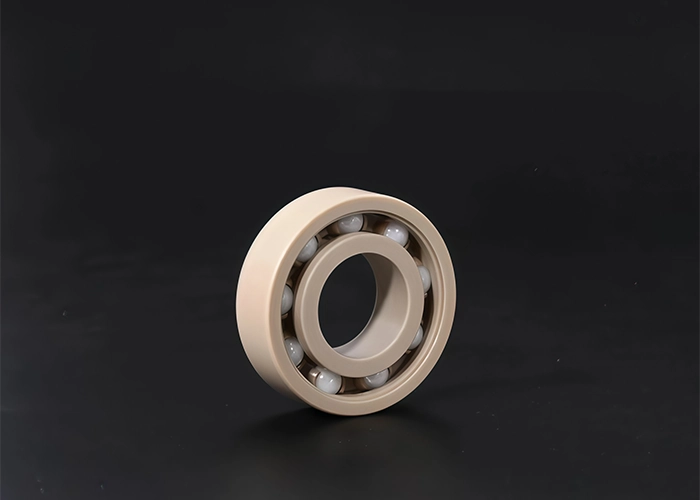
Gears, bearings, and bushings are among the most common POM applications.
Low friction reduces resistance between moving surfaces, while wear resistance helps components retain their shape during repeated motion. High rigidity also helps gear teeth and bearing surfaces maintain alignment.
These parts are often injection molded for high-volume production or CNC machined for prototypes and smaller production quantities.
Automotive Components
Automotive manufacturers use POM for door-lock mechanisms, regulator parts, clips, gears, linkages, and selected fuel-system components.
These applications benefit from the material’s strength, chemical resistance, low friction, and ability to maintain consistent geometry.
When POM is used around fuels or lubricants, the exact grade and chemical compatibility should be verified for the intended service conditions.
Industrial Equipment
Industrial applications include conveyor guides, valve seats, wear strips, bushings, pump components, and other machine parts exposed to repeated movement.
POM is useful in these environments because it can reduce friction while maintaining relatively accurate dimensions.
Custom industrial parts are also good candidates for CNC machining because equipment often requires specialized geometries or replacement components in limited quantities.
Electronics and Consumer Products
POM is used in keyboard mechanisms, printer components, actuators, snap-fit housings, fasteners, and other small precision mechanisms.
Its stiffness and fatigue performance are particularly useful where a component must move repeatedly or snap into place.
The smooth surface and good moldability of POM also make it practical for high-volume consumer components with moving interfaces.
Medical and Drug-Delivery Components
Suitable POM grades are used in selected medical and drug-delivery products, including inhaler components, handles, and precision mechanical parts.
These applications benefit from accurate geometry, low friction, strength, and reliable repeated movement.
Medical applications require grade-specific certification and regulatory review, so standard industrial POM should not automatically be substituted for approved medical material.
How Is POM Manufactured and Processed?
POM can be processed using several manufacturing methods. The most suitable process depends on production volume, geometry, tolerance, part size, and tooling budget.
Injection molding is common for high-volume production, while extruded stock provides material for secondary machining. CNC machining is particularly useful for prototypes and low-volume precision parts.
Injection Molding
Injection molding is widely used for producing repeatable POM components at scale.
Molten material is injected into a mold, cooled, and ejected as a finished part. The process works well for gears, clips, housings, mechanisms, and other complex components.
POM has relatively high molding shrinkage, so uniform wall thickness, suitable draft, fillets, and proper mold design are important for controlling warping and sink.
Extrusion
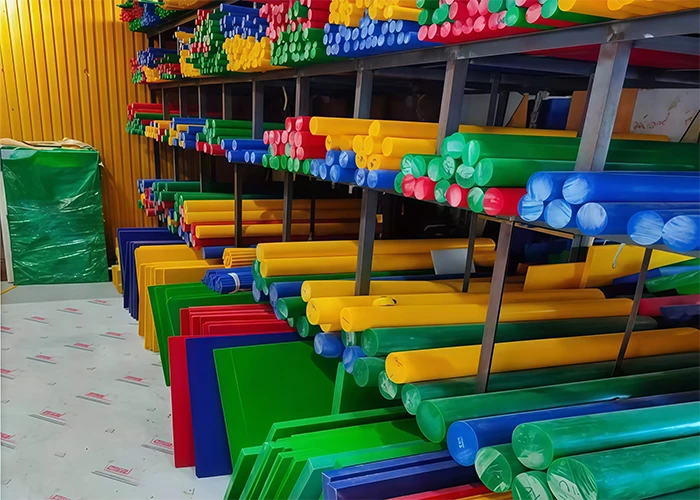
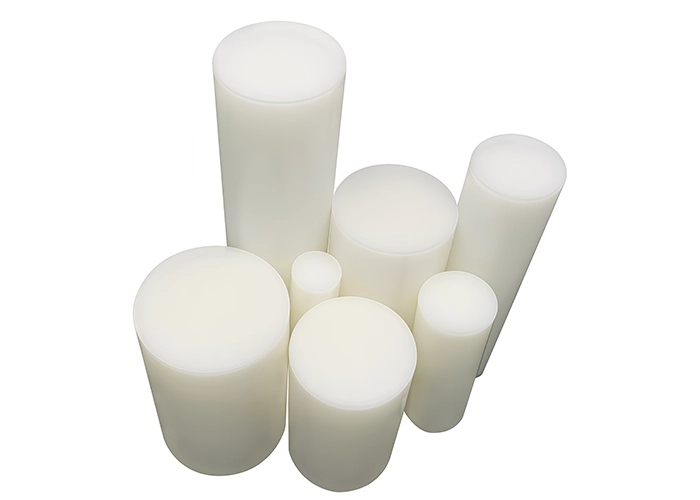
POM can also be extruded into rods, sheets, tubes, and other stock shapes.
These forms are useful when a component will later be cut, turned, milled, drilled, or otherwise machined.
Extruded stock gives designers an efficient starting point for prototypes and custom parts because no dedicated mold is required.
CNC Machining
CNC machining is a strong manufacturing option for POM prototypes, low-volume production, larger cross-sections, and close-tolerance parts.
Because POM machines cleanly and holds its shape well, it can be used to manufacture precise gears, bushings, rollers, spacers, fixtures, and custom mechanical components.
The process also makes design changes easier because geometry can be updated through CAD and CAM rather than modifying production tooling.
Can POM Be CNC Machined?
Yes. POM is considered one of the more machinable engineering plastics and works well with CNC milling, turning, drilling, and related operations.
Its clean cutting behavior and dimensional stability make it particularly useful for functional prototypes and low-volume components that need accurate mechanical features.
CNC Milling POM
CNC milling can produce pockets, slots, holes, flat surfaces, profiles, gear features, and complex housings from POM sheet or block.
Sharp cutting tools help create clean chips and reduce unnecessary heat. Stable workholding is also important, particularly for thin sections or long unsupported features.
Because POM is less rigid than metal, toolpaths should avoid excessive forces that could deflect delicate geometry.
CNC Turning POM
POM rod is well suited to CNC turning.
Typical turned parts include bushings, sleeves, rollers, spacers, rings, shafts, and other cylindrical components. The material can produce smooth turned surfaces when tool geometry and cutting parameters are appropriate.
Long or slender parts may still need additional support because cutting forces can cause deflection.
Heat and Chip Control
Although POM machines well, excessive heat should still be avoided.
Sharp tools and suitable feeds help the cutting edge remove material cleanly instead of rubbing against the surface. Effective chip evacuation also prevents cut material from remaining near the tool and workpiece.
Overheating can affect surface finish and dimensional accuracy, so cutting parameters should be selected to keep the process stable.
Tolerances and Dimensional Stability
POM can support relatively close machining tolerances because it is rigid and dimensionally stable compared with many softer plastics.
However, realistic tolerance selection is still important. Large components, thin walls, thermal expansion, internal stress, and workholding can all influence the final dimension.
Critical mating features should receive the tightest control, while non-functional surfaces generally do not need the same tolerance level.
Burrs and Surface Finish
POM generally produces clean machined edges and good surface finishes, which is one reason it is popular for precision machining.
Sharp tools help minimize burr formation and reduce the need for aggressive manual finishing.
Surface requirements should still be defined according to function. A sliding bearing surface may need different machining control than a non-contact cosmetic face.
What Should Designers Consider When Using POM?
Good POM part design should take advantage of its stiffness and low friction while accounting for thermal expansion, stress concentration, bonding limitations, and production method.
Early design decisions can make a significant difference to machining stability, cost, and long-term performance.
Choose the Right POM Grade
Start by deciding whether homopolymer or copolymer better matches the application.
POM-H is often preferred when stiffness, strength, and fatigue resistance are most important. POM-C can be more suitable for chemical exposure, thicker sections, or applications where thermal stability is a greater concern.
Specific modified grades may also be available for static dissipation, reinforcement, wear, or regulatory requirements.
Allow for Thermal Expansion
POM is dimensionally stable for a plastic, but it still expands more with temperature than metals.
A tight-fitting POM component assembled into a metal housing may therefore experience changing clearance as temperature changes.
Designers should consider the full operating temperature range rather than specifying a fit only at room temperature.
Avoid Excessive Stress Concentrations
Sharp internal corners, aggressive press fits, thin sections, and high fastener loads can create localized stress.
Fillets and more gradual geometry transitions help distribute loads more evenly.
Thin machined features should also receive enough support during manufacturing to prevent deflection, an approach also recommended in Protolabs’ POM machining guidance.
Consider Bonding and Surface Treatment
POM is difficult to bond with conventional adhesives because of its low surface energy.
If an assembly needs reliable joining, mechanical fasteners, inserts, press fits, or suitable welding techniques may be more practical than adhesive bonding.
Painting and coating can also require specialized surface preparation, so cosmetic requirements should be considered before material selection.
Match the Manufacturing Method to Production Volume
CNC machining works well for prototypes, engineering validation, replacement parts, and low-volume custom components.
Once geometry is stable and production quantities become large, injection molding can provide lower per-part cost and faster repeated production.
The best decision depends on tooling investment, quantity, tolerance, geometry, and how often the design is expected to change.
When Should You Choose POM for a Prototype?
POM is especially useful when a prototype must demonstrate real mechanical behavior rather than simply show shape or appearance.
Its machinability, stiffness, wear resistance, and dimensional stability allow engineers to test moving assemblies with material behavior that is relevant to the final product.
Precision Functional Prototypes
POM is a strong option for prototypes that require close fits, accurate holes, bearing surfaces, gears, or mechanical interfaces.
CNC machining allows these features to be produced directly from engineering-grade stock without waiting for mold tooling.
This makes it easier to test assembly, alignment, movement, and dimensional performance early in development.
Moving and Wear Components
Gears, bushings, rollers, guides, and other moving parts benefit from POM’s low friction and wear resistance.
A machined prototype can help engineers evaluate noise, movement, fit, and contact behavior before committing to a production design.
This can be particularly valuable when wear or motion performance cannot be judged reliably from CAD geometry alone.
Low-Volume Custom Parts
POM is also practical for custom components that will never justify injection-mold tooling.
Specialized machine parts, replacement components, fixtures, test equipment, and short production runs can all be CNC machined directly from POM stock.
This provides production-like material properties while keeping tooling costs low and allowing future design changes.
Conclusion
POM is a semi-crystalline engineering plastic valued for high stiffness, low friction, wear resistance, low moisture absorption, and reliable dimensional stability. Homopolymer POM offers higher strength and fatigue performance, while copolymer POM provides improved chemical and thermal stability. These characteristics make acetal plastic especially useful for gears, bushings, rollers, guides, valves, and other precision mechanical components where repeatable movement and accurate dimensions matter.
At UForProto, we provide CNC plastic machining and prototype manufacturing services for custom POM and acetal components. From precision gears and bushings to housings, wear parts, and low-volume mechanical components, we support prototype development with practical material selection, CNC machining, dimensional inspection, and manufacturing guidance.
FAQs
1.What Is Polyoxymethylene?
Polyoxymethylene, or POM, is a semi-crystalline engineering thermoplastic also known as acetal or polyacetal. It is valued for high stiffness, low friction, wear resistance, and good dimensional stability.
2.What Is POM Material Used For?
POM is commonly used for gears, bushings, bearings, rollers, guides, valve parts, fasteners, and other precision mechanical components that require low friction and reliable dimensional control.
3.What Are the Properties of POM Plastic?
POM offers high stiffness, good strength, low friction, wear resistance, low moisture absorption, and strong dimensional stability. It also performs well under repeated mechanical movement.
4.Is POM Plastic Strong?
Yes. POM has good mechanical strength and stiffness compared with many common plastics. It is suitable for precision parts and moderate-load mechanical components, although actual performance depends on grade, geometry, and service conditions.
5.Is POM Plastic Machinable?
Yes. POM is one of the more machinable engineering plastics. It cuts cleanly and is well suited to CNC milling, turning, drilling, and other precision machining operations.