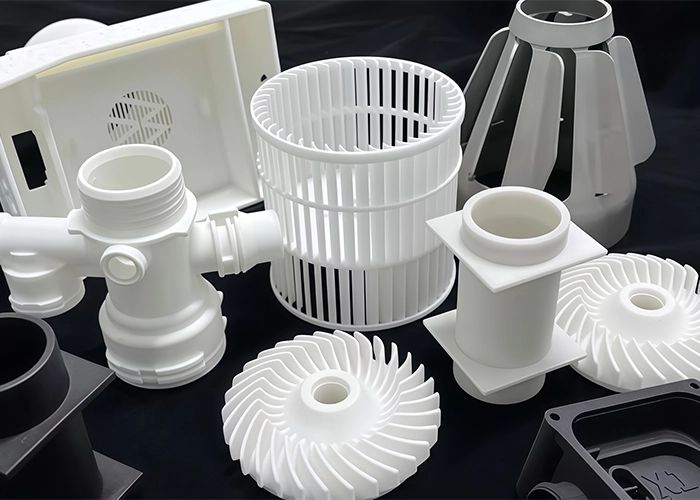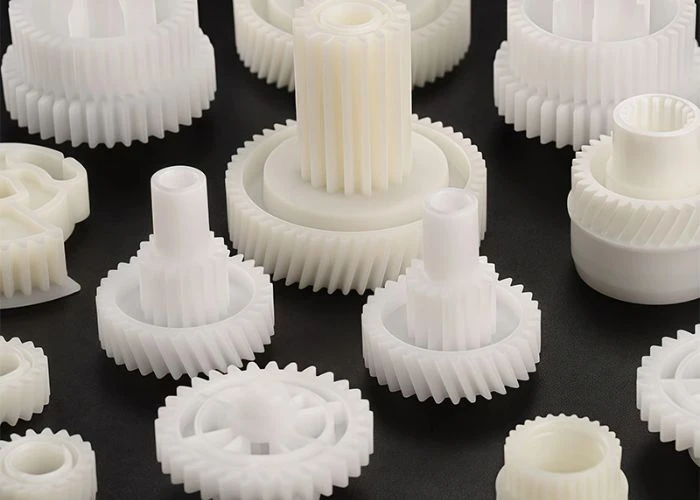

Polycarbonate, commonly known as PC, is a transparent engineering thermoplastic valued for its combination of impact resistance, strength, heat resistance, and optical clarity. It is widely used in protective covers, machine guards, electronic housings, automotive components, lenses, medical products, and functional prototypes where ordinary plastics may not provide enough toughness.
For product designers, the value of polycarbonate goes beyond transparency. Its mechanical performance, dimensional behavior, processing requirements, and surface sensitivity all affect how a part should be designed and manufactured. This guide explains what is polycarbonate, its key properties, common uses, manufacturing methods, CNC machining behavior, and the main factors to consider when using PC for prototypes and custom plastic parts.
What Is Polycarbonate?
Polycarbonate is a transparent engineering thermoplastic known for its high impact resistance, strength, heat resistance, and dimensional stability. It can be molded, extruded, thermoformed, or CNC machined, making it suitable for both high-volume products and custom prototypes. Its combination of toughness, clarity, and processing flexibility is why PC is widely used in protective, optical, electronic, and mechanical applications.
How Is Polycarbonate Made?
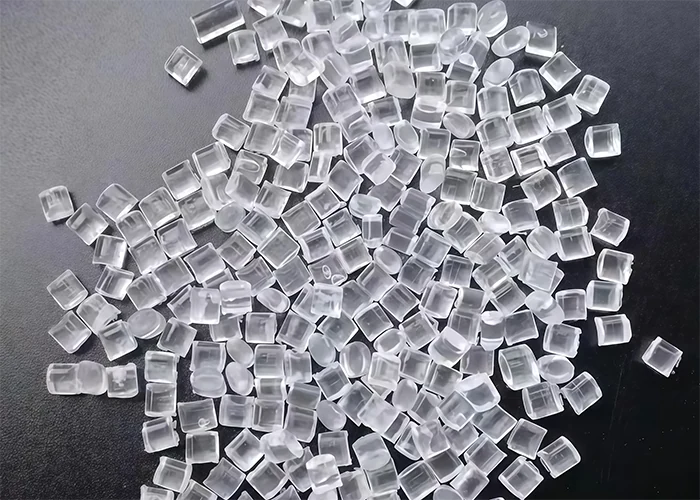
Commercial polycarbonate is commonly produced from bisphenol A and a carbonate-forming compound. One established production route uses bisphenol A and phosgene, while another uses transesterification with diphenyl carbonate. The result is a polymer containing repeating carbonate groups along the molecular chain.
For designers, the exact chemistry is less important than what the molecular structure means in practice. The polymer structure gives PC a combination of toughness, heat resistance, stiffness, and optical performance that allows it to work in applications where many transparent plastics would be too brittle or too temperature-sensitive.
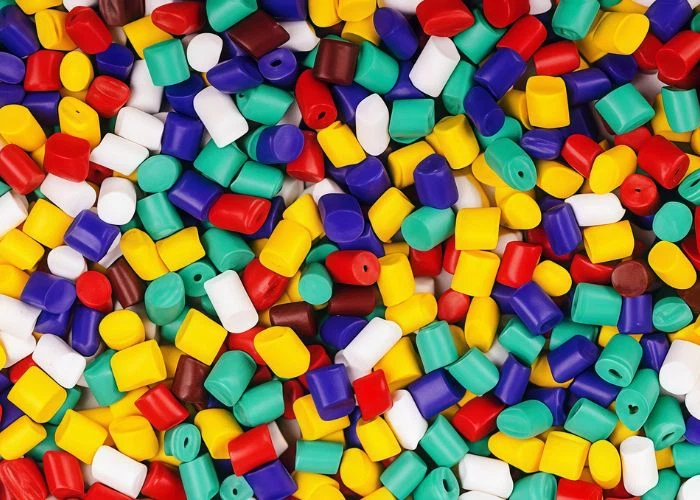
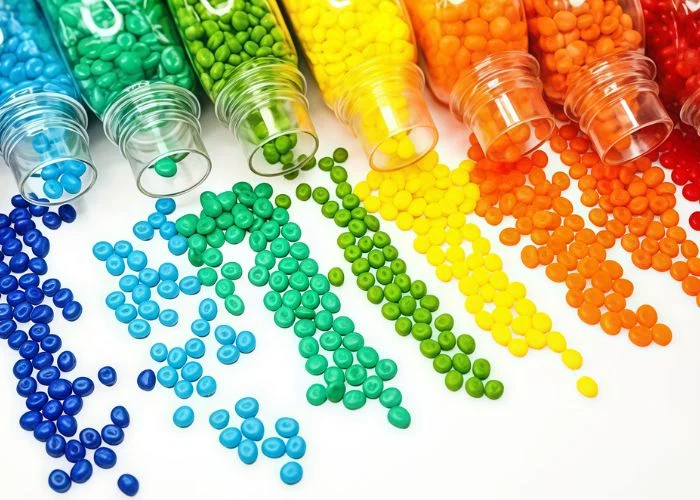
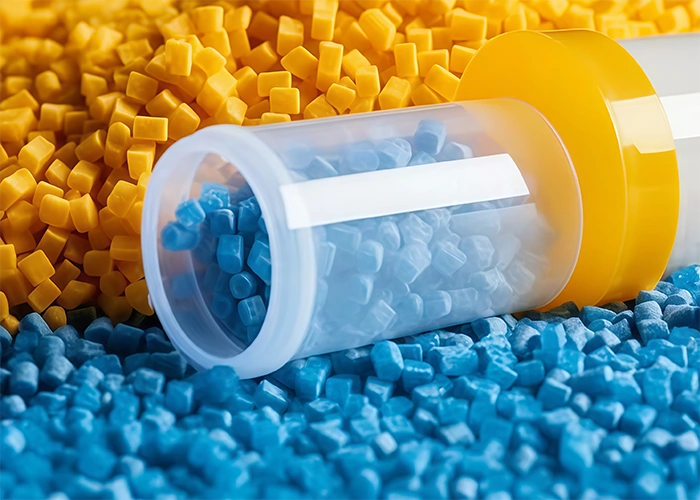
Commercial PC is also available in modified grades. Manufacturers can add UV stabilizers, flame-retardant additives, colorants, reinforcement, or other modifiers depending on the final application. The specific grade should therefore be checked whenever environmental, optical, regulatory, or mechanical requirements are important.
Why Is Polycarbonate Used as an Engineering Plastic?
Polycarbonate sits between general-purpose plastics and higher-performance engineering materials because it offers useful mechanical, thermal, and optical properties in one material. It can undergo considerable deformation before breaking and has significantly better impact resistance than many rigid transparent plastics.
Another advantage is manufacturing flexibility. PC can be injection molded into production parts, extruded into sheets and profiles, thermoformed into covers and guards, and machined from solid stock for prototypes or low-volume components.
This makes polycarbonate especially useful when a design requires both functional performance and visual access. Protective equipment, clear machine covers, electronic housings, and transparent prototypes are typical examples.
What Are the Key Properties of Polycarbonate?
Polycarbonate is often selected because no single property dominates its performance. Instead, it offers a practical balance of toughness, clarity, heat resistance, stiffness, and electrical insulation.
Actual values vary between grades, thicknesses, additives, and test conditions. Designers should therefore use supplier data when final dimensions or performance limits are critical.
High Impact Resistance
High impact resistance is one of the defining properties of polycarbonate. The material can absorb substantial impact energy without breaking in the brittle manner associated with some other transparent materials.
This toughness explains why PC is frequently used for safety glazing, protective screens, machine guards, helmet visors, equipment covers, and other components that may experience accidental impact.
Impact resistance does not mean a part is impossible to damage. Sharp notches, internal stress, aggressive chemicals, poor fastener design, or inappropriate processing can still contribute to cracking. Geometry and manufacturing quality remain important.
Optical Clarity and Transparency
Standard polycarbonate can be highly transparent to visible light, which allows it to replace glass in many applications where impact resistance and lower weight are more important than maximum surface hardness.
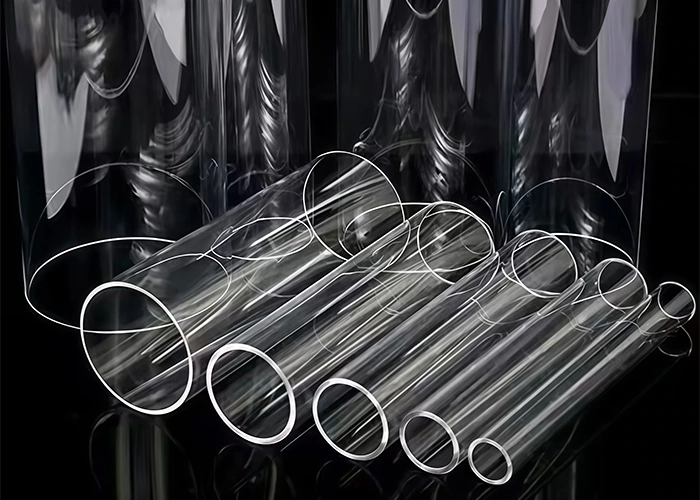
This combination is useful for clear covers, windows, lenses, protective shields, inspection panels, and prototypes that need internal components to remain visible.
However, transparency depends heavily on surface condition. Machining marks, scratches, tool chatter, stress, and poor finishing can reduce clarity. A CNC-machined transparent prototype therefore requires more attention to cutting conditions and post-processing than an opaque functional part.
Heat Resistance
Polycarbonate performs at higher temperatures than many common commodity plastics. Its glass transition temperature is around 147°C, although the practical working temperature of a finished component depends on load, grade, environment, and service duration.
This thermal capability makes PC suitable for electrical housings, lighting parts, automotive components, and equipment near moderate heat sources.
Heat resistance should not be confused with unlimited dimensional stability. Like other thermoplastics, PC expands as temperature rises. A design that combines polycarbonate with aluminum, steel, or another material should account for the difference in thermal expansion.
Strength and Dimensional Stability
Polycarbonate provides useful stiffness and strength for housings, brackets, covers, and other functional plastic components. It can retain its shape under loads that would cause softer plastics to deform more easily.
Its dimensional stability is one reason PC works well for engineering prototypes. Designers can machine a part from solid stock, assemble it with other components, and evaluate fit and function before moving to production tooling.
Still, PC is not metal. Thin walls, long unsupported features, heavy fastener loads, and elevated temperatures can cause deflection. Part geometry should support the mechanical behavior of the material rather than relying on material strength alone.
Electrical Insulation
Polycarbonate also offers good electrical insulating properties and is used in electrical and electronic applications where heat resistance, strength, and non-conductivity are valuable.
Typical products include electrical enclosures, covers, housings, connectors, and protective components.
For regulated or high-voltage applications, the exact resin grade, wall thickness, flame rating, operating temperature, and electrical specification should always be verified rather than relying on general PC properties.
What Are the Advantages and Limitations of Polycarbonate?
Understanding polycarbonate requires looking at both sides of the material. Its toughness and clarity make it attractive, but scratch resistance, chemical compatibility, and residual stress can become important limitations.
Advantages of Polycarbonate
The main advantage of polycarbonate is its combination of transparency and impact resistance. This allows designers to create clear components that are far more resistant to accidental breakage than ordinary glass-like materials.
PC is also lightweight compared with glass and easy to process through several manufacturing routes. Sheets can be cut, drilled, routed, bent, or thermoformed, while solid stock can be machined into more detailed functional components.
For prototype development, this manufacturing flexibility is especially valuable. A transparent housing or functional cover can be produced without investing in an injection mold, allowing engineers to evaluate fit, visibility, assembly, and mechanical performance before production.
Limitations of Polycarbonate
One important limitation is scratch resistance. Although PC is highly impact resistant, its surface is relatively easy to scratch. Transparent automotive and optical applications often use protective hard coatings for this reason.
Chemical resistance also needs careful evaluation. Polycarbonate performs well with some substances but can be attacked by certain solvents, concentrated chemicals, and hydrocarbons. Chemical exposure combined with mechanical stress may increase the risk of stress cracking.
Standard PC also has limited resistance to long-term UV exposure. Outdoor applications may require UV-stabilized grades or protective coatings to reduce yellowing and degradation.
What Is Polycarbonate Used For?
The applications of polycarbonate reflect its material strengths. It is most useful when toughness, transparency, low weight, dimensional control, or electrical insulation are important.
Protective Covers and Safety Components
Polycarbonate is widely used for machine guards, protective shields, safety glazing, helmet visors, and other components that need to remain intact under impact.
Transparent protective parts are particularly useful in industrial equipment because operators can see moving components while remaining separated from them.
For prototypes and custom equipment, these components may be machined or fabricated directly from PC sheet before a production method is finalized.
Automotive and Transportation Parts
Polycarbonate is used in the automotive sector for components such as headlamp lenses, optical parts, interior components, bezels, and protective covers. Its low weight and impact performance make it well suited to applications where glass may be too heavy or brittle.
Headlamp lenses are a good example of both the advantages and limitations of the material. PC provides impact resistance and transparency, but exposed surfaces typically need suitable protection against scratching and UV degradation.
Electronics and Equipment Housings
Electrical insulation, dimensional stability, impact resistance, and heat performance make polycarbonate useful for electronic housings and equipment covers.
The material can also be manufactured in transparent or colored forms, allowing designers to create indicator windows, inspection areas, internal lighting features, or complete enclosures from the same material family.
For prototypes, CNC machining makes it possible to test connector locations, wall thicknesses, fastening features, and internal clearances before a molded housing is produced.
Optical and Transparent Components
Clear PC is used for eyewear, safety goggles, protective lenses, lighting components, windows, and other transparent products.
The material is especially useful where an optical component may experience impact. However, applications that require a highly polished or visually perfect surface need careful finishing because PC is softer and more scratch-sensitive than glass.
Surface requirements should therefore be defined early. A clear machine cover does not need the same optical quality as a precision viewing window.
Medical and Consumer Products
Polycarbonate can also be found in selected medical, laboratory, and consumer products. Certain medical grades are designed to meet application-specific regulatory and sterilization requirements.
Consumer products benefit from many of the same characteristics: impact resistance, transparency, low weight, and the ability to produce complex shapes.
Material certification becomes particularly important when parts will contact patients, food, chemicals, or sterilization environments. A general industrial PC grade should not automatically be substituted for a certified grade.
How Is Polycarbonate Manufactured and Processed?
Polycarbonate can be processed in several ways, which gives designers flexibility when moving from prototypes to production.
The best process depends on part geometry, production quantity, optical requirements, tolerance, stock form, and tooling budget.
Injection Molding
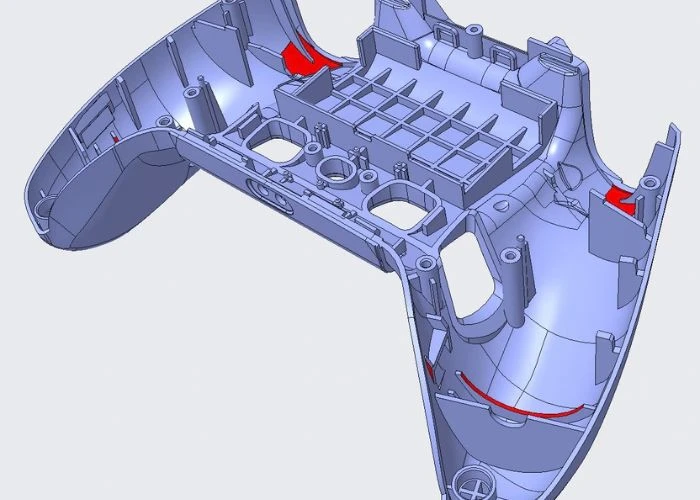
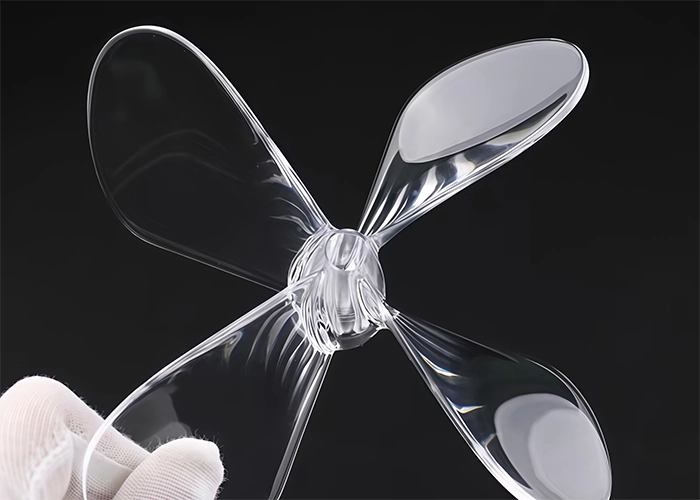
Injection molding is widely used for high-volume polycarbonate parts. The material is heated until it flows, injected into a mold cavity, cooled, and removed as a finished component.
This process can produce complex geometry, integrated features, and consistent parts once the mold and processing conditions are established.
For early-stage development, however, mold cost and lead time can be difficult to justify. CNC-machined PC prototypes can be used first to verify geometry and assembly.
Extrusion and Sheet Production
Polycarbonate can be extruded into sheets, tubes, rods, profiles, and films. Extruded sheet is especially common for glazing, machine guarding, covers, displays, and fabricated structures.
Sheet material is convenient because it can be cut and fabricated quickly without dedicated molds.
It also provides a practical starting point for CNC routing or milling when a part needs slots, holes, pockets, or custom profiles.
Thermoforming and Bending
Polycarbonate sheet can be thermoformed into curved or three-dimensional shapes. It can also tolerate significant deformation, and some sheet parts can be bent without the brittle failure associated with materials such as acrylic.
This makes PC useful for guards, transparent covers, panels, and prototype structures.
Forming still needs to account for thickness, bend radius, stress, temperature, and final dimensional requirements. A bend that looks simple in CAD may leave residual stress if processed incorrectly.
CNC Machining
CNC machining removes material from polycarbonate sheet, plate, rod, or block to create the final geometry.
It is particularly useful for prototypes, custom housings, low-volume parts, fixtures, transparent covers, and components that need accurate machined features without mold investment.
Milling, drilling, routing, and turning can all be used, but tool sharpness, heat control, workholding, and surface protection have a major effect on final quality.
Can Polycarbonate Be CNC Machined?
Yes. Polycarbonate is suitable for CNC machining and is commonly used for prototype and low-volume components.
The main challenge is not whether PC can be cut, but how to control heat, stress, deformation, and surface damage during the process. A machining strategy developed for aluminum cannot simply be applied unchanged to transparent plastic.
CNC Milling Polycarbonate
CNC milling is useful for producing pockets, profiles, slots, mounting features, housings, brackets, and machined covers from PC stock.
Sharp cutting tools are important because they produce cleaner chips and generate less friction. A dull cutter tends to rub against the plastic, which can create heat, poor edges, and surface damage.
Thin walls and transparent cosmetic surfaces require particular care. Toolpaths should maintain stable cutting conditions rather than placing unnecessary pressure on flexible sections.
CNC Turning Polycarbonate
Round polycarbonate components can also be produced by CNC turning. Typical geometries include sleeves, rings, cylindrical housings, spacers, and other rotational parts.
Because PC is less rigid than metal, aggressive cutting forces may deflect slender features. Sharp tools and appropriate support help maintain dimensional accuracy.
Parting and drilling operations also need good chip control to prevent local heat buildup.
Heat Control During Machining
Heat is one of the most important factors in CNC machining polycarbonate. Friction can raise the local temperature enough to soften the material, change chip formation, or damage the machined surface.
Sharp tools, suitable feeds, controlled spindle speeds, and efficient chip evacuation help keep the cut stable.
Heat can also influence inspection. A part measured immediately after aggressive machining may not be at the same temperature as the inspection environment, so tight-tolerance components should be allowed to stabilize before final measurement.
Workholding and Internal Stress
Workholding must secure the part without creating unnecessary stress.
Excessive clamping force can distort a plastic component during machining. When the clamps are released, the part may recover and dimensions can shift. This is particularly relevant for thin covers, large plates, and components with uneven wall thickness.
Internal stress may also exist in stock material or develop during machining. Removing large amounts of material from one side of a part can change the stress balance and lead to warping. Balanced machining and suitable stock preparation can help reduce this risk.
Surface Finish and Transparency
For opaque components, minor machining marks may have little effect on function. Transparent PC is different because even small scratches and cutter marks can be highly visible.
Protective film should remain on non-machined surfaces whenever practical, and handling should minimize contact with cosmetic faces.
If higher clarity is required, additional finishing or polishing may be necessary. The finishing method should be chosen carefully because excessive heat or aggressive treatment can introduce distortion or stress.
What Should Designers Consider When Using Polycarbonate?
Good polycarbonate part design should account for both the material’s strengths and the realities of manufacturing.
A part that performs well on paper may still be difficult to machine, assemble, or finish if geometry and tolerance requirements do not match the material.
Wall Thickness and Part Rigidity
Wall thickness strongly influences how a PC part responds to load.
Thin transparent covers may be lightweight and attractive, but they can flex under fastening or assembly forces. Increasing thickness, adding ribs, or changing the support layout may improve rigidity without changing materials.
For CNC-machined parts, extremely thin walls can also move under cutting forces and become difficult to hold within tolerance.
Tolerances and Thermal Expansion
Polycarbonate can be machined accurately, but tolerances should reflect the size and function of the part.
Thermal expansion means that large dimensions may change more with temperature than equivalent metal components. Very tight tolerances across large plastic features may therefore add machining and inspection difficulty without improving product performance.
Critical fits should receive the most attention, while non-functional surfaces can usually use more practical tolerances.
Threads, Holes, and Fasteners
Holes and fasteners create local stress concentrations. If screws are over-tightened or placed too close to an edge, stress can increase around the hole.
Designers should provide enough material around mounting features and avoid treating plastic fasteners exactly like metal-to-metal joints.
Where repeated assembly is required, thread inserts or other fastening strategies may provide better long-term performance than cutting small threads directly into the plastic.
Surface Finish and Scratch Protection
Polycarbonate’s relatively low scratch resistance should be considered whenever appearance matters.
Visible surfaces may need protective film during manufacturing, careful packaging, or a scratch-resistant coating in the finished application.
For transparent prototypes, define whether the goal is functional visibility or optical appearance. This helps determine whether standard machining is sufficient or whether additional polishing is justified.
UV and Chemical Exposure
Standard polycarbonate is not ideal for prolonged UV exposure without stabilization or protection. Outdoor components should use a suitable UV-resistant grade or coating where required.
Chemical exposure also needs to be reviewed carefully. Certain solvents and chemicals can attack PC or increase the risk of stress cracking, especially around highly stressed features.
Material selection should therefore consider cleaning agents, lubricants, fuels, adhesives, and other substances the component may contact during its full service life.
When Should You Choose Polycarbonate for a Prototype?
Polycarbonate is particularly useful when a prototype needs to demonstrate more than shape alone.
Its combination of strength, toughness, clarity, and machinability allows engineers to evaluate real product behavior using a material that can closely represent the functional requirements of the final design.
Functional Prototypes
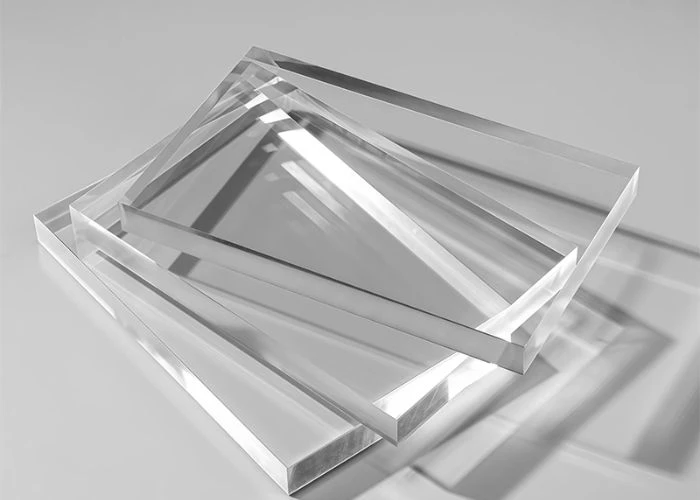
PC is a strong option for prototypes that need to survive assembly, fastening, impact, moderate heat, or repeated handling.
Machined housings, brackets, equipment covers, and structural plastic parts can be used to check fit and mechanical behavior before production tooling is released.
Because CNC machining does not require a mold, design changes can also be introduced quickly between prototype iterations.
Clear and Optical Prototypes
Transparent polycarbonate is useful when a prototype must provide visibility into an assembly.
Clear covers, fluid-related components, light housings, protective windows, and inspection panels can all benefit from PC’s transparency and toughness.
The required optical quality should be specified clearly. A functional transparent prototype may need only good visibility, while a display component may require additional polishing and surface protection.
Low-Volume Custom Parts
Polycarbonate is also suitable for low-volume components where injection molding would require too much tooling investment.
CNC machining allows each part to be produced directly from engineering stock while maintaining control over critical dimensions and features.
This is particularly useful for specialized equipment, test systems, custom enclosures, replacement parts, and product development programs where quantities remain limited.
Conclusion
Polycarbonate combines impact resistance, transparency, heat resistance, and useful dimensional performance in a versatile engineering thermoplastic. These characteristics make it suitable for protective covers, housings, optical parts, electronic components, functional prototypes, and custom machined parts. Good results depend on matching the material to the actual application while considering wall thickness, thermal expansion, internal stress, surface requirements, chemical exposure, and the manufacturing process.
At UForProto, we provide plastic prototyping and CNC plastic machining services for custom polycarbonate components. From functional housings and transparent prototypes to low-volume precision parts, we support material selection, machining, dimensional inspection, and finishing requirements to help turn product designs into practical, testable components.
FAQs
1.Is Polycarbonate Plastic?
Yes. Polycarbonate is a thermoplastic engineering plastic known for high impact resistance, transparency, heat resistance, and good dimensional stability.
2.How Strong Is Polycarbonate?
Polycarbonate is very tough and highly impact resistant. It can withstand significant impact without brittle failure, which is why it is widely used for guards, covers, lenses, and structural plastic parts.
3.Is Polycarbonate Heat Resistant?
Yes. Polycarbonate has better heat resistance than many general-purpose plastics and can maintain useful mechanical properties at elevated temperatures. The exact limit depends on the grade and operating conditions.
4.Is Polycarbonate Scratch Resistant?
Not naturally. Polycarbonate is impact resistant but relatively easy to scratch. Clear or cosmetic parts often use protective films, hard coatings, or polishing to improve surface appearance and durability.
5.What Is the Best Adhesive for Polycarbonate?
The best adhesive depends on the joint design and service environment. Polycarbonate is commonly bonded with compatible acrylic, polyurethane, epoxy, or specialty plastic adhesives, but chemical compatibility should be checked to avoid stress cracking.