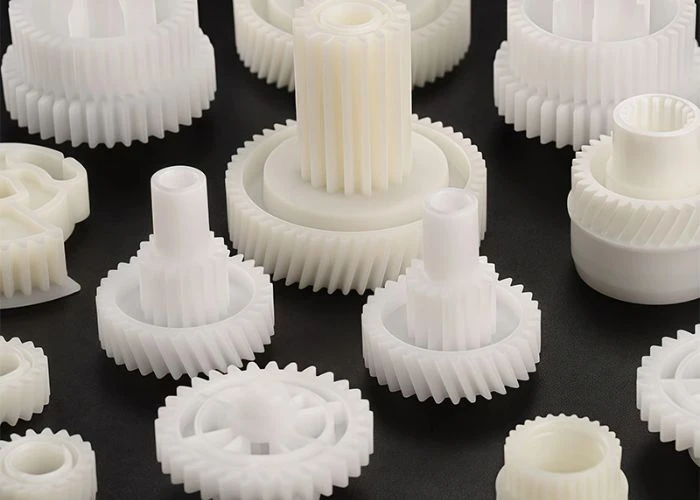

PE is widely used in production, but in prototype development it becomes most relevant when the part must behave correctly during real use. Sliding contact, repeated wear, moisture, cleaning agents, and chemical exposure can all make PE more useful than a general-purpose prototype plastic. The key question is therefore not simply whether PE can be machined, but whether the prototype needs to reproduce the working conditions the final component will experience.
Why PE Is Selected for Functional Prototype Applications
PE is usually selected because of how a part works rather than how it looks. It is commonly used for guide surfaces, liners, wear pads, bushings, rollers, protective components, and other parts that slide, contact, separate, or protect surrounding structures. A PE component may appear simple during initial inspection, yet its real value becomes clearer after repeated movement, cleaning, contact, or environmental exposure. For this reason, PE prototypes are most useful when engineers need to understand how a working surface behaves over time rather than simply confirm the external shape. In these applications, friction, wear, contact pressure, and environmental behaviour often provide more useful engineering information than cosmetic appearance alone.
Engineering Conditions That Make PE a Better Choice
PE becomes especially relevant when contact behaviour is part of the design requirement. Instead of selecting it only from a material data sheet, engineers should consider whether the part will slide, wear, experience repeated contact, or operate around moisture and chemicals. These conditions determine whether PE provides meaningful prototype value.
Sliding and Wear Conditions Favor PE
PE, particularly grades such as UHMWPE, is often considered for components that must move repeatedly against another surface. Guide rails, sliding blocks, liners, wear pads, bushings, and conveyor-related parts can benefit from testing that evaluates movement resistance, noise, contact pressure, and wear development over time. A component may pass an initial fit check but still show polishing, scratching, deformation, or increasing clearance after repeated cycles. For these applications, the value of a PE prototype lies in showing how the working surface changes during use, not simply whether the part can be manufactured or assembled correctly once.
Moisture and Chemical Exposure Change the Material Requirement
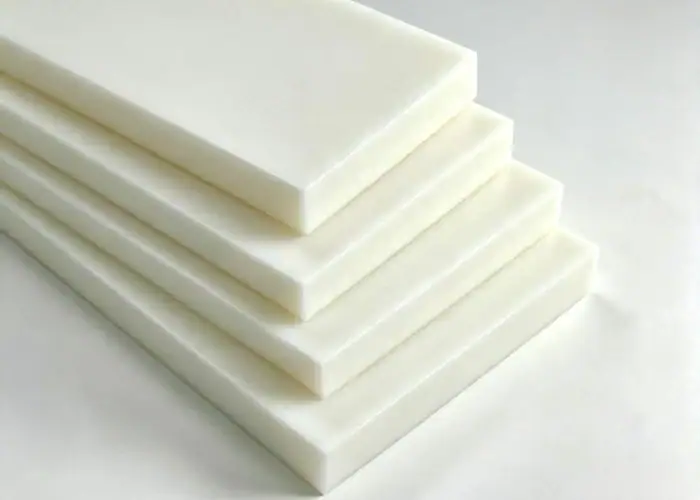
PE is also considered for components exposed to moisture, cleaning agents, oils, or certain industrial fluids. In these projects, the prototype should be evaluated as an environmental-use component rather than only as a dimensional model. Engineers need to observe whether the material maintains its surface condition, geometry, and function after exposure. Different PE grades can behave differently, so the selected grade should match the intended operating environment and validation objective. This is especially important for protective covers, trays, guards, liners, and other components where chemical or moisture resistance contributes directly to service performance.
Where PE Prototypes Provide the Most Engineering Value
PE prototypes provide the most value in functional components where contact behaviour or environmental resistance matters more than appearance. Wear pads and liners may be designed to absorb controlled wear while protecting surrounding parts, so engineers should observe actual contact pressure and wear patterns. Guide rails, bushings, and conveyor components require stable movement, making friction, clearance, noise, and alignment more important than cosmetic finish. Industrial covers, trays, guards, and chemical-contact parts place greater emphasis on moisture or fluid exposure. Although these applications look different, they share one principle: the prototype should reproduce the condition that influences performance rather than simply reproduce the geometry.
Why CNC Plastic Machining Is Suitable for PE Prototypes
When PE prototypes are intended for functional evaluation, using the real material is often more important than producing the fastest possible sample. CNC plastic machining allows engineers to create accurate components directly from PE stock while retaining the material behaviour required for meaningful testing.
Real PE Provides More Representative Functional Feedback
For sliding, wear, moisture, and chemical-contact applications, substitute materials can easily distort the test result. 3D printing may be useful for early shape, layout, or fit checks, but printed materials usually do not reproduce the same friction, wear, moisture resistance, or chemical behaviour as PE. When these properties influence the engineering decision, machining actual PE gives engineers feedback about the intended material rather than about a temporary prototype substitute. This makes CNC plastic machining particularly useful when material behaviour is part of the test itself.
Surface Condition Is Part of PE Functional Performance
For PE components, machining quality can directly affect how the part performs in contact. Surface roughness, machining marks, flatness, edge condition, and local geometry can influence friction, movement resistance, noise, and wear. Two components made from the same PE grade may therefore produce different test feedback if their surface conditions are not comparable. Surface finish should not be treated only as an appearance requirement in these projects; it is part of the functional interface and should remain consistent enough for engineers to interpret the test result correctly.
Reducing Risk Before PE Parts Move Into Production
PE prototype validation should focus on how the component behaves inside the real product rather than only on whether its dimensions are correct. Contact pressure, mating materials, fastening conditions, assembly clearance, and repeated operation can all change the final result. Testing these relationships early helps engineers identify whether a problem comes from the PE component itself or from the complete assembly.
Test PE Under Real Contact and Assembly Conditions
For many PE parts, the working surface is more important than the outer shape. Testing should therefore reproduce movement direction, contact pressure, mating surfaces, support conditions, and fastening forces as closely as practical. A guide, liner, or wear pad may behave differently after it is installed into the complete assembly because support stiffness and contact pressure can change. When repeated cycles or multiple test units are important, a small batch of PE samples may also provide more useful information than a single prototype by allowing engineers to compare wear patterns, assembly consistency, and functional repeatability before larger production commitments.
Common Mistakes When Prototyping PE Plastic Parts
Many PE prototype problems come from testing the wrong condition rather than choosing the wrong material. Material grade, working surface, contact environment, and test method should be considered together before drawing conclusions from the prototype.
| Common Mistake | Why It Causes Problems | Better Approach |
| Selecting PE from one material property alone | Other load or contact conditions may still control performance | Define the complete operating condition |
| Testing only the shape | Friction and wear risks remain hidden | Test the actual working surface |
| Using substitute materials when behaviour matters | Results may not represent real PE behaviour | Use real PE for functional material testing |
| Ignoring surface condition | Friction and wear feedback may become inconsistent | Control machining and surface condition |
| Treating all PE grades as equivalent | HDPE and UHMWPE can behave differently | Match the PE grade to the validation goal |
Conclusion
PE is most valuable in plastic prototyping when a component needs to reproduce real conditions involving sliding, wear, moisture, or chemical exposure. The material should be selected according to how the part works, how it contacts surrounding components, and what behaviour the prototype needs to reveal. Using real PE under representative contact and assembly conditions gives engineers clearer evidence before production.
FAQs
1. When Should Engineers Choose PE Material for Plastic Prototyping?
PE is worth considering when the prototype needs to validate sliding, repeated wear, moisture resistance, chemical exposure, or contact behaviour under real operating conditions.
2. Can PE Material Be CNC Machined?
Yes. PE grades such as HDPE and UHMWPE can be CNC machined into functional prototypes and low-volume engineering components.
3. What Types of PE Parts Usually Need Prototype Testing?
Typical examples include guide rails, liners, wear pads, bushings, rollers, conveyor components, industrial covers, and chemical-contact parts.
4. Is PE Useful for Wear-Resistant Prototype Parts?
Yes. PE, especially UHMWPE, is often useful when engineers need to evaluate low-friction contact and wear behaviour under repeated operation.
5. Can 3D Printing Replace PE Prototype Testing?
3D printing can support early shape and layout checks, but it usually cannot fully reproduce the friction, wear, moisture, or chemical behaviour of real PE.
6. Why Is Surface Condition Important for PE Prototypes?
Surface roughness, machining marks, and flatness can influence friction, movement resistance, noise, and wear, making surface condition part of functional validation.