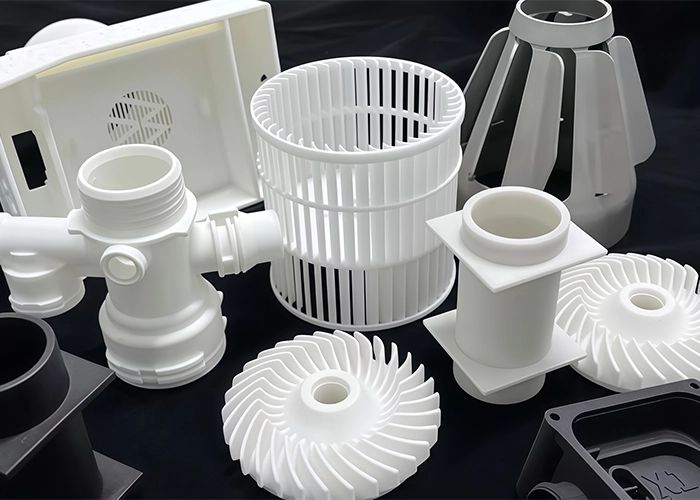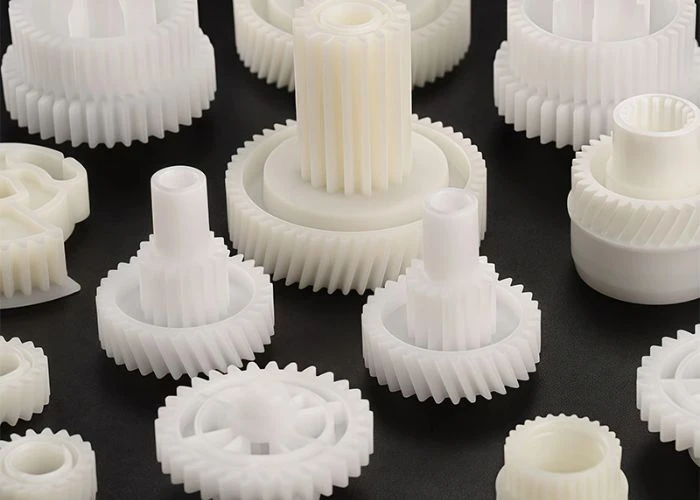

Plastics are made by converting raw materials such as crude oil, natural gas, or renewable feedstocks into small chemical molecules called monomers. These monomers are then joined through polymerization to form long-chain polymers, which are compounded, pelletized, and finally shaped into usable products through processes such as injection molding, extrusion, blow molding, thermoforming, CNC machining, and other manufacturing methods.
This guide explains how plastics are made from raw materials to finished products, including where plastic comes from, what plastic is made of, how polymerization works, the difference between thermoplastics and thermosets.
What Is Plastic?
Plastic is a material based mainly on polymers, with additives often incorporated to adjust strength, flexibility, heat resistance, appearance, durability, processing behavior, and other properties required for a specific application.
A polymer is a large molecule made from repeating molecular units, while commercial plastic material normally contains more than the base polymer alone. Depending on the application, manufacturers may add pigments, stabilizers, plasticizers, flame retardants, lubricants, glass fibers, minerals, or other modifiers. This is why two plastics made from a similar base polymer can still behave very differently during manufacturing and use.
From an engineering and manufacturing perspective, plastics also have several important characteristics:
- Low density:Most plastics are significantly lighter than metals, making them useful where reducing component weight is important.
- Electrical insulation:Many plastic grades provide strong dielectric performance and are widely used for housings, connectors, and insulating components.
- Chemical resistance:Certain plastics can withstand oils, fuels, acids, solvents, and other chemicals that may attack conventional materials.
- Low thermal conductivity:Plastics generally transfer heat more slowly than metals, which can be beneficial in thermal isolation but requires careful heat control during machining.
- Wide manufacturing compatibility:Plastic parts can be produced through CNC machining, injection molding, extrusion, thermoforming, 3D printing, and other processes depending on geometry and production volume.
- Application-specific machinability:Different plastic grades respond differently to cutting forces, friction, and heat, so tooling and machining parameters must be selected for the specific material.
Polymer Vs. Plastic
A polymer is a broad class of large molecules made from repeating structural units, while plastic is a practical material category that normally uses one or more polymers as its primary component. Not every polymer is considered plastic; natural rubber, cellulose, proteins, and DNA are also polymers. Common plastics used in manufacturing include PE, PP, ABS, PC, PET, PVC, nylon, PEEK, and many other thermoplastic and thermosetting materials.
Where Do The Raw Materials For Plastic Come From?
Plastic raw materials mainly come from crude oil, natural gas, petrochemical feedstocks, renewable biological resources, and increasingly from recovered plastic waste that is returned to the production cycle.
Traditional plastic production is closely connected with the petrochemical industry because oil and gas provide a large and efficient source of carbon-based chemical feedstocks. Modern plastic production, however, is becoming more diverse as manufacturers increase the use of recycled resin, bio-based feedstocks, and alternative raw materials.
Crude Oil And Natural Gas
Crude oil and natural gas remain two of the most important feedstocks for conventional plastic production. Crude oil is refined into different fractions, including naphtha, while natural gas processing can provide ethane, propane, and other hydrocarbons. These materials can then be cracked into smaller molecules such as ethylene and propylene, which serve as building blocks for many common plastics.
Naphtha And Other Petrochemical Feedstocks
Naphtha is a hydrocarbon mixture produced during crude-oil refining and is an important feedstock for petrochemical production. During steam cracking, naphtha can be converted into ethylene, propylene, and other chemical intermediates. Ethane and propane obtained from natural gas processing can serve similar roles, depending on regional feedstock availability and petrochemical infrastructure.
Natural And Renewable Raw Materials
Some plastics can be manufactured from renewable resources such as sugarcane, corn, starch, cellulose, and vegetable oils. For example, ethanol derived from sugarcane can be converted into ethylene and subsequently into bio-based polyethylene, while PLA is commonly associated with fermentation-derived lactic acid. Importantly, “bio-based” describes where the carbon comes from and does not automatically mean that the finished plastic is biodegradable.
Can Plastic Be Made Without Oil?
Yes, some plastics can be manufactured without using crude oil as the primary feedstock. Natural gas, biomass, plant sugars, cellulose, plant oils, recycled plastic, and other carbon sources can all contribute to plastic production. However, manufacturing route, material performance, cost, production capacity, and end-of-life requirements differ significantly between alternatives, so petroleum-based feedstocks still remain important in global plastic manufacturing.
How Did Plastic Manufacturing Begin?
Plastic manufacturing began with the modification of naturally occurring polymers and later developed into the production of fully synthetic polymers designed specifically for industrial use.
Early material development focused on modifying substances such as cellulose and natural rubber to improve moldability and durability. By the late nineteenth and early twentieth centuries, chemists were developing increasingly synthetic materials, eventually leading to modern plastics that could be manufactured with highly controlled properties.
The First Polymers
Polymers existed in nature long before modern plastics were invented. Cellulose, natural rubber, proteins, and starch are examples of naturally occurring polymers. Early manufacturers learned how to modify these materials chemically and mechanically, creating products with improved toughness, flexibility, or forming behavior and establishing some of the foundations of the modern polymer industry.
Which Was The First Human-Made Plastic?
Bakelite, a phenol-formaldehyde resin introduced commercially in the early twentieth century, is widely recognized as the first fully synthetic plastic. Unlike earlier semi-synthetic materials, it did not rely on a naturally occurring polymer as its main structural material. Its heat resistance and electrical insulation properties made it useful for electrical components, switches, telephone housings, and other industrial products.
What Materials Were Used Before Plastic?
Before plastics became widely available, manufacturers relied heavily on wood, metals, glass, ceramics, leather, paper, bone, natural rubber, and natural fibers. Plastics became increasingly popular because they could provide lower weight, corrosion resistance, electrical insulation, high production efficiency, complex shapes, and adjustable mechanical and thermal properties.
How Are Plastics Made Step By Step?
Plastics are typically made through raw-material extraction, refining, cracking, monomer production, polymerization, compounding, pelletizing, and final product forming.
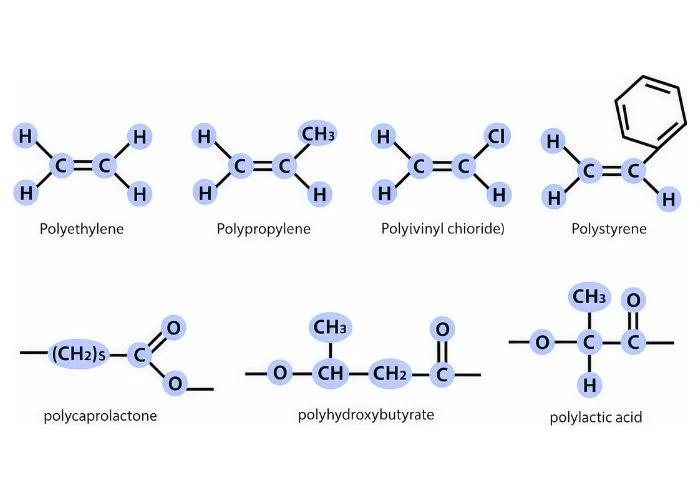
The exact process depends on the type of polymer being produced, but the overall logic is similar for many conventional plastics: obtain a carbon-rich feedstock, convert it into smaller chemical molecules, join those molecules into long polymer chains, modify the polymer for the required properties, and then shape the material into a usable product.
| Step | Main Process | Typical Result |
| 1 | Raw material sourcing | Crude oil, natural gas, or renewable feedstock |
| 2 | Refining | Naphtha, ethane, propane, and other feedstocks |
| 3 | Cracking | Ethylene, propylene, and other molecules |
| 4 | Polymerization | Long-chain polymers |
| 5 | Compounding and pelletizing | Plastic resin or pellets |
| 6 | Product forming | Finished plastic products |
Step 1: Raw Material Extraction
Plastic manufacturing begins with obtaining the required feedstock. Conventional plastics often start with crude oil or natural gas extracted and transported to refineries or petrochemical plants, while bio-based plastics may begin with sugarcane, corn, cellulose, plant oils, or other renewable raw materials. The chosen feedstock determines which chemical intermediates can be produced later in the process.
Step 2: Refining The Raw Materials
Crude oil cannot be directly converted into a plastic product, so it first undergoes refining. Refining separates crude oil into several fractions according to their physical and chemical characteristics, with naphtha being an important feedstock for petrochemical manufacturing. Natural gas is also processed to separate useful components such as ethane and propane before further chemical conversion.
Step 3: Cracking Hydrocarbons Into Smaller Molecules
Cracking uses high temperatures to split larger hydrocarbon molecules into smaller chemical compounds. Important outputs include ethylene and propylene, which are major monomers used for polyethylene and polypropylene production. Other molecules generated during petrochemical processing can also become feedstocks for different polymers and industrial chemicals.
Step 4: Polymerization
Polymerization is the key stage in which small monomer molecules are chemically connected to form long polymer chains. Ethylene, for example, can be polymerized into polyethylene, while propylene forms polypropylene. The catalyst, temperature, pressure, molecular structure, and reaction conditions can influence molecular weight, branching, crystallinity, and other characteristics that ultimately affect material performance.
Step 5: Producing Plastic Resin And Pellets
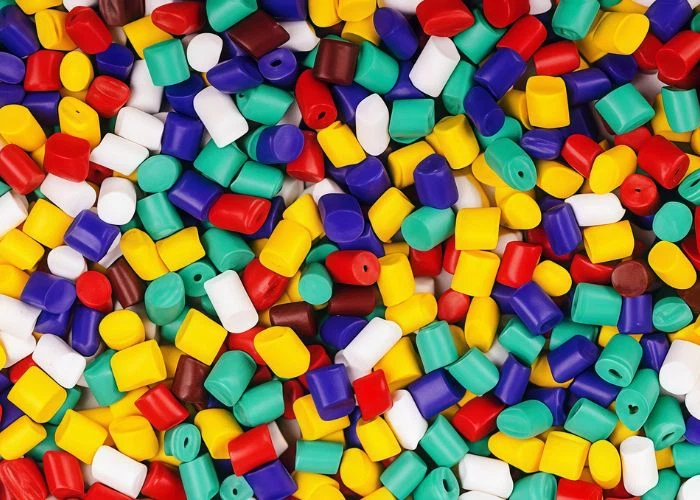
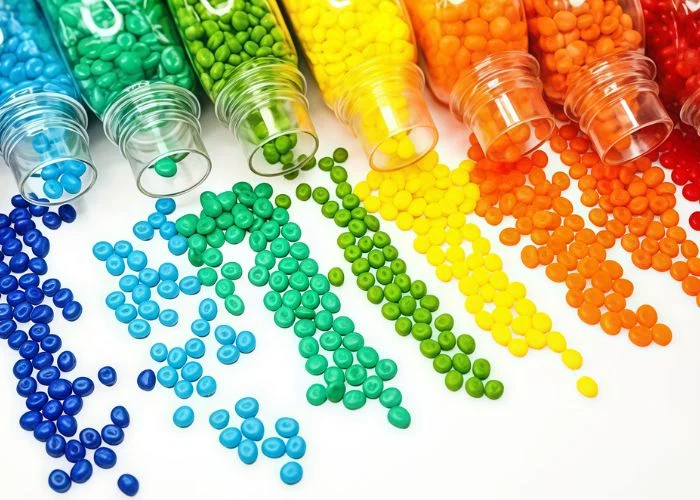
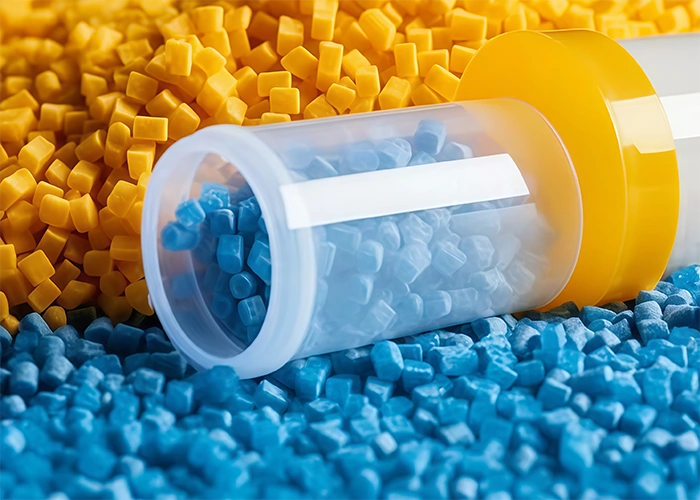
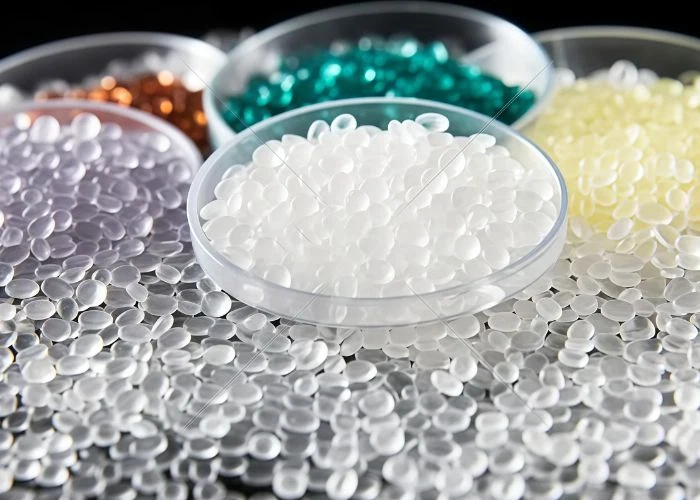
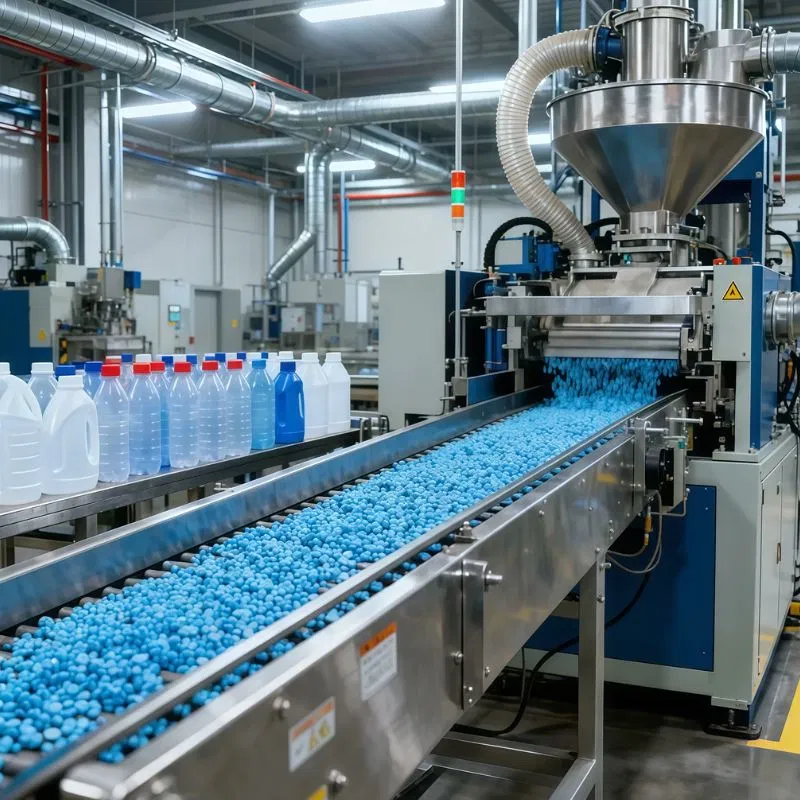
After polymerization, the polymer is often compounded with additives to create the required material properties. Manufacturers may introduce pigments, antioxidants, UV stabilizers, flame retardants, impact modifiers, mineral fillers, glass fibers, or other ingredients. The compounded material is commonly extruded and cut into uniform pellets, making it easier to transport, store, meter, and process in downstream manufacturing equipment.
Step 6: Manufacturing Plastic Products
Plastic pellets are converted into finished products using a manufacturing process suited to the material and geometry. Injection molding is commonly used for complex three-dimensional components, extrusion for continuous profiles and tubing, blow molding for hollow containers, and thermoforming for sheets and thin-wall products. CNC machining, vacuum casting, and 3D printing may also be used for prototypes, low-volume parts, and applications where tooling investment is not justified.
How Is Plastic Created From Naphtha?
Plastic is created from naphtha by cracking the hydrocarbon feedstock into smaller molecules, separating useful monomers such as ethylene and propylene, polymerizing those monomers, and converting the resulting polymers into resin or pellets.
Naphtha Refining And Cracking
Naphtha is obtained during crude-oil refining and can be sent to a steam cracker, where high temperatures break larger hydrocarbon molecules into smaller compounds. The resulting mixture contains several products that must be cooled, separated, and purified before they can be used in polymer manufacturing.
Creating Monomers
After cracking, the resulting chemical mixture is separated into useful components such as ethylene and propylene. These purified molecules serve as monomers, meaning they are the smaller chemical units that can later be repeatedly joined to form a polymer chain.
Converting Monomers Into Polymers
Monomers are converted into polymers through controlled chemical reactions. Ethylene can produce polyethylene, while propylene can produce polypropylene. Manufacturing conditions can be adjusted to influence polymer structure and material properties, which is why a single polymer family can contain many grades designed for different processing and application requirements.
What Polymerization Methods Are Used To Make Plastics?
Plastics are mainly produced through addition polymerization and condensation polymerization, two reaction families that connect smaller molecules into high-molecular-weight materials through different chemical mechanisms.
Addition Polymerization
Addition polymerization generally joins monomers containing reactive double bonds into long chains without producing significant small-molecule by-products. Common plastics manufactured through addition-type polymerization include polyethylene, polypropylene, polystyrene, and PVC. Reaction conditions and catalysts can be adjusted to create different polymer structures and property combinations.
Condensation Polymerization
Condensation polymerization generally involves molecules containing reactive functional groups combining step by step, often releasing small molecules such as water or methanol. PET, many polyamides, and several engineering polymers can be produced using condensation-type reactions. The chemistry and reaction control directly influence molecular weight and final material performance.
What Are The Main Types Of Plastics?
The two main polymer families used to classify plastics are thermoplastics and thermosets, which differ primarily in how their molecular structures respond to heat after the material has been formed.
Thermoplastics can generally be softened and reshaped through heating, whereas thermosets form a more permanent cross-linked structure during curing and cannot normally be melted and remolded in the same way.
| Plastic Type | Behavior When Heated | Common Examples | Typical Processing |
| Thermoplastics | Soften with heat and solidify when cooled | PE, PP, ABS, PC, PET, PVC | Injection molding, extrusion, thermoforming |
| Thermosets | Cure into a permanent network | Epoxy, phenolic, some polyesters | Molding, casting, composite processing |
Thermoplastics
Thermoplastics soften when sufficient heat is applied and solidify again when cooled, making them suitable for injection molding, extrusion, thermoforming, welding, and many recycling operations. Common commodity and engineering thermoplastics include PE, PP, ABS, PC, PET, PVC, PMMA, PS, and PTFE, with applications ranging from packaging and consumer products to automotive, electronics, medical devices, industrial equipment, and precision components.
Thermosets
Thermosetting plastics form a three-dimensional cross-linked network during curing and generally cannot be remelted and reshaped like thermoplastics after full cure. Common examples include epoxy resins, phenolic resins, and some unsaturated polyesters. Their dimensional stability, electrical insulation, chemical resistance, and heat performance make them useful in electrical components, composites, adhesives, coatings, and high-temperature applications.
How Are Plastic Materials Turned Into Products?
Plastic materials are turned into finished products through machining, molding, extrusion, forming, casting, or additive manufacturing. The right process depends on the plastic grade, part geometry, tolerance, surface requirements, production volume, tooling cost, and final application.
Polymer production and part manufacturing are separate stages. A material producer may manufacture PE, PC, ABS, PEEK, or another polymer, while downstream manufacturers convert these materials into housings, prototypes, medical components, automotive parts, consumer products, and industrial assemblies. The selected manufacturing process directly affects dimensional accuracy, surface finish, lead time, tooling investment, and production cost.
CNC Machining
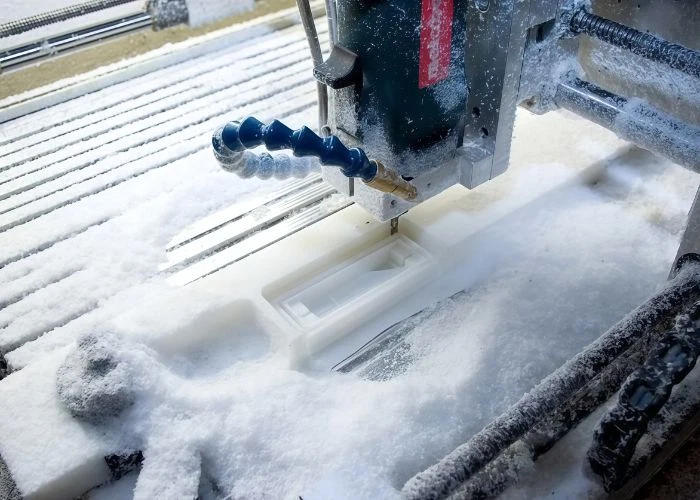
CNC machining creates plastic components by precisely removing material from solid stock such as sheets, plates, rods, tubes, and blocks. CNC milling, turning, drilling, boring, threading, and 5-axis machining can be programmed directly from CAD models and engineering drawings to produce both simple and highly complex plastic parts.
One of its main advantages is that no dedicated production mold is required. Engineers can move from a finished design to a physical component without waiting for mold design, manufacturing, testing, and modification. This makes CNC machining particularly suitable for prototypes, engineering validation parts, custom components, replacement parts, fixtures, and low-volume production.
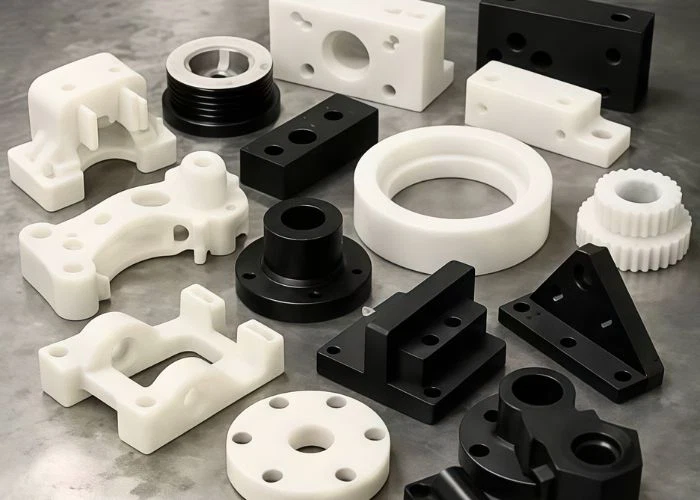
A wide range of engineering plastics can be machined, including PEEK, POM, Nylon, PTFE, PC, ABS, PEI, PPS, PVDF, acrylic, UHMW, and other thermoplastics. Because parts are cut from commercially available stock, engineers can often test the actual specified material rather than a substitute prototype resin.
5-axis CNC machining further expands the geometry that can be produced from plastic stock. By moving the cutting tool or workpiece along multiple linear and rotary axes, a 5-axis machine can access several sides of a component in fewer setups. This is particularly useful for parts with angled holes, compound surfaces, deep cavities, complex contours, undercut-access features, or critical dimensions located on multiple faces.
Reducing the number of setups can also improve positional accuracy between features. Each time a plastic component is removed and reclamped, small alignment errors or clamping-induced deformation can be introduced. Machining multiple surfaces in one setup helps reduce these risks, which is valuable for complex PEEK, POM, Nylon, and other engineering-plastic components with tight geometric relationships.
Dimensional control is another important advantage of CNC machining. It can produce precision holes, pockets, threads, sealing surfaces, bearing seats, mating faces, slots, and alignment features. This makes the process useful for plastic components that must assemble accurately with metal parts, bearings, fasteners, seals, electronic hardware, or other precision components.
Plastic machining nevertheless requires different process control from metal machining. Many plastics have relatively low stiffness and low thermal conductivity, making them more sensitive to cutting forces and localized heat. Excessive clamping force can distort a component, while excessive cutting heat may cause melting, burrs, poor surface finish, thermal expansion, or dimensional instability.
Material behavior must also be considered. Nylon can absorb moisture and change dimension, PTFE can deform relatively easily under mechanical load, acrylic may crack or chip if cutting conditions are unsuitable, and high-performance plastics such as PEEK require appropriate tooling and process parameters to maintain dimensional accuracy and surface quality.
Sharp cutting tools, controlled feeds and speeds, effective chip evacuation, suitable workholding, appropriate cooling strategies, and stress-relieved stock can therefore be important when machining precision plastic components. Thin walls and tight-tolerance features may also require staged roughing and finishing operations to reduce deformation.
For product development and low-volume manufacturing, CNC machining provides a useful balance between precision, material choice, geometric capability, flexibility, and lead time. Conventional 3-axis machining can efficiently handle many plastic components, while 5-axis machining becomes particularly valuable for complex multi-sided geometry and features that would otherwise require several setups. Engineers can manufacture a functional component, inspect critical dimensions, test assembly and performance, modify the CAD model, and produce another revision without changing expensive production tooling.
Injection Molding
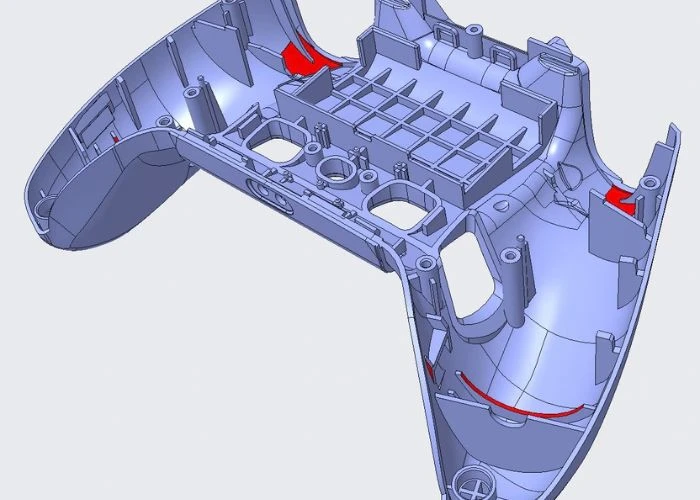
Injection molding heats plastic pellets until the material becomes flowable and then injects the polymer under pressure into a mold cavity. After the material cools and solidifies, the mold opens and ejects the finished component.
The process is highly efficient for large production quantities. It can create complex features such as ribs, bosses, clips, thin walls, and integrated structures while maintaining short cycle times once the mold and processing parameters have been established.
The main consideration is tooling investment. Mold design, machining, validation, and modification require additional cost and lead time. Injection molding therefore becomes particularly attractive when production quantities are high enough to distribute the tooling investment across a large number of parts.
Extrusion
Extrusion heats plastic and continuously pushes it through a shaped die. The shape of the die determines the cross-section of the resulting product, allowing long lengths of material to be produced efficiently.
Typical extruded products include tubes, pipes, sheets, films, channels, seals, rods, and structural profiles. The process is particularly efficient when a product requires the same cross-sectional geometry throughout its length.
Because extrusion primarily produces continuous profiles, additional operations may be necessary to create holes, threads, pockets, slots, cutouts, or precision mating features. Cutting, drilling, routing, or CNC machining can therefore be used as secondary operations.
Blow Molding
Blow molding is primarily used to manufacture hollow plastic products. A heated plastic tube or preform is positioned inside a mold, and compressed air expands the softened material until it contacts the internal mold surfaces.
After cooling, the component retains the shape of the mold cavity. Common applications include bottles, containers, tanks, ducts, reservoirs, and other thin-walled hollow products.
The process is efficient for hollow geometry but is generally less suitable for highly precise mechanical features. Critical sealing areas, holes, mounting interfaces, or threaded features may require secondary manufacturing operations.
Thermoforming
Thermoforming begins with a plastic sheet that is heated until it becomes soft enough to form. Vacuum, pressure, or mechanical force then draws or pushes the sheet over or into a mold.
The process is commonly used for trays, covers, packaging, panels, equipment enclosures, and other relatively large thin-walled components. Tooling can also be simpler than tooling required for many injection-molded products.
However, the stretching that occurs during forming can cause variations in wall thickness and dimensional accuracy. Trimming, drilling, routing, or CNC machining may therefore be required to create final contours, openings, mounting holes, and other controlled features.
Rotational Molding
Rotational molding produces hollow plastic products by placing polymer material inside a mold and rotating the mold while it is heated. As the material melts, it gradually coats the internal surfaces of the mold.
The process is particularly useful for relatively large hollow components such as tanks, bins, containers, housings, and recreational products. Because the process operates at relatively low pressure, tooling requirements can differ significantly from high-pressure injection molding.
Dimensional precision is generally lower than that achievable through CNC machining. Precision flanges, holes, sealing areas, mounting surfaces, and interfaces may therefore require additional machining after molding.
Vacuum Casting
Vacuum casting commonly uses a silicone mold produced from a master pattern. Liquid polyurethane or another casting resin is introduced into the mold under vacuum and allowed to cure before the component is removed.
This process is useful for producing small batches of prototype parts with molded-like appearance and geometry. It is often applied to housings, covers, consumer-product prototypes, display models, and bridge-production components.
Silicone molds have a limited service life, and the casting material often simulates rather than exactly matches a production thermoplastic. When a prototype must use a specific engineering plastic or requires tighter dimensional control, machining solid stock may be more appropriate.
3D Printing
3D printing produces plastic parts by building material layer by layer directly from digital geometry. Depending on the printing technology, the raw material may be thermoplastic filament, polymer powder, liquid resin, or an engineering-grade high-temperature polymer.
The process is valuable for rapid design iteration, complex internal geometry, lightweight structures, concept models, and low-volume prototypes. Parts can often be produced without molds, dies, or extensive conventional tooling.
However, dimensional accuracy, surface finish, anisotropic mechanical behavior, and available material properties vary between printing technologies. Functional components may therefore require secondary machining when critical interfaces, holes, flat surfaces, or tighter tolerances are required.
| Manufacturing Method | Basic Principle | Best Suited For | Main Consideration |
| CNC Machining | Material is removed from solid plastic stock using controlled cutting operations | Precision prototypes, functional parts, custom components, and low-volume production | Unit cost becomes less competitive at very high production volumes |
| Injection Molding | Molten polymer is injected into a mold | High-volume complex components | Initial tooling cost and lead time |
| Extrusion | Heated polymer is continuously pushed through a die | Tubes, sheets, profiles, and continuous products | Primarily limited to consistent cross-sections |
| Blow Molding | Air expands heated plastic against a mold | Bottles, tanks, and hollow products | Limited control of precision mechanical features |
| Thermoforming | Heated plastic sheet is formed over or into a mold | Covers, trays, panels, and packaging | Wall thickness and dimensional variation |
| Rotational Molding | Plastic forms against the inside of a rotating heated mold | Large hollow components | Lower dimensional precision |
| Vacuum Casting | Liquid resin cures inside a silicone mold | Prototype and bridge-production batches | Limited mold life and material equivalence |
| 3D Printing | Material is built layer by layer | Rapid prototypes and complex geometry | Surface finish, tolerance, and material limitations |
What Happens To Plastic After Production And Use?
After use, plastic may be reused, mechanically recycled, chemically recycled, recovered for energy, landfilled, or otherwise treated depending on polymer type, contamination, product design, and available waste-management infrastructure.
A plastic product’s life cycle therefore continues beyond manufacturing. Material selection, design, collection systems, sorting technology, recycling economics, and contamination all influence what happens to the material after use.
Plastic Disposal
Plastic waste may enter reuse, recycling, incineration, landfill, or other waste-treatment systems depending on local infrastructure. When plastic waste is poorly managed, it can also escape into the environment, making collection, containment, and proper disposal important parts of the plastic life cycle.
Recycling And Material Recovery
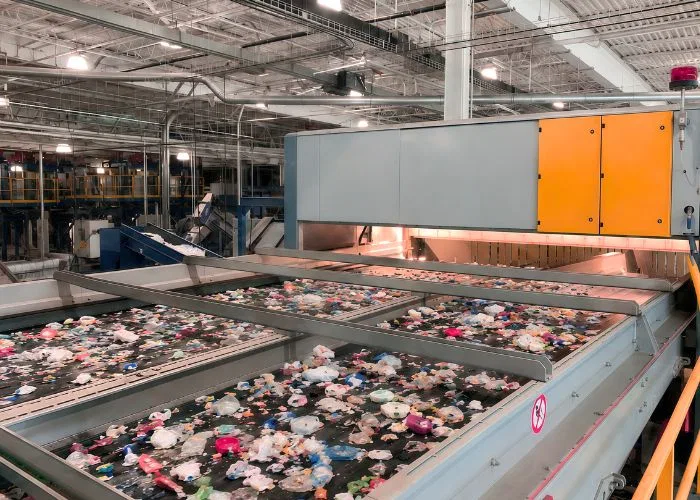
Mechanical recycling generally involves sorting, cleaning, shredding, melting, filtering, and re-pelletizing thermoplastic materials. PE, PP, and PET are among the polymers commonly associated with mechanical recycling streams. Chemical recycling uses different technologies to break plastic into chemical feedstocks, oils, or monomers, although economic viability, energy demand, product purity, and suitable material streams vary between processes.
Plastic Pellet Loss And Pollution
Small plastic resin pellets can be lost during manufacturing, storage, loading, transport, and downstream processing if handling controls are inadequate. Because pellets are small and easily dispersed, manufacturers can reduce losses through closed conveying systems, spill containment, cleaning procedures, drainage controls, and responsible logistics practices.
Cumulative Environmental Impact
The environmental impact of plastic extends across raw-material extraction, energy consumption, polymer production, transportation, product manufacturing, use, collection, recycling, and disposal. Evaluating a plastic material therefore requires more than asking whether it is fossil-based or bio-based; service life, material efficiency, recyclability, durability, process energy, and end-of-life treatment also matter.
How Is The Plastics Industry Changing?
The plastics industry is moving toward greater use of recycled and renewable feedstocks, improved product recyclability, lower material consumption, better waste management, and more circular manufacturing systems.
Conventional plastics continue to offer strong performance, mature processing technology, and economic advantages, but manufacturers are increasingly evaluating ways to reduce waste and improve material use across the product life cycle.
The Plastics Transition
The traditional linear model of producing, using, and discarding plastic is gradually being supplemented by more circular approaches. Manufacturers are paying greater attention to recycled content, mono-material structures, design for disassembly, production scrap recovery, material efficiency, and end-of-life planning.
Growing Use Of Renewable Raw Materials
Renewable feedstocks can reduce reliance on certain fossil resources, but material selection still requires careful engineering evaluation. Cost, supply stability, dimensional performance, heat resistance, mechanical strength, process compatibility, and available recycling systems determine whether a renewable material is practical for a specific application.
Improving Plastic Circularity
Improving plastic circularity requires more than labeling a product as recyclable. Effective recycling depends on product design, polymer compatibility, identification, collection, sorting, contamination control, recycling infrastructure, and demand for the recovered material. Manufacturers increasingly need to consider these factors during material and product development rather than only at the disposal stage.
Conclusion
Plastic manufacturing is a complete material-production chain that begins with crude oil, natural gas, renewable feedstocks, or recovered plastics and continues through refining, cracking, monomer production, polymerization, compounding, pelletizing, and final product manufacturing. The final performance of a plastic product depends not only on the base polymer but also on additives, processing method, geometry, production quantity, temperature requirements, chemical exposure, dimensional stability, and mechanical performance.
At UForProto, we turn plastic materials into functional prototypes and low-volume parts for real product development. Our services cover plastic prototyping, CNC plastic machining, vacuum casting, 3D printing, prototype build services, and surface finishing, supporting projects from early design validation through functional testing and final presentation. For engineering teams developing medical devices, beauty equipment, consumer products, automotive components, home appliances, electronics, and other products, UForProto helps bridge the gap between material selection, prototype validation, and manufacturable finished parts.
FAQs
1.Where Does China Get Its Plastic From?
China obtains plastic through several supply routes, including domestic petrochemical production, imported crude oil and natural gas used as chemical feedstocks, imported polymer resin, and recycled material. The supply balance differs by polymer family because PE, PP, PET, PVC, ABS, PC, and engineering plastics have different domestic capacities and import requirements. China’s large plastics-processing industry therefore relies on an integrated supply chain involving refining, cracking, polymerization, resin trading, compounding, recycling, and downstream manufacturing.
2.Is Polymer Plastic?
A polymer is not automatically a plastic. Polymer describes a large molecule made from repeating molecular units, while plastic is a material category that normally uses polymers as its main structural component. Cellulose, natural rubber, proteins, and DNA are all polymers but are not normally classified as plastics. Commercial plastics typically combine a base polymer with additives such as stabilizers, pigments, fillers, fibers, plasticizers, or flame retardants to create the processing and performance characteristics required for a specific application.
3.Is Plastic Made From Oil?
Many conventional plastics are made from crude oil, but plastic does not have to come exclusively from oil. Crude oil can be refined into naphtha, which is cracked to produce monomers such as ethylene and propylene before polymerization. Natural gas is another major feedstock, while some bio-based plastics use sugarcane, corn, cellulose, or plant oils. Recycled plastic can also replace part of the virgin feedstock, meaning modern plastic production can involve several different raw-material pathways.