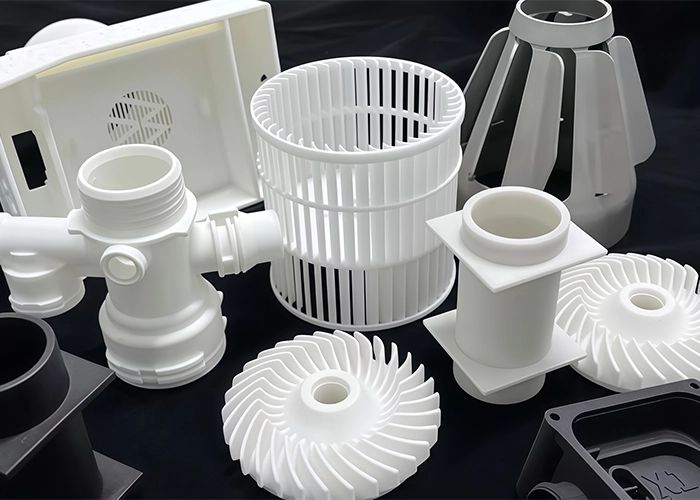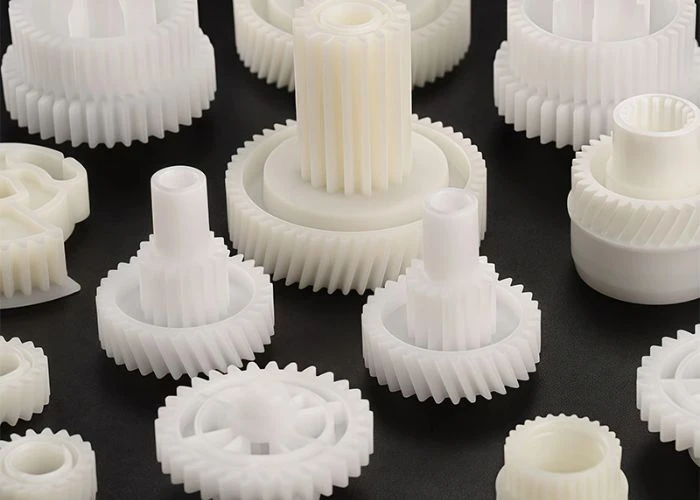

PP, short for polypropylene, is a lightweight thermoplastic used in everything from packaging and household products to automotive components, medical items, and industrial parts. Its low density, chemical resistance, flexibility, and good fatigue performance make it useful when designers need a durable plastic without excessive weight or cost.
This guide explains what PP is, how it is made, its main types and properties, how it is processed into plastic parts, and what to consider when using it for prototypes. It also covers machining challenges, applications, material comparisons, and the situations where PP may or may not be the right choice for your design.
What Is PP?
PP stands for polypropylene, a thermoplastic polymer made from propylene monomers. It belongs to the polyolefin family and is generally semi-crystalline, non-polar, lightweight, and chemically resistant. Commercial PP is widely used because its performance can be adjusted through copolymerization, additives, fillers, and processing conditions.
What Does PP Stand For?
PP is the common abbreviation for polypropylene. Chemically, polypropylene consists of repeating propylene units, with the general formula (C3H6)n(C_3H_6)_n. The arrangement of the polymer chains influences crystallinity, stiffness, thermal behavior, and other material properties.
Compared with polyethylene, PP is generally somewhat harder and more heat resistant while retaining relatively low density. These characteristics help explain why it is common in molded components, containers, hinges, housings, and lightweight structural parts.
How Is Polypropylene Made?
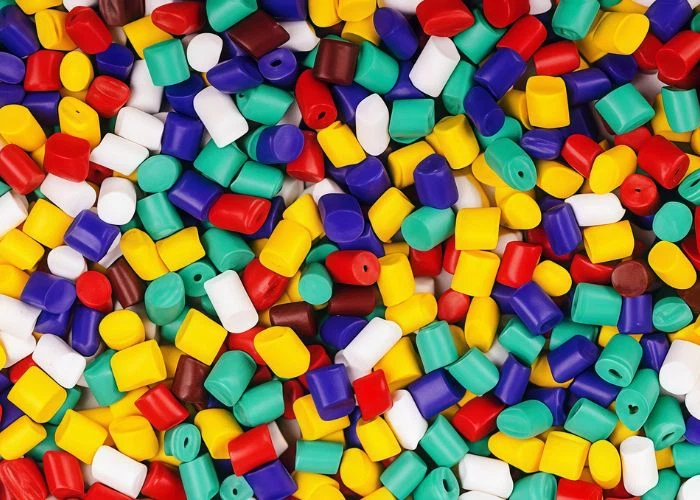
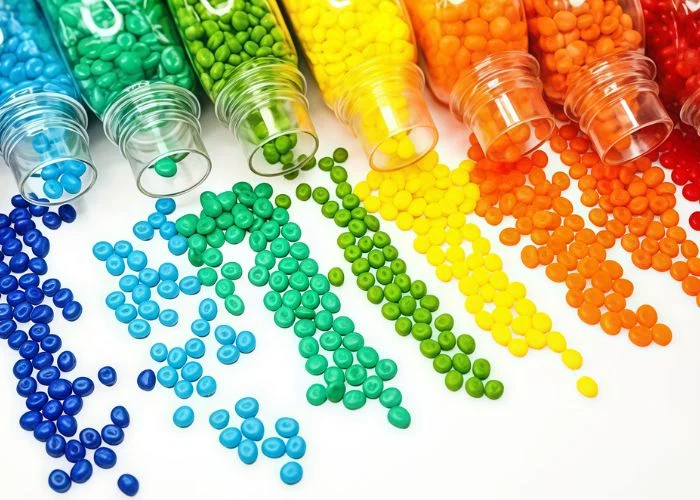
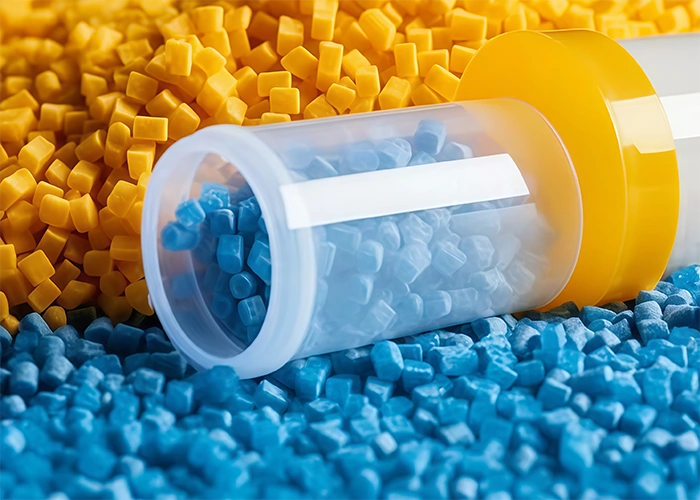
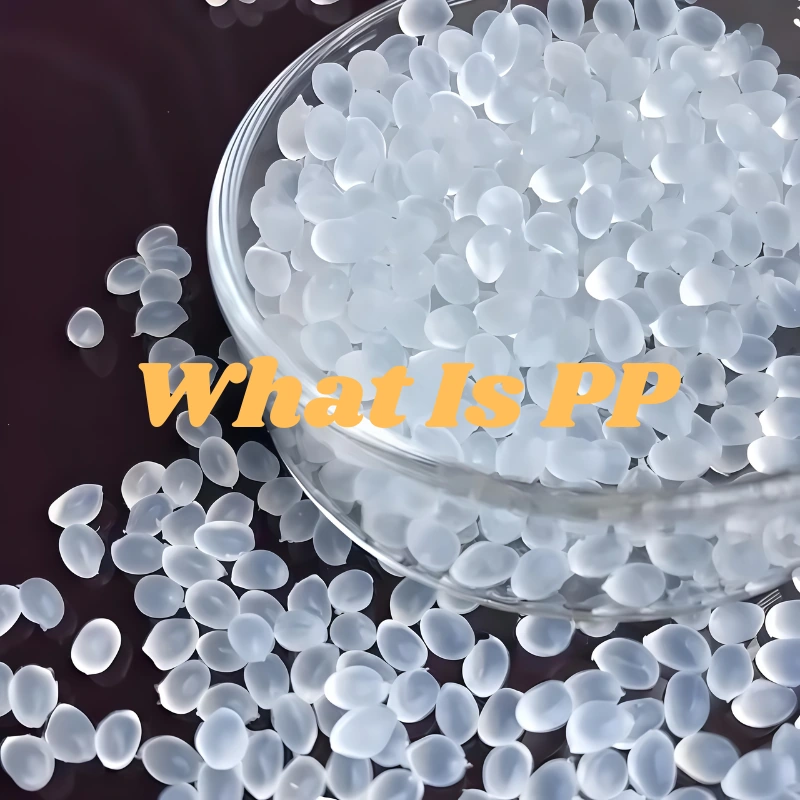
Polypropylene is produced by polymerizing propylene, typically using controlled catalytic processes. Industrial production commonly uses gas-phase, bulk, or slurry polymerization methods, after which the polymer is processed into pellets for later manufacturing.
The polymer structure can be modified to produce different PP grades. Changes in crystallinity, molecular weight, copolymer content, and additives allow manufacturers to adjust stiffness, impact strength, transparency, flow behavior, and temperature performance for different applications.
What Are the Main Types of Polypropylene?
Not all polypropylene behaves the same way. The three most common commercial categories are homopolymer PP, random copolymer PP, and impact copolymer PP. Each offers a different balance of stiffness, clarity, impact resistance, and temperature performance.
Homopolymer Polypropylene
Homopolymer PP contains only propylene monomer and is generally the stiffest of the common PP families. It offers good strength-to-weight performance, chemical resistance, and processability.
It is commonly considered for rigid housings, containers, mechanical components, appliance parts, and other products where dimensional stiffness matters more than low-temperature impact performance.
Random Copolymer Polypropylene
Random copolymer PP contains a relatively small amount of another monomer, commonly ethylene, distributed through the polymer chain. This reduces crystallinity and can improve clarity and flexibility compared with homopolymer PP.
It is often useful for applications that benefit from transparency, softer behavior, or improved impact performance while retaining the chemical resistance and low weight associated with polypropylene.
Impact Copolymer Polypropylene
Impact copolymer PP is designed to provide better impact resistance, particularly where standard PP would be too brittle. This improvement is achieved by incorporating an elastomeric phase or copolymer structure that increases toughness.
The trade-off is typically lower stiffness than a comparable homopolymer grade. For product development, the decision should therefore depend on whether rigidity or impact durability is more important.
Key Properties of PP Plastic
PP is popular because it combines several useful properties rather than excelling in only one area. Its low density, chemical resistance, fatigue behavior, electrical insulation, and processability make it suitable for many consumer and industrial products.
Low Density and Lightweight Performance
Polypropylene has a density of roughly 0.90 g/cm³, making it one of the lightest commonly used commodity plastics. This allows designers to reduce component weight without introducing a foam or hollow structure purely for weight savings.
Low density is particularly useful in portable products, automotive interiors, containers, housings, and other parts where material mass affects handling, shipping, or overall product weight.
Strength, Flexibility, and Fatigue Resistance
PP offers a useful combination of toughness and flexibility. It is not as rigid as many engineering plastics, but it can repeatedly flex without cracking when the geometry and grade are appropriate. Its fatigue resistance is one reason it is associated with living hinges and repeatedly flexed plastic features.
This property can be valuable in caps, closures, hinged covers, clips, and integrated flexible features that would otherwise require separate moving components.
Chemical and Moisture Resistance
Polypropylene is resistant to many acids, bases, fats, and organic chemicals under suitable service conditions. Its non-polar structure also means it absorbs very little moisture compared with hygroscopic engineering plastics.
That combination makes PP attractive for containers, laboratory products, chemical-handling components, fluid-related parts, and products exposed to cleaning agents. Chemical compatibility should still be checked against the specific substance, concentration, temperature, and exposure time.
Heat Resistance and Electrical Insulation
PP generally offers better thermal performance than polyethylene, although its exact temperature capability depends on grade, load, and environment. Commercial PP grades also provide useful electrical insulation properties.
For precision parts, however, thermal expansion still matters. PP expands more than metals and many higher-performance engineering plastics, so close-tolerance assemblies must account for temperature changes.
What Are the Advantages and Limitations of PP?
PP offers a strong balance of cost, weight, chemical resistance, durability, and processability, but it is not suitable for every design. Understanding both sides is more useful than treating it as a universally good plastic.
Main Advantages of Polypropylene
The main advantages of PP include low density, good chemical resistance, moisture resistance, fatigue performance, electrical insulation, and relatively economical processing. It can also be injection molded into complex shapes and is available in many modified grades.
For product development, this makes it particularly attractive when a part needs to be lightweight, repeatedly handled, chemically resistant, or produced at larger volumes.
Main Limitations of Polypropylene
Standard PP has limitations in UV resistance, low-temperature toughness, surface adhesion, and dimensional stability under changing temperatures. Outdoor applications often require stabilization because prolonged UV exposure can degrade the polymer.
Its relatively low surface energy also makes bonding, painting, and printing more difficult without appropriate surface preparation or treatment.
How These Trade-Offs Affect Part Design
PP works best when the design takes advantage of its natural behavior. Flexible clips, living hinges, lightweight housings, chemical-resistant containers, and molded parts can suit the material well.
It becomes less attractive when the part requires high structural rigidity, very low thermal expansion, strong adhesive bonding, or consistently tight dimensional control over a wide temperature range.
How Is PP Processed Into Plastic Parts?
Polypropylene can be processed using several manufacturing methods. Injection molding is especially common, but extrusion, thermoforming, blow molding, and machining are also used depending on the product geometry and production volume.
Injection Molding
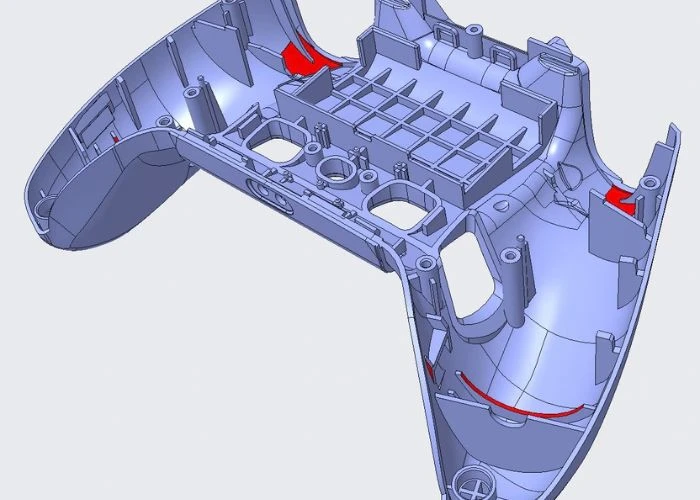
Injection molding is one of the most common methods for producing PP parts. Molten material is injected into a mold, cooled, and ejected as the finished shape. PP’s flow characteristics make it suitable for containers, caps, housings, consumer goods, and automotive components.
For higher production volumes, molding can produce complex geometry efficiently, but the tooling investment and design commitment need to be justified by the expected quantity.
Extrusion and Thermoforming
Extrusion is used for continuous products such as sheets, films, pipes, profiles, and fibers. PP can then be further processed into packaging, sheet products, and other formed components.
Thermoforming can be used where sheet material is heated and shaped over a tool, making it useful for trays, covers, packaging, and larger thin-wall structures.
CNC Machining
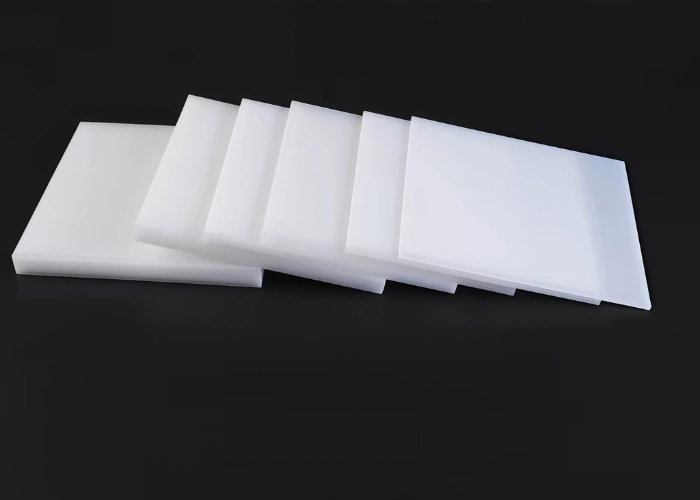
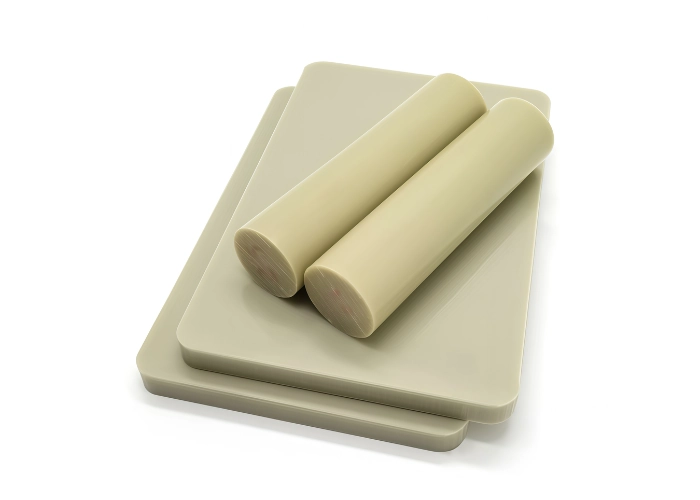
PP sheet, plate, and rod can also be CNC machined. This is useful when the quantity is low, the geometry is still evolving, or a functional prototype is needed without waiting for injection mold tooling.
Machining provides direct control over dimensions and allows fast design changes, but PP’s flexibility and thermal behavior mean cutting conditions and workholding must be carefully controlled.
Other Processing Methods
Depending on the product, PP can also be blow molded, welded, formed, cut, or combined with inserts and other materials. The best process depends on part size, wall thickness, geometry, quantity, and required surface quality.
How Can PP Prototypes Be Made?
The prototype process should match what the design team needs to learn. A prototype used to verify fit and function may require a different approach from one intended to closely reproduce the final molded part.
CNC Machining for Functional PP Prototypes
CNC machining is useful when actual polypropylene material is important for testing. A part can be cut directly from PP stock, allowing engineers to evaluate dimensions, fit, chemical behavior, flexibility, and mechanical function before committing to mold tooling.
This approach works particularly well for low quantities, larger components, and parts whose geometry can be produced from available stock shapes.
Prototype Molding for Production-Intent Parts
When mold behavior, wall thickness, gate location, shrinkage, living hinges, or production surface quality need to be evaluated, prototype molding can provide more representative parts than machining.
It requires tooling, but it can be valuable when the development team needs to test a design closer to its intended production process.
PP-Like Materials for Early Design Validation
At early concept stages, exact PP material behavior may not always be necessary. A visually or mechanically similar prototype material can be used to check size, ergonomics, assembly, and overall product appearance.
Once material-specific behavior becomes important, the prototype should move toward actual PP or a manufacturing method that better represents final production.
What Makes PP Difficult to Machine?
PP is machinable, but its low stiffness and relatively high thermal expansion create different challenges from metals or rigid engineering plastics. Good results depend on controlling heat, cutting forces, clamping, and feature stability.
Heat and Material Deformation
Plastic machining generates heat at the cutting edge, and PP can soften or distort if heat accumulates faster than it can dissipate.
Sharp tools, suitable feeds, controlled cutting engagement, and effective chip removal help reduce heat. Excessive rubbing should be avoided because it can worsen surface quality and dimensional stability.
Workholding and Part Stability
Over-clamping PP can deform the stock before machining begins. Once the part is released, the geometry may move as the clamping load disappears.
Fixtures should therefore support the component without crushing or bending it. Thin walls, large flat sections, and flexible features need particular attention.
Tolerances and Surface Finish
Very tight tolerances are more difficult to maintain in PP than in stiffer, more dimensionally stable materials. Temperature, residual stress, wall thickness, tool pressure, and inspection conditions can all affect the measured result.
Surface finish also depends on tool sharpness and cutting strategy. A tool that cuts cleanly through aluminum may not automatically produce the best finish on soft polypropylene.
Common Applications of Polypropylene
PP is used across a wide range of industries because its cost, weight, chemical resistance, processability, and fatigue performance suit both simple products and engineered components.
Consumer Products and Appliances
Consumer applications include storage products, housings, closures, hinges, household goods, appliance components, and reusable containers.
Its low weight and ability to be molded into integrated features can help reduce part count in high-volume products.
Medical and Laboratory Products
PP is used in various medical and laboratory items, including containers, sample-related products, disposable components, and chemically resistant laboratory hardware.
Suitability for a specific medical application depends on the exact grade, sterilization method, regulatory requirements, and contact conditions.
Automotive Components
Automotive applications include interior trim, battery-related components, housings, ducts, clips, and other molded parts where low weight and chemical resistance are useful.
Impact-modified and filled PP grades can further broaden its use where improved toughness or stiffness is required.
Packaging and Containers
Packaging is one of PP’s major application areas. Its chemical resistance, low moisture absorption, low density, and moldability suit caps, food containers, reusable packaging, bottles, and storage products.
Industrial and Chemical-Handling Parts
Industrial uses include tanks, fittings, guards, fluid-related components, laboratory hardware, and other parts exposed to moisture or chemicals.
The final decision should always be based on the specific chemical environment rather than assuming all PP grades behave identically.
PP vs. Other Common Plastics
Material comparisons are useful only when they support a design decision. PP is often compared with PE, ABS, and PC because these plastics can overlap in housings, containers, functional components, and consumer products.
PP vs. PE
PP is generally stiffer and more heat resistant than polyethylene, while PE may offer better low-temperature behavior depending on grade. Both are lightweight and chemically resistant polyolefins.
PP vs. ABS
PP is lighter and generally offers better chemical resistance, while ABS is typically more rigid and easier to paint, bond, and finish. The better choice depends on whether flexibility and chemical resistance or stiffness and cosmetic finishing matter more.
PP vs. PC
Polycarbonate offers higher rigidity and impact performance in many structural applications, while PP is lighter, more chemically resistant in many environments, and usually more economical. PC is generally preferred when optical clarity or higher structural stiffness is important.
Is PP Right for Your Plastic Part?
The decision should come from the part’s real operating requirements. PP is a strong candidate when low weight, chemical resistance, flexibility, fatigue performance, and cost are more important than maximum rigidity or dimensional stability.
When PP Is a Good Choice
PP is particularly suitable for parts such as flexible clips, living hinges, containers, covers, housings, lightweight structures, chemical-resistant parts, and products expected to be injection molded at scale.
It can also be a useful prototype material when engineers need to test production-like flexibility or chemical behavior before tooling.
When Another Plastic May Be Better
A different plastic may be more appropriate when the part requires higher stiffness, improved dimensional stability, better UV performance without additives, easier bonding, high transparency, or higher continuous-use temperature.
ABS, PC, POM, PEEK, and other engineering plastics each solve different design problems, so selection should be based on function rather than familiarity.
Consider the Prototype Process Before Final Material Selection
Material and prototype method should be considered together. CNC machining can provide real PP material quickly for functional testing, while molding is more representative when wall behavior, shrinkage, living hinges, and production geometry need to be evaluated.
For early development, the most useful prototype is not always the one that perfectly matches final production. It is the one that answers the next engineering question with the least unnecessary cost and delay.
Conclusion
PP is a practical choice for many plastic parts because it combines low density, chemical resistance, flexibility, fatigue performance, and economical processing. Its limitations in rigidity, adhesion, UV resistance, and dimensional stability mean it should still be selected according to the part’s actual environment and functional requirements. For product development, the prototype method is equally important because machining, molding, and PP-like materials answer different design questions.
At UForProto, we provide plastic prototype manufacturing services for product development and design validation, including CNC plastic machining, prototype molding, 3D printing, surface finishing, and complete prototype assembly. We help engineering teams evaluate materials, geometry, fit, appearance, and function before moving into production.
FAQs
1.Is Polypropylene Plastic?
Yes. Polypropylene, or PP, is a thermoplastic polymer in the polyolefin family. It can be melted and reshaped during processing, which is why it is widely used for molded, extruded, and machined plastic parts.
2.What Is Polypropylene Made Of?
Polypropylene is made by polymerizing propylene, a hydrocarbon monomer. The resulting polymer can be modified with copolymers, fillers, stabilizers, and other additives to adjust stiffness, impact resistance, UV stability, or processing performance.
3.What Is Polypropylene Used For?
Polypropylene is used for packaging, containers, household products, automotive components, medical and laboratory items, industrial parts, and lightweight housings. Its low density, chemical resistance, and fatigue performance make it suitable for many molded and functional plastic products.