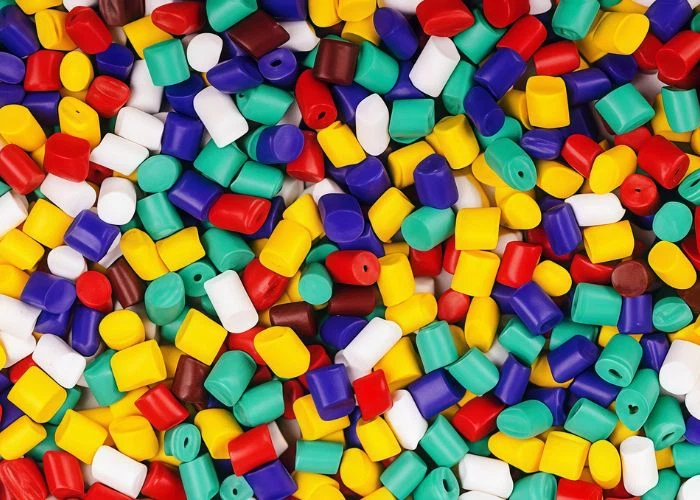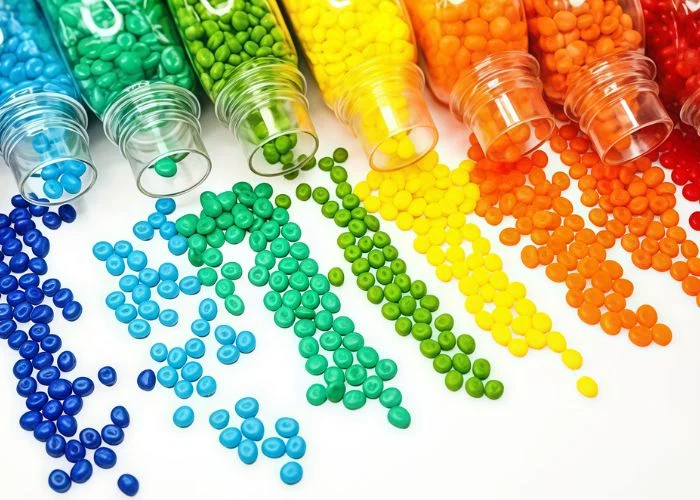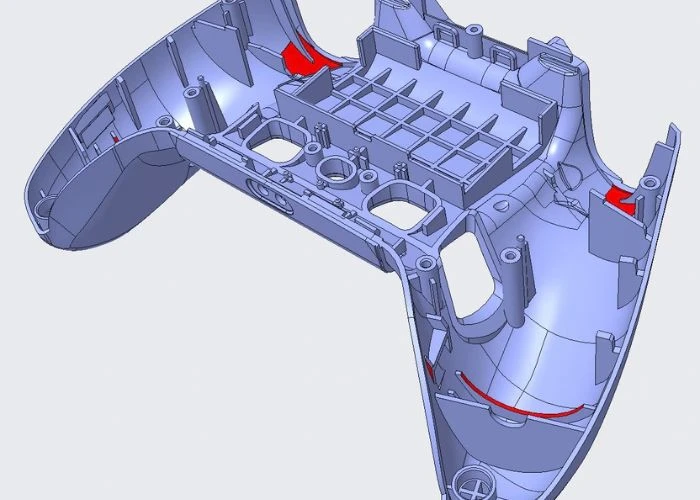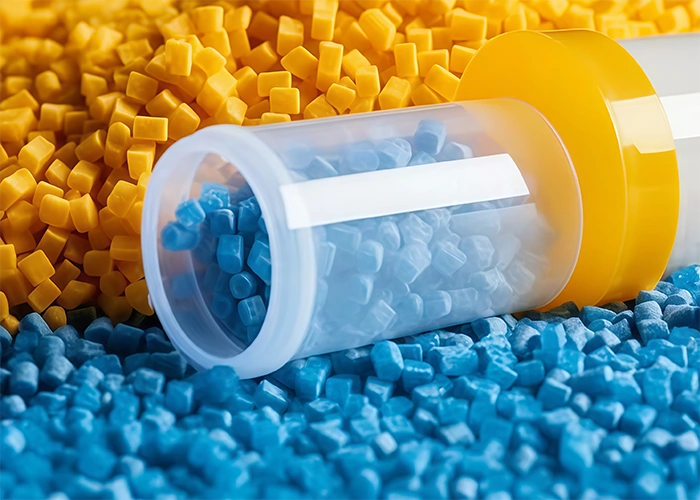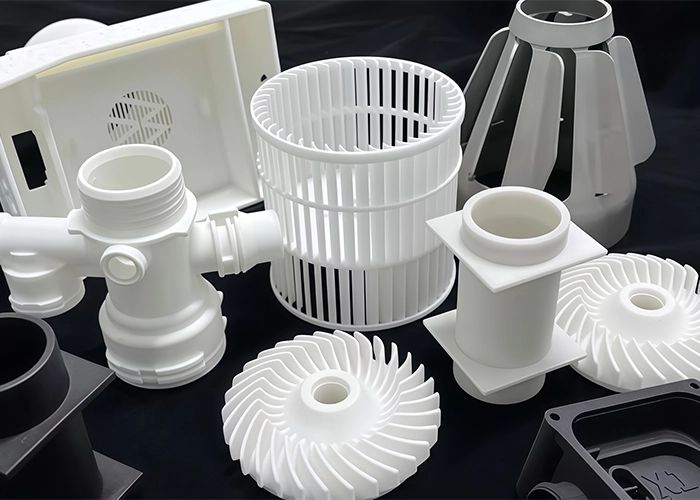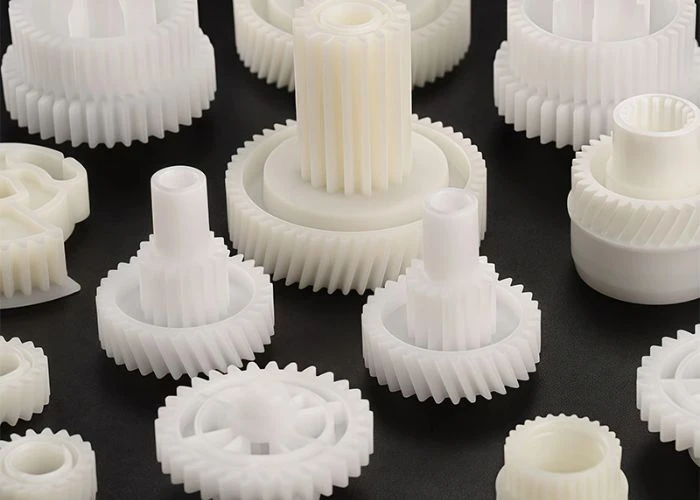

Plastic is made primarily of polymers combined with additives, fillers, pigments, or reinforcements that modify how the material looks, performs, and processes. Most conventional plastics begin with carbon-rich raw materials such as crude oil and natural gas, while some newer plastics can originate from cellulose, sugarcane, corn, starch, or other renewable resources.
This guide explains what is plastic made up of, where its raw materials come from, which chemical elements form plastics, how polymers are produced, and how plastics are manufactured.
What Is Plastic?
Plastic is a material composed mainly of polymers—large molecules formed from repeating chemical units called monomers—plus additives that adjust properties such as strength, flexibility, color, UV stability, flame resistance, wear resistance, and processing behavior.
The word “plastic” therefore describes a broad material family rather than one specific chemical substance. PE, PP, PVC, PET, PC, nylon, and many other plastics have different molecular structures and properties, even though they all belong to the general category of polymer-based materials.
From an engineering perspective, plastics are valued because their properties can be adjusted over a wide range. Depending on the polymer and formulation, they can provide:
- Low density and reduced component weight
- Electrical and thermal insulation
- Chemical and corrosion resistance
- High strength-to-weight performance
- Transparency or controlled appearance
- Compatibility with molding, extrusion, forming, and CNC machining
What Is Plastic Made Of?
Plastic is made primarily of a base polymer combined with additives, fillers, pigments, plasticizers, stabilizers, fibers, or other modifiers that control how the material performs during manufacturing and in service.
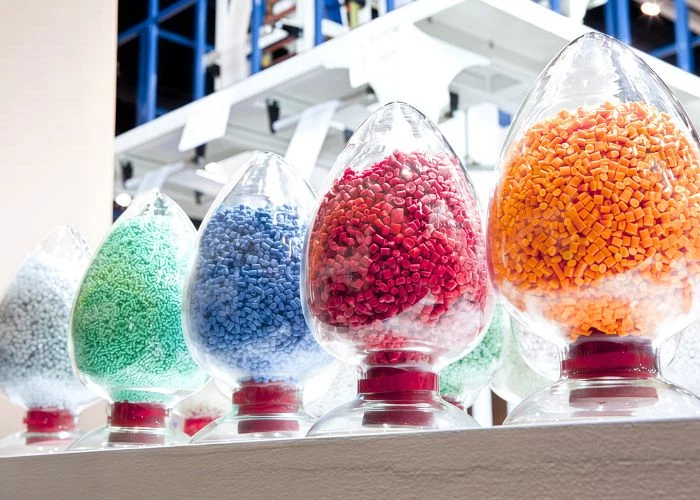
The polymer normally forms the continuous structural phase of the material, while the additional ingredients are selected to change specific properties such as stiffness, flexibility, flame resistance, wear resistance, UV stability, color, or dimensional behavior.
It is important to distinguish between the questions what is plastic made of and what is plastic made from. The first question refers to the composition of the finished plastic material, meaning polymers and any additional ingredients incorporated into the formulation. The second usually refers to the original feedstock, such as petroleum, natural gas, cellulose, or plant sugars. These are related questions, but they describe different stages in the material-production chain.
A commercial plastic grade may therefore contain much more than its polymer name suggests. Unfilled nylon, glass-filled nylon, flame-retardant nylon, and bearing-grade nylon all belong to the same broad polymer family, yet their mechanical performance, thermal expansion, moisture behavior, cutting characteristics, and tool-wear potential can differ substantially. For manufacturing engineers, understanding the complete formulation is often more useful than knowing the generic polymer name alone.
Polymers
Polymers are the main structural component of plastics and are made from many repeating molecular units connected into long chains or three-dimensional networks.
Smaller molecules known as monomers, or chemically related reactive building blocks, are joined through polymerization reactions to create these large molecules. Ethylene can be polymerized into polyethylene, propylene into polypropylene, and styrene into polystyrene, while other plastics such as PET and nylon are produced through reactions involving multiple chemical building blocks.
If the question is what are polymers made of, the most direct answer is that polymers are made from atoms organized into repeating molecular structures. Carbon and hydrogen dominate many common plastics, but oxygen, nitrogen, chlorine, fluorine, and other elements may also be present. The chemistry of the repeating unit strongly affects polarity, molecular attraction, flexibility, thermal stability, friction behavior, and chemical resistance.
Polymer behavior is also controlled by structure beyond simple chemical formula. Molecular weight influences chain entanglement and melt behavior, branching changes packing efficiency, crystallinity affects density and shrinkage, and cross-linking restricts molecular movement. These structural differences explain why two plastics containing similar elements can behave very differently during machining and use. POM, PEEK, PP, PE, and nylon are semi-crystalline materials, while PC, PMMA, ABS, and PEI are generally more amorphous, creating different responses to heat, stress, and dimensional change.
Additives And Fillers
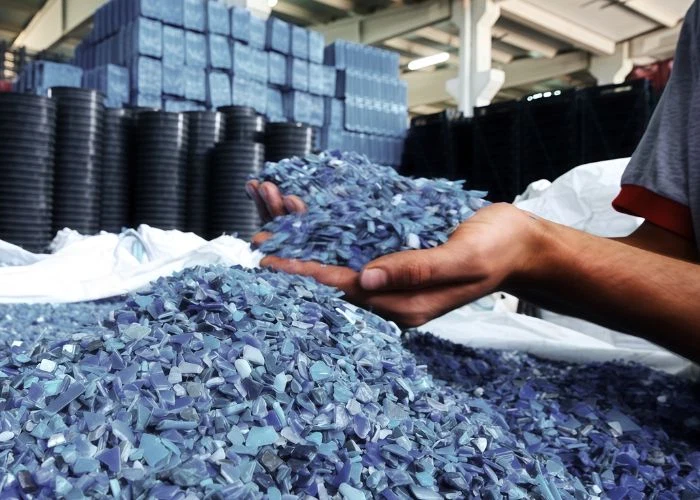
Additives and fillers are materials blended into a base polymer to modify properties that the polymer alone cannot provide efficiently. Depending on the application, the formulation may include plasticizers for flexibility, stabilizers for heat or UV resistance, pigments for appearance, flame retardants for fire performance, impact modifiers for toughness, lubricants for wear behavior, mineral fillers for stiffness or dimensional control, and reinforcing fibers for higher mechanical strength.
These additions can substantially change how a material behaves. Plasticized PVC, for example, can be soft and flexible, while rigid PVC contains a different formulation and behaves more like a structural thermoplastic. Glass-filled nylon can be significantly stiffer than unfilled nylon, while carbon-filled PEEK can provide lower thermal expansion and greater modulus than standard PEEK. The percentage, type, size, orientation, and distribution of the additive or reinforcement all influence the final material.
For CNC machining, additives are especially important because they can alter tool wear, chip formation, heat generation, cutting force, and dimensional stability. Mineral- or glass-filled grades are usually more abrasive than neat polymers. Lubricated bearing grades may machine differently from standard grades, while softer plasticized materials may deform more easily under clamping. When tight tolerances are required, the complete material designation should therefore be confirmed before process planning.
What Elements Make Up Plastic?
Plastic is made mainly from carbon and hydrogen, but oxygen, nitrogen, chlorine, fluorine, sulfur, and other elements may also be present depending on the polymer. There is no single universal plastic chemical formula because plastic describes thousands of different polymer materials rather than one chemical compound.
| Plastic | Simplified Repeating Chemistry | Main Elements |
| Polyethylene (PE) | (C₂H₄)n | Carbon, hydrogen |
| Polypropylene (PP) | (C₃H₆)n | Carbon, hydrogen |
| Polystyrene (PS) | (C₈H₈)n | Carbon, hydrogen |
| PVC | (C₂H₃Cl)n | Carbon, hydrogen, chlorine |
| PET | (C₁₀H₈O₄)n | Carbon, hydrogen, oxygen |
| PTFE | (C₂F₄)n | Carbon, fluorine |
The letter “n” represents a large number of repeating molecular units. Polyethylene and polypropylene contain only carbon and hydrogen in their repeating structures, while PVC contains chlorine, PET contains oxygen, and PTFE contains fluorine. These elemental differences help create the distinct chemical and thermal behavior associated with each material, but elemental composition alone does not determine performance.
The complete engineering behavior also depends on molecular architecture, crystallinity, additives, reinforcement, processing history, and environmental exposure. A chemical formula is therefore useful for understanding polymer chemistry, but it should not replace actual material data when selecting plastic for high-temperature, chemical, structural, or precision-machined applications.
What Raw Materials Are Used To Make Plastic?
Plastic is mainly made from raw materials such as crude oil and natural gas, while some plastics are also produced from cellulose, sugarcane, corn, starch, vegetable oils, and other renewable biological feedstocks.
Conventional polymer production relies heavily on petrochemical resources because they provide carbon-rich molecules that can be efficiently converted into important monomers such as ethylene and propylene.
The raw material is only the first step in the process. Crude oil does not become plastic simply by cooling or shaping it. Oil must first be refined into useful hydrocarbon fractions, natural gas must be processed into components such as ethane and propane, and these feedstocks then undergo chemical conversion to produce monomers or polymer precursors. Only after polymerization do they become the long-chain materials recognizable as plastic resin.
Renewable routes follow the same general chemical logic even though the starting resource differs. Cellulose can be chemically modified, plant sugars can be fermented into chemical intermediates, and bioethanol can be converted into ethylene before polymerization. The origin of the carbon therefore does not by itself determine whether the final plastic is strong, biodegradable, recyclable, heat resistant, or suitable for machining.
Petroleum
Petroleum is one of the main raw-material sources for conventional plastic because crude oil can be refined into hydrocarbon fractions such as naphtha, which are then converted into smaller chemical molecules used to manufacture polymers. Crude oil is a complex mixture of hydrocarbons rather than a single substance, so refining separates it into more useful fractions before petrochemical production begins.
Naphtha is particularly important because it can be processed in steam crackers to produce ethylene, propylene, and other chemical intermediates. These molecules become the building blocks for many familiar plastics. Ethylene can be converted into polyethylene, while propylene is used to produce polypropylene. Other petrochemical products contribute to styrene, PET intermediates, PVC feedstocks, and many other polymer families.
This is the more accurate answer to what is plastic made from originally when discussing petroleum-based plastic. The original resource may be crude oil, but the direct building block of polyethylene is ethylene rather than crude oil itself. Understanding this sequence avoids the misleading idea that oil is simply transformed physically into plastic without major chemical changes.
Natural Gas
Natural gas is another major feedstock for plastic because gas processing provides hydrocarbons such as ethane and propane, which can be converted into ethylene, propylene, and related chemical building blocks. In many petrochemical systems, natural gas provides an efficient route to the light olefins required for large-volume polymer production.
Ethane is especially important for ethylene manufacture. During steam cracking, ethane is heated under controlled conditions so that molecular bonds break and ethylene is formed. After cooling, compression, separation, and purification, the ethylene can be fed into polymerization equipment to manufacture polyethylene. Propane can also contribute to propylene production through industrial petrochemical routes.
Whether a region relies more heavily on naphtha, ethane, propane, or another feedstock depends on raw-material availability and infrastructure. These upstream differences influence production economics and plant design, but from the viewpoint of the finished plastic component, the polymer grade, reinforcement, molecular structure, and material condition usually have a greater effect on machining and mechanical performance.
Cellulose And Plant-Based Materials
Some plastics are made from renewable plant-based resources such as cellulose, sugarcane, corn, starch, and plant oils, either by chemically modifying naturally occurring polymers or by converting biomass into molecules that can be polymerized. This means the answer to is plastic made from trees is yes for certain materials, but not for most conventional plastics.
Cellulose is a naturally occurring polymer found in wood, cotton, and other plants. It can be purified and chemically modified to create cellulose-derived plastics such as cellulose acetate. Plant sugars offer another route. Sugarcane or corn can provide fermentable sugars that are converted into ethanol, lactic acid, or other chemical intermediates used in polymer production.
The question how is plastic made from plants therefore has several answers depending on the polymer. Bio-based polyethylene can be produced by converting plant-derived ethanol into ethylene before polymerization, while PLA can be produced using lactic-acid chemistry derived from fermented plant sugars. Importantly, renewable origin and biodegradability are not the same property. A plant-derived polyethylene can remain chemically equivalent to conventional polyethylene and is not automatically biodegradable.
How Is Plastic Made?
Plastic is made through a sequence that usually includes raw-material extraction, refining or feedstock preparation, cracking or chemical conversion, monomer production, polymerization, compounding, pelletizing, and final product forming.
For conventional petroleum-based plastics, the simplified production path is feedstock → chemical intermediate → monomer → polymer → compounded resin → finished product.
Although individual polymers use different reaction chemistry, the overall logic is similar. A carbon-rich raw material is converted into controlled molecules, those molecules are joined into much larger polymer chains, and the polymer is then modified with additives before being shaped into pellets, sheets, rods, molded products, films, tubes, or other forms.
| Stage | Main Process | Typical Result |
| 1 | Raw material extraction | Crude oil, natural gas, biomass |
| 2 | Refining or preparation | Naphtha, ethane, propane, biological intermediates |
| 3 | Cracking or conversion | Ethylene, propylene, other monomers |
| 4 | Polymerization | Base polymer |
| 5 | Compounding and pelletizing | Commercial plastic resin |
| 6 | Forming and manufacturing | Finished parts or stock material |
Raw Material Extraction
Raw material extraction provides the crude oil, natural gas, or renewable biological resources required to begin plastic production. Conventional petrochemical routes start with oil or gas recovered from underground reserves and transported to refineries or petrochemical plants, while renewable routes may begin with crops, wood, cellulose, plant sugars, or vegetable oils.
At this point, there is still no usable plastic. Extraction only provides the upstream feedstock. The engineering properties associated with a finished plastic—such as stiffness, temperature capability, wear resistance, transparency, toughness, or machinability—develop much later through chemical conversion, polymerization, material formulation, and stock manufacturing.
This distinction is important because the environmental or economic origin of a feedstock and the functional behavior of the final plastic are separate questions. Two materials derived from very different raw resources can have similar polymer chemistry, while two plastics derived from the same petrochemical source can have completely different properties.
Refining And Feedstock Preparation
Refining and feedstock preparation convert crude natural resources into controlled hydrocarbon streams or biological intermediates that can be used efficiently in polymer chemistry. Crude oil is separated into fractions such as naphtha, while natural gas is processed to recover ethane, propane, and other valuable hydrocarbons.
Renewable materials follow different preparation routes. Plant sugars may be fermented, cellulose may be purified and chemically modified, and vegetable oils may undergo chemical conversion before becoming suitable polymer feedstocks. Regardless of origin, the objective is to produce consistent chemical inputs that can be processed reliably.
Purity is critical because polymerization reactions depend on controlled chemistry. Unwanted contaminants can interfere with catalysts, reduce reaction efficiency, alter molecular weight, or create inconsistent polymer properties. For this reason, refining and chemical separation are important parts of the manufacturing chain rather than simple preliminary steps.
Cracking Ethane And Propane
Cracking breaks larger hydrocarbon molecules into smaller molecules such as ethylene and propylene, which are important monomers or precursors for many common plastics. High temperatures are used to break carbon-carbon bonds and produce smaller unsaturated hydrocarbons that are more useful for polymer production.
Ethane can be cracked efficiently into ethylene, while naphtha cracking produces a wider mixture that may include ethylene, propylene, butadiene, and aromatic compounds. These products are then cooled, separated, compressed, and purified so that individual chemical streams can be used in downstream manufacturing.
This stage is the key to understanding how plastic is made from petroleum. Crude oil is first refined, then selected hydrocarbon fractions are cracked, useful molecules are isolated, and those molecules are converted into polymers. The transformation is therefore chemical rather than merely physical.
Polymerization
Polymerization is the stage in which small monomers or reactive molecules are chemically linked to form long polymer chains or networks. This is the step where ethylene becomes polyethylene, propylene becomes polypropylene, styrene becomes polystyrene, and vinyl chloride becomes PVC.
Different polymers use different reaction mechanisms. Chain-growth polymerization is associated with PE, PP, PS, and PVC, while step-growth reactions are used for materials such as PET and many polyamides. Reaction conditions including temperature, pressure, catalysts, monomer ratio, and reaction time influence molecular weight, branching, crystallinity, and other structural characteristics.
These differences can create several grades within the same polymer family. HDPE and LDPE are both polyethylene, but their molecular architectures differ, producing different density, stiffness, flexibility, and processing behavior. Polymerization therefore establishes much of the molecular structure that later controls engineering performance.
Compounding And Additives
Compounding converts a base polymer into a practical commercial material by blending it with additives, fillers, reinforcing fibers, pigments, lubricants, stabilizers, or other modifiers. This stage allows material manufacturers to tailor a polymer to the requirements of a particular application rather than relying only on the natural properties of the base resin.
Glass fiber can be added for greater stiffness, carbon fiber for higher modulus or lower thermal expansion, flame retardants for electrical applications, lubricants for wear components, UV stabilizers for outdoor exposure, and pigments for identification or appearance. Mineral fillers may also influence shrinkage, stiffness, processing, or dimensional stability.
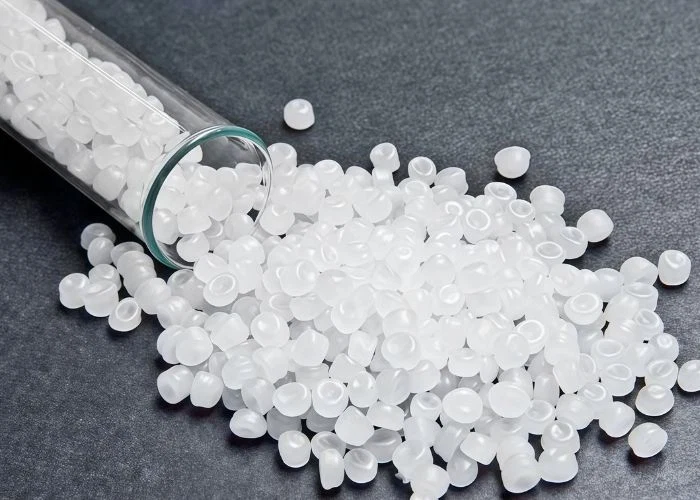
After compounding, thermoplastics are often extruded and cut into pellets. These pellets are convenient for transport and downstream processing, but the formulation created during compounding remains critical to later manufacturing behavior. An unfilled polymer and a 30% glass-filled version can require noticeably different tooling and cutting strategies even when the base polymer is identical.
Shaping And Forming
Plastic is converted into finished products through molding, extrusion, forming, casting, additive manufacturing, or CNC machining from previously manufactured stock. The best process depends on polymer behavior, part geometry, tolerance, quantity, wall thickness, tooling budget, and performance requirements.
Injection molding is efficient for high-volume complex parts, extrusion is used for continuous profiles such as pipes, tubes, rods, films, and sheets, blow molding is common for hollow containers, and thermoforming shapes heated sheet over a mold. Rotational molding is often used for large hollow structures, while 3D printing is useful for rapid prototypes and complex low-volume geometry.
CNC machining follows a different principle because the polymer is not melted and reshaped during part production. Instead, material is removed from solid stock such as rod, sheet, plate, or block. This makes machining particularly useful for prototypes, precision engineering parts, custom components, small quantities, and designs where mold investment cannot be justified.
What Are The Main Types Of Plastic?
The main types of plastics are thermoplastics and thermosetting plastics, while elastomers are commonly treated as a related polymer category because of their distinctive elastic behavior.
Thermoplastics soften when heated and can usually be reshaped, thermosets form permanent cross-linked structures after curing, and elastomers are designed to undergo large reversible deformation.
| Plastic Type | Response To Heat Or Load | Common Examples |
| Thermoplastics | Soften with sufficient heat and solidify when cooled | PE, PP, PVC, PC, PET, PA |
| Thermosets | Form permanent cross-linked structures during curing | Epoxy, phenolic, polyester resin |
| Elastomers | Stretch or deform and recover after unloading | Silicone, rubber-like polymers |
Thermoplastics
Thermoplastics are polymers that soften when sufficiently heated and solidify again when cooled because their molecular chains are not permanently cross-linked. This behavior makes them compatible with injection molding, extrusion, thermoforming, welding, and many recycling processes.
Thermoplastics include commodity materials such as PE, PP, PVC, PS, and PET, as well as engineering materials such as ABS, PC, POM, nylon, PPS, PEEK, PEI, and PVDF. They may be amorphous or semi-crystalline, and this structural difference affects shrinkage, transparency, chemical resistance, temperature behavior, and dimensional stability.
For CNC machining, thermoplastics cover a very wide range of behavior. PC can be rigid and transparent, nylon can absorb moisture, PTFE can be soft and prone to deformation, and PEEK can maintain strength at much higher temperatures. The term “thermoplastic” therefore describes heat response but does not predict machining behavior on its own.
Thermosetting Plastics
Thermosetting plastics form permanent three-dimensional molecular networks during curing and generally cannot be melted and reshaped after the curing reaction is complete. Epoxy, phenolic resins, melamine systems, and some polyester resins are common examples.
Before curing, thermosets may exist as liquids, powders, reactive mixtures, or partially polymerized materials. Heat, catalysts, or curing agents initiate reactions that create cross-links between molecular chains. Once the network forms, additional heat eventually causes degradation rather than normal remelting.
Thermosets are widely used in electrical insulation, adhesives, coatings, tooling, and fiber-reinforced composites because their cross-linked structure can provide good heat resistance, dimensional stability, and chemical performance. When machined after curing, reinforced grades may generate abrasive dust and can require specialized tools and extraction.
Elastomers
Elastomers are polymeric materials designed to undergo large elastic deformation and return substantially toward their original shape when the load is removed. Their molecular chains remain flexible, while limited cross-linking or other intermolecular interactions prevent permanent flow.
Silicone, synthetic rubber, natural rubber, and flexible polyurethane systems are common examples. They are widely used for seals, gaskets, vibration isolators, rollers, flexible couplings, bumpers, and other parts where elasticity is required.
Soft elastomers can be difficult to machine precisely because the tool and fixture may deform the material before cutting occurs. When close tolerances are required, harder grades, special support fixtures, extremely sharp tooling, chilled machining, or alternative manufacturing methods may provide better results.
Common Plastics And What They Are Made Of
Common plastics are produced from different monomers or reactive chemical building blocks, and these chemical differences create distinct combinations of strength, flexibility, temperature resistance, wear behavior, and dimensional stability.
PE is based on ethylene, PP on propylene, PVC on vinyl chloride, PS on styrene, while PET, nylon, polycarbonate, and polyurethane use more complex reaction chemistry.
| Plastic | Main Building Block(s) | Typical Engineering Characteristics |
| PE | Ethylene | Low density, chemical resistant |
| PP | Propylene | Lightweight, fatigue resistant |
| PVC | Vinyl chloride | Chemically resistant, rigid or flexible |
| PS | Styrene | Rigid, lightweight |
| PET | Ethylene glycol + terephthalate chemistry | Stable, strong, good wear behavior |
| PA | Amide-forming reactants | Tough, wear resistant |
| PC | Carbonate-forming chemistry | Tough, transparent |
| PU | Polyol + isocyanate | Wide range of hardness and flexibility |
Polyethylene (PE)
Polyethylene is made by polymerizing ethylene into long carbon-hydrogen chains and is one of the simplest and most widely used thermoplastic families.
Differences in molecular branching and molecular weight produce grades such as LDPE, HDPE, and UHMW-PE, each with different density, stiffness, wear behavior, and processing characteristics.
HDPE has relatively linear chains that pack closely, giving it greater stiffness and density than LDPE. UHMW-PE has extremely long molecular chains that provide excellent abrasion resistance, impact performance, and low friction, making it useful for guides, wear strips, liners, and moving mechanical components.
When machined, PE is relatively soft and can deform under excessive clamping pressure. Heat generated by dull tools can also soften the cutting zone. Sharp tools, moderate workholding force, effective chip removal, and adequate support are therefore more important than applying high cutting pressure.
Polypropylene (PP)
Polypropylene is made by polymerizing propylene and provides a combination of low density, chemical resistance, fatigue performance, and useful stiffness.
The methyl side group attached to the polymer backbone distinguishes PP from PE and influences chain packing and crystallinity.
Polypropylene is widely used in chemical-handling components, laboratory equipment, automotive interiors, packaging, living hinges, fluid systems, and consumer products. Homopolymer and copolymer grades are available, allowing manufacturers to adjust stiffness, impact resistance, and low-temperature behavior.
During machining, PP can flex more easily than rigid engineering plastics. Thin walls and narrow features can deflect under tool pressure, so workholding and cutter engagement must be controlled. Because friction can quickly generate localized heat, sharp cutting edges and efficient chip evacuation help maintain dimensions and surface quality.
Polyvinyl Chloride (PVC)
PVC is made from vinyl chloride monomer and contains carbon, hydrogen, and chlorine in its polymer structure.
Its formulation can be adjusted significantly, which is why PVC is available in both rigid and flexible forms.
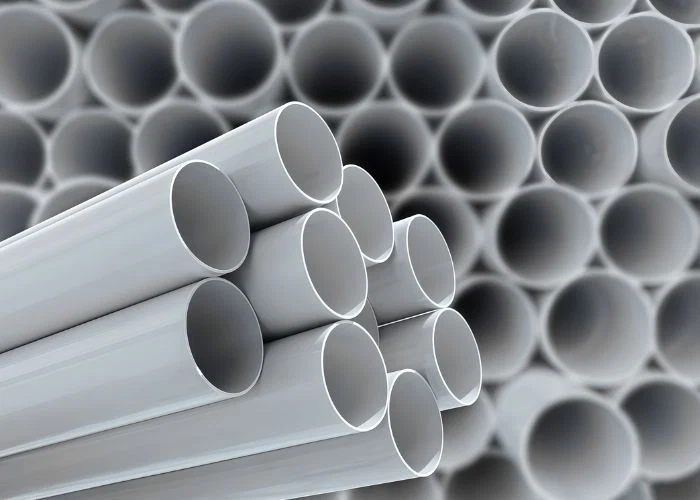
Rigid PVC is used for pipes, chemical tanks, panels, structural profiles, and industrial components, while flexible PVC contains plasticizers that reduce stiffness and make the material suitable for cable insulation, flexible tubing, and other soft products. These two forms demonstrate how strongly additives can change the performance of one base polymer.
Rigid PVC can machine cleanly when sharp tools and controlled cutting temperatures are used. Excessive heat should be avoided because thermal degradation can damage the material and reduce surface quality. The material formulation should also be considered when chemical compatibility or long-term environmental exposure is important.
Polystyrene (PS)
Polystyrene is made from styrene monomer and contains aromatic phenyl groups attached to its carbon-based polymer backbone. These groups restrict molecular movement and contribute to the rigidity associated with general-purpose polystyrene.
Standard PS is relatively stiff but brittle, while high-impact grades contain modifiers that improve toughness. Expanded polystyrene introduces a cellular structure and is commonly used in packaging and insulation, while solid PS is used for housings, trays, displays, and consumer components.
Solid polystyrene can chip or crack around unsupported edges during machining. Toolpaths should therefore avoid aggressive entry into delicate features, and thin walls should be supported whenever possible. Sharp tooling and moderate cutting forces help reduce brittle fracture.
Polyethylene Terephthalate (PET)
PET is a polyester produced from ethylene-glycol and terephthalate chemistry, creating a polymer that contains carbon, hydrogen, and oxygen.
It is widely known for beverage bottles and packaging, but engineering PET grades are also supplied as machinable rod, plate, and sheet.
Engineering PET provides good strength, dimensional stability, wear resistance, low moisture absorption, and useful chemical performance. These characteristics make it suitable for bearings, rollers, guides, food-processing equipment, mechanical components, and other precision parts.
Compared with moisture-sensitive nylon, PET can provide more predictable dimensions in humid environments. However, thermal control remains important during machining because cutting heat can cause temporary expansion or poor surface finish if the tool begins rubbing instead of cutting efficiently.
Polyamide (PA)
Polyamide is a polymer family containing repeating amide linkages, and common grades such as nylon 6 and nylon 6/6 are produced through different chemical routes.
Nylon 6 is associated with caprolactam chemistry, while nylon 6/6 is commonly produced using hexamethylenediamine and adipic-acid-based chemistry.
Polyamides offer good toughness, wear resistance, fatigue performance, strength, and relatively low friction. They are widely used for gears, bearings, bushings, rollers, guides, wear strips, and other mechanical parts. Filled and reinforced versions can provide even greater stiffness and dimensional performance.
Moisture absorption is one of the most important design considerations. Nylon can change dimension and mechanical properties as humidity changes, so tight-tolerance components should be specified with attention to moisture condition. Internal stress in stock can also cause movement during machining, making staged roughing and finishing useful for demanding parts.
Polycarbonate (PC)
Polycarbonate is an amorphous thermoplastic containing carbonate groups in its polymer backbone and is known for combining transparency, impact strength, rigidity, and dimensional performance.
These characteristics make PC useful for machine guards, transparent housings, protective covers, medical components, optical parts, and functional prototypes.
Commercial PC grades may contain UV stabilizers, flame-retardant additives, glass reinforcement, or other modifiers. These formulations can change stiffness, optical quality, heat resistance, and machining behavior, so the exact grade should be confirmed for precision applications.
During CNC machining, polycarbonate requires good thermal and stress control. Excessive clamping force, poor tool sharpness, unsuitable coolants, or high cutting temperatures can contribute to stress cracking or surface damage. Optical applications may also require careful finishing because dimensional accuracy alone does not guarantee acceptable clarity.
Polyurethane (PU)
Polyurethane is made from reactions involving polyols and isocyanates and can be formulated into materials ranging from soft foams to rigid foams, flexible elastomers, coatings, adhesives, and solid wear-resistant components.
This wide property range makes PU less uniform than many thermoplastics.
Hard polyurethane can be used for tooling boards, wheels, rollers, wear pads, bumpers, and industrial components, while soft grades are common in cushioning, seals, and flexible products. The selected formulation determines hardness, resilience, abrasion resistance, density, and temperature behavior.
Machinability depends heavily on hardness and formulation. Rigid polyurethane tooling board can be cut relatively easily, while soft elastomeric PU can deform around the cutting edge. For this reason, drawings should specify grade, hardness, density, and final material condition rather than simply stating “PU.”
What Are Glass-Reinforced Plastics Made Of?
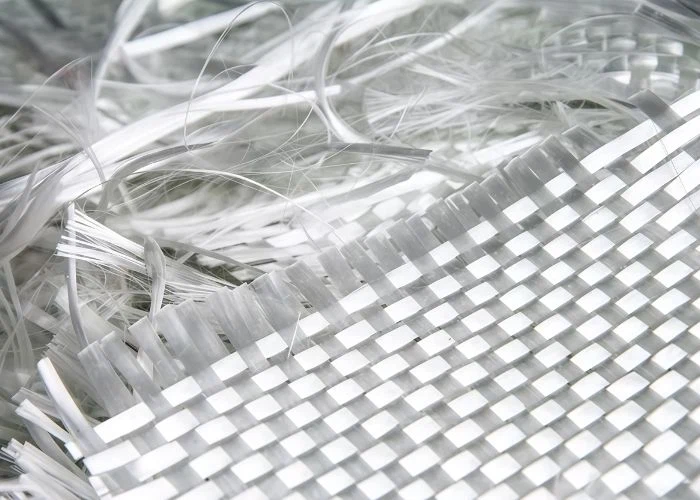
Glass-reinforced plastics are made from a polymer matrix combined with glass fibers, with the polymer holding the shape and transferring load while the glass reinforcement increases stiffness, strength, creep resistance, and dimensional stability.
The polymer matrix can be thermoplastic or thermosetting, and the reinforcement may consist of short fibers, long fibers, woven glass cloth, or continuous strands.
Glass-filled thermoplastics such as PA-GF, PEEK-GF, PPS-GF, and PP-GF are widely used where an unfilled polymer does not provide sufficient stiffness. Fiber content is often specified as a percentage by weight, and increasing reinforcement generally raises modulus while reducing thermal expansion. Fiber orientation, however, can create directional properties, particularly in molded components.
For CNC machining, reinforcement creates a clear trade-off. The increased stiffness can improve geometric stability and reduce deflection, but exposed glass fibers are abrasive and can wear cutting edges rapidly. Worn tools then increase cutting force and heat, so carbide tooling, controlled finishing passes, and tool-life monitoring are important when machining reinforced plastics.
What Are Bioplastics Made Of?
Bioplastics are made from polymers that are bio-based, biodegradable, or both, and renewable feedstocks can include sugarcane, corn, starch, cellulose, plant oils, and biologically produced chemical intermediates. The term “bioplastic” therefore does not describe one specific chemistry.
A major distinction is required between feedstock origin and end-of-life behavior. A bio-based plastic contains renewable carbon, while a biodegradable plastic has a molecular structure that microorganisms can break down under suitable conditions. A material may satisfy one definition without satisfying the other.
For engineers, the term “bioplastic” is therefore only a starting point. Material selection still requires evaluation of actual polymer type, mechanical strength, temperature capability, moisture sensitivity, dimensional stability, manufacturing compatibility, available stock forms, and environmental requirements.
Bio-Based Plastics
Bio-based plastics contain carbon derived partly or entirely from renewable biological resources rather than exclusively from fossil feedstocks. Bio-based polyethylene is a useful example because plant-derived ethanol can be converted into ethylene and then polymerized into PE.
Chemically, the resulting bio-based polyethylene can belong to the same polymer family as petroleum-derived polyethylene. Its renewable origin does not automatically make it biodegradable, and its mechanical and manufacturing behavior is still controlled by the polymer structure and grade.
Other bio-based materials use lactic-acid chemistry, cellulose, starch, plant oils, or fermentation-derived intermediates. When replacing a conventional plastic with a bio-based alternative, engineers should therefore compare actual material data rather than assuming equivalent performance based only on sustainability claims.
Biodegradable Plastics
Biodegradable plastics contain polymer structures that microorganisms can break down under appropriate environmental conditions, but degradation rate depends on temperature, humidity, oxygen, microbial activity, material thickness, and disposal environment.
PLA is a well-known example associated with plant-derived lactic-acid chemistry, while PHA polymers can be produced biologically. However, a plastic labeled biodegradable may require industrial composting conditions rather than normal outdoor exposure.
Biodegradability should therefore be considered together with functional requirements. A component still needs suitable strength, heat resistance, dimensional stability, chemical compatibility, shelf life, and manufacturing performance during its intended service life before end-of-life behavior becomes relevant.
How Does Plastic Composition Affect Manufacturing?
Plastic composition directly affects manufacturing because polymer chemistry, crystallinity, reinforcement, fillers, additives, moisture content, and residual stress control stiffness, thermal expansion, cutting heat, chip formation, tool wear, dimensional stability, and surface finish.
This is why the same CNC program should not automatically be used for every plastic grade.
For precision machining, a generic material description such as “nylon” or “PEEK” may not provide enough information. Unfilled, glass-filled, carbon-filled, bearing-grade, flame-retardant, conductive, medical-grade, or food-contact versions of the same polymer can behave differently under identical cutting conditions.
The final machining strategy should therefore consider material grade, stock condition, geometry, tolerance, surface requirement, quantity, and operating environment together rather than treating polymer selection and CNC process planning as separate decisions.
Strength And Rigidity
Strength and rigidity determine how well a plastic component resists cutting force, clamping pressure, vibration, and elastic deformation during machining.
A more rigid material usually holds geometry more easily than a soft material, but greater stiffness does not automatically mean the plastic is easier to machine.
Glass-filled plastics can be stiff but abrasive, acrylic can be rigid but brittle, and high-performance materials such as PEEK can be strong while still requiring careful heat control. Softer plastics such as PE, PP, and PTFE may deform under fixture pressure even when cutting forces are relatively low.
Part geometry also matters. A thick block of PP can be stable during machining, while a thin wall from the same material can deflect significantly. Good fixturing therefore distributes clamping pressure over large areas and supports weak features instead of simply increasing clamp force.
Heat And Chemical Resistance
Heat resistance influences whether a plastic maintains stiffness and dimensions during cutting, while chemical resistance determines whether the material survives coolants, cleaning agents, process fluids, and its final operating environment.
Plastics generally conduct heat much more slowly than metals. As a result, cutting heat remains concentrated near the tool and workpiece. If the cutter becomes dull or the feed is too low, rubbing generates heat that can soften the polymer, smear the surface, form burrs, or create dimensional errors.
Sharp tools and efficient chip formation are therefore essential. Chips should carry heat away from the cutting zone rather than allowing heat to accumulate in the workpiece. Compressed air is often useful for chip evacuation, while any liquid coolant should be checked for compatibility with the specific plastic.
Chemical performance must also be evaluated under real operating conditions because temperature, concentration, stress level, and exposure time can change resistance. A plastic that performs well with a chemical at room temperature may behave differently when exposed at elevated temperature or under continuous mechanical load.
Machinability And Dimensional Stability
Plastic machinability and dimensional stability depend on thermal expansion, stiffness, moisture absorption, internal stress, reinforcement, cutting heat, and the amount of material removed from the original stock.
Precision plastic machining therefore requires more process control than simply copying metal-cutting parameters.
Extruded or compression-molded stock can contain residual stress. Removing a large volume of material from one side changes that stress balance, which may cause warping after roughing or after the part is released from the fixture. Large pockets, thin plates, and asymmetric parts are particularly sensitive.
A staged strategy can reduce this risk. Rough machining leaves finishing allowance, the part is allowed to relax, and final machining is performed after the geometry has stabilized. Stress-relieved stock can also provide better results when tight flatness, parallelism, or positional tolerances are required.
Moisture creates a different dimensional problem in materials such as nylon. A part machined in a dry condition may expand after absorbing moisture, so inspection condition and operating environment should be considered during tolerance planning. PTFE can experience creep under load, while glass-filled materials may remain stiffer but wear tools more quickly.
Thermal expansion must also be considered during inspection. Plastic dimensions can change significantly with temperature compared with metal components. A part measured immediately after warm machining may not represent its stabilized dimensions, so precision inspection should be performed after the component has returned to a controlled temperature.
For CNC plastic parts, successful dimensional control therefore depends on the entire process: material identification, stock condition, stress relief, workholding, tool sharpness, feed and speed, chip removal, thermal control, roughing strategy, finishing sequence, and final inspection.
Conclusion
Plastic is made from much more than one raw material. Its final properties result from a complete chain that begins with petroleum, natural gas, cellulose, or other renewable feedstocks and continues through chemical conversion, polymerization, compounding, and manufacturing. Understanding the differences between feedstocks, monomers, polymer structures, additives, reinforcements, thermal behavior, and dimensional stability helps engineers select the right plastic for actual performance and manufacturing requirements.
At UForProto, we turn engineering plastics into functional prototypes and low-volume parts through CNC plastic machining, vacuum casting, 3D printing, and other prototype manufacturing processes. From material selection and dimensional control to machining, assembly, and surface finishing, we help engineering teams validate plastic part designs and move efficiently from early prototypes to functional, manufacturable components.
FAQs
1.Is Plastic Toxic To The Body?
Plastic is not automatically toxic to the human body. Safety depends on the polymer, additives, degradation products, exposure route, dose, operating temperature, and intended application. Food-contact and medical plastics are selected according to specific regulatory or material requirements, while industrial grades may not be suitable for direct contact. Excessive heating, chemical degradation, or uncontrolled additives can also change exposure risk, so the exact material grade and supplier documentation should be verified.
2.How Plastic Is Made From Petroleum
Plastic is made from petroleum through refining, cracking, monomer production, polymerization, and compounding. Crude oil is refined into useful hydrocarbon fractions such as naphtha, which can be cracked to produce ethylene, propylene, and other chemical intermediates. These molecules are polymerized into long-chain materials such as PE or PP before additives are introduced and the resin is converted into pellets, sheets, rods, molded products, or other stock forms.
3.Is Plastic Made From Chemicals?
Yes. Plastic is made from chemical compounds, with polymers forming the main structure and additives modifying specific properties. Common plastics contain elements such as carbon, hydrogen, oxygen, nitrogen, chlorine, or fluorine depending on the polymer. The word “chemical” does not itself indicate whether a plastic is dangerous, because safety depends on the actual substance, dosage, exposure pathway, temperature, and intended use rather than simply whether something is chemically manufactured.
4.Is Plastic Made From Natural Resources?
Yes. Plastic can be made from natural resources including crude oil, natural gas, cellulose, sugarcane, corn, starch, and plant oils. Conventional plastics rely heavily on fossil-derived hydrocarbon feedstocks, while bio-based materials use renewable carbon sources. Recycled polymer can also replace part of virgin material in some systems. The raw-material source does not alone determine strength, recyclability, biodegradability, temperature resistance, or machining performance.
5.Is Plastic Made From Trees?
Some plastics can be made using tree-derived materials. Wood contains cellulose, a natural polymer that can be purified and chemically modified to produce cellulose-based plastic materials. Trees and other plants can also provide sugars or biomass that are converted into chemical feedstocks for certain bio-based polymers. Most conventional PE, PP, PVC, PET, and PS products, however, are not directly made from wood, and plant-based origin does not automatically mean the final plastic is biodegradable.