
The healthcare industry is changing as care becomes more connected, digital, preventive, and increasingly delivered beyond traditional hospitals. For engineers and product-development teams, these changes are also creating new requirements for physical medical devices. Remote monitoring systems, portable diagnostic equipment, home healthcare products, and AI-enabled devices must move from digital concepts into products that people can hold, operate, assemble, and evaluate. In this article, I examine seven healthcare industry trends and explain how they are influencing medical device development, plastic prototyping, and the physical validation of new healthcare products.
Why Is the Healthcare Industry Changing?
The healthcare industry is not changing because of one technology alone. Aging populations, workforce pressure, healthcare costs, digital tools, changing patient expectations, and the movement of care beyond hospitals are developing at the same time. Together, these forces are changing how healthcare is delivered and what kinds of technologies and physical products healthcare organizations need.
Deloitte’s 2026 Global Health Care Outlook identifies care-model transformation, workforce and productivity challenges, technology, remote monitoring, and preventive care among important forces affecting healthcare systems. Its survey found that 49% of non-US health-system executives saw potential savings from technology-enabled patient engagement and remote monitoring.
One visible change is the movement of care from centralized hospitals toward outpatient facilities, community settings, and the home. Virtual care can deliver part of that transition digitally, but many healthcare activities still require a physical interface between technology, clinicians, and patients.
A remote monitoring platform, for example, may depend on wearable sensors, handheld devices, charging equipment, housings, displays, and other physical components. Preventive care can similarly increase demand for devices used for screening, measurement, diagnostics, and continuous monitoring.
This is the part of healthcare industry transformation that is particularly relevant to product engineers. Digital innovation does not eliminate physical product development. In many cases, it creates new categories of healthcare hardware that must be designed, prototyped, evaluated, and refined before a final product can be manufactured.
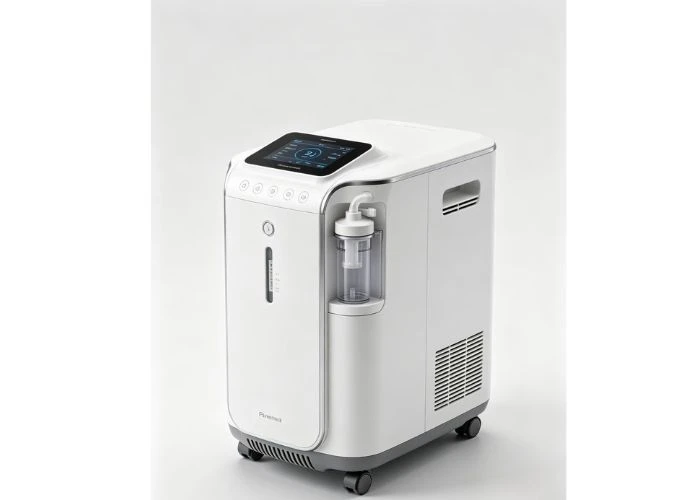
1. Connected Care Is Expanding the Healthcare Industry Beyond Traditional Facilities
Connected care links patients, clinicians, devices, and healthcare data across different environments. As this model expands, medical technology is no longer designed only for controlled clinical settings. More devices must operate in homes, outpatient facilities, rehabilitation environments, and everyday situations where the user may not be a trained healthcare professional.
This shift changes the physical product requirements.
A hospital device may be operated by trained staff under standardized conditions. A home healthcare product may be handled daily by an elderly patient, caregiver, or family member.
That difference affects enclosure size, button position, grip, display visibility, access to connectors, battery replacement, cleaning, and the way components are assembled.
Connected devices can also require more hardware within a limited package. Sensors, antennas, displays, batteries, circuit boards, connectors, and communication modules all compete for internal space.
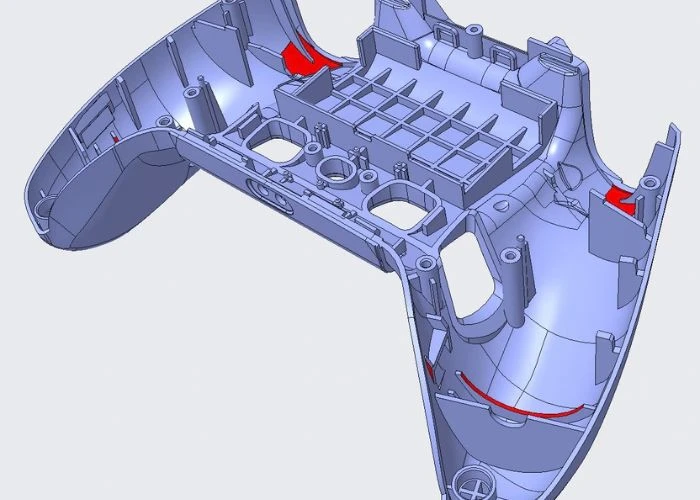
As a result, the exterior shape cannot be considered independently from the internal architecture. Product-development teams need to understand how the housing, internal supports, openings, and user interfaces work together.
For us, this is where a physical prototype becomes more informative than a screen image alone. Engineers can evaluate how the product feels in the hand, how users reach controls, whether components have sufficient space, and whether the overall physical architecture supports the intended use.
2. Remote Monitoring Is Creating New Physical Healthcare Products
Remote patient monitoring is one of the clearest examples of digital healthcare creating demand for physical products. Data may ultimately be analyzed in software or transmitted through a connected platform, but it must first be collected through a device. That makes physical design an important part of the complete monitoring experience.
Remote monitoring can involve portable monitors, wearable products, home diagnostic equipment, measurement devices, charging stations, and other connected hardware.
These products frequently have different design priorities from large stationary hospital equipment.
Portability makes size and weight more important. Repeated home use makes ergonomics, cleaning, durability, and intuitive operation more visible. Battery-powered products introduce internal packaging and access requirements.
The relationship between the device and the patient also becomes more direct.
A housing is no longer simply a protective shell around electronics. Its geometry influences how the user holds the device, understands the controls, reads information, connects accessories, and performs routine tasks.
This means an engineering team may need several physical iterations before the final geometry is convincing.
I see this as an important connection between the broader healthcare industry and plastic prototyping: as care becomes more distributed, product developers need practical ways to turn new healthcare concepts into physical devices that can be reviewed before production decisions are fixed.
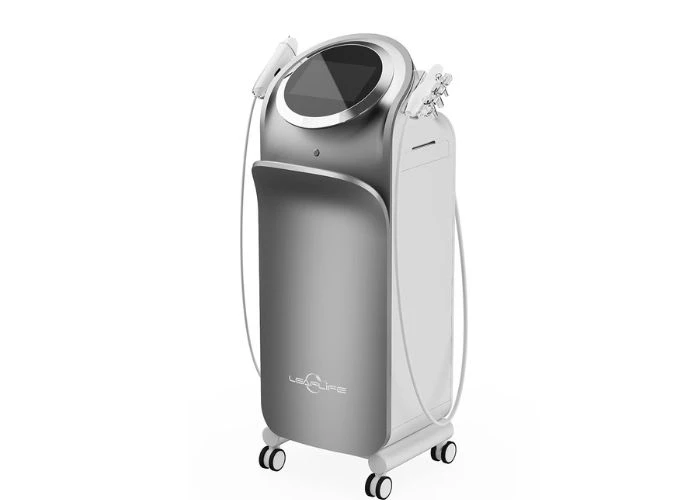
3. AI Is Influencing Both Digital and Physical Healthcare Technology
Artificial intelligence receives significant attention in the healthcare industry, but its influence is not limited to software. When AI is integrated into diagnostic, imaging, monitoring, or decision-support equipment, the digital capability still needs a physical product through which clinicians or patients interact with the technology.
Deloitte’s 2026 Life Sciences Outlook found that 49% of surveyed MedTech executives identified AI-driven diagnostics as a top product-development priority. Half of surveyed MedTech executives also planned to focus on launching new devices or platforms.
This is an important distinction for hardware developers.
An AI algorithm can evolve rapidly through software updates, while the physical device surrounding it may require CAD revisions, prototype parts, assembly checks, surface development, and manufacturing review.
A new sensor may change an opening. A different display may change the front housing. A larger battery can affect internal supports and overall dimensions. Additional cooling or connectivity requirements can influence the physical architecture.
These changes make hardware iteration part of healthcare technology development.
I therefore do not see AI and physical prototyping as unrelated development paths. When AI becomes part of a physical healthcare device, the hardware still needs to be evaluated as a product that people will hold, see, operate, maintain, and assemble.
4. Healthcare Products Are Moving Closer to the Patient
Healthcare technology increasingly reaches users outside specialist clinical environments. Home care, preventive monitoring, rehabilitation, personal health management, and portable diagnostics can place medical technology directly into everyday life. This shift makes the physical user experience more important because the product may need to communicate its purpose without constant assistance from trained staff.
A device used every day must make sense physically.
The user needs to understand where to hold it, which control to press, where to connect a cable, how to replace or charge a battery, and how to position the device correctly.
For engineers, these are not purely cosmetic decisions.
A button can be electrically correct but physically difficult to reach. A display can fit within the CAD model but appear too small when the complete product is held at the expected viewing distance.
A portable housing may meet internal packaging requirements while still feeling unnecessarily bulky in the user’s hand.
Physical prototypes make these relationships easier to evaluate because the development team can interact with the design at full scale.
This does not replace formal human-factors engineering or usability validation. Instead, plastic prototyping can provide physical development models that help teams refine geometry and interaction before later validation activities.
That distinction is particularly important for medical products, where a prototype used for engineering review should not be confused with a clinically validated or approved medical device.
5. Faster Medical Device Iteration Is Becoming More Important
Healthcare innovation creates opportunities, but medical device development remains a structured process. New concepts have to move from an identified need toward physical designs that can be evaluated and refined. This makes iteration important: a prototype is most useful when it answers a specific development question and gives the team information for the next design revision.
The FDA describes device development as beginning with an unmet medical need, followed by a concept and proof of concept before later development stages. It also emphasizes that device requirements vary according to classification and risk.
For product-development teams, this means early physical prototypes have a different purpose from final regulated products.
Physical Prototypes Help Turn Healthcare Concepts Into Engineering Evidence
A CAD model is essential for product development, but some design relationships become much easier to understand when the part exists physically.
An early prototype may reveal that a housing is too large, an opening is difficult to access, a button position feels unnatural, or an internal component does not leave enough assembly space.
The team can then change the CAD and manufacture another iteration.
Formlabs similarly describes rapid prototyping as part of an iterative medical-device development process in which designs are revised and evaluated through physical prototypes.
The key is not simply making prototypes quickly. The prototype needs to answer the right question.
An appearance model may be used to review size, form, color, texture, and visual details. A functional prototype may need to evaluate mechanical behavior, interfaces, or assembly relationships.
This is why we treat plastic prototyping as an engineering-development tool rather than simply a way to create a model of the CAD file.
6. Healthcare Industry Innovation Requires Different Prototype Manufacturing Routes
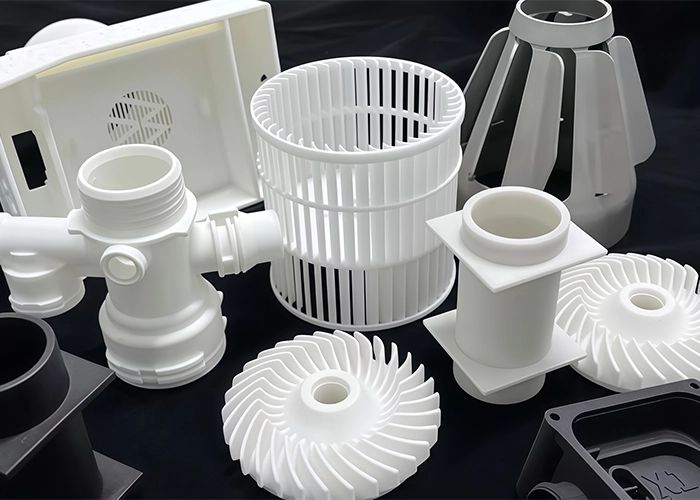
No single prototype manufacturing process fits every healthcare device. The correct route depends on what the engineering team needs to learn from the prototype. Geometry, actual material behavior, surface quality, quantity, transparency, mechanical requirements, and assembly all influence whether we use CNC plastic machining, SLA, SLS, vacuum casting, or a combination.
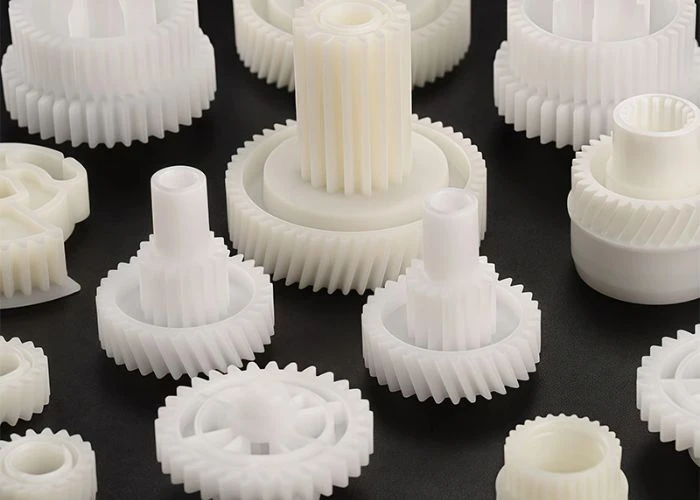
For parts that need to represent real engineering-plastic behavior, CNC plastic machining can manufacture prototypes directly from materials such as ABS, PC, PMMA, POM, PP, PA, PPS, or other available engineering-plastic stock.
This can be useful for housings, structural components, transparent parts, and interfaces where the actual plastic material contributes to the engineering evaluation.
SLA provides a different type of value. It is useful when a project needs fine details, smooth surfaces, complex geometry, or fast design iterations.
SLS can be useful for nylon components, complex internal geometry, brackets, clips, and functional structures that benefit from powder-bed printing.For medical enclosure projects where the manufacturing route is less clear, we discuss the decision in more detail in our guide to 3D printing vs CNC machining for medical device enclosures.
Vacuum casting can support projects that need multiple similar prototype parts after a design has reached a more stable condition.
Protolabs also positions additive manufacturing as a tool for medical-device product development and rapid prototyping, while Formlabs highlights iterative development and different 3D printing processes for different medical applications.
I would not choose one of these processes simply because a project belongs to the healthcare industry. The manufacturing route should be selected according to the specific evidence the prototype must provide.
That prevents a common development mistake: choosing the technology first and then trying to make every prototype requirement fit the process.
7. Complete Prototype Builds Are Becoming More Valuable in Healthcare Product Development
Many healthcare products are not single plastic parts. A physical device can contain housings, covers, transparent components, buttons, internal supports, fasteners, displays, customer-supplied electronics, and other elements. As the design matures, evaluating these components together can reveal relationships that cannot be understood from isolated prototype parts alone.
A housing may look correct by itself but create an unexpected relationship with the display or internal support after assembly.
A transparent cover may need to align with a painted housing. A button can have the correct geometry as an individual component but feel different once installed into the complete prototype.
For this reason, some development projects move naturally from individual prototype parts toward complete physical builds.
Different components do not necessarily need the same manufacturing process. An outer cosmetic housing may use SLA or CNC machining, an internal nylon bracket may use SLS, and transparent components may require CNC machining or another suitable prototype route.
Surface finishing also becomes part of the development result when the team needs to evaluate a more production-like appearance.
Painting, silk screening, UV-related finishing, electroplating, and other treatments can change how a prototype communicates the intended product design.
At this stage, the goal is still engineering and product-development evaluation. A mechanically assembled healthcare prototype should not be represented as proof of clinical performance, regulatory compliance, electrical safety, or complete-device functionality unless those requirements have been separately validated by the responsible qualified parties.
What Does Healthcare Industry Innovation Mean for Prototype Manufacturing?
The seven trends above point to one manufacturing conclusion: faster healthcare innovation does not simply require prototypes to be produced faster. Product-development teams need prototypes that answer increasingly specific questions about physical size, user interaction, material behavior, appearance, internal packaging, assembly, and the relationship between multiple components.
For a very early concept, a fast 3D printed model may provide enough information to change the overall geometry.
At another stage, engineers may need a CNC-machined part in the intended engineering plastic because material behavior or a critical mechanical interface has become important.
Later, a more complete prototype may combine several manufacturing processes, surface finishing, and assembly so that the development team can evaluate the product as a physical system.
This is why I see prototype manufacturing as part of an iterative development loop.
The CAD defines the current engineering intent. The physical prototype makes that intent tangible. The engineering team evaluates what the prototype reveals, and the next CAD revision incorporates what was learned.
The manufacturing process should support that loop rather than force every development question into the same technology.
For healthcare product teams, this approach also creates a useful boundary between prototype evidence and final product evidence. A prototype can help engineers identify design issues and refine a product, while formal medical-device validation and regulatory requirements remain separate responsibilities.
How We Support Healthcare Product Development at UForProto
As healthcare technology moves from concept toward a physical device, engineering teams need manufacturing support that can follow different prototype requirements. At UForProto, we work as a direct plastic prototype manufacturer rather than a trading company, focusing on the physical plastic parts and assemblies used during product development.
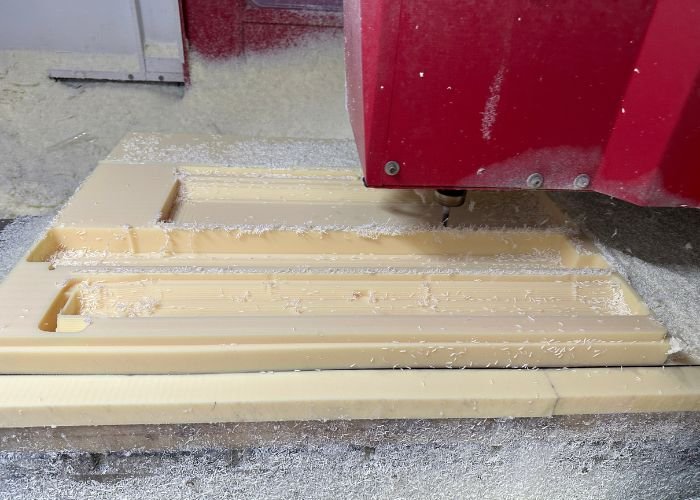
Our capabilities include CNC plastic machining, SLA and SLS 3D printing, vacuum casting, surface finishing, and complete prototype assembly.
For healthcare projects, this can include equipment housings, covers, transparent plastic components, buttons, internal structural parts, brackets, cosmetic parts, and multi-component prototype builds.
I do not assume that every component should use the same process.
If actual engineering plastic is important, CNC machining may be appropriate. If rapid geometry iteration or cosmetic detail is the priority, SLA may provide a better route. SLS can support complex nylon components, while vacuum casting may be considered when several similar prototype parts are required.
We can also coordinate surface finishing and mechanical prototype assembly when the development team needs to review a more complete physical product.
Our role is prototype manufacturing. We do not treat this work as clinical testing, regulatory approval, or complete medical-device functional validation.
When requesting a manufacturing review, engineers and purchasing teams can provide CAD files, drawings, quantity, material requirements, critical dimensions, surface requirements, prototype purpose, and relevant assembly information.
Conclusion
The healthcare industry is becoming more connected, distributed, technology-driven, and focused on new models of care. These changes are creating physical product-development challenges alongside digital innovation. Remote monitoring, portable devices, AI-enabled healthcare equipment, and patient-facing products still require engineers to evaluate geometry, materials, interfaces, appearance, and assembly. Plastic prototyping, 3D printing, CNC plastic machining, finishing, and prototype assembly can provide different forms of physical evidence throughout that development process. For a healthcare product project, engineers and purchasing teams can send UForProto their CAD files, drawings, material requirements, quantities, and assembly information for manufacturing review and quotation.
FAQs
1. What Is the Healthcare Industry?
The healthcare industry is the broad ecosystem involved in delivering healthcare products and services. It includes healthcare providers, hospitals, medical technology, pharmaceutical and life-sciences companies, diagnostics, digital health, insurance and payment systems, and supporting organizations. For product engineers, the MedTech and healthcare-device segments are especially relevant because they turn clinical and user needs into physical and digital products.
2. What Are the Major Trends Shaping the Healthcare Industry?
Major trends include connected care, remote patient monitoring, care moving beyond hospitals, preventive healthcare, digital transformation, AI, and increasing pressure to improve healthcare productivity. The impact varies by market and organization, but these trends are changing both healthcare delivery and the technologies used by clinicians and patients.
3. How Is Technology Changing the Healthcare Industry?
Technology is connecting patients and clinicians, enabling remote monitoring, supporting diagnostic and workflow decisions, and moving some care activities outside traditional facilities. For medical-device developers, these changes can also create new requirements for sensors, portable equipment, user interfaces, housings, internal components, and complete physical products.
4. Why Is Plastic Prototyping Important in Medical Device Development?
Plastic prototyping allows engineers to turn CAD into physical parts that can be evaluated for size, geometry, access, appearance, interfaces, and assembly. Different prototypes can answer different development questions. They support engineering iteration, but a prototype should not automatically be treated as evidence of clinical performance or regulatory compliance.
5. Which Prototype Manufacturing Processes Are Used for Healthcare Devices?
Common routes include CNC plastic machining and several 3D printing processes, while vacuum casting can also be useful for selected low-volume prototype requirements. The appropriate process depends on material, geometry, surface quality, quantity, and the engineering purpose of the prototype rather than simply the fact that the product belongs to the healthcare industry.
6. What Should Engineers Send for a Healthcare Product Prototype Quote?
I recommend providing 3D CAD files, 2D drawings when available, required quantity, preferred material or material requirements, critical dimensions, surface-finish requirements, prototype purpose, and relevant assembly information. If customer-supplied components must fit the prototype, their CAD or key interface information can also help us review the manufacturing requirements more accurately.