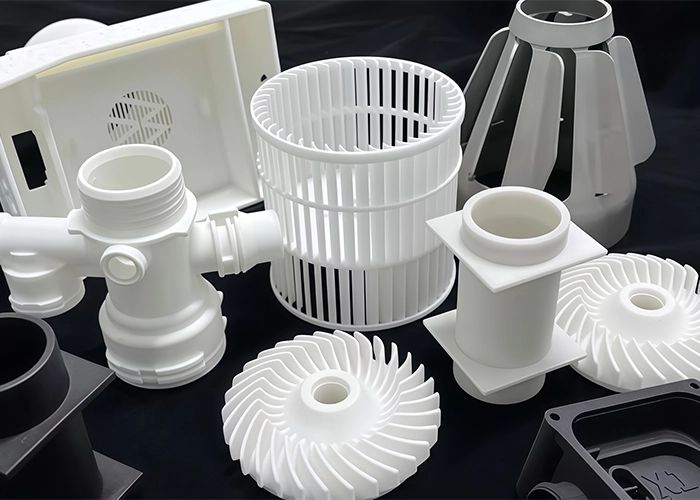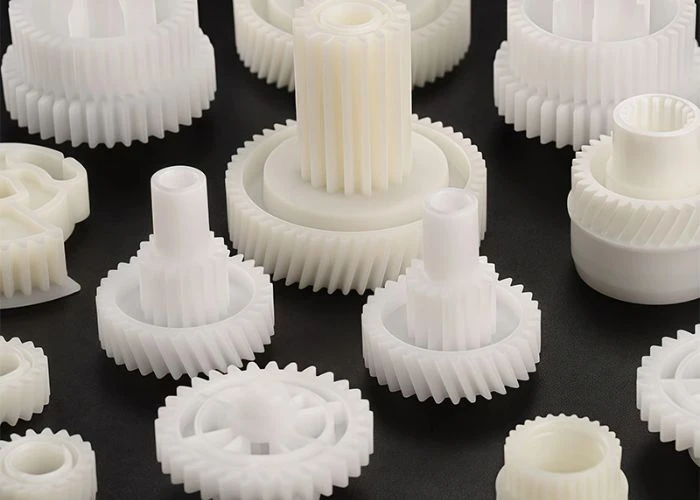

When engineers compare polyethylene (PE) and polypropylene (PP) , the discussion often begins with material properties. However, successful material selection rarely starts with a datasheet. In most prototype projects, the more important question is what the prototype is expected to validate before production. Whether the goal is assembly verification, functional testing, user evaluation, or manufacturing preparation, the prototype should provide the engineering evidence needed to support the next decision. That is why experienced development teams usually treat material selection as part of the overall plastic prototyping strategy rather than as an isolated comparison between two plastics.
Understanding Why PE and PP Are Often Compared
Material comparisons rarely begin because engineers want to compare plastics. Instead, they begin because a product requires a balance of mechanical performance, manufacturability, cost, and validation efficiency. PE and PP frequently appear together because both can satisfy many of these initial requirements. The real differences usually become clear only after prototype development progresses beyond the CAD model and into physical evaluation.
Similar Materials, Different Engineering Decisions
At the beginning of a project, PE and PP often appear interchangeable because both are widely used for functional plastic components. Engineers reviewing CAD models may find that either material seems capable of meeting the initial design requirements. As a result, the final material decision is frequently postponed until physical prototypes are available.
Once prototype manufacturing begins, however, the discussion usually changes. Engineers start evaluating how the product behaves during assembly, repeated operation, user interaction, and manufacturing. These observations often reveal practical differences that cannot be identified through CAD models alone. Instead of asking which material has the better specification, development teams begin asking which material provides more reliable engineering evidence for the next stage of the project.
Looking Beyond Material Datasheets
Material datasheets are valuable references, but they describe standardized laboratory conditions rather than complete products. They provide tensile strength, density, and thermal properties, yet they cannot predict how a prototype behaves after machining, assembly, inspection, or repeated use. For engineers responsible for product development, these real-world observations often carry more weight than published specifications.
This is why prototype manufacturing plays such an important role in material selection. Building a physical prototype allows teams to evaluate dimensional consistency, assembly quality, user interaction, and manufacturing feasibility under realistic conditions. These engineering observations frequently determine the final material decision far more effectively than comparing specification tables alone.
Comparing Prototype Objectives Instead of Material Properties
| Prototype Objective | Why PE May Be Selected | Why PP May Be Selected | Prototype Validation Focus |
| Assembly verification | Evaluate fit and interaction | Compare assembly behaviour | Complete product assembly |
| Functional testing | Assess performance under intended conditions | Compare functional behaviour | Engineering validation |
| User evaluation | Observe handling and usability | Compare user experience | Physical product reviews |
| Manufacturing preparation | Verify machining and prototype quality | Evaluate production readiness | Manufacturing feedback |
Prototype Validation Shapes Material Decisions
Material selection rarely remains unchanged throughout product development. As prototype validation progresses, engineering teams gather practical information that cannot be obtained from CAD models or laboratory data alone. Assembly performance, functional behaviour, and user interaction often become the factors that determine whether PE or PP is the better choice for the next stage of development.
Assembly Validation Provides the First Engineering Evidence
Prototype evaluation usually begins with individual components, where both PE and PP may appear equally capable of meeting dimensional requirements. At this stage, engineers focus on machining accuracy and whether parts match the original CAD design. However, a product is rarely used as a collection of separate components. Its real performance only becomes clear after the parts are assembled into a complete system.
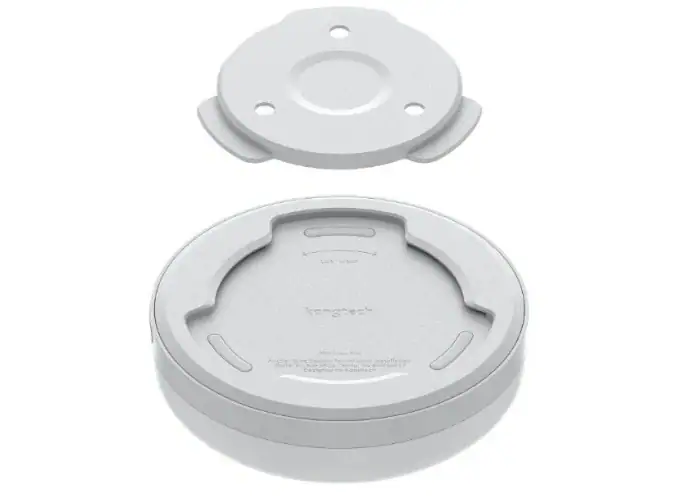
Assembly validation often reveals engineering issues that are impossible to identify beforehand. Contact pressure between mating parts, fastening methods, tolerance accumulation, and repeated installation can all influence how a material performs in practice. These observations frequently reshape material priorities because they reflect how the product behaves under realistic operating conditions rather than under theoretical assumptions.
Functional Testing Refines Engineering Priorities
Once a prototype operates under realistic conditions, engineering priorities often change. Initial discussions may have focused on whether the part could be manufactured accurately, but functional testing introduces new questions. Engineers begin evaluating repeated movement, structural stability, interaction with neighbouring components, maintenance requirements, and overall product reliability.
At this stage, prototype validation shifts from confirming geometry to validating engineering assumptions. Development teams are no longer comparing two plastics in isolation—they are evaluating which material enables the product to perform more consistently throughout its intended application. These practical observations frequently provide stronger guidance than any published material specification.
User Evaluation Completes Prototype Validation
Successful products are evaluated by more than engineering teams alone. Designers, manufacturing engineers, purchasing specialists, installers, maintenance personnel, and end users may all review the same prototype from different perspectives. Although technical performance remains important, user experience often influences the final material decision in ways that laboratory testing cannot predict.
For example, two prototypes may achieve similar engineering performance while creating very different impressions during handling, assembly, cleaning, or routine operation. Observing these differences allows development teams to balance engineering requirements with real-world usability. Including user evaluation in prototype validation therefore helps reduce uncertainty before production decisions are made.
Comparison Table
How Prototype Validation Influences Material Decisions
| Validation Stage | Engineering Question | Typical Evaluation | Decision Outcome |
| Assembly validation | Do the parts work together correctly? | Fit, fastening, tolerance stack-up | Initial material confidence |
| Functional testing | Can the product perform reliably? | Movement, loading, durability | Engineering optimisation |
| User evaluation | Does the product meet practical expectations? | Handling, usability, maintenance | Final material selection |
Material Selection Evolves Throughout Product Development
Selecting PE or PP is rarely a one-time decision made at the beginning of a project. As development progresses, prototype objectives become more specific, additional stakeholders become involved, and manufacturing considerations become increasingly important. Instead of asking which material is universally better, experienced engineering teams continually evaluate whether the current material still supports the next development milestone.
Different Validation Goals Require Different Materials
A prototype is rarely expected to answer only one engineering question. During concept development, the primary objective may be confirming overall geometry and assembly. As the project moves forward, attention often shifts toward functional behaviour, long-term performance, manufacturing readiness, or customer evaluation. Although the product itself has not changed, the information required from the prototype has evolved.
Because validation objectives continue to change, it is common for development teams to evaluate more than one candidate material during the same project. This should not be viewed as uncertainty. Instead, it reflects a structured engineering process in which each prototype provides evidence for a different development decision. The most appropriate material is therefore the one that supports the current validation objective rather than the one that appears strongest on paper.
Cross-Functional Evaluation Improves Material Decisions
As projects approach production, prototype evaluation expands beyond the engineering department. Industrial designers review appearance and ergonomics, manufacturing engineers assess process capability, quality teams examine dimensional consistency, purchasing specialists evaluate supply considerations, and customers may provide direct feedback through pilot evaluations. Each group views the same prototype from a different perspective.
Because every department focuses on different priorities, material selection naturally becomes a multidisciplinary decision rather than a simple technical comparison. A successful prototype enables all stakeholders to evaluate the same physical product, discuss trade-offs using shared evidence, and gradually build confidence before production tooling is approved. This collaborative approach reduces engineering changes later in the development cycle.
Manufacturing Strategy Influences Material Selection
Material selection should always be considered alongside manufacturing strategy. Even when PE and PP appear equally suitable during design reviews, the manufacturing process itself often provides additional engineering insight. Producing prototypes through CNC plastic machining allows engineers to evaluate production-intent materials with realistic dimensional accuracy and machining quality, while prototype assembly confirms how those materials perform within a complete product.
As development continues, many projects also benefit from low-volume prototype builds. Producing several identical samples enables engineering teams to compare consistency, collect broader user feedback, and verify assembly repeatability before investing in production tooling. Rather than separating material selection from manufacturing, combining both activities creates a more reliable foundation for engineering decisions.
Comparison Table
How Material Decisions Evolve During Product Development
| Development Stage | Primary Prototype Objective | Recommended Manufacturing Method | Material Decision Focus |
| Concept validation | Confirm geometry and basic feasibility | 3D Printing or CNC Plastic Machining | Initial material screening |
| Engineering validation | Verify assembly and functional performance | CNC Plastic Machining | Compare candidate materials |
| Product evaluation | Customer review and prototype assembly | CNC + Prototype Assembly | Confirm engineering suitability |
| Pre-production validation | Low-volume sample production | CNC + Low-Volume Manufacturing | Final material selection |
Managing Material Changes During Development
Changing materials during prototype development is not a sign of poor planning. More often, it indicates that prototype validation has provided new engineering evidence. As additional testing is completed and more stakeholders participate in product reviews, engineering teams gain a clearer understanding of which material best supports product performance, manufacturing efficiency, and long-term development goals.
Engineering Priorities Continue to Change
Early in development, engineers often focus on proving that the concept works. As the project matures, attention shifts toward durability, repeatability, maintenance, production readiness, and long-term reliability. Because these priorities evolve, the material that appeared suitable at the concept stage may no longer provide the best engineering value later in the project.
Manufacturing Feedback Supports Better Decisions
Prototype manufacturing often exposes issues that cannot be predicted during design. Machining quality, achievable tolerances, inspection results, assembly efficiency, and secondary operations all provide valuable engineering feedback. Instead of treating manufacturing as the final step, successful development teams use manufacturing itself as part of the decision-making process.
Prototype Evidence Reduces Engineering Risk
The greatest value of a prototype is not proving that the design works exactly as expected. Its real value lies in revealing unexpected issues before production tooling is approved. Assembly interference, inconsistent user feedback, dimensional variation, and manufacturing challenges are far easier to address during prototype development than after production begins. Every prototype therefore becomes an opportunity to reduce engineering risk through practical evidence rather than assumptions.
Engineering Decision Guide
Common Mistakes When Comparing PE and PP
| Common Mistake | Why It Creates Problems | Better Engineering Approach |
| Choosing materials before defining prototype objectives | The prototype may answer the wrong engineering question | Define validation goals before selecting materials |
| Comparing only material properties | Datasheets cannot predict real product performance | Evaluate complete prototype behaviour |
| Assuming one prototype is enough | A single sample rarely represents production conditions | Use additional samples when engineering confidence is required |
| Ignoring manufacturing strategy | Manufacturing strongly influences engineering feedback | Consider machining, assembly, and inspection together |
| Locking the material too early | Development priorities naturally evolve | Keep material selection flexible until sufficient validation is completed |
How Does UForProto Support Better Material Decisions?
Successful material selection is not achieved by recommending one plastic over another. It comes from understanding the prototype objective, selecting the appropriate manufacturing process, and generating reliable engineering evidence before production begins. At UForProto, we treat material selection as part of the complete plastic prototyping workflow, helping customers reduce uncertainty through practical validation rather than theoretical comparison.
Planning Prototype Validation Before Manufacturing
Before recommending PE, PP, or any other engineering plastic, we first review what the prototype is expected to achieve. Some projects focus on assembly verification, while others require functional testing, customer demonstrations, pilot production, or manufacturing evaluation. Understanding these objectives allows us to recommend a prototype strategy that supports engineering decisions instead of simply producing parts.
By defining validation priorities before manufacturing begins, engineering teams can reduce unnecessary prototype revisions, improve communication, and ensure that every prototype contributes meaningful information to the next stage of development. This approach also helps avoid selecting materials based solely on previous experience or specification tables.
Manufacturing Prototypes with Production-Intent Materials
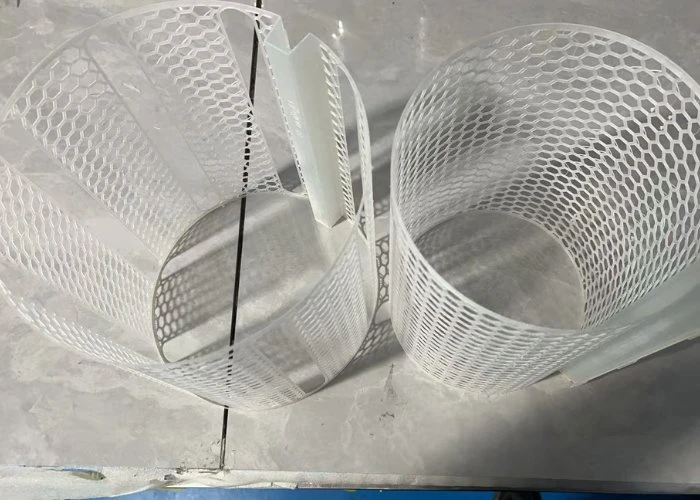
Selecting the right material is only meaningful if the prototype accurately represents the intended product. Through CNC plastic machining, we manufacture prototype parts directly from production-intent engineering plastics whenever practical. This enables engineers to evaluate dimensional accuracy, machining quality, assembly performance, and functional behaviour under conditions that closely resemble future production.
For projects that require multiple samples, cosmetic prototypes, or customer evaluation units, prototype assembly and low-volume manufacturing extend the validation process beyond individual components. Producing several consistent prototypes allows development teams to compare repeatability, collect broader feedback, and build confidence before investing in production tooling.
Supporting the Next Engineering Decision
A prototype should do more than confirm that a design can be manufactured. It should provide the information needed to determine whether the project is ready for further investment. Whether the next step involves design refinement, customer approval, tooling, or low-volume production, every prototype should reduce uncertainty and support a more confident engineering decision.
At UForProto, our objective is not simply to manufacture plastic parts. We aim to help customers obtain practical engineering evidence through prototype manufacturing, assembly validation, and production-oriented development, enabling smoother transitions from concept to production.
Conclusion
Selecting between polyethylene (PE) and polypropylene (PP) is not about finding the material with the best specifications, but about choosing the one that best supports your current prototype objectives. As product development progresses, prototype validation provides practical engineering evidence that helps refine material decisions. By combining plastic prototyping, CNC plastic machining, and production-oriented validation, engineering teams can reduce development risk and move toward production with greater confidence. The right material is the one that enables better engineering decisions at the right stage of product development.
FAQs
1. Is polyethylene always a better prototype material than polypropylene?
No. Neither material is universally better. The appropriate choice depends on what the prototype is expected to validate. Assembly performance, functional behaviour, manufacturing objectives, and user evaluation may all influence which material provides the most valuable engineering evidence.
2. Why do engineering teams sometimes prototype the same product in both PE and PP?
Using two materials is a structured engineering strategy rather than a sign of uncertainty. Different prototype materials allow teams to compare validation results, reduce development risk, and make more informed decisions before production tooling is approved.
3. When should the final material decision be made?
Initial material selection usually happens before prototype manufacturing, but the final engineering decision is often confirmed after assembly validation, functional testing, and product evaluation have been completed.
4. Does CNC plastic machining improve material evaluation?
Yes. Manufacturing prototypes from production-intent materials enables engineers to evaluate dimensional accuracy, machining quality, assembly performance, and functional behaviour under realistic engineering conditions.
5. Why is prototype assembly important during material selection?
Many engineering issues become visible only after components are assembled into a complete product. Prototype assembly helps engineers evaluate contact behaviour, tolerance accumulation, fastening methods, and interaction between components that cannot be observed from individual parts.
6. Can prototype validation reduce development risk before production?
Yes. Prototype validation provides practical engineering evidence before production tooling is approved. By confirming assembly, functionality, manufacturability, and user expectations early, development teams can reduce costly engineering changes later in the product lifecycle.