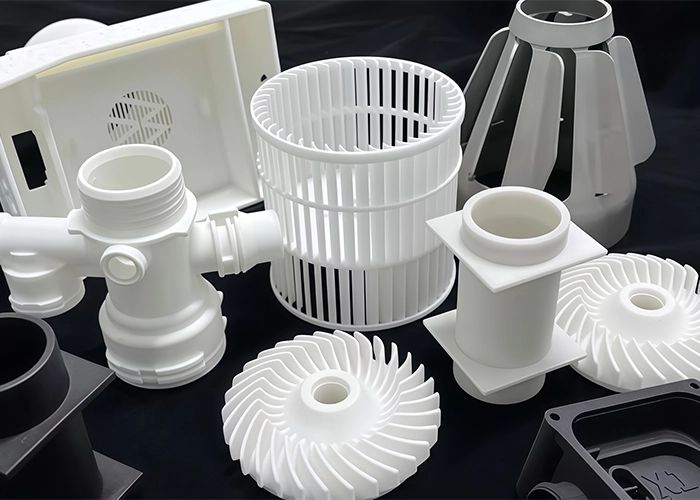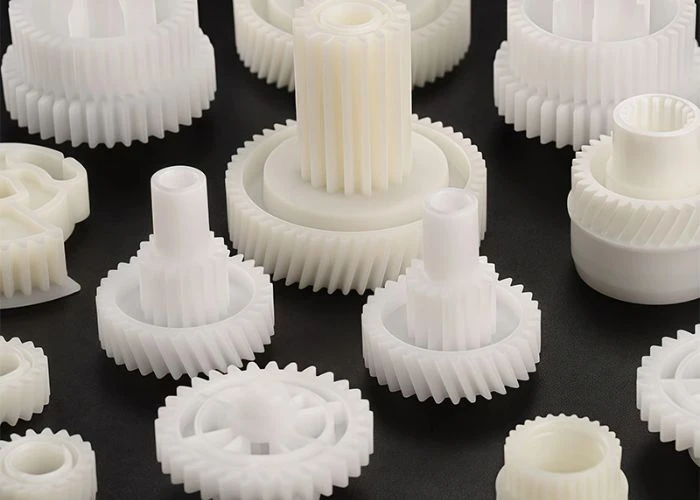

As product development progresses, engineering teams often reach a stage where a single prototype is no longer sufficient, yet production tooling is still too early. At this point, the challenge is no longer creating one functional part but producing multiple consistent samples for design reviews, customer evaluation, assembly testing, and market validation. Vacuum casting bridges this gap by delivering small batches of production-like plastic parts without the cost and lead time of injection molding. As part of a complete plastic prototyping workflow, it enables faster development decisions while reducing investment before production begins.
Understanding Where Vacuum Casting Fits
Every manufacturing process serves a different purpose during product development. CNC plastic machining is ideal for high-precision prototype parts, 3D printing accelerates early concept validation, and injection molding supports mass production. Vacuum casting fills the development stage between these processes by providing multiple high-quality plastic samples before production tooling becomes economically practical.
Bridging the Gap Between Prototypes and Production
Early prototypes are usually produced to verify basic dimensions, assembly relationships, and overall product concepts. As development progresses, however, more stakeholders become involved. Engineering teams may require functional test samples, purchasing departments may request evaluation parts, marketing teams may prepare exhibition models, and customers often need multiple units for field trials. At this stage, producing one highly finished prototype is no longer enough. Vacuum casting allows development teams to manufacture several identical samples that share the same geometry, surface quality, and overall appearance, providing a more reliable basis for technical evaluation before production tooling is approved.
Why Small-Batch Consistency Matters
One of the greatest advantages of vacuum casting is not simply producing more parts—it is producing parts that closely resemble one another. Consistency becomes increasingly important when multiple teams evaluate the same product, compare different design revisions, or conduct assembly and usability testing. Samples manufactured from the same silicone mold provide a common reference for engineering discussions, making product feedback more objective and reducing uncertainty during development. This level of consistency is difficult to achieve when every prototype is manufactured independently using different setups or finishing processes.
Choosing the Right Process at Different Development Stages
| Development Stage | Recommended Process | Primary Objective |
| Early concept validation | 3D Printing | Quickly verify design ideas |
| Functional prototype | CNC Plastic Machining | High precision and functional testing |
| Small-batch validation | Vacuum Casting | Multiple consistent prototype samples |
| Mass production | Injection Molding | High-volume manufacturing with production tooling |
Building Consistent Prototype Samples
The quality of a vacuum casting project depends on much more than the casting process itself. Every stage—from producing the master pattern to manufacturing the silicone mold and casting the final parts—affects the accuracy, appearance, and consistency of the finished samples. By controlling each step carefully, engineers can produce small batches that closely represent the intended product while supporting reliable design reviews, assembly validation, and customer evaluation.
Creating a High-Quality Master Pattern
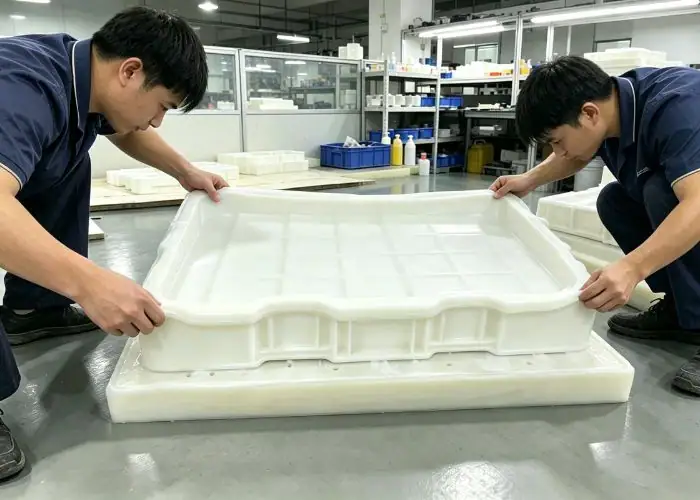
Every successful vacuum casting project begins with a precise master pattern. Since the silicone mold reproduces every detail of the master, any dimensional deviation, machining mark, polishing defect, or surface imperfection may appear repeatedly on every cast part. For this reason, the quality of the master pattern has a direct influence on the consistency of the final batch. Depending on the geometry, tolerance requirements, and cosmetic expectations of the project, the master pattern is typically produced through CNC plastic machining or high-resolution 3D printing, followed by polishing, painting, or texture finishing when required.
Producing Silicone Molded Parts
After the master pattern has been approved, a silicone mold is created to reproduce its geometry. Polyurethane resin is then poured into the mold under vacuum conditions, allowing the material to flow into fine features while minimizing trapped air bubbles. This process captures complex details, thin walls, and cosmetic surfaces more effectively than many rapid manufacturing methods. Because every part is produced from the same mold, development teams receive samples with consistent geometry and appearance, making product evaluation more reliable.
Maintaining Appearance and Dimensional Consistency
Producing multiple parts is only valuable if those parts provide a consistent basis for evaluation. In prototype development, engineers often compare assembly quality, cosmetic appearance, ergonomics, and functional performance across several samples. Variations between individually manufactured prototypes can introduce unnecessary uncertainty during these evaluations. Vacuum casting minimizes these differences by using a shared master pattern and silicone mold, enabling engineering teams to focus on product performance instead of sample-to-sample variation. This consistency is one of the main reasons why vacuum casting is widely used before production tooling is approved.
Master Pattern Quality vs. Final Part Quality
| Project Stage | Influence on Final Samples | Engineering Focus |
| Master pattern | Determines dimensional accuracy and surface quality | Precision machining and finishing |
| Silicone mold | Replicates geometry and fine details | Mold quality and repeatability |
| Vacuum casting | Produces multiple consistent parts | Stable casting process |
| Surface finishing | Improves appearance and presentation | Cosmetic quality and customer evaluation |
Comparing Vacuum Casting with Other Prototype Processes
No single manufacturing process is suitable for every stage of product development. Vacuum casting, 3D printing, CNC plastic machining, and injection molding each solve different engineering challenges. Understanding how these processes compare helps development teams select the most appropriate manufacturing method based on prototype objectives, required quantities, appearance expectations, and production plans.
Vacuum Casting vs. 3D Printing
3D printing is often the preferred choice during the earliest stages of product development because it allows engineers to verify concepts quickly and make design changes with minimal preparation. Vacuum casting becomes more valuable once the design is relatively stable and multiple identical samples are required. Compared with individually printed parts, vacuum-cast components generally provide more consistent surface quality, appearance, and dimensional repeatability. This makes vacuum casting particularly suitable for customer demonstrations, design reviews, pilot testing, and pre-production evaluation, where consistency across several samples is more important than producing a single prototype as quickly as possible.
Vacuum Casting vs. CNC Plastic Machining
CNC plastic machining and vacuum casting are often complementary rather than competing processes. CNC machining excels at producing highly accurate functional components, complex engineering features, and premium master patterns. Vacuum casting, on the other hand, is more efficient when the project requires multiple parts with similar geometry and appearance. In many development projects, engineers first manufacture a precision master pattern using CNC machining and then use vacuum casting to produce consistent prototype batches. Combining these two processes allows teams to achieve both dimensional accuracy and manufacturing efficiency without investing in production tooling too early.
Understanding the Limitations of Vacuum Casting
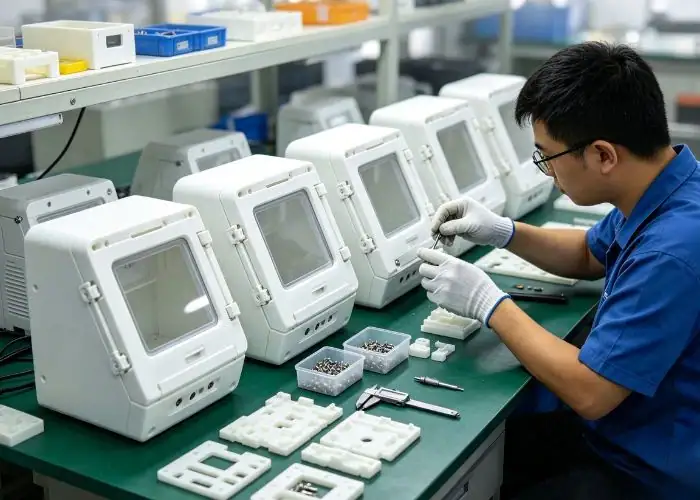
Although vacuum casting is highly effective for prototype development and low-volume production, it is not intended to replace every manufacturing process. When projects require production-intent materials, extremely tight dimensional tolerances, or long-term durability testing, other manufacturing methods may provide more representative results. For example, CNC machining is often preferred for tolerance-critical components, while injection molding remains the most appropriate choice for validating production tooling and manufacturing conditions. Understanding these limitations helps engineering teams select vacuum casting where it creates the greatest value rather than applying it beyond its intended purpose.
Vacuum Casting vs. Other Prototype Manufacturing Processes
| Process | Primary Advantage | Best For | Typical Quantity |
| 3D Printing | Fast design iteration | Concept models and early validation | 1–5 parts |
| CNC Plastic Machining | High precision and engineering performance | Functional prototypes and master patterns | 1–20 parts |
| Vacuum Casting | Consistent appearance and small-batch production | Product validation and customer samples | 10–50+ parts |
| Injection Molding | Production materials and high-volume manufacturing | Mass production | Hundreds to millions |
Preparing for a Successful Vacuum Casting Project
A successful vacuum casting project begins long before the silicone mold is produced. Clear project information enables manufacturers to evaluate part geometry, recommend suitable manufacturing methods, and identify potential challenges early in the development process. By defining technical requirements before production starts, engineering teams can improve communication, reduce unnecessary revisions, and achieve more predictable prototype results.
CAD Files, Quantity, and Surface Requirements
A complete 3D CAD model is the foundation of every vacuum casting project. It allows engineers to evaluate part geometry, wall thickness, draft angles, undercuts, and other features that may influence silicone mold design. In addition to geometry, defining the required quantity and surface finish is equally important. Whether the project requires glossy, matte, textured, painted, transparent, or color-matched parts will influence the master pattern preparation, mold construction, and finishing process. Providing this information early helps manufacturers recommend a more efficient production plan and deliver prototypes that better meet project expectations.
Material Selection and Product Validation Goals
Rather than specifying only a production material, it is often more helpful to explain what the prototype is expected to validate. For example, the project may require ABS-like rigidity, PC-like transparency, rubber-like flexibility, or sufficient strength for assembly testing. Defining these validation objectives allows manufacturers to recommend polyurethane resins that better simulate the intended product performance. Focusing on engineering goals instead of material names also helps ensure that the prototype provides meaningful feedback for the next stage of product development.
How Does UForProto Support Vacuum Casting Projects?
Vacuum casting delivers the best results when every stage of the project is carefully coordinated. At UForProto, we treat vacuum casting as part of an integrated plastic prototyping workflow rather than an isolated manufacturing process. From engineering review and master pattern production to silicone molding, casting, surface finishing, inspection, and prototype assembly, each step is managed to help customers obtain reliable prototypes that support confident product decisions.
From Master Pattern to Finished Prototype Parts
Our engineering team supports the complete manufacturing workflow, including CNC plastic machining, precision 3D printing, master pattern preparation, silicone mold production, vacuum casting, surface finishing, and quality inspection. Managing these processes within one project reduces communication delays, improves dimensional consistency, and ensures that every prototype accurately reflects the original design intent.
Supporting Prototype Validation and Low-Volume Production
Whether customers need appearance models, functional prototypes, customer demonstration samples, or low-volume production parts, our goal is to deliver prototypes that support meaningful engineering decisions. By combining vacuum casting with complementary processes such as CNC machining, 3D printing, and prototype assembly, we help development teams move efficiently from concept validation to production preparation while maintaining speed, quality, and flexibility throughout the project.
Conclusion
Vacuum casting plays an important role between prototype development and mass production. Rather than replacing CNC machining, 3D printing, or injection molding, it complements these processes by providing multiple production-like samples when design validation, customer evaluation, and low-volume testing require greater consistency. Understanding where vacuum casting fits within the product development cycle helps engineering teams choose the right manufacturing method at the right time.
Successful prototype development is not determined by a single manufacturing process but by selecting the process that best matches the objectives of each development stage. By combining vacuum casting with appropriate engineering planning and prototype validation, teams can reduce development risks, improve decision-making, and move toward production with greater confidence.
FAQs
1. When should vacuum casting be used instead of injection molding?
Vacuum casting is typically the better choice when product designs are still being validated and multiple prototype parts are needed before investing in production tooling. It helps reduce upfront costs while providing production-like samples for evaluation.
2. How many parts can be produced from one silicone mold?
The exact quantity depends on part geometry, resin type, and surface finish requirements. In most prototype projects, one silicone mold is suitable for producing a small batch of consistent parts before a replacement mold is required.
3. Is vacuum casting better than 3D printing?
Not necessarily. 3D printing is ideal for rapid concept validation and frequent design iterations, while vacuum casting is better suited for producing multiple consistent samples with improved surface quality and presentation.
4. Can vacuum casting parts be used for functional testing?
Yes. Many polyurethane resins can simulate the properties of production plastics, making vacuum casting suitable for assembly verification, handling evaluation, and many functional prototype applications.
5. What information is required before requesting a vacuum casting quotation?
Providing 3D CAD files, required quantities, surface finish expectations, colour requirements, and prototype objectives enables manufacturers to recommend the most suitable manufacturing solution and prepare an accurate quotation.
6. Can vacuum casting be combined with CNC machining or 3D printing?
Yes. Many development projects use CNC machining or high-resolution 3D printing to create the master pattern, followed by vacuum casting to produce multiple consistent prototype parts. This combined workflow improves both accuracy and efficiency.