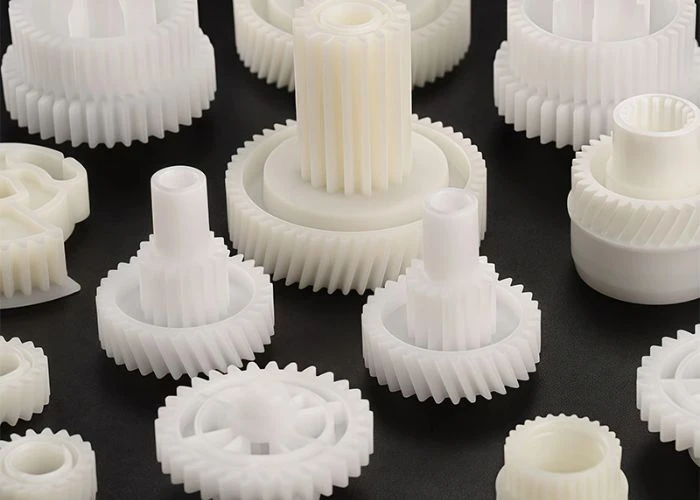

Polyethylene is one of the most widely used thermoplastics in modern products. It can be found in packaging, bottles, pipes, tanks, electrical insulation, medical products, industrial wear parts, and many other applications. Its popularity comes from a useful combination of low weight, chemical resistance, toughness, moisture resistance, and relatively low cost.
However, polyethylene is not a single material with one fixed set of properties. HDPE, LDPE, LLDPE, and UHMWPE behave differently because their molecular structures are different. This guide explains what is polyethylene, its main types, properties, uses, processing methods, and CNC machining considerations to help designers choose a suitable PE material for their projects.
What Is Polyethylene?
Polyethylene, usually abbreviated as PE, is a thermoplastic polymer made from ethylene monomers. During polymerization, ethylene molecules join together to form long hydrocarbon chains. The way these chains are arranged affects the density, flexibility, stiffness, strength, and processing behavior of the finished material.
Because PE is a thermoplastic, it softens when heated and hardens again as it cools. This makes many polyethylene grades suitable for processes such as injection molding, extrusion, blow molding, and rotational molding. PE is also available as sheet, plate, and rod for machining.
One reason polyethylene is so widely used is its versatility. A soft plastic film, a rigid chemical container, and an industrial wear guide can all be made from polyethylene, but each application may require a different PE grade.
How Is Polyethylene Made?
Polyethylene is produced by polymerizing ethylene gas under controlled temperature, pressure, and catalyst conditions. These processing conditions influence how the molecular chains form and, in turn, determine the structure of the final material.
For example, LDPE has more branching in its molecular chains, which prevents the chains from packing closely together. This gives the material lower density and greater flexibility. HDPE has a more linear structure, allowing the chains to pack more closely and creating a stronger, more rigid material.
For designers, the key point is simple: materials that share the PE name can still behave very differently. The exact grade should always be considered when evaluating performance or manufacturability.
What Are the Main Types of Polyethylene?
Polyethylene is divided into several families according to factors such as density, molecular structure, branching, and molecular weight. These differences influence how each material responds to load, impact, friction, temperature, and manufacturing processes.
The most common PE types designers encounter are HDPE, LDPE, LLDPE, and UHMWPE. Each serves a different set of product and engineering requirements.
High-Density Polyethylene (HDPE)
High-density polyethylene has a relatively linear molecular structure. Because its chains can pack closely together, HDPE has greater density and rigidity than lower-density polyethylene grades.
HDPE combines good toughness with chemical and moisture resistance. It is commonly used for bottles, tanks, pipes, containers, cutting boards, housings, and industrial components. It is also available in sheet and rod form, making it useful for machined prototypes and custom plastic parts.
For designers, HDPE is often a practical general-purpose choice when a part needs more rigidity than LDPE but does not require the higher wear performance of UHMWPE.
Low-Density Polyethylene (LDPE)
Low-density polyethylene has a more heavily branched molecular structure. The chains cannot pack as closely as those in HDPE, so LDPE is softer, lighter, and more flexible.
This flexibility makes LDPE well suited to plastic films, bags, squeeze bottles, flexible lids, coatings, and other products that need to bend or deform without cracking.
Its softness can be a disadvantage for precision mechanical components. If a design needs good rigidity or must hold close dimensions under load, HDPE or another engineering plastic may be a better starting point.
Linear Low-Density Polyethylene (LLDPE)
Linear low-density polyethylene has a mostly linear molecular backbone with short branches. It combines good flexibility with useful impact and puncture resistance.
LLDPE is widely associated with films, flexible packaging, liners, and products that must stretch without tearing. Compared with conventional LDPE, it can provide improved toughness while maintaining the flexible behavior expected from a low-density polyethylene.
For most designers, LLDPE is more relevant to molded or film-based products than to precision CNC-machined components.
Ultra-High-Molecular-Weight Polyethylene (UHMWPE)
UHMWPE has extremely long molecular chains and a much higher molecular weight than conventional polyethylene grades. This gives it excellent wear resistance, impact toughness, and low-friction behavior.
It is commonly used for wear strips, conveyor guides, liners, rollers, sliding components, chute parts, and other industrial applications where repeated friction or impact is expected.
UHMWPE is also commonly machined from sheet, plate, or rod. However, its relatively soft structure and thermal expansion must be considered when tight tolerances are required.
Other Polyethylene Grades
Other PE materials include medium-density polyethylene, high-molecular-weight polyethylene, cross-linked polyethylene, and specially modified formulations.
These grades are designed to provide specific combinations of flexibility, strength, chemical resistance, processing behavior, or service performance.
When a project specifies a less common PE grade, designers should rely on the supplier’s technical data rather than assume it will behave like standard HDPE or LDPE.
What Are the Key Properties of Polyethylene?
Polyethylene is useful because it offers a balanced combination of toughness, chemical resistance, low moisture absorption, electrical insulation, and relatively low density.
Exact values vary significantly between grades, so designers should treat general PE properties as a starting point rather than a substitute for a material datasheet.
Strength and Impact Resistance
Most polyethylene grades offer good toughness and can absorb impact without brittle failure. However, stiffness and load capacity vary considerably.
HDPE provides a useful balance of strength and rigidity for general-purpose components. UHMWPE is especially valuable where repeated impact and abrasion are important. LDPE and LLDPE are softer but can tolerate significant deformation.
The geometry of the part matters as much as the material grade. Thin walls, long unsupported sections, and concentrated loads can cause deformation even when the material itself has good impact resistance.
Flexibility and Rigidity
The balance between flexibility and rigidity is one of the main differences among PE grades.
LDPE and LLDPE are commonly chosen for flexible products. HDPE is noticeably more rigid because its molecular chains are packed more closely. UHMWPE is tough and durable but should not be treated as a highly rigid structural plastic.
When deflection matters, designers should consider wall thickness, load direction, mounting points, and unsupported spans instead of relying only on a tensile strength value.
Chemical and Moisture Resistance
Polyethylene resists moisture and many common acids, bases, and chemicals. This is one reason it is widely used in tanks, containers, fluid-handling products, liners, and outdoor applications.
Chemical compatibility still depends on the exact substance, concentration, temperature, exposure time, and PE grade.
For parts that will contact aggressive fluids, material compatibility should be checked against the actual service conditions rather than assuming every polyethylene grade will perform the same way.
Wear and Friction Performance
Wear behavior is especially important for industrial polyethylene parts.
UHMWPE has very good abrasion resistance and a low coefficient of friction, which makes it useful for guides, liners, wear strips, conveyor components, and other sliding surfaces.
These characteristics can reduce friction and, in some applications, lower the need for lubrication. However, pressure, sliding speed, temperature, and the mating material still affect service life.
Electrical Insulation
Polyethylene is a good electrical insulator and is widely used in wire, cable, and related electrical applications.
Its low moisture absorption is also useful where electrical components are exposed to humid environments.
For more demanding electrical designs, designers should still verify the exact grade, thickness, additives, service temperature, and required dielectric performance.
Temperature and Dimensional Stability
Temperature is an important consideration when designing PE components.
Polyethylene expands more with temperature changes than metals and many rigid engineering plastics. Large parts or close-fitting assemblies can therefore experience noticeable dimensional changes during operation.
The same issue matters during CNC machining. Heat generated at the cutting edge may temporarily expand the material, affecting both cutting performance and inspection results. Tight tolerances should therefore be specified only where they provide real functional value.
What Are the Advantages and Limitations of Polyethylene?
Polyethylene is attractive because it combines practical performance with broad availability and relatively economical production.
Its advantages are substantial, but PE also has limitations that can affect precision parts, structural components, bonding, and high-temperature applications.
Advantages of Polyethylene
One major advantage is versatility. Depending on the grade, polyethylene can provide flexibility, toughness, chemical resistance, low friction, wear resistance, or greater rigidity.
Its low density helps keep products lightweight, while low moisture absorption makes it useful in wet and fluid-handling environments. Many PE grades can also be processed efficiently through established molding and extrusion methods.
For product development, stock PE materials can be CNC machined into functional prototypes without dedicated molds. This gives designers a practical way to test dimensions, fit, assembly, and performance before committing to production tooling.
Limitations of Polyethylene
PE is generally less rigid than many engineering plastics and metals. Under sustained loading, parts may flex or creep, especially when the geometry is thin or poorly supported.
Thermal expansion can also make close dimensional control more difficult. This is particularly important for larger machined parts or assemblies that operate across a wide temperature range.
Another limitation is surface adhesion. Polyethylene has low surface energy, so painting, coating, printing, and adhesive bonding can require special surface preparation.
What Is Polyethylene Used For?
Polyethylene appears in many industries because different grades can meet very different product requirements.
The application usually reflects the properties of the selected PE type. Flexible grades are common in packaging, while rigid or wear-resistant grades are more suitable for mechanical and industrial components.
Packaging and Consumer Products
Packaging is one of the most familiar uses of polyethylene.
LDPE and LLDPE are commonly used for films, bags, wraps, flexible packaging, and squeeze products. HDPE is often selected for rigid bottles, household containers, storage products, and molded consumer components.
The difference shows how one polymer family can support both flexible and rigid products simply by changing molecular structure and grade.
Medical and Healthcare Products
Certain polyethylene grades are used in healthcare products because they combine chemical resistance, toughness, low moisture absorption, and suitable processing characteristics.
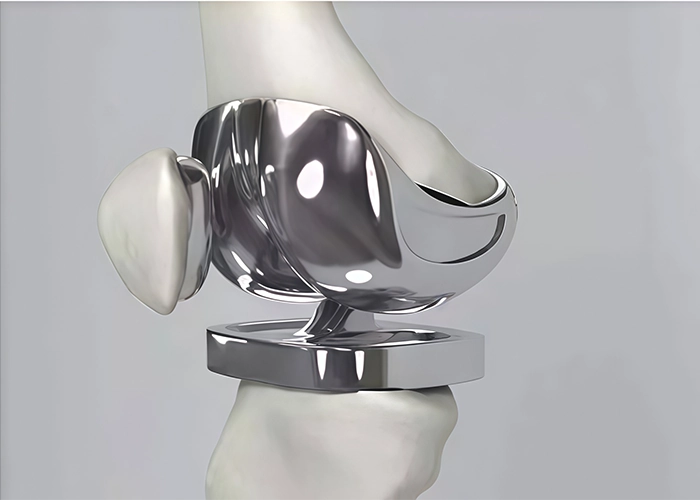
UHMWPE is particularly well known for applications that require strong wear resistance and low friction, while other PE grades can be found in packaging, tubing, containers, and disposable products.
Medical projects should always consider the specific grade, certification, sterilization method, traceability, and regulatory requirements.
Automotive Components
Polyethylene can be used in automotive products where low weight, impact resistance, moisture resistance, or chemical compatibility are important.
Typical examples include tanks, containers, protective components, and selected molded parts.
Designers should evaluate service temperature, vibration, fastening loads, fluids, UV exposure, and long-term deformation before selecting a grade.
Industrial Wear Parts
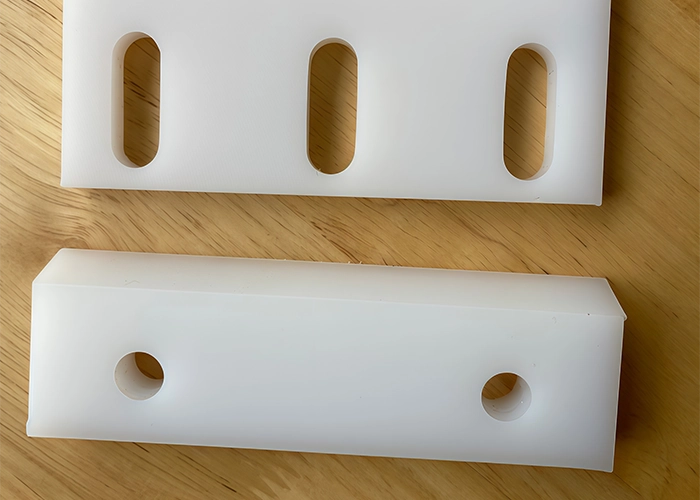
UHMWPE is widely used for industrial wear components such as guides, liners, wear strips, rollers, and conveyor parts.
Low friction and abrasion resistance make it useful in equipment where parts repeatedly slide against products, rails, or other machine components.
These parts are often machined from stock because industrial equipment frequently requires custom dimensions rather than high-volume standardized geometry.
Pipes, Tanks, and Fluid Handling
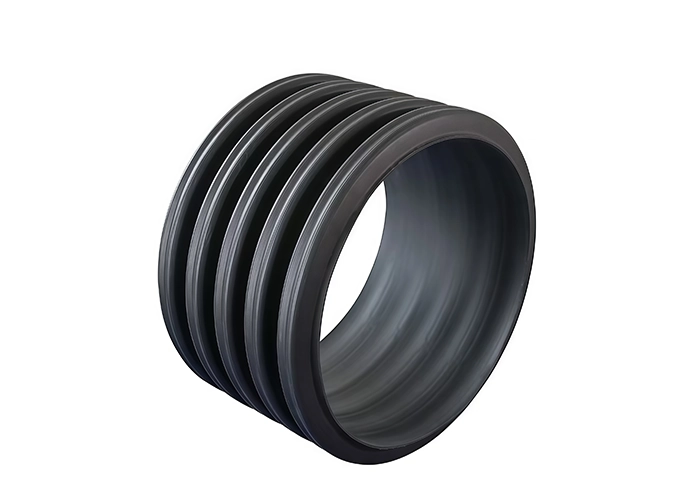
HDPE is commonly used for pipes, tanks, storage containers, and fluid-handling products because of its toughness, low moisture absorption, and resistance to many chemicals.
When specifying PE for these applications, designers should consider pressure, joints, wall thickness, service temperature, chemical compatibility, and long-term creep.
Electrical and Insulation Components
Polyethylene is also used for wire and cable insulation and other electrical applications.
Its insulating performance, low moisture absorption, and low weight make it useful where electrical isolation is required without adding unnecessary mass.
The exact formulation still matters because additives and environmental conditions can affect long-term electrical performance.
How Is Polyethylene Manufactured and Processed?
Polyethylene can be converted into finished products using several processes. The most suitable method depends on the PE grade, geometry, production volume, tolerance, and tooling budget.
Molding and extrusion are generally preferred for repeated production, while CNC machining offers greater flexibility for prototypes, low-volume parts, and custom components.
Injection Molding
Injection molding is commonly used for high-volume polyethylene parts.
Molten PE is injected into a mold, cooled, and removed as a finished component. Once the tooling is established, the process can produce large quantities of repeatable parts efficiently.
The main disadvantage during early development is the tooling investment. For this reason, companies often validate a design with machined prototypes before committing to a production mold.
Extrusion
Extrusion forces molten polyethylene continuously through a shaped die.
It is well suited to products with a constant cross-section, including pipes, tubing, sheets, films, and profiles.
Extrusion can be highly efficient for continuous production, but it is not designed for complex individual components with features that change along the part.
Blow and Rotational Molding
Blow molding is commonly used to produce hollow products such as bottles and containers. Heated plastic is formed against the inside of a mold to create the required hollow geometry.
Rotational molding is another option for hollow parts, especially larger products such as tanks and containers. Polymer is heated inside a rotating mold so that it coats the internal surface.
Both processes are useful for specific product shapes, but tooling and production requirements make them less flexible than machining during early design changes.
CNC Machining
CNC machining removes material from PE sheet, plate, rod, or block rather than forming the plastic inside a mold.
This eliminates the need for dedicated production tooling and makes CNC machining useful for functional prototypes, custom parts, fixtures, replacement components, and low-volume production.
Design changes can also be implemented quickly because engineers can update the CAD model and machining program instead of modifying a mold.
Can Polyethylene Be CNC Machined?
Yes. Polyethylene can be CNC machined, and HDPE and UHMWPE are among the grades commonly supplied as machinable stock.
However, machining polyethylene requires a different approach from cutting aluminum or rigid engineering plastics. PE is relatively soft, expands with heat, and can deform under excessive cutting or clamping forces.
Best PE Grades for CNC Machining
HDPE is a common choice for machined plastic parts because it offers reasonable rigidity, chemical resistance, and broad availability in sheet and rod.
UHMWPE is frequently machined for industrial wear components such as guides, liners, wear strips, and rollers. Its low-friction behavior and abrasion resistance make it particularly useful in moving equipment.
LDPE can also be cut, but its greater softness and flexibility make it more difficult to hold close dimensions. It is therefore less common for rigid precision components.
Heat and Dimensional Stability
Heat control is important when machining polyethylene.
Excessive heat may soften the material and cause local expansion, which can affect dimensions and surface quality. Sharp tools, suitable cutting parameters, and effective chip removal help reduce rubbing and heat buildup.
For tighter-tolerance features, the part should be allowed to return to a stable temperature before final measurement.
Workholding and Part Deformation
A polyethylene workpiece must be held securely without being compressed or distorted.
Too much clamping force can change the shape of the part during machining. Once the clamps are released, the material may recover and leave the final dimension outside tolerance.
Broad support, controlled clamping pressure, soft jaws, vacuum fixtures, or custom fixtures can improve stability depending on the geometry.
Designers can also help by avoiding unnecessarily thin unsupported walls and by providing practical surfaces for locating and clamping the part.
Burrs and Surface Finish
Soft polyethylene can form burrs or stringy chips around edges, holes, and milled features.
Sharp cutters are important because they slice the material cleanly rather than push or rub it. Tool geometry, feed, and chip evacuation all influence the final surface.
Deburring should also be controlled. Aggressive finishing can round edges or alter small features, especially on softer PE grades.
How to Choose the Right Polyethylene Grade
Selecting a polyethylene grade should begin with the function of the finished part rather than with cost alone.
The best choice depends on load, stiffness, wear, chemical exposure, temperature, geometry, and manufacturing method.
Strength, Load, and Rigidity
Start by asking how much the part needs to resist deformation.
HDPE is often suitable for general rigid components, while LDPE and LLDPE are better when flexibility is intentional. UHMWPE is excellent for wear and impact applications but is not necessarily the best choice when maximum rigidity is required.
Part geometry also matters. Increasing wall thickness or adding support may sometimes improve performance more effectively than changing materials.
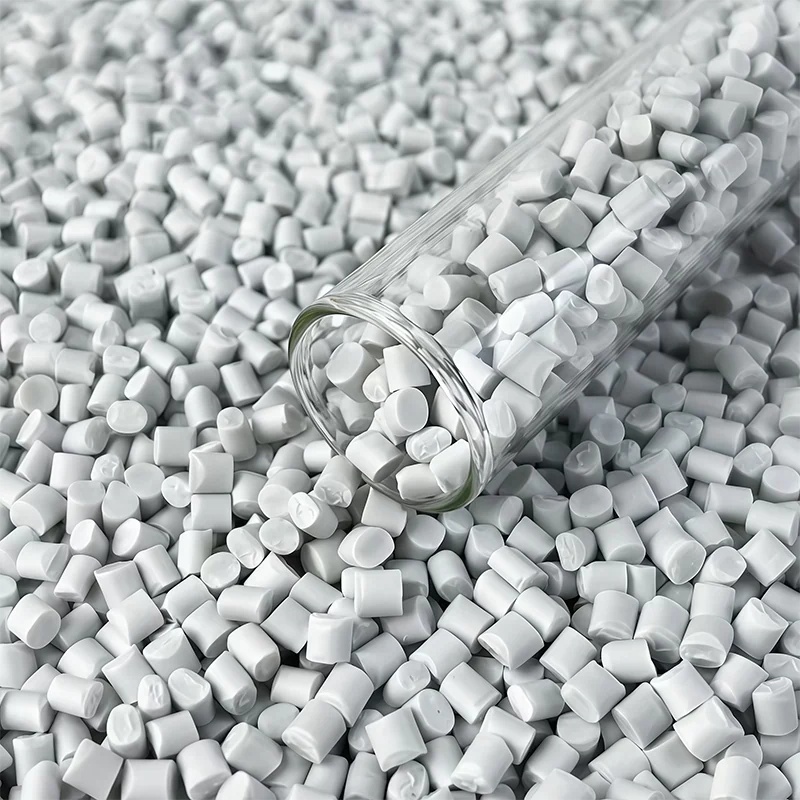
Wear and Chemical Exposure
For moving components, consider friction and wear early in the design.
UHMWPE is often preferred for guides, liners, and sliding components because of its low friction and abrasion resistance.
Chemical exposure should be evaluated separately. Although PE generally provides good chemical resistance, compatibility depends on the chemical, concentration, temperature, and length of exposure.
Temperature and Environment
Operating temperature affects stiffness, creep, and dimensional stability.
Outdoor applications may also require consideration of UV exposure, while large components may need extra allowance for thermal expansion.
If the part fits closely with metal components, differences in thermal expansion can become important as the operating temperature changes.
Manufacturing Method
The intended production process should influence material selection from the beginning.
LDPE and LLDPE are well suited to many film and molding applications, while HDPE and UHMWPE are often more practical for CNC-machined functional parts.
Production volume matters as well. CNC machining is flexible for prototypes and low-volume production, while molding and extrusion become more attractive when the design is stable and quantities increase.
Conclusion
Polyethylene is a versatile thermoplastic family rather than a single material with fixed performance. HDPE, LDPE, LLDPE, UHMWPE, and other grades offer different levels of rigidity, flexibility, impact strength, chemical resistance, and wear performance. Choosing the right grade requires designers to consider the actual operating environment, geometry, loads, dimensional requirements, and manufacturing process instead of relying on the PE name alone.
At UForProto, we provide plastic prototyping and CNC plastic machining services for custom functional parts and low-volume production. From material selection and prototype development to machining and dimensional inspection, we help turn plastic part designs into practical components while considering tolerances, geometry, surface requirements, and real application needs.
FAQs
1.Is Polyethylene Toxic?
Polyethylene is generally considered a low-toxicity plastic for normal industrial and consumer applications. However, safety can depend on the specific grade, additives, and service conditions, especially if the material is exposed to excessive heat or chemicals.
2.Is Polyethylene the Same as Plastic?
Polyethylene is a type of plastic, but plastic is a much broader category. PE belongs to the thermoplastic family and includes common grades such as HDPE, LDPE, LLDPE, and UHMWPE.
3.What Are Two Disadvantages of Polyethylene?
Two common disadvantages of polyethylene are relatively low stiffness and high thermal expansion. These properties can make PE less suitable for heavily loaded structural parts or applications that require very tight dimensional stability.
4.Is Polyethylene Waterproof?
Polyethylene has very low water absorption and offers excellent resistance to moisture, so it is widely used in tanks, pipes, liners, and outdoor products. However, whether a finished product is fully waterproof also depends on its design, joints, seals, and manufacturing method.
5.Is Polyethylene a Polymer?
Yes. Polyethylene is a thermoplastic polymer made by joining many ethylene molecules into long molecular chains. Changes in chain structure and molecular weight create different PE grades with different mechanical and processing properties.