
Choosing a machining manufacturer involves more than comparing prices or checking a list of CNC machines. For engineers and purchasing teams, the real challenge is determining whether a supplier can consistently manufacture the required geometry, control critical dimensions, manage materials, and deliver usable parts on schedule. A capable manufacturer should also identify manufacturing risks before production and communicate clearly when specifications need clarification. In this guide, I explain nine practical factors for evaluating machining suppliers, with particular attention to CNC plastic machining, prototype development, quality assurance, and long-term manufacturing reliability.
1. Does the Machining Manufacturer Have the Right Manufacturing Capabilities?
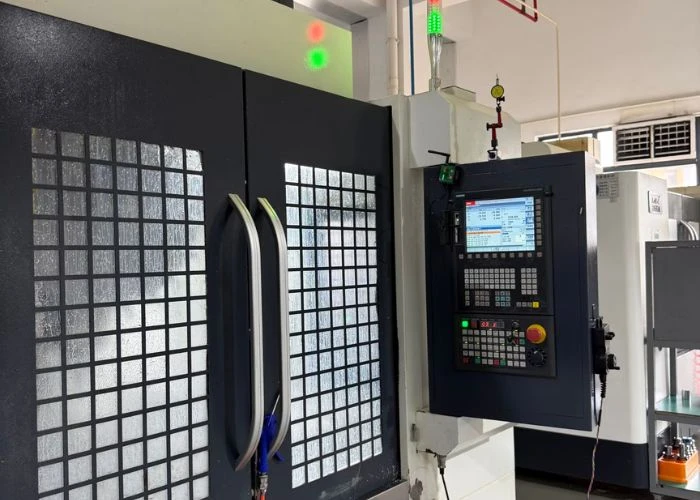
Manufacturing capability should be evaluated against the actual part requirements rather than the number of machines shown on a supplier’s website. I begin by reviewing part size, geometric complexity, material, tolerances, surface requirements, and expected quantity. These details help determine whether the manufacturer has the equipment, process experience, and production resources needed for the project.
A supplier may operate several CNC machining centers but still lack experience with thin plastic housings, transparent components, deep cavities, or complex assembly interfaces. Machine availability does not automatically demonstrate the ability to control deformation, maintain dimensional relationships, or achieve the required appearance.
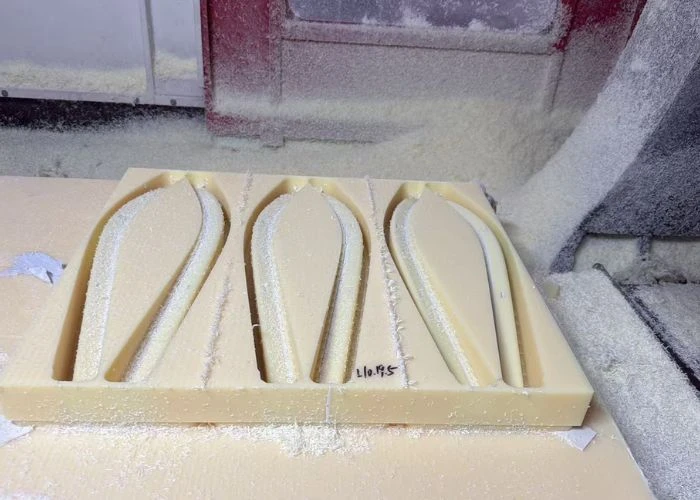
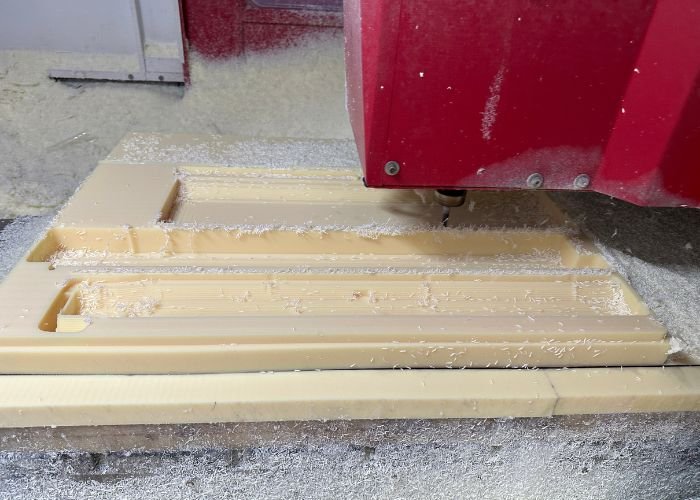
For CNC plastic machining, I also examine whether the manufacturer understands the difference between machining engineering plastics and metals. Plastics may respond differently to clamping pressure, cutting heat, internal stress, and tool engagement. These characteristics influence process planning even when the CAD geometry appears straightforward.
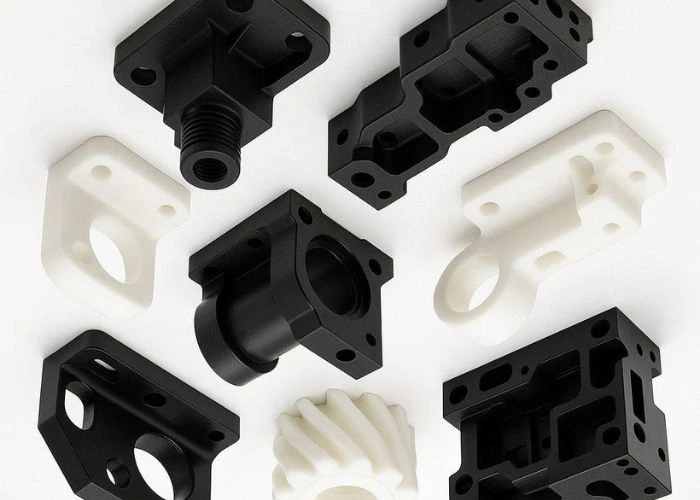
The most useful evidence is not a general capability statement but examples of comparable parts. I recommend asking whether the supplier has manufactured components with similar materials, geometry, dimensions, and finishing requirements.
2. How Does the Manufacturer Evaluate Engineering Drawings and DFM Risks?
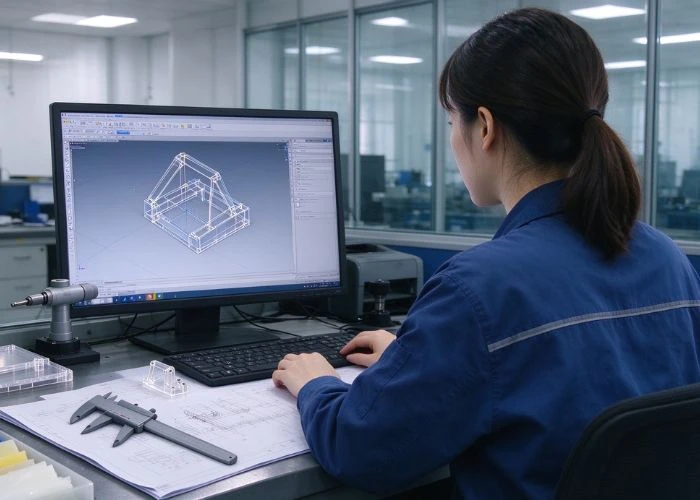
A reliable machining manufacturer should review engineering information before committing to a manufacturing plan. I consider this review an important indicator of technical competence because it reveals whether the supplier understands the intended function of the part. The objective is not to redesign the customer’s product but to identify requirements that could affect manufacturing quality, cost, or delivery.
A complete review should consider the CAD model, engineering drawing, material specification, surface finish, quantity, and critical interfaces. If the drawing contains ambiguous tolerances or missing requirements, I expect the manufacturer to request clarification rather than make unsupported assumptions.
For example, a plastic housing may include several mounting holes that appear independent in CAD but must align with a mating component during assembly. If their positional relationship is functionally important, the manufacturer should understand that requirement before selecting machining setups and inspection methods.
I also look at how suppliers communicate potential risks. A useful engineering review identifies the affected feature, explains the manufacturing concern, and proposes a practical option for discussion. Simply describing a part as difficult to machine provides little value to the customer.
For buyers, this behavior can be more informative than a low initial quotation. A manufacturer that identifies a critical issue before production may prevent a much more expensive problem after parts have been completed.
3. How Does the Machining Manufacturer Control Quality and Inspection?
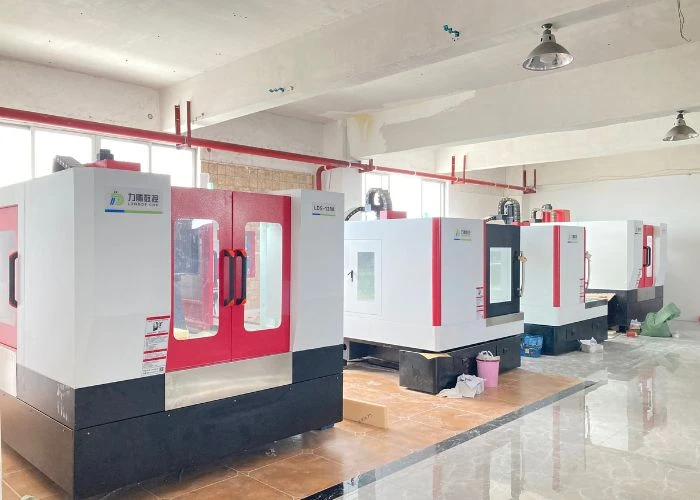
Quality assurance should be evaluated through measurable evidence rather than general claims of precision. I look for a manufacturer that connects drawing requirements with inspection methods, process controls, and documented acceptance criteria. A quality management certificate is useful, but it does not replace verification of the actual parts. The inspection approach should reflect the risks associated with the component.
For a machined plastic component, I distinguish between dimensions that affect function and those that mainly describe overall appearance. A mounting interface, locating hole, or mating surface may require closer attention than a noncritical external feature.
Inspection equipment should match the feature being measured. Calipers and micrometers may be appropriate for accessible dimensions, while optical measuring equipment or coordinate measuring machines may be more suitable for certain geometric relationships. Equipment alone is insufficient unless the measurement method and acceptance conditions are defined.
For plastic components, temperature, part support, measurement force, and the time elapsed after machining may influence the result. I expect the manufacturer to recognize these effects when measuring flexible or dimensionally sensitive materials.
I also recommend confirming which inspection records will be provided. A first-article inspection report, dimensional report, material certificate, or other document may be appropriate depending on the project. These requirements should be agreed upon before manufacturing rather than requested unexpectedly at shipment.
The NIST supplier selection guidance also emphasizes evaluating supplier quality systems, documentation, and the ability to investigate nonconforming products. I consider this especially relevant when comparing manufacturers for repeat orders.
4. Does the Manufacturer Understand Material Selection and Traceability?
Material knowledge is an important indicator of machining capability because different materials respond differently to cutting, clamping, temperature, and finishing. I expect a machining manufacturer to understand the material specified on the drawing and identify any concerns related to its machinability or intended application. For engineering plastics, material grade and stock condition can be just as important as the polymer name.
ABS, PC, PMMA, POM, PP, and PA are commonly used in plastic prototype manufacturing, but they cannot be treated as interchangeable. Their stiffness, thermal behavior, moisture response, and machining characteristics differ, which can influence both manufacturing strategy and prototype evaluation.
I pay particular attention to proposed material substitutions. A supplier should not replace a specified engineering plastic with a different grade or an ABS-like printing resin without approval. Even when the appearance is similar, the resulting component may not provide the intended engineering evidence.
Material traceability should match project requirements. For ordinary appearance prototypes, basic material identification may be sufficient. For more demanding components, the customer may require batch identification, supplier documentation, or certificates linked to the material used.
I consider traceability most useful when it allows a manufacturer to answer a practical question: which material was used for this part, and can that information be confirmed if a problem occurs later?
5. Can the Machining Manufacturer Manage Finishing and Assembly Requirements?
A machined part is not always ready for use immediately after leaving the CNC machine. I evaluate whether the manufacturer can manage the additional operations required to deliver a usable component or prototype assembly. Deburring, sanding, painting, printing, hardware installation, and trial fitting may influence both the final appearance and the functional condition of the parts.
Surface finishing should be considered during manufacturing planning rather than treated as an unrelated final step. A painted housing, for example, may require defined cosmetic surfaces, masking areas, and attention to dimensions that could be affected by the coating.
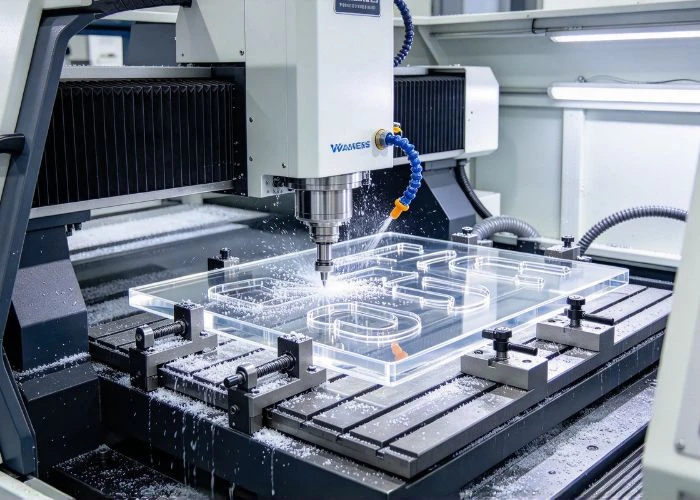
For transparent plastic parts, machining and finishing decisions can have a significant effect on the visible result. Tool marks, scratches, polishing quality, and internal geometry may influence appearance even when the nominal dimensions are acceptable.
When a project includes multiple components, I also look at how the manufacturer coordinates their interfaces. Parts produced separately may meet individual dimensions yet reveal gaps, misalignment, or interference during trial assembly.
A manufacturer that coordinates machining, finishing, and prototype assembly can reduce the number of handoffs the customer must manage. However, I still distinguish manufacturing and fit-up support from complete product performance testing, which requires a separate validation plan.
6. How Transparent Are the Manufacturer’s Quotation and Pricing Terms?
A reliable machining manufacturer should provide a quotation that clearly reflects the requested manufacturing scope. I evaluate whether the price includes the specified material, quantity, machining operations, surface finishing, inspection, and any additional services. Comparing quotations without aligning these requirements can create misleading conclusions, especially when suppliers interpret the same RFQ differently.
The lowest quoted unit price does not necessarily represent the lowest project cost. A quotation may exclude finishing, special inspection, assembly, packaging, or shipping. These exclusions can become additional expenses after the order has been placed.
I also examine how the manufacturer explains one-time preparation costs. Programming, fixtures, special tooling, and process development may be necessary for particular components. These costs should be identified clearly rather than hidden within vague quotation descriptions.
For prototype projects, design revisions deserve particular attention. A quotation based on one CAD revision may no longer be valid after changes to geometry, material, tolerance, or finishing requirements. I prefer to confirm how revisions will be reviewed and priced before work begins.
Payment terms, delivery terms, and shipping responsibilities should also be written into the commercial agreement. For international buyers, confirming whether freight, customs-related charges, and export documentation are included helps prevent disputes during delivery.
7. Can the Machining Manufacturer Deliver Consistently and on Schedule?
Delivery reliability depends on more than the manufacturer’s advertised lead time. I consider whether the supplier has a realistic production plan, suitable equipment capacity, material availability, and control over finishing and inspection. A short promised delivery period is only valuable when the manufacturer can explain how the work will be completed and what conditions could affect the schedule.
For CNC plastic machining, total lead time may include engineering review, material preparation, programming, machining, manual finishing, dimensional inspection, and packaging. A manufacturer that quotes only machine time may underestimate the complete delivery schedule.
Complex prototype assemblies require additional coordination. If several components must be completed before trial fitting, a delay affecting one critical part can influence the entire project. I therefore look for evidence that the manufacturer understands dependencies between operations.
I also value early communication when problems arise. Material shortages, unexpected machining difficulties, and design clarifications should be reported before they become shipment delays. A supplier that communicates risks promptly gives the customer more time to adjust priorities or approve alternatives.
For repeat orders, delivery performance should be evaluated over time rather than judged by a single successful shipment. On-time delivery records, responsiveness to schedule changes, and consistency between promised and actual completion dates provide stronger evidence of reliability.
8. How Effectively Does the Manufacturer Communicate and Manage Changes?
Clear technical communication is essential when machining custom components because drawings rarely eliminate every possible question. I evaluate how quickly a manufacturer identifies unclear requirements, who is responsible for engineering discussions, and how decisions are documented. For international projects, communication quality can influence manufacturing reliability as much as equipment capability.
An effective supplier should distinguish between a technical question and an approved design change. If a hole position, wall thickness, or material specification needs adjustment, the manufacturer should obtain authorization before implementing the modification.
Revision control is particularly important in plastic prototyping, where design changes may occur frequently. I expect the manufacturer to identify the current CAD version, drawing revision, and approved requirements before programming or manufacturing begins.
I also examine how the supplier handles nonconforming parts. When a problem occurs, a reliable manufacturer should explain what was affected, identify the likely cause, and propose an appropriate corrective action rather than simply promising that the next batch will be better.
For purchasing teams, consistent communication reduces uncertainty. Written confirmations of material, finishing, critical dimensions, inspection expectations, and delivery arrangements create a shared reference that both parties can use throughout the project.
9. Is the Machining Manufacturer Reliable for Long-Term Cooperation?
Long-term reliability requires more than successfully completing an initial order. I consider whether a machining manufacturer can maintain quality, manage design revisions, preserve manufacturing knowledge, and respond when project requirements change. A suitable supplier should demonstrate stable processes and transparent communication rather than relying entirely on individual operators or one successful prototype.
A sample order can provide valuable evidence before a larger commitment. I recommend using it to evaluate the delivered component, inspection records, packaging, engineering responses, and consistency with the original quotation.
For repeat manufacturing, I also consider how the supplier manages approved programs, fixtures, material specifications, and inspection instructions. Maintaining these records can reduce variation when the same component is ordered again or when a previously approved design is revised.
Production capacity should be assessed realistically. A factory with many machines may still have scheduling bottlenecks, while a smaller specialized manufacturer may offer stronger engineering attention for a particular category of parts. The appropriate choice depends on project scale, complexity, and the level of support required.
I recommend reviewing supplier performance using measurable criteria such as part acceptance, delivery consistency, response time, documentation quality, and corrective-action effectiveness. This creates a more reliable basis for future purchasing decisions than personal impressions alone.
How Should Buyers Compare Machining Manufacturers Before Placing an Order?
After evaluating the nine factors, I recommend comparing shortlisted manufacturers using the same project requirements. This makes differences in technical capability, quality evidence, pricing, and delivery easier to identify. Rather than assigning equal importance to every factor, the purchasing team should prioritize requirements according to the part’s function, manufacturing risk, and business consequences of failure.
| Evaluation Factor | Evidence to Request | Potential Warning Sign |
| Manufacturing capability | Comparable parts and process explanation | General claims without relevant examples |
| Engineering review | Documented questions and manufacturing feedback | No review of critical requirements |
| Quality control | Inspection plan and sample reports | Precision claims without measurement evidence |
| Material control | Grade confirmation and traceability where required | Unapproved material substitution |
| Finishing and assembly | Defined operation scope and responsibilities | Unclear outsourced operations |
| Quotation | Itemized scope, exclusions, and terms | Unexpected additional charges |
| Delivery | Realistic schedule and milestone communication | Unsupported delivery promises |
| Communication | Named contact and revision records | Unauthorized design changes |
| Long-term reliability | Sample-order performance and corrective-action records | Inconsistent repeat-order performance |
For a critical engineering component, I would give greater importance to material control, dimensional verification, and process consistency. For an early appearance prototype, manufacturing flexibility, finishing quality, and communication speed may carry more weight.
The objective is not to identify a manufacturer that claims to be the best at everything. It is to select one whose demonstrated capabilities and working methods match the specific risks of the project.
How We Support CNC Plastic Prototyping as a Direct Manufacturer
At UForProto, we are a direct plastic prototype manufacturer rather than a trading company. Our work focuses on manufacturing physical plastic components and prototype assemblies from customer engineering requirements. We combine CNC plastic machining, SLA/SLS 3D printing, vacuum casting, surface finishing, and prototype assembly to support product development projects that require coordinated manufacturing rather than isolated parts.
When reviewing an inquiry, we consider the CAD geometry, specified materials, quantity, critical dimensions, finishing requirements, and intended assembly relationships. This helps us identify manufacturing questions before confirming the quotation and production arrangement.
Our manufacturing scope is particularly relevant to plastic housings, structural components, appearance prototypes, and low-volume prototype builds. We do not provide injection molding or complete-device functional testing, so we keep those activities separate from the manufacturing services we quote.
Engineers and purchasing teams can send us CAD files, drawings, material requirements, quantities, and finishing specifications at info@ufprproto.com for a manufacturing review and quotation.
Conclusion
Selecting a reliable machining manufacturer requires more than reviewing equipment lists, certifications, or quoted prices. I recommend evaluating how each supplier interprets engineering requirements, controls materials, verifies critical dimensions, coordinates finishing, and manages delivery risks. Clear communication and documented manufacturing decisions are equally important, particularly when designs change during prototype development. A sample order can help confirm whether the manufacturer’s actual performance matches its claims. By comparing suppliers against the same technical and commercial requirements, engineers and purchasing teams can make more informed decisions, reduce avoidable manufacturing problems, and establish stronger partnerships for future machining projects.
FAQs
1. What Should I Look for in a Machining Manufacturer?
I recommend evaluating manufacturing capability, relevant material experience, engineering review, inspection methods, quotation transparency, communication, and delivery reliability. A manufacturer should be able to demonstrate how its processes meet the requirements of your specific parts rather than relying only on general capability claims.
2. How Can I Verify a Machining Manufacturer’s Quality?
I would review the manufacturer’s quality management documentation, inspection equipment, sample dimensional reports, and relevant production examples. For critical components, I also recommend confirming how important features will be measured and whether the required inspection records are included in the order.
3. Is ISO 9001 Certification Enough to Choose a Machining Manufacturer?
No. ISO 9001 certification provides evidence of a quality management system, but it does not guarantee that every manufactured component meets its drawing requirements. I recommend evaluating actual machining capability, part-specific inspection methods, material control, and delivery performance alongside certification.
4. Why Do Machining Manufacturers Provide Different Quotations for the Same Part?
Different quotations may reflect variations in material sourcing, machining strategy, equipment, setup time, inspection, finishing, and commercial assumptions. I recommend checking that every supplier has quoted the same drawing revision, material, quantity, finishing requirements, and delivery scope before comparing prices.
5. Can a Machining Manufacturer Support Prototype Development and Low-Volume Production?
Yes, depending on the manufacturer’s equipment, process capabilities, and production arrangements. For plastic prototyping, I look for experience with engineering-plastic materials, design revisions, dimensional inspection, finishing, and assembly. These capabilities can help maintain consistency as a project moves from individual prototypes to small batches.
6. Should I Place a Sample Order Before Choosing a Machining Manufacturer?
For important or ongoing projects, I recommend a sample order when practical. It allows the engineering and purchasing teams to evaluate actual part quality, dimensional results, finishing, communication, packaging, and delivery performance. A successful sample does not guarantee future performance, but it provides stronger evidence than marketing claims alone.