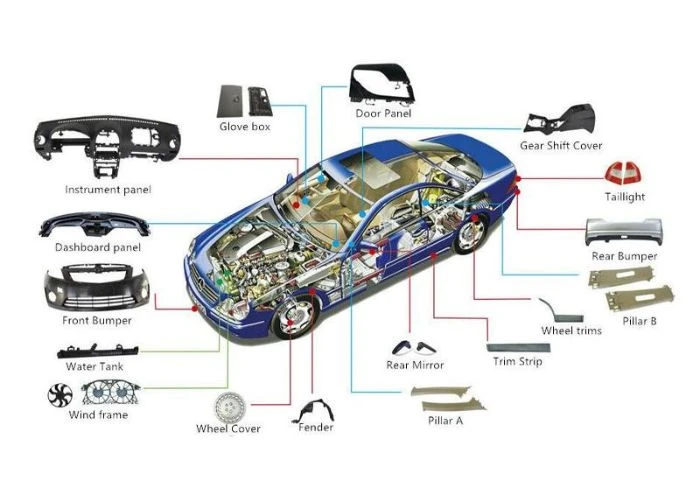

Prototyping large plastic parts introduces manufacturing challenges that are less noticeable in smaller components. As dimensions increase, material stability, machine capacity, workholding, structural support, and inspection become more important. When engineers need to prototype large plastic parts, selecting a manufacturing process is only the beginning. I also consider how the part will behave during machining, handling, finishing, and assembly. In this guide, I explain the available manufacturing methods, material considerations, design decisions, and dimensional risks that influence large plastic prototypes, helping engineers and purchasing teams make more informed development decisions before production.
What Makes Large Plastic Part Prototyping Different?
Large plastic part prototyping is not simply conventional plastic prototyping performed at a larger scale. Increasing part dimensions changes how material behaves, how a component can be supported, and how accurately its geometry can be maintained. I evaluate large prototypes as complete manufacturing projects because machine capacity, material condition, machining strategy, finishing, and inspection can influence one another.
The first challenge is physical size. A part may fit within the nominal travel of a CNC machine but still require additional space for fixtures, tool movement, and safe handling. The usable manufacturing envelope is therefore not always identical to the machine’s published working dimensions.
Material movement becomes more significant as well. Long plastic panels, thin covers, and broad unsupported surfaces may bend under their own weight or change shape when internal stresses are released. Temperature differences between manufacturing and inspection can also affect measured dimensions.
Another challenge is the relationship between local accuracy and overall geometry. Individual holes may be manufactured correctly while their positions relative to distant mounting features become more difficult to control. For large assemblies, I pay particular attention to datums, mating interfaces, and how the component is supported during measurement.
These factors make early manufacturing review particularly valuable. Before selecting a process, I want to understand which dimensions affect function, which surfaces must remain visually consistent, and whether the prototype will be evaluated as an individual part or as part of a larger assembly.
What Manufacturing Methods Can Prototype Large Plastic Parts?
Several manufacturing technologies can produce large plastic prototypes, but their capabilities depend on equipment size, geometry, material requirements, and production quantity. I compare processes according to the physical evidence the prototype must provide rather than assuming the largest available machine is automatically the best solution. CNC machining, additive manufacturing, thermoforming, and casting each serve different development needs.
CNC Plastic Machining for Large Prototype Parts
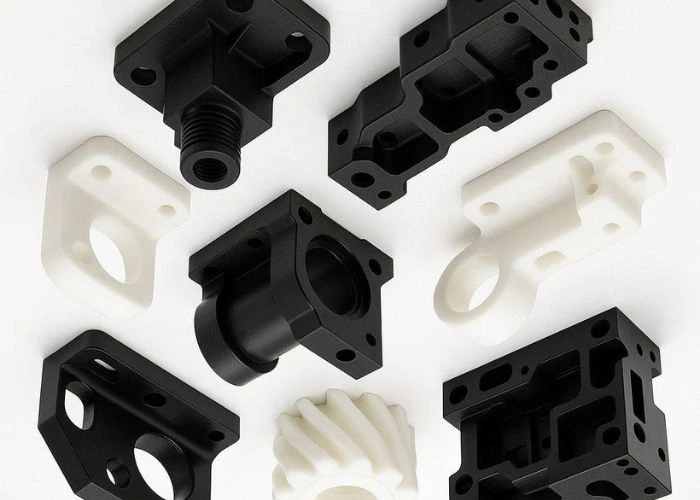
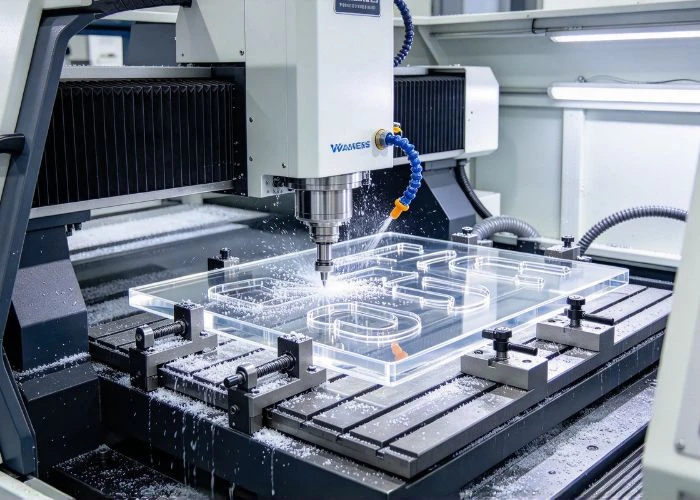
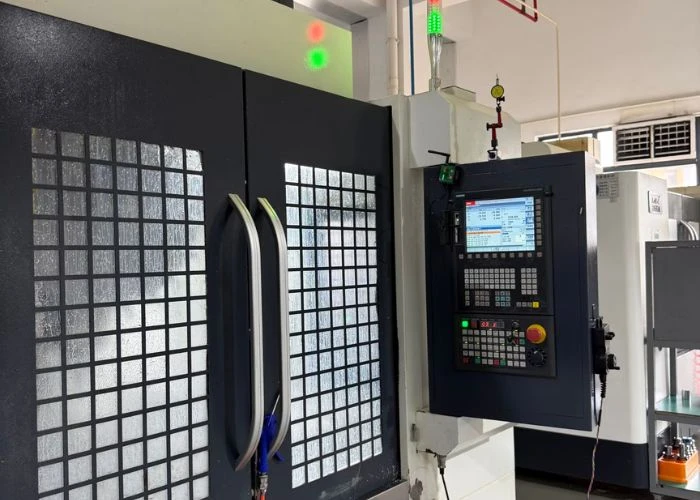
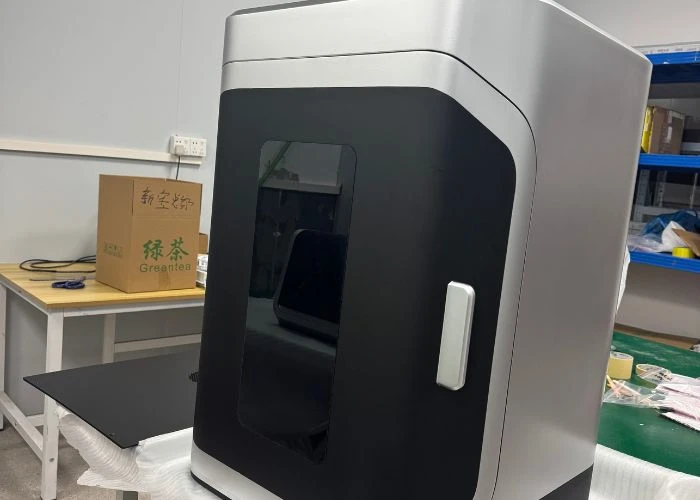
CNC plastic machining is particularly useful when a large prototype needs to be manufactured from actual engineering-plastic stock. I consider this method for equipment housings, structural panels, mounting components, covers, and other parts requiring controlled mechanical interfaces.
CNC machining can produce accurate holes, pockets, mating surfaces, and fastening features without dedicated production molds. It also allows engineers to evaluate the behavior of the selected stock material rather than relying entirely on a simulated plastic formulation.
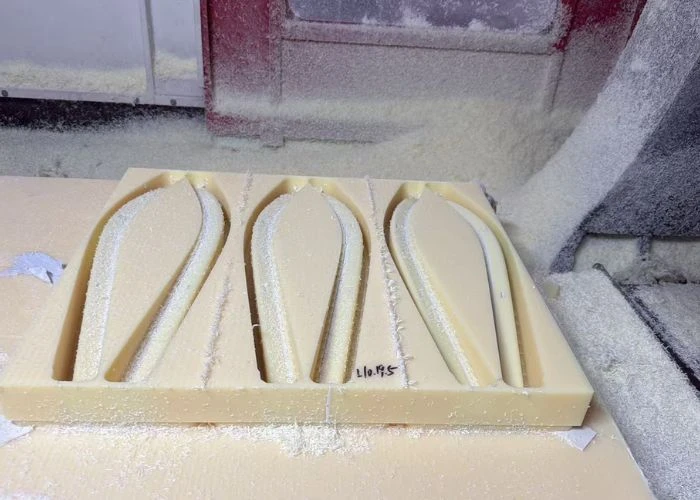
However, large-part machining requires careful planning. A broad panel may need distributed support to prevent bending, while a tall or irregular housing may require several setups. Removing excessive material from one side can also change the stress balance and affect the finished geometry.
For this reason, I review stock dimensions, machining access, workholding, material removal, and inspection strategy together. A part that can be programmed successfully is not necessarily a part that can be manufactured consistently without deformation.
Large-Format 3D Printing
Large-format 3D printing can be useful when complex geometry, rapid design changes, or limited machining access makes subtractive manufacturing less practical. The available build volume depends on the printer and technology, so I verify actual equipment capability before recommending a printing approach.
For parts exceeding the available build volume, printing in sections may be possible. However, splitting a design introduces joining surfaces, alignment requirements, and additional finishing work. The assembled result may not have the same stiffness or dimensional behavior as a single-piece component.
SLA can provide detailed surfaces, while SLS can produce complex polymer components. Neither process should automatically be assumed suitable for every large structure. Material behavior, print orientation, distortion, and post-processing must be considered before deciding whether a printed prototype can represent the intended product.
Thermoforming and Other Large-Part Prototyping Methods
Thermoforming is an important option for large, relatively thin plastic shells. A heated thermoplastic sheet is shaped against a forming tool, making the process suitable for certain panels, trays, covers, and large enclosures.
Productive Plastics demonstrates how large-part thermoforming can reduce the need for more expensive tooling in suitable applications, especially when multiple similar parts are required. However, its advantages depend on part geometry, material, trimming requirements, and the number of parts needed.
Vacuum casting can also support prototype development when several similar resin parts are required. However, large castings introduce additional challenges involving mold dimensions, resin flow, curing behavior, and dimensional consistency. I would not assume that a vacuum-casting process suitable for small components can automatically be scaled to a large housing.
At UForProto, our relevant manufacturing services include CNC plastic machining, SLA/SLS 3D printing, vacuum casting, surface finishing, and prototype assembly. We do not provide thermoforming or injection molding, and each large-part project must be reviewed against actual equipment and process capabilities.
Large Plastic Prototyping Method Comparison
| Method | Suitable Applications | Main Advantage | Main Limitation |
| CNC plastic machining | Large panels, housings, mechanical interfaces | Actual engineering-plastic stock and controlled machining | Machine envelope, workholding, deformation |
| Large-format 3D printing | Complex shapes and evolving designs | Geometric flexibility | Build volume, distortion, material differences |
| Thermoforming | Large thin shells and covers | Efficient sheet-based forming | Tooling, wall thinning, trimming |
| Vacuum casting | Multiple similar resin prototypes | Repeatability for suitable geometries | Mold size, resin behavior, mold life |
| Prototype tooling | Production-representative molded samples | Process-specific manufacturing evidence | Tooling investment and preparation |
I use this comparison as an initial engineering reference, not as a fixed ranking. For large plastic parts, the most appropriate method depends on whether the priority is material representation, geometry, visual quality, quantity, or production-process validation.
How Should Engineers Choose Materials for Large Plastic Prototypes?
Material selection becomes especially important when prototyping large plastic parts because stiffness, thermal expansion, moisture absorption, and internal stress can affect the overall geometry. I do not choose materials based on strength alone. Instead, I consider the component’s dimensions, support conditions, operating environment, and the type of physical evaluation required.
ABS is often a practical option for large plastic housings and appearance components because it offers a useful combination of machinability, toughness, and finishing compatibility. However, large ABS panels can still distort when significant material is removed or when their support conditions change.
Polycarbonate (PC) may be considered when impact resistance or toughness is important. PMMA is relevant when optical appearance or transparency matters, although its greater sensitivity to cracking and stress must be considered during machining, fastening, and handling.
POM offers useful dimensional and friction-related characteristics for mechanical components, while PP can be appropriate where chemical resistance is important. PA materials may provide useful toughness and wear resistance, but moisture-related dimensional changes require attention.
For large parts, I also examine the available stock form. A material may have excellent published properties but be difficult to obtain in the required thickness or dimensions. Using an unsuitable stock size can increase material waste, joining requirements, and machining complexity.
The material should ultimately be selected according to what the prototype needs to demonstrate. If the purpose is appearance evaluation, surface quality and finishing compatibility may dominate. If the purpose is mechanical assembly, stiffness, dimensional behavior, and interface performance become more important.
What Design Considerations Matter Most for Large Plastic Parts?
Designing a large plastic prototype requires attention to more than the final CAD geometry. I consider how the part will be manufactured, supported, handled, measured, and assembled. Features that are straightforward on a small component may create significant manufacturing difficulties when extended across a large structure, particularly when thin walls or distant mounting interfaces are involved.
Wall Thickness, Ribs, and Structural Support
Large plastic panels need sufficient structural support to maintain their intended shape. I review wall thickness, unsupported spans, ribs, and mounting locations together because these features influence stiffness and deformation.
A very thin panel may be easy to represent in CAD but difficult to machine or inspect without bending. Increasing thickness may improve stiffness, but it can also increase weight, material consumption, and manufacturing cost.
Ribs and local reinforcement can provide an alternative to uniformly increasing wall thickness. However, their geometry must remain compatible with the selected manufacturing process. A rib arrangement suitable for injection molding, for example, may require different considerations when produced by CNC machining.
Datums, Mounting Features, and Assembly Interfaces
For large plastic prototypes, I pay particular attention to the relationship between distant features. A mounting hole at one end of a housing may need to align with another component located far away. Small local deviations can become important when several parts are assembled.
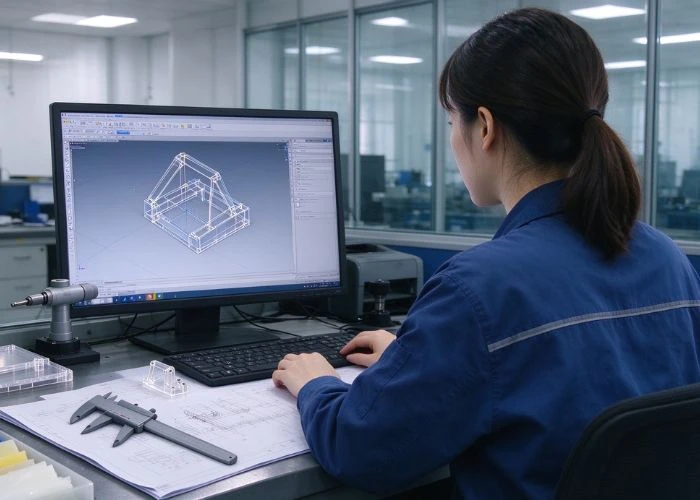
A practical datum strategy helps define how the part is positioned during manufacturing and inspection. Critical mounting surfaces, hole patterns, and mating interfaces should be identified before machining rather than relying on general dimensional tolerances applied across the entire drawing.
I also consider whether the prototype will be measured in a free state or while supported in its intended assembly position. A flexible plastic panel may show different geometry under these two conditions, making the inspection setup important to the interpretation of results.
Should a Large Plastic Prototype Be Made in One Piece or Multiple Sections?
One-piece manufacturing can reduce joining operations and eliminate certain assembly interfaces. However, it may require larger equipment, more material, difficult workholding, or additional handling precautions.
Dividing a large prototype into sections can make manufacturing more practical when the complete geometry exceeds available machine or printer capacity. It may also allow individual sections to be replaced during design revisions.
The trade-off is the introduction of joints. I review joint position, alignment features, fastening methods, visible seams, and expected loads before recommending a split design. A joint placed across a critical appearance surface or heavily loaded interface may create new problems.
The best decision depends on the prototype’s purpose. A sectional appearance model may be entirely appropriate for evaluating a large enclosure, while a component intended to assess continuous structural behavior may require a different approach.
How Can Manufacturers Control Warping and Dimensional Accuracy in Large Plastic Prototypes?
Warping and dimensional variation are among the most important manufacturing risks when engineers prototype large plastic parts. I examine material condition, workholding, machining sequence, temperature, and inspection support as connected factors. A component can meet individual feature dimensions yet still fail to align with the intended assembly because its overall geometry has changed.
Material stress is one possible source of distortion. When machining removes material from a plastic plate or block, the remaining material may redistribute existing stresses. Large, thin components can be particularly sensitive because their reduced stiffness provides less resistance to movement.
I therefore consider roughing and finishing as separate stages when the geometry requires it. Removing material progressively, allowing the workpiece to stabilize where appropriate, and using a suitable finishing strategy may reduce the risk of unexpected movement.
Workholding also requires care. Excessive clamping force can temporarily deform plastic components. When the part is released, its geometry may change, even though it appeared correct while secured to the machine.
Temperature is another factor. Plastics generally experience dimensional changes with temperature, and different polymers respond differently. For large parts, I consider the measurement environment and avoid interpreting small dimensional differences without understanding the temperature and support conditions.
Inspection should reflect the intended function. Instead of applying unnecessarily tight tolerances to every surface, I recommend identifying critical interfaces and establishing a realistic measurement method. This helps ensure that dimensional requirements support assembly performance rather than creating avoidable manufacturing cost.
How Do Surface Finishing and Assembly Affect Large Plastic Prototypes?
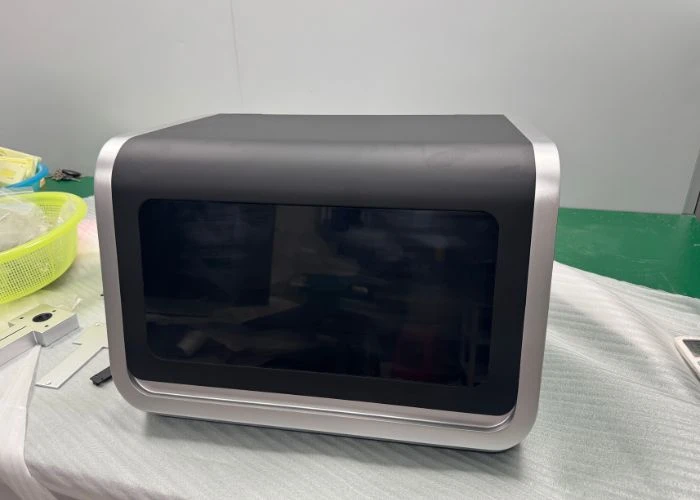
Surface finishing and assembly are important when a large plastic prototype must represent the appearance or physical arrangement of a complete product. I consider these requirements before manufacturing because finishing thickness, visible seams, component alignment, and handling can affect the final result. Producing individual parts successfully does not automatically guarantee that the assembled prototype will meet expectations.
Large visible surfaces can make finishing inconsistencies easier to notice. Uneven sanding, coating variations, scratches, and local surface defects may become more apparent across broad panels or curved housings.
For appearance prototypes, I review the required color, gloss, texture, graphics, and visible part transitions. Painting, silk-screen printing, and other finishing processes may be appropriate depending on the material and design requirements.
Assembly introduces additional dimensional relationships. A large enclosure may contain several covers, brackets, panels, and fastening points. Small differences between individual components can affect the final gap, flushness, and alignment.
For this reason, I recommend identifying important assembly interfaces before manufacturing and performing trial fitting where the project requires it. This can reveal interference, misalignment, or fastening-access problems before the prototype is delivered for further development.
How Should Engineers Evaluate Large Plastic Prototypes Before Production?
A large plastic prototype should be evaluated according to the specific questions it was manufactured to answer. I distinguish between geometry verification, material-related evaluation, appearance review, and production-process validation. These activities may require different prototype methods, and the results of one should not automatically be treated as proof of another.
For geometry evaluation, I focus on overall dimensions, mounting positions, clearances, and the relationship between mating components. Physical inspection and trial assembly can help identify issues that are difficult to recognize from CAD alone.
Material evaluation requires additional caution. A CNC-machined prototype made from engineering-plastic stock can provide useful information about that stock material, but its behavior may differ from an injection-molded component because the manufacturing processes create different material histories and internal conditions.
Rosti‘s discussion of production-quality prototypes highlights the importance of representative manufacturing conditions when engineers need to validate production-specific characteristics. This is particularly relevant when a product will eventually require molded samples, tooling evaluation, or process-dependent performance verification.
For large plastic parts, I recommend documenting what the prototype has actually demonstrated and what remains unverified. This prevents a successful appearance or assembly review from being mistaken for complete production readiness.
What Affects the Cost and Lead Time of Large Plastic Part Prototyping?
Large plastic part prototyping costs depend on the complete manufacturing scope rather than the external dimensions alone. I consider material size, stock availability, machine capacity, machining complexity, finishing, inspection, and assembly requirements. Lead time is influenced by many of the same factors, but the fastest machining operation does not necessarily produce the shortest overall project schedule.
A large plastic blank may require substantial material investment, especially when the finished component contains deep cavities or large amounts of removed material. Stock thickness and available sheet dimensions can therefore influence the quotation before machining begins.
Machine setup and handling also contribute to cost. Large components may require additional fixtures, careful lifting, multiple setups, or extended inspection preparation. These activities are part of manufacturing even though they do not directly remove material.
Finishing and assembly can extend the schedule. A large painted housing may require substantial surface preparation, coating, drying, inspection, and handling before it is ready for assembly or shipment.
When requesting a quotation, I recommend providing the CAD model, overall dimensions, intended material, quantity, critical tolerances, surface requirements, and assembly expectations. These details help the manufacturer evaluate the actual work instead of estimating from appearance alone.
How We Support Large Plastic Part Prototyping at UForProto
At UForProto, we work as a direct plastic prototype manufacturer rather than a trading company. Our manufacturing services include CNC plastic machining, SLA/SLS 3D printing, vacuum casting, surface finishing, and prototype assembly. For large plastic components, we review the actual geometry, material requirements, manufacturing access, and assembly expectations before confirming a suitable manufacturing approach.
I pay particular attention to critical interfaces, large unsupported surfaces, material availability, and whether a component should be manufactured as one piece or divided into sections. These decisions can affect dimensional consistency, finishing effort, and the overall feasibility of the prototype.
For projects involving several plastic components, we can coordinate manufacturing, finishing, and physical prototype assembly within our available capabilities. We do not provide injection molding, thermoforming, or complete-device functional testing.
Engineers and purchasing teams can send us CAD files, drawings, material specifications, and project requirements for manufacturing review and quotation. We assess large-part feasibility according to the actual design and available equipment rather than promising a universal maximum part size.
Conclusion
To prototype large plastic parts successfully, engineers need to consider more than manufacturing speed or equipment size. Material stability, geometry, structural support, machining strategy, dimensional control, finishing, and assembly all influence the final result. I recommend defining the prototype’s evaluation objectives before selecting a manufacturing method, then identifying the features and interfaces that matter most. A well-planned large plastic prototype can provide valuable physical evidence while reducing avoidable manufacturing and development risks. If you are developing a large plastic housing, panel, or mechanical component, send your CAD files, drawings, and project requirements for a manufacturing feasibility review and quotation.
FAQs
1. What Is the Best Way to Prototype Large Plastic Parts?
There is no single best manufacturing method for every large plastic component. I consider CNC machining when actual engineering-plastic stock and controlled interfaces are important, 3D printing when geometric complexity is the priority, and thermoforming when suitable large thin-shell geometry is involved. The final choice depends on dimensions, materials, quantity, and evaluation objectives.
2. Can Large Plastic Parts Be CNC Machined?
Yes. Large plastic components can be CNC machined when the part geometry, stock dimensions, machine capacity, and workholding requirements are compatible. I also evaluate material deformation, machining access, and inspection conditions before confirming manufacturability.
3. Which Plastic Materials Are Suitable for Large Prototypes?
ABS, PC, PMMA, POM, PP, and PA are among the engineering plastics that may be considered, depending on the application. I evaluate stiffness, toughness, dimensional behavior, finishing requirements, and available stock sizes rather than selecting a material based on one property alone.
4. How Can Warping Be Reduced in Large Plastic Prototypes?
Warping risk can be reduced through appropriate material selection, balanced material removal, suitable workholding, and controlled machining strategies. I also consider temperature and inspection support because a flexible large component may change shape when its support conditions change.
5. Should Large Plastic Prototypes Be Manufactured in One Piece?
Not necessarily. One-piece manufacturing can eliminate joints, but it may increase equipment and handling requirements. Sectional manufacturing can improve feasibility for oversized components, although it introduces alignment, fastening, and seam considerations. I make the decision according to the prototype’s intended function and appearance.
6. What Information Is Needed to Quote Large Plastic Part Prototyping?
I recommend providing a 3D CAD model, 2D drawings where available, overall dimensions, material requirements, quantity, critical tolerances, finishing specifications, and assembly expectations. This information helps determine whether the design is manufacturable and which production steps will influence cost and lead time.